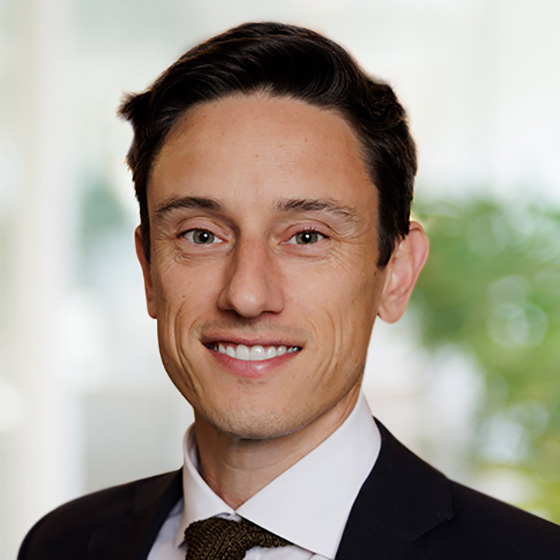
LUCY STRAKER: I would love to.
PETER BRANSDEN: Beazley is seen as a pioneer in the market, and I'm really keen to get your thoughts on where you think the product is headed in its next evolution and where you see market dynamics over the next 12 months.
LUCY STRAKER: Yeah, great question. Thanks, Pete. So as you said, I think Beazley created the market back in 2016, and we've seen this transition from clients who didn't necessarily appreciate that they could buy this coverage and/or they relied on their all risk coverage. And then we're now in this transition period where we're seeing GL carriers implement A and B and/or firearms exclusions. So some people are outright excluding it.
Complementing that at the same time, you've then also got state legislation that is mandating workplace violence prevention methods for businesses specifically in Oregon, California and New York, depending on the industry. And so I think at the moment, there's this period of transition, I guess, where people are learning about the coverage. We're probably going to see outright exclusions on the GL, sooner rather than later, potentially, as appetites are limited, and people then seek to buy affirmative cover in the standalone market space.
PETER BRANSDEN: Yeah, I mean, certainly, we're seeing the problem of the active assailant is something that is being talked about in boardrooms across the US. And our clients are seeing this coverage as one part of a holistic solution that they're looking to employ. When we take submissions to Beazley, what are the things that you're looking for from our clients that show that they're a really good risk?
LUCY STRAKER: Yeah, I don't think it's as clear cut as being a good risk or bad risk. I think it's a combination of things. We want to make sure you've got the right prevention protocols in place, that you have security, your screening, how you're training your people, what your response looks like, how you're communicating with local law enforcement, and so forth. And then in addition to that, it's also the culture. You might have all of this in place, but we also want to make sure you're seen to be doing the right thing. You want to support your people. So therefore, if then something does happen, you can also evidence that on the back end as well. So it's a combination of those factors.
PETER BRANSDEN: Got it. And my guess is that you're seeing interest from all aspects of the economy. Are there any pockets that have been particularly surprising in terms of interest for the product?
LUCY STRAKER: Surprising, no. I think it's just at what stage they've adopted the affirmative cover. So early adopters tended to be commercial real estate clients, education and healthcare, obviously, because they were the most vulnerable industry class from a statistics standpoint. But we are now seeing events and entertainment, a lot of hospitality, et cetera, as well. So it varies.
PETER BRANSDEN: Lucy, I want to thank you for joining me here in the hub, and I hope you have a great rest of your RIMS.
LUCY STRAKER: Thanks, Pete.