
Setting the stage: A year of relentless pressure
If last year was about bracing for the impact of high medical trend, this year has been about navigating through it. Healthcare costs continue to climb rapidly: our data shows that, so far in 2025, healthcare costs have increased by about 8%. For 2026, costs are expected to increase another 9.1% before plan design changes, according to our recent Best Practices in Healthcare Survey.
As the latest data shows, the cost environment has reached a new level of intensity, and the pressure is being felt on every side.
Healthcare costs continue to escalate
This year more than half of employers exceeded their healthcare budgets by an average of 4.5%, according to our survey. The macroeconomic backdrop — persistent inflation, wage pressure and economic uncertainty — has sharpened the focus on affordability, not just for employers, but for employees and their families.
What’s driving the increase?
- High-cost claimants and catastrophic events
A small fraction of members — just 1%—now account for nearly one-third of all plan costs. The average spend per high-cost claimant has jumped 12% in a single year, and these members are increasingly complex, often having multiple chronic conditions and specialty drug therapies*. - Specialty pharmacy and new therapies
Pharmacy inflation continues to outpace medical inflation, with a 14% increase over 2024. Drivers include the rapid adoption of high-cost specialty drugs — especially for diabetes, autoimmune conditions and cancer — and the introduction of expensive new therapies that promise better outcomes. - Chronic disease and preventable conditions
Chronic conditions like cancer, musculoskeletal disorders and cardiometabolic diseases remain the leading contributors to overall spending. What’s changed is the prevalence and complexity of these cases, with more members requiring ongoing, high-touch management. - Utilization rebound and care deferral
After several years of pandemic-driven volatility, utilization is steadily increasing. Outpatient, office and behavioral health visits are trending up. Telehealth remains an essential option, but it hasn’t offset the return to in-person care.
Looking forward: A call to action
The macroeconomic headwinds aren’t likely to ease soon. Healthcare inflation is growing at a faster rate than general inflation, and there’s no sign of slowing down. What can you do?
Use predictive data and advanced analytics to define your risk tolerance. Now more than ever, you must assess your exposure to risk and variability. Can you quantify claims variability for your plan? How much volatility can your organization tolerate? Monte Carlo simulation and predictive analytics can help you assess your exposure to risk.
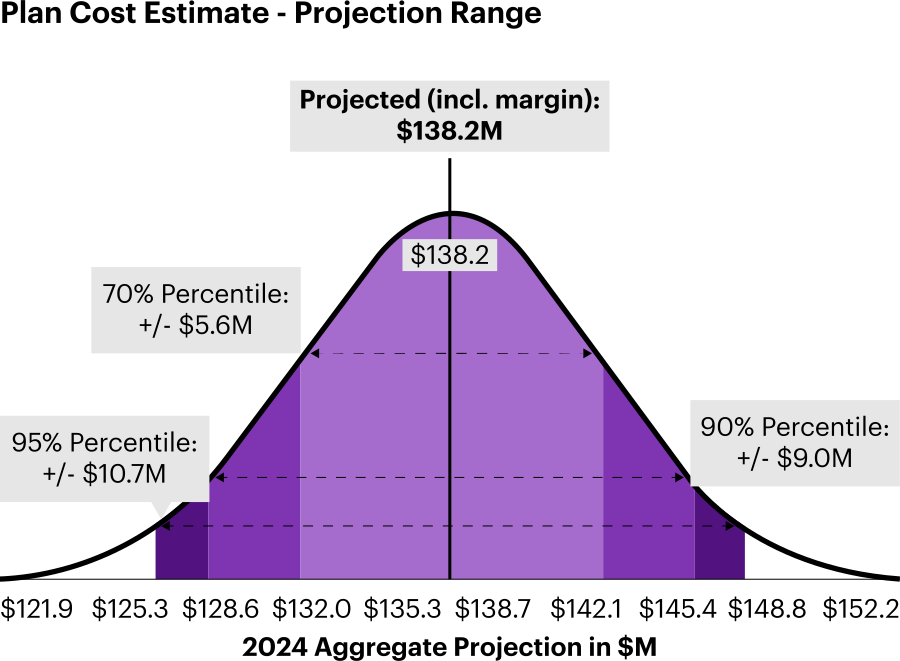
Use Monte Carlo simulation and predictive analytics to assess your exposure to risk.
Define your risk management strategy. There are many levers available to manage financial risk, including stop loss, captive strategy and Individual Coverage Health Reimbursement Arrangements (ICHRAs) to name a few. Learn more about risk management strategies and captive insurance.
Actively manage your pharmacy programs. New pharmacy benefit managers (PBMs) have been disrupting the market with attractive value propositions, and you should evaluate the new options available to you. Additionally, you should closely review coverage for GLP-1 medications and assess exposure to high-cost specialty drugs.
Use transparency data to evaluate medical carrier offerings and alternative plan designs. You have more data and options available to optimize your medical costs. Transparency data lets you compare medical costs quickly between health plans. Alternative plan designs offer differentiated cost models and employee experience.
Navigating today’s high-cost healthcare environment requires a proactive management approach. You face mounting pressures from rising pharmacy costs, a growing chronic disease burden and shifts in care utilization. By using advanced analytics and transparency data, reviewing risk management levers and reconsidering pharmacy strategies, you're better positioned to control costs, mitigate risk and provide sustainable, high-quality benefits for the long term.
*Unless otherwise noted, analysis is based on:
- WTW employer data: with ~2.6M lives, $18 billion medical and pharmacy-paid claims in 2024
- Comparison periods: Calendar year 2024–25 and July 2024 – June 2025
FAQ – Frequently asked questions
What's the current trend in healthcare costs for 2025 and beyond?
Healthcare costs continue to rise rapidly, with an 8% increase in 2025 and a projected 9.1% increase for 2026 before plan design changes. More than half of employers exceeded their healthcare budgets by an average of 4.5% this year.
What are the main drivers behind increasing healthcare costs?
The main drivers include:
- High-cost claimants and catastrophic events, with 1% of members accounting for nearly one-third of all plan costs
- Specialty pharmacy and new therapies, showing a 14% increase in pharmacy inflation
- Chronic disease and preventable conditions requiring ongoing management
- Utilization rebound and care deferral as pandemic-driven volatility stabilizes
How can employers manage rising healthcare costs effectively?
Employers can take several proactive steps:
- Use predictive data and advanced analytics to define risk tolerance and assess exposure to variability
- Create a comprehensive risk management strategy using tools like stop loss, captive strategy and Individual Coverage Health Reimbursement Arrangements (ICHRAs)
- Manage pharmacy programs by evaluating new pharmacy benefit manager (PBM) options and reviewing coverage for high-cost specialty drugs
- Use transparency data to compare medical carrier offerings and consider alternative plan designs for optimized medical costs
By implementing these strategies, employers can better control costs, mitigate risk and provide sustainable benefits for the long term.
Author