
In recent years, captive insurance for employee benefits has gained considerable traction among employers. Our 2025 Benefit Trends Survey shows that over 40% of employers are either using or thinking about captives as an alternative financing option for their benefits. We’ve seen this trend in the past couple of years.
Medical stop loss (MSL) insurance has seen unprecedented growth due to rising healthcare costs and a greater percentage of self-insured employers. Million-dollar-plus claims increased significantly by nearly 30% in 2024 after climbing at a steady pace the previous three years.
What's captive insurance?
There are two primary types of captives: single-parent captives and group captives.
Single parent and group captives
| Single Parent | Group |
|---|---|
|
|
| Who should consider these solutions? | |
|
|
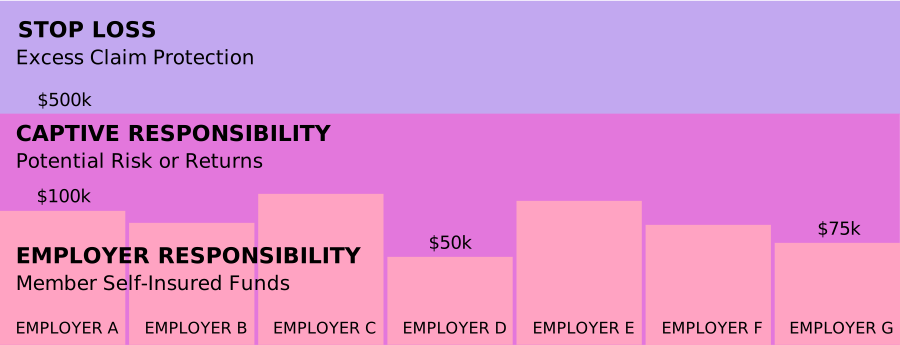
Illustration 1: Funding structure of group captives
Key points about the group captive funding structure:
- Groups retain their own stop loss policies but cede a layer of risk to a captive they own
- The risk within the captive layer is calculated, spread evenly and capped via the stop loss policy to protect the employer's total liability
- Plans will share in the stop loss risk and reinsurance layer
- The shared captive risk layer reduces the amount of traditional insurance group participants purchase while still providing risk pooling. The group captive approach aims to recapture insurance profits and risk loads while still protecting captive participants from catastrophic claims risk
Group captives vs. stop loss
Captives aren’t a universal fit. While they can be a smart self-insurance strategy for some, it's important to consider other alternatives such as stop loss collaborative solutions or carve-in stop loss.
| Group captives | Stop loss collaboratives | Carve-in stop loss | |
|---|---|---|---|
| Improved purchasing power for better rates and terms | ✓ Yes | ✓ Yes | × Limited leverage |
| Structure | × Most complex | ✓ Streamlined | ✓ Most streamlined |
| Built-in analytics and cost containment solutions | ✓ Yes | × No | × No |
| Initial cash outlays (Collaterals) | ✓ Yes | × No | × No |
| Dividends potential | ✓ Yes, but may trigger tax events | ✓ Small dividends through experience refund program | |
| Commitment | Long term | Can be a year-to-year decision | |
For well-managed employers with access to collaborative solutions like our Stop Loss Collaborative (SLC) and Rx Collaborative, the improved purchasing power under a group captive arrangement for shared services can be limited. In evaluating group captive quotes against SLC quotes, we often find that captive financials don’t always compare favorably. It’s important to carefully evaluate all alternatives to select the best risk management approach that best fits your needs.
Maximizing the benefits of captive insurance with stop loss
Choosing between captive and stop loss isn't always an either/or decision; using both can offer an optimal risk management approach. Many groups retain a predictable layer of their cost via captive and reinsure at higher attachment point for catastrophic claims, usually at lower premiums, through an external stop loss policy. This combined structure provides funding stability like traditional stop loss, while allowing more effective self-insurance for expected costs. The figure below shows how captive and stop loss can work together to achieve the optimal risk management approach.
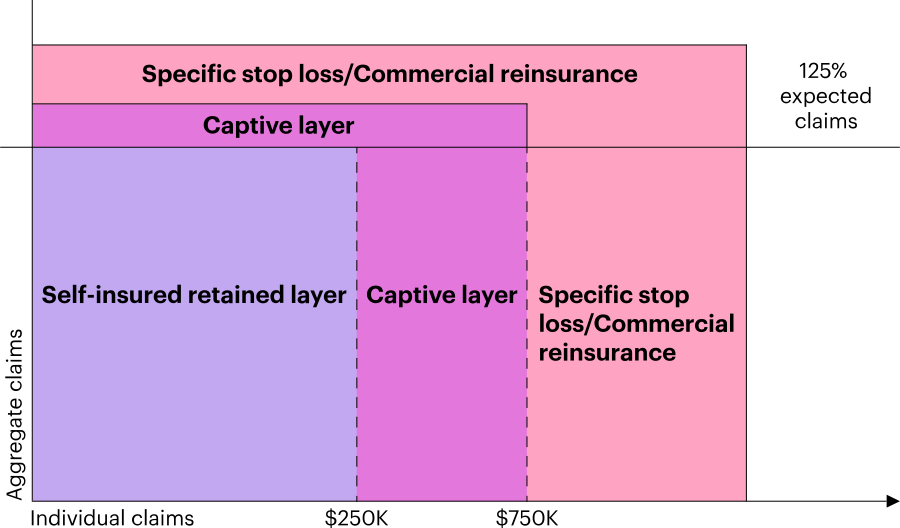
Illustration 2: Funding structure combining captive and stop loss
You need to find the right experts that align with your strategic goals and will benefit your workforce in the long run. Captives are complex and may not be suitable for every situation. Our risk management team has deep expertise about captive areas, like MSL, life and disability and global employee benefits.
In addition to cost shifting, the use of a captive doesn't alter the inherent features or pricing of stop loss risk. If high-cost claims aren't adequately managed, payment will ultimately be required — whether through a captive arrangement, traditional stop loss carriers, or by plan retention. Therefore, addressing cost drivers at their roots remains critical. Self-funded employers should use advanced analytics to project future expenses, identify individuals at elevated risk and implement data-driven strategies for effective cost control and comprehensive risk management.
Authors