


Emerging risks in healthcare continue to reflect a rapidly evolving landscape shaped by technological advancements, workforce challenges and never-ending security threats. The proliferation of artificial intelligence (AI) and digital health technologies introduces risks related to algorithmic bias, misdiagnosis and the reliability of AI-driven tools, especially when these systems are trained on incomplete or skewed data.
Cybersecurity remains a sensitive and critical concern, with healthcare experiencing record-breaking data breaches and ransomware attacks that threaten patient safety and disrupt care delivery. Additionally, the integration of new technologies and third-party vendors can expose vulnerabilities, while the growing threat of counterfeit drugs and substandard medical devices further complicates patient safety.
Workforce shortages, clinician burnout and financial pressures add to the complexity, potentially impacting operational efficiency and the quality of care. As telemedicine, remote monitoring and virtual care expand, new liability and privacy risks emerge, underscoring the need for robust risk management strategies and regulatory oversight to ensure both innovation and patient protection. The following offers a high-level review of those issues and emerging risks.
Emerging risks impacting healthcare
1. Financial pressures
Financial issues continue to be problematic for the healthcare industry. “Many hospitals, especially smaller and rural facilities, are at risk of closure due to financial instability. While larger, for-profit health systems may see improved financial margins, smaller hospitals struggle to remain viable. This financial divide could lead to the closure of more than 700 hospitals, creating challenges for healthcare access in underserved areas. These trends highlight the need for hospitals to be agile, technologically savvy, and financially resilient as they navigate the evolving healthcare landscape in 2025.” (KFF Health News)
2. Labor expenses
Labor costs are driving hospital expenses up, margins down. Labor costs in hospitals typically account for a significant portion of overall expenses. On average, labor costs make up about 50% to 60% of a hospital's total operating expenses. This includes salaries, wages, and benefits for healthcare professionals, administrative staff, and contract labor.
3. Medicare and Medicaid underpayments
Underpayment is the difference between the costs incurred and the reimbursement received for delivering care to patients. Underpayments to hospitals for Medicare and Medicaid reimbursement amounted to more than $100 billion. In 2020, Medicaid underpayments were also significant, with hospitals receiving only 88 cents for every dollar spent on Medicaid patients. While Medicare payment levels hit record lows in 2022, hospitals receiving only 82 cents for every dollar spent on Medicare care.
4. Financial impacts on rural care providers
According to Healthcare Brew, about 768 rural hospitals in the US are at risk of closing, with 315 at “immediate risk” of closing within three years.
Rural hospitals are facing a crisis, driven by a combination of financial instability, low patient volumes and staffing shortages. These hospitals often struggle with inadequate reimbursement rates from insurance providers, including Medicare and Medicaid, making it difficult to cover operational costs. Additionally, lower patient volume in rural areas means less revenue, while fixed costs remain high. Recruiting and retaining healthcare professionals in these regions is another significant challenge, leading to staffing shortages that further strain resources. Limited access to primary and specialized care exacerbates health disparities, and the economic impact of hospital closures can lead to community decline as residents move away due to the lack of healthcare services. These interconnected factors create a complex environment that threatens the viability of rural hospitals.
5. Financial impact on rural labor and delivery services (OB deserts)
Rural hospitals in general and specifically obstetrical units are faced with a continued increase in closures. Between 2010 and 2022, 238 rural hospitals closed obstetrics units, while only 26 opened new ones. This resulted in a decrease from 57% of rural hospitals offering obstetrics care in 2010 to 48% in 2022. By 2022, 52% of rural U.S. hospitals had no maternity wards, compared to 36% of urban hospitals. According to Chartis, Nearly 25% of hospitals that eliminated OB services since 2011 were considered “vulnerable to closure.”
For many facilities, the desire to provide labor and delivery services has been overpowered by the realities of economics and staffing and questions of clinical appropriateness. OB services require skilled, specialized practitioners and nurses and the ability to deliver care around the clock. Additionally, Medicaid, which pays for approximately 51% of rural births each year in the U.S., not only reimburses hospitals less for this service than commercial payers but often reimburses below the cost of care.
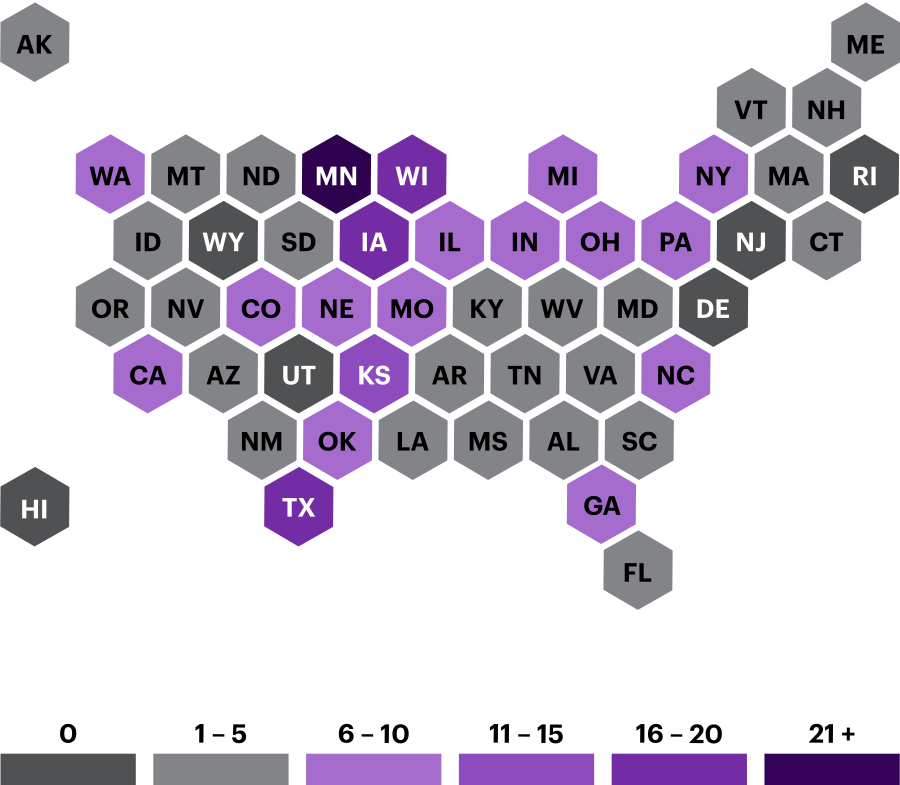
Number of rural hospitals that stopped offering OB services between 2011 and 2021
Source: Chartis
6. Workforce shortages
The ongoing shortage of healthcare professionals, particularly in the revenue cycle and clinical areas, is a critical concern. This shortage not only increases operational costs but also contributes to workforce burnout, making it harder for hospitals to maintain high-quality care. According to the World Health Organization (WHO) report, it was estimated that there will be a shortage of 7.2 million health workers to deliver healthcare services worldwide, and by 2035, the demand for nursing will reach 12.9 million.
7. Aging workforce
Nearly half of all physicians in primary care were over 55 years of age in 2021. So many primary care physicians nearing retirement age are a leading contributor to the primary care physician shortage — which is expected to be between 17,800 and 48,000 physicians by 2034, the AAMC reports.
- “The aging of the U.S. workforce is due in part to the overall aging of the U.S. population. During the two-decade period between 2000 and 2020, the share of employed workers ages 60 and over has doubled among both men and women. Specifically, the percent of all employed men who are in that age range rose from 7.4 to 14.8 percent, while among all employed women it rose from 6.3 to 14.0%. Although most of this increase, in absolute terms, was due to a growing share of the workforce entering their early 60s, the percentage of employed workers in each five-year age group over age 60 either doubled or nearly doubled during this period. The percentage ages 80 and over plateaued in the late-2010s.”
Related content
8. Technological Integration and Interoperability
Hospitals will continue to invest heavily in technology that enables better data sharing and interoperability across different care settings. This is crucial for improving patient outcomes, especially as healthcare shifts toward value-based care models that emphasize coordinated, patient-centered services.
9. Patient-centric and virtual care models
The move toward virtual care, including telemedicine, virtual nursing and remote monitoring, will continue to grow. Hospitals will need to integrate these models with in-person care to meet patient expectations and improve access to services. Integrated Care Models (Next in Healthcare PWC).
10. Medications
Physicians are experiencing a demand for weight-loss programs that offer GLP-1 medications. The cost of such medication management is rising and putting financial pressure on health plans. For example, GLP-1 medications can cost around $1,000 per prescription and for employers, the annual cost per user can be between $8,000 and $10,000. This significant expense is leading health plans to explore various strategies to manage these costs, such as implementing step therapy, requiring prior authorization and promoting a lifestyle change program Good Rx.
11. Population health management
Population health management refers to the process of improving clinical health outcomes of a defined group of individuals through improved care coordination and patient engagement supported by appropriate financial and care models. Partnering between hospitals, health systems and community organizations is essential to supporting community needs. Advanced analytics and predictive modeling will be increasingly important for managing population health. Hospitals that can leverage data to identify high-risk patients and intervene early will be better positioned to improve outcomes and reduce costs.
12. Workplace aggression and violence
Violence against healthcare workers continues to trend in the wrong direction. The aggressors can be patients, families, coworkers or random bad actors; however, patients are the primary aggressors in most situations. The threat of facing injury or death from the very individuals they are trying to help is adding a great deal of unneeded anxiety to an already stressed workforce. With six bills currently sitting in Congress, healthcare workers are pushing for legislation that would set minimum safety standards and would be enforced by federal agencies such as OSHA.
- According to the U.S. Bureau of Labor Statistics, there was an 86% increase in “nonfatal occupational injuries…resulting from intentional injury by another person” experienced by healthcare and social workers between 2011 and 2018. Further, there were three times as many attacks against healthcare workers over the same time period than in all-other industries combined.
Hospitals and other healthcare facilities have had to respond by increasing security, through either employed or contracted professionals. Magnetometers, armed guards and video surveillance can be found in almost every setting. The implementation of these measures is extremely expensive and brings unforeseen risks to hospitals and health systems, including allegations of excessive force, false arrest, or discrimination. Extensive training for all employees, as well as established procedures for code black situations are critical to protect patients and employees and avoid liability.
Listen to the episode of the Vital Signs podcast series, Guiding principles: Mitigating violence in the workplace for more information on various strategies and techniques that employers can implement to create a safer work environment.
13. Property
Most buyers of property insurance know that this market has been particularly difficult for several years, both from a renewal and claims handing perspective. Healthcare institutions, with high-value facilities and equipment and exposure to significant losses from water damage and catastrophic weather events, experienced severe rate increases over multiple renewal cycles.
"The healthcare insurance landscape in 2025 contains a mix of evolving challenges and opportunities as the market softens. Property insurance is seeing rates level off, yet inflation, rising material costs, and natural disasters continue to create hurdles. Carriers are also pulling back from catastrophe-prone areas like Florida and California, further shaping the market."
While the pace of rate increases at renewal has decelerated, the property market remains stubbornly challenging due to a variety of factors. In 2022, there were 18 disaster events in the U.S. with losses exceeding $1 billion: hurricanes, western wildfires, and winter storms/freezes reaching areas like Texas, along with severe flooding in the Midwest to name a few. Recent reinsurance renewals have been very difficult for commercial property insurers, with increased rates and reduced capacity. This inevitably affects insureds, even those that are highly protected and loss-free.
Property insurers are particularly concerned that their insureds’ physical assets (buildings and equipment) are not valued appropriately on their statements of values. If insured organizations have not consistently and methodically trended the value of their largest assets, the insurer may have to pay much more than expected to replace or repair these locations, especially in light of high inflation and supply chain disruptions.
Most insurers are insisting that their insureds are increasing the stated values of their buildings and equipment at renewal by significantly higher factors than in the past. FM Global’s 2023 Building Cost Index, a benchmark for the property insurance industry, indicates an 11.1% increase in “completed building prices” since January of 2022. This is on top of the roughly 18% increase they indicated in 2022 (and continued rate increases being quoted for hospitals and other healthcare institutions). Insureds should be prepared to demonstrate their methodology for calculating these values, or their insurers may seek to cap limits on various locations. Third-party appraisals remain the most accepted method of valuation.
Underwriting standards are more stringent than ever, making compliance and collaboration on property risk control recommendations essential for securing optimal renewal terms. In some cases, insurers may require substantial facultative reinsurance if an insured party fails to comply with risk control measures, even when those measures involve significant capital expenditures. This additional reinsurance cost can lead to a steep increase in the renewal premium or even non-renewal.
Meanwhile, new tariffs are driving up building material costs, a factor insurers are incorporating into their replacement cost valuations.
14. Sexual assault and molestation
Reports of sexual abuse and molestation by healthcare staff against patients and staff against staff have surged in recent years, exposing critical vulnerabilities in hospital systems and patient safety protocols. High-profile cases have brought the issue to light more recently. Systemic issues such as transparent reporting and accountability when allegations surface contribute to the issue. Many assaults go unreported, and when patients do come forward, their claims are too often dismissed or mishandled, further compounding trauma and allowing perpetrators to continue working unchecked.
Our Allegations of Abuse Readiness Program delivers a comprehensive toolkit designed to help all healthcare settings plan for, respond to, and recover from allegations of abuse. This toolkit includes an educational webinar recording, sample checklists, guides and procedure documents.
15. Nuclear verdicts
The number of and value of medical malpractice lawsuits continues to climb dramatically each year. “Nuclear Verdicts,” so called because they can have a devastating impact on the defendant, which may be a provider, hospital or healthcare system, often exceeding $10 million, and sometimes reaching $100 million or more.
Nuclear verdicts can result from various factors, including the severity of the alleged injury, the perceived negligence of the provider and the emotional impact of the case on the jury. They are also impacting the medical malpractice insurance industry, who continue to pay limit losses for claims that were previously defendable.
Whereas in previous years, there were jurisdictions deemed “safe” from mega-verdicts, the changing litigation landscape in many jurisdictions opens the possibility of a nuclear verdict for many more defendants. Without tort reform measures, this will be a pervasive issue.
Several WTW webinars and thought leadership articles are available, addressing key industry topics such as funded litigation challenges, early resolution in claims management and strategies for setting reserves. Additional discussions provide insight into the daily processes involved in clinical investigations and examine the complexities of compensable events. These recorded sessions offer valuable perspectives for professionals looking to deepen their understanding of these areas.
16. Cyber threats
Hospitals and health systems continue to be prime targets for cyber threat actors. According to WTW’s proprietary Cyber Claims Data, in the first half of 2022, 25% of all notifications related to cyber threats were made by healthcare organizations, more than any other industry. Over half of these events came from ransomware and data breaches. Given the volume of and potential value of patient data hospitals can retain, it is no surprise that these entities are prime targets for hackers. Additionally, healthcare entities are very reliant on third-party vendors for support, all of which can be avenues for intrusion.
The cyber insurance market saw significant relief in the second half of 2022, after over two years of eye-watering increases. These carriers are; however, requiring that their insureds have robust controls in place to prevent intrusions. Without such controls such as multi-factor authorization (MFA), firewalls and encryption, most carriers will decline to even look at a risk. The good news is that hospitals have made substantial investments in their IT infrastructure, which should lead to fewer claims in this arena.
In 2023, carriers continue to focus on emerging cyber risks such as chat bots (Meta pixel), consumer data protection legislation at the state and national level, and the potential for widespread / catastrophic events and the potential for breaches from vendors and other third-party providers. Lastly, the use of artificial intelligence technology, while not a true cyber risk, will bring a host of new exposures to this sector.
Take a look back at the 2024 cyber liability market and our perspective on what to expect in 2025 in this article.
Conclusion
As hospitals navigate the landscape of 2025, they will face a complex array of risks that demand strategic agility and innovation. Financial instability, particularly among smaller and rural hospitals, presents a critical challenge, threatening the accessibility of healthcare for vulnerable populations. Continued shortages of healthcare team members further create operational pressures.
Technological integration and the shift toward connected health ecosystems offer opportunities to enhance patient care but also introduce risks associated with interoperability and the need for substantial investment. The move toward patient-centric and virtual care models is reshaping the delivery of healthcare, requiring hospitals to adapt quickly to meet evolving patient expectations and regulatory demands.
To thrive in this environment, health systems must prioritize financial resilience, workforce sustainability and technological innovation. By embracing these changes, hospitals can not only mitigate risks but also position themselves to deliver higher-quality, more efficient care in an increasingly complex healthcare landscape.
The WTW team of healthcare industry experts are ready to provide answers to questions, data and analytics by line of coverage, and guidance based on our experience with healthcare clients across the country.
Author

AI and the Effects on Healthcare
Explore current and future uses of AI in healthcare

Evolving Landscape of Medication Management
Addressing current topics related to medication issues