Market update
2025 was a strong year for financial asset performance broadly. Markets delivered positive returns across most major asset classes over the year, continuing the risk-on trend from late 2024.
Equities led the way on performance, with international equities outperforming U.S. equities and emerging markets significantly outperforming developed markets. Emerging markets, particularly in China, Taiwan and Korea, benefited from an AI. capex boom and wider AI.-related developments.
U.S. fixed income also performed well, supported by the resumption of the Fed’s rate-cutting cycle and a weakening U.S. Dollar. Globally, fixed income sectors benefited from global rate cuts and narrowing credit spreads, with sovereign and credit markets delivering mid-single-digit gains.
Within commodities markets, gold and silver were standout assets. They posted exceptional returns (~66% and ~147%, respectively) and drove overall sector performance, with oil and industrial metals also contributing positively.
The primary drivers of asset movements during the year were: U.S. and global trade policy (e.g., tariffs), AI.-related growth, currency dynamics and continued investor interest in diversification beyond U.S. assets. Investor sentiment remained broadly constructive while volatility was relatively subdued despite constantly evolving trade and tariff shocks beginning in April 2025. Looking ahead, we expect fiscal stimulus, AI., and wider technological innovations, and geopolitics to remain influential themes in 2026 and beyond.
Something encouraging: positive macroeconomic developments in the U.S.
The delayed Q3 U.S. GDP report was released in December, showing an annualized growth rate of 4.3%; significantly outpacing the consensus estimate of 3.0%. This was driven by strong consumer spending and domestic investment.
Additionally, initial unemployment claims data suggest a steady domestic labor market in recent weeks, falling from ~224,000 in mid-December to 199,000 at the end of the year. This marks the lowest level since late November, and implies layoffs have remained relatively low despite softer-than-ideal hiring. Continuing claims also fell, and the unemployment rate eased from 4.5% to 4.4%.
Something cautionary: December FOMC minutes highlight disagreements among voting members
The FOMC minutes from the December meeting highlighted differing views among voting members on the future path of monetary policy. While some supported further rate cuts if inflation continues to ease, others signaled reluctance for additional rate cuts in the short-term future. Reduced expectations of Fed rate cuts in 2026 contributed to the rising bond yields we’ve seen. December’s CPI print showed inflation to be steady at 2.7% y-o-y, remaining above the Fed’s target level and bolstering the argument against further rate cuts.
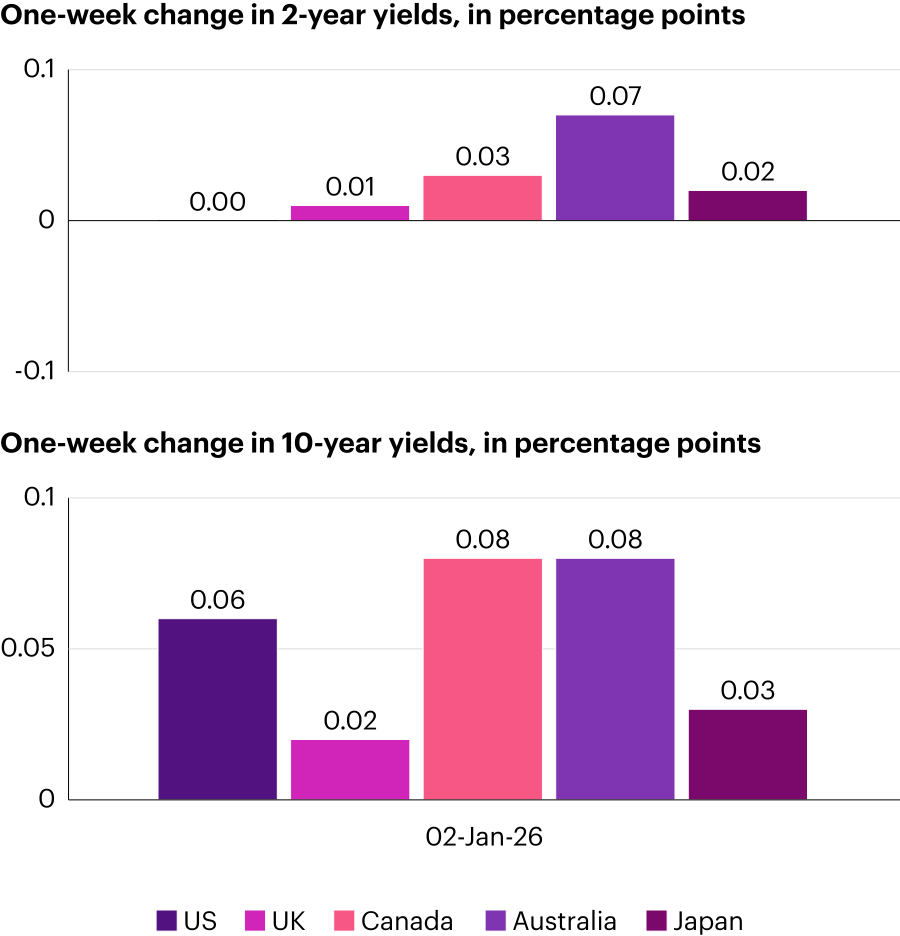
Bar charts showing 1-week change in 2-year and 10-year yields as of 1/2/2026 for the US, UK, Canada, Australia, and Japan
Source: WTW, FactSet Date: 12/31/2025
Something curious
Following the implementation of widespread tariffs in April of last year, the U.S. dollar experienced significant weakening relative to other currencies. The tariffs were intended to bolster domestic manufacturing and reduce trade deficits, but they fueled market uncertainty and reduced foreign investment inflows. Contrary to widespread expectations that these protectionist measures would drive inflation and support a stronger dollar through tighter monetary policy, the USD declined 12% (against a global basket of major currencies) in the first six months of the year – the worst start in over 50 years.
The dollar’s weakness was exacerbated by global investors’ hesitation toward the administration’s policy agenda, leading to a broader erosion of foreign investment. It resulted in the relative underperformance of U.S. equities vs. international stocks, with the MSCI EAFE index outperforming the S&P 500 by 13.3% during 2025, despite strong absolute performance for both.
WTW news
We are thrilled to share the exciting news of WTW's strategic acquisition of Flowstone Partners, a move that significantly enhances our wealth offerings and underscores our commitment to delivering innovative solutions for our clients.
Thank you for taking the time to read this edition of What To Watch, brought to you by Jon Pliner, global chief investment officer; Jim Neill, senior director; Nikki Latta, senior associate; Garrett Goniea, senior associate; Madison Rugh, analyst and the WTW Investments team.
Disclaimer
The information included in this email is intended for general educational purposes only and should not be relied upon without further review with your WTW consultant. The information included in this email is not based on the particular investment situation or requirements of any specific trust, plan, fiduciary, plan participant or beneficiary, endowment, or any other fund; any examples or illustrations used in this email are hypothetical. As such, this email should not be relied upon for investment or other financial decisions, and no such decisions should be taken on the basis of its contents without seeking specific advice. WTW does not intend for anything in this email to constitute “investment advice” within the meaning of 29 C.F.R. § 2510.3-21 to any employee benefit plan subject to the Employee Retirement Income Security Act and/or section 4975 of the Internal Revenue Code.
WTW is not a law, accounting or tax firm and this email should not be construed as the provision of legal, accounting or tax services or advice. Some of the information included in this email might involve the application of law; accordingly, we strongly recommend that audience members consult with their legal counsel and other professional advisors as appropriate to ensure that they are properly advised concerning such matters. Additionally, material developments may occur subsequent to this email rendering it incomplete and inaccurate. WTW assumes no obligation to advise you of any such developments or to update the email to reflect such developments. In preparing this material we have relied upon data supplied to us by third parties. While reasonable care has been taken to gauge the reliability of this data, we provide no guarantee as to the accuracy or completeness of this data and WTW and its affiliates and their respective directors, officers and employees accept no responsibility and will not be liable for any errors or misrepresentations in the data made by any third party.
This document may not be reproduced or distributed to any other party, whether in whole or in part, without WTW’s prior written consent, except to the extent required by law. WTW and its affiliates and their respective directors, officers and employees accept no responsibility and will not be liable for any consequences howsoever arising from any use of or reliance on the contents of this document including any opinions expressed herein.
Views expressed by other WTW consultants or affiliates may differ from the information presented herein. Actual recommendations, investments or investment decisions made by WTW and its affiliates, whether for its own account or on behalf of others, may not necessarily reflect the views expressed herein. Investment decisions should always be made based on an investor’s specific financial needs. Past investment performance is not indicative of future performance.