

Published for the first time in January 2026, the U.S. Terrorism Insurance Index provides a comprehensive analysis of price change within the domestic insurance market.
The index aggregates renewal data across our U.S. terrorism and sabotage portfolio for policies with inception dates between October 1, 2025, and December 31, 2025. Renewed contracts are compared against expiring structures, adjusting for changes in layering, attachment points, and order size. This study focuses exclusively on so-called 'standalone' terrorism and sabotage insurance policies with entirely U.S. exposures. Any programs offering international coverage were removed from the dataset.
Source: The U.S. Terrorism Insurance Index
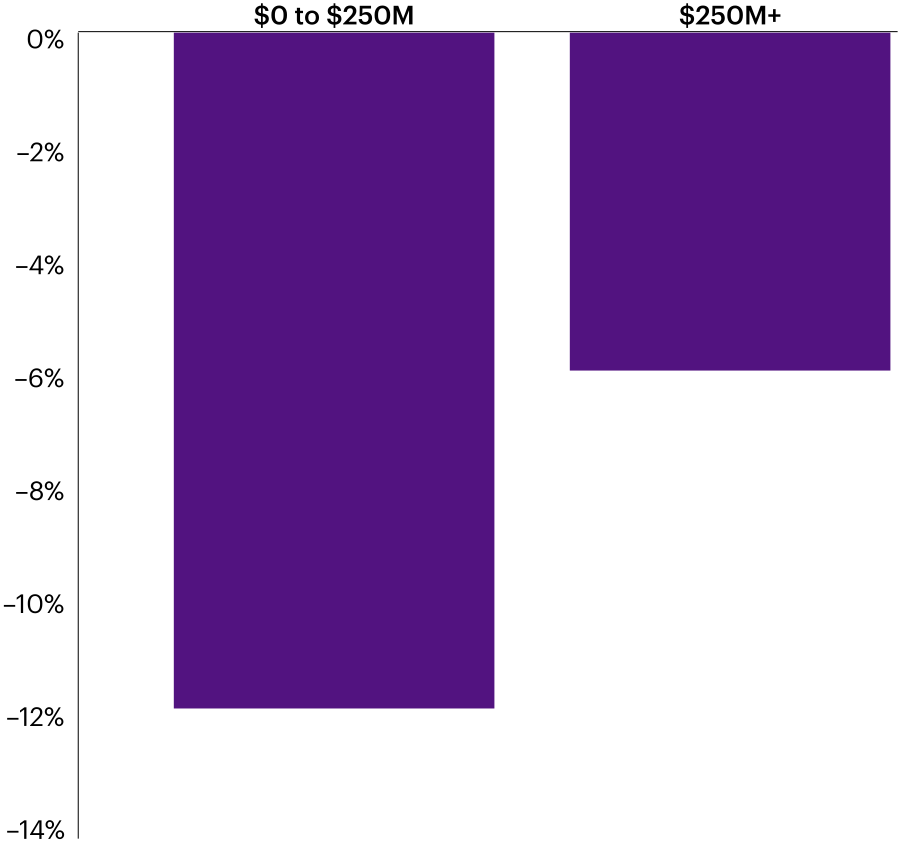
Our findings show that on average terrorism policyholders experienced a price decrease of 10.4% in Q4 2025. Price changes varied significantly by program size: those programs with limits below $250M saw rate reductions twice as large as those on higher limit policies. Overall, over 90% of policyholders saw price decreases which in several cases exceeded 40% of the expiring terms. Of the few price increases imposed by carriers, none were higher than 15%.
As highlighted in the forthcoming Crisis Management Annual Review, capacity for terrorism and sabotage insurance in the North American market has grown over the past 12 months. Policyholders now have access to more than $2 billion in limit from insurers with a specialty underwriting presence in the U.S., with carriers actively pursuing growth and competing aggressively for market share. However, with many large programs already priced near insurers’ minimum rate thresholds, underwriters may have limited scope to reduce pricing further. As mid-sized and smaller policies begin to approach these same rate floors, the opportunity for additional discounts in this space naturally narrows.
“Q4’s double‑digit softening signals a striking reversal from the hard market of recent years. It presents an ideal opportunity for policyholders to channel savings into coverage upgrades that strengthen resilience against the threats most relevant today,” advises Peter Bransden, Head of Willis Crisis Management, North America.
Current market conditions create a timely opportunity for policyholders to reassess the structure of their terrorism and sabotage programs. With pricing at or near historic lows, organizations may wish to explore several strategic options:
Today’s security environment calls for a risk management approach that integrates financial protection with operational readiness. Contact the Willis Crisis Management team to ensure that you capitalize on favorable market conditions and strengthen organizational resilience.
WTW hopes you found the general information provided here informative and helpful. The information contained herein is not intended to constitute legal or other professional advice and should not be relied upon in lieu of consultation with your own legal advisors. In the event you would like more information regarding your insurance coverage, please do not hesitate to reach out to us. In North America, WTW offers insurance products through licensed entities, including Willis Towers Watson Northeast, Inc. (in the United States) and Willis Canada Inc. (in Canada).


