

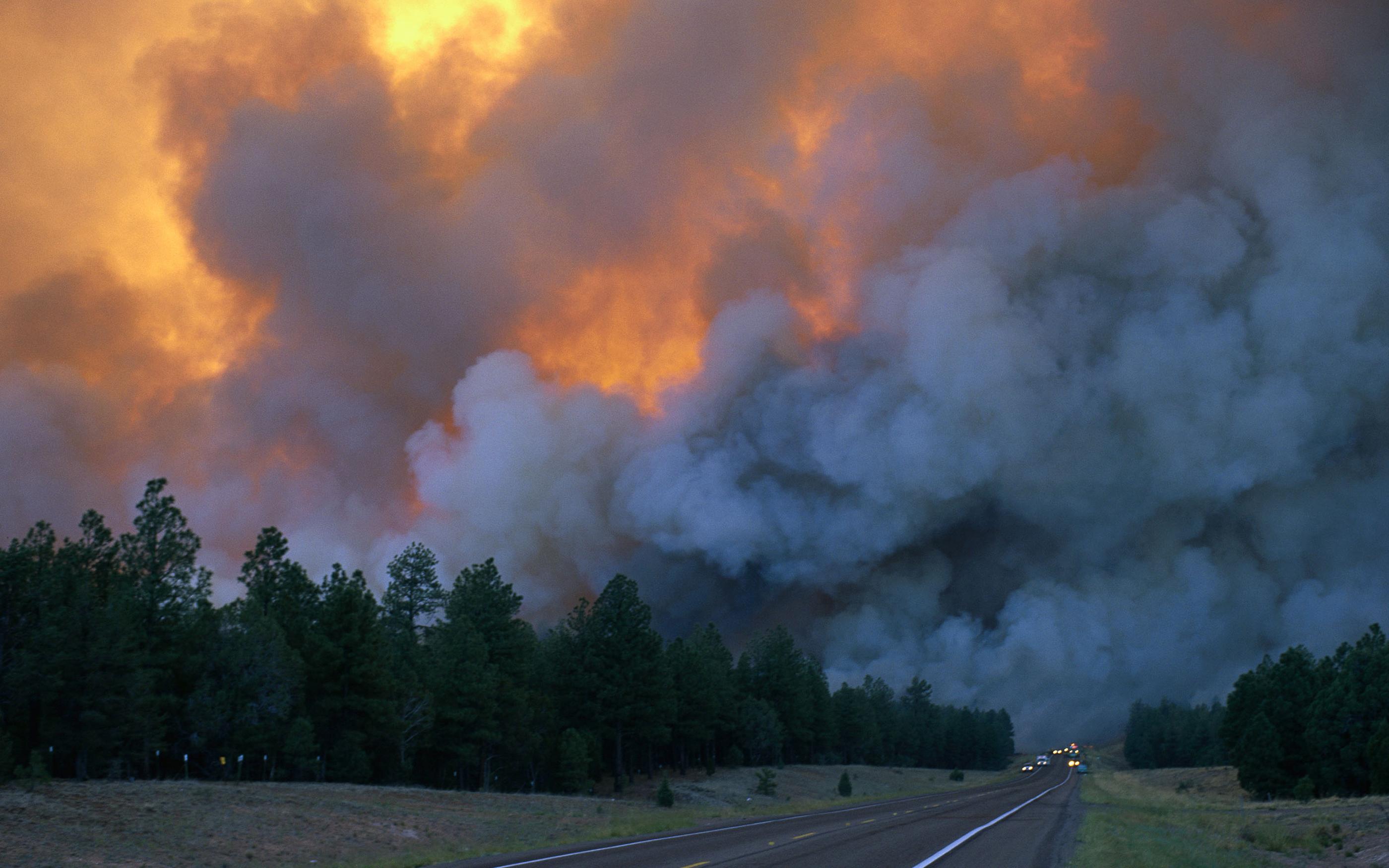
Property risk control guidelines
Wildfires are not completely preventable; however, the following property risk control guidelines will help you prepare your property in the event of a wildfire:
Fire
In regions susceptible to wildland fires, construct all buildings and important structures of noncombustible material when possible. Noncombustible construction materials include stone, brick, concrete and any other material that can provide a minimum one hour fire resistance rating. If possible, floors should rest directly on the ground. If they need to be raised, protect the support columns to provide a two hour fire resistance.
Allow no openings or penetrations where burning embers can enter the building. Attachments to the building, such as fences, sheds, awnings, platforms, etc. should be noncombustible as well.
- Roofs should be made of a continuous, noncombustible material (such as metal sheeting, slate or concrete) that fits tightly and with no gaps.
- Protect underfloor spaces to prevent sparks and embers from entering the building. If using screens to protect these areas, do not use those made of aluminum or glass fiber. Also, screen mesh should not exceed nominal 1/8 inch in size. Any screens used to protect chimney openings should be made of corrosion proof material and not exceed nominal 1/8 inch size.
- Provide fire rated shutters having a minimum one hour fire resistance rating to protect windows and frames. Use self closing, one hour fire rated doors for all external doors. Door windows should be properly fire rated as well. Seal spaces under the doors to stop embers from traveling underneath the door.
- Skylights should be made of wired glass and permanently installed.
- Rainwater gutters on the roof may collect leaves and debris. If in place, they should be made of noncombustible material or properly covered to prevent fire spread.
FM Global Data Sheet 9 19 titled Wildland Fire, states that wildland fire exposure can be mitigated by creating a reduced fuel zone defensible space around the site and developing a building envelope that provides a total ember, flame, and heat barrier.
- Plant ‘fire resistant’ shrubs and trees that can help contain rather than fuel a fire. For example, hardwood trees are less flammable than pine, evergreen, eucalyptus or fir trees.
- Consider the installation of automatic fire sprinkler system(s) to protect combustible walls and outdoor structures.
Smoke
Smoke from wildfires can travel hundreds of miles depending on wind direction, temperature, humidity and other factors. Clothing, food, pharmaceutical, semiconductor and electronics businesses have smoke sensitive manufacturing processes and/or raw materials and finished products that are highly susceptible to smoke damage. These businesses may be at risk even if they are not located in an area directly exposed to wildfires.
With this in mind, FM Global Data Sheet 9-19 suggests that you fit it air-intake openings on air-handling systems with automatic dampers actuated by smoke detectors and provide a means to deactivate smoke evacuation systems in advance of a wildland fire, to prevent such a system from activating and drawing smoke filled make up air into the building. If you have central air conditioning, install a clean air filter. Use an air filter with a MERV rating as high as your air conditioning system can handle (check the user’s manual or contact the manufacturer or installer). Air filters with a MERV rating of 13 or higher can remove more than 85 percent of fine particulate matter (PM2.5). Filters may need to be replaced more frequently during fire season.
Use a CARB certified air cleaner which can greatly improve indoor air quality and reduce impacts from smoke. Do not run swamp coolers or whole house fans. Central air conditioners and window air conditioners should be operated in “recirculate” mode. [1]
Flooding and Mudslides [2]
People living directly downslope of mountainous wildfire areas should be aware that, in addition to debris flows, landslides, and rockfall; there is another, potential deadly hazard—mud flooding at and near the mouths of channels that drain burned over, ash laden slopes. Studies have shown that, in the first year following a wildfire, the volume of sediment and water runoff in streams greatly increases. People living, working, or traveling near such streams could be killed or injured by flooding that contains enormous amounts of debris and mud washed off burned hillsides.
“When an environment is damaged from wildfire, even relatively short high intensity rainstorms may trigger debris flows. They are typically generated when hillside soil, rock, or landslide material becomes rapidly saturated with water and flows into a channel. Intense rainfall, rapid snowmelt, or high levels of groundwater flowing through fractured bedrock can trigger these events. Debris flows and floods may also occur when precipitation on slopes causes extensive hillside erosion and channel scour.
Debris flows (commonly called mud slides, mud flows or debris avalanches) are shallow landslides, saturated with water, that travel rapidly downslope as muddy slurries. The flowing mud carries rocks, trees, and other debris as it pours down the slopes. Sudden debris flows gushing down rain sodden slopes and gullies are widely recognized as a hazard to human life and property. Most debris flows are localized in small gullies, threatening only those buildings in their direct path. But the bare slopes left denuded by wildfires are especially susceptible to more catastrophic debris flows during and immediately after rainstorms. Debris flows often occur without warning in areas where they have never been seen before.”
Pre-emergency planning
The importance of having written and well-practiced procedures established before an emergency cannot be overstated. Typically, people respond more rapidly and effectively when planning has occurred. Good pre-emergency plans outline what preparations are needed, ensures a clear understanding of specific tasks and assignments, describes what training and resources are required and identifies steps that must be taken to respond to the emergency. If you live or work in an area particularly prone to wildfires, you need to prepare for a rapid evacuation!
To assist in the development or revision of your emergency response plan, we suggest you contact the authority having jurisdiction (AHJ) or governmental agency responsible for your area/region to evaluate your mitigation and action plans. This applies to areas in the United States and in countries such as Greece, Indonesia and Australia. Multi-organizational coordination in the planning process helps eliminate duplication of effort, provides a thorough understanding of goals and objectives, and allows all users of the plan to achieve the desired results.
Pre-emergency planning should include business continuity plans for the restoration and resumption of critical operations. For example, aboveground utilities (e.g., electric transmission and distribution lines) could have delay issues if lost, and you may need standby generators either on site or available after the area has been cleared for re-entry.
Effective property preventive maintenance already includes many key components of a wildfire property pre-emergency response plan.
Prepare for wildfires by utilizing the following guidelines [3]
- You may have to evacuate quickly due to a wildfire. Learn your evacuation routes, practice with household, pets and identify where you will go.
- Follow the instructions from local authorities. They will provide the latest recommendations based on the threat to your community and appropriate safety measures.
- Use fire-resistant materials to build, renovate or make repairs.
- Find an outdoor water source with a hose that can reach any area of your property.
- Create a fire-resistant zone that is free of leaves, debris or flammable materials for at least 30 feet from your home.
- Designate a room that can be closed off from outside air. Close all doors and windows. Set up a portable air cleaner to keep indoor pollution levels low when smoky conditions exist.
- Do not return home until authorities say it is safe to do so.
- Avoid hot ash, charred trees, smoldering debris and live embers. The ground may contain heat pockets that can burn you or spark another fire.
- When cleaning, wear protective clothing including a long sleeved shirt, long pants, work gloves and sturdy thick soled shoes during clean-up efforts.
- Use a respirator to limit your exposure, and wet debris to minimize breathing dust particles. People with asthma, COPD and/or other lung conditions should take precautions in areas with poor air quality, as it can worsen symptoms.
- Document property damage with photographs. Conduct an inventory and contact your insurance company for assistance.
Send text messages or use social media to reach out to family and friends. Phone systems are often busy following a disaster. Make calls only in emergencies.
In the event of moderate to heavy rainfall, do not wait for a flash flood warning to take steps to protect life and property. Thunderstorms that develop over the burned area may begin to produce flash flooding and debris mud flows before a warning can be issued. If you are in an area vulnerable to flooding and debris flows, plan in advance and move away from the area. There may be very little time to react once the storms and rain start. Before and during rains, watch for cracks in snow, ice soil or rock; bulges at the bottom of slopes; holes or bare spots on hillsides; leaning trees or increased muddiness of streams. Any sudden increase in runoff or debris is cause for concern.
Conclusion
According to the National Interagency Fire Center. A total of 4,318 structures were reported destroyed by wildfires in 2023, including 3,060 residences, 1,228 minor structures, and 51 commercial/mixed residential structures. In 2023, the majority of structures were destroyed in the Northern California Geographic Area, including the 2,308 residences destroyed in Maui.
Federal Emergency Management Agency
National Interagency Fire Center
National Fire Protection Association
- NFPA 1143, Standard for Wildland Fire Management
- NFPA 1144, Standard for Reducing Structure Ignition Hazards from Wildland Fire
Disclaimer
WTW hopes you found the general information provided here informative and helpful. The information contained herein is not intended to constitute legal or other professional advice and should not be relied upon in lieu of consultation with your own legal advisors. In the event you would like more information regarding your insurance coverage, please do not hesitate to reach out to us. In North America, WTW offers insurance products through licensed entities, including Willis Towers Watson Northeast, Inc. (in the United States) and Willis Canada Inc. (in Canada).
Contact
Download
| Title | File Type | File Size |
|---|---|---|
| Technical advisory bulletin wildfiresPDF | .1MB |