
As the ownership structure of college athletics programs changes, “stakeholder capitalism” will evolve. Collegiate sports will experience a seismic shift in its financial landscape as private equity (PE) firms poise themselves to enter the fray. More specifically, PE investment in college sports could impact the compensation of university leaders, coaches and student athletes.
The influx of PE capital combined with performance-based incentive plan models brought by PE investments may lead to higher compensation for the highest performing athletic directors and coaches. However, justifying this increased financial backing also may put more pressure on athletic departments to deliver exceptional financial results in addition to athletic wins.
In short, a heightened focus on financial and operational performance metrics as well as achieving competitive success is coming. And this will extend beyond just satisfying traditional stakeholders to include boards of regents/trustees, alumni, boosters and everyday fans.
The evolving world of college athletics is full of nuance. Through this series of articles, we share insights that hopefully will spark meaningful discussions. We invite collaboration and welcome other viewpoints on this topic to enrich our understanding of this topic.
Where PE interest in college sports began
Free athlete labor was upended after the approval of the October 2024 settlement of NCAA v. House. The practicalities of the decision require schools with top athletic departments to add approximately $20 million per year to their compensation budgets, earmarked to pay student athletes. When schools with tight budgets and high operating expenses must find these extra funds – while maintaining their primary mission of education – revenue generation finds its way to the forefront of leaders’ minds.
For some universities, PE may bridge this revenue gap by providing additional capital to help attract, motivate and retain their best athletic talent (including administrators, coaches and student athletes). The funding also could help improve teams’ physical assets, including stadiums, arenas, training facilities and equipment without inhibiting delivery of educational value to the entire student body.
In its simplest form, PE invests in private, for-profit companies to increase their value and crystalize a profit upon exit, all while collecting management fees. Reflecting on this incentive model, the question becomes whether typical PE success metrics – internal rate of return (IRR) and multiple on invested capital (MOIC) hurdles – could or should be incorporated into athletic departments' pay programs. Additional considerations include whether:
- Universities can effectively incorporate a truly capitalist entity within their corporate structures and student value propositions
- Carried interest based on IRR and MOIC hurdles can sit alongside most universities’ tax-exempt or quasi-governmental organization regulatory requirements, including but not limited to the prohibition of private inurement
- Athletic department pay based on department valuation is viable, as neither will ever be “for sale”
Partnering with for-profits isn’t new to universities and athletic departments
Universities often form strategic partnerships with for-profit corporations to promote research and economic development through the commercialization of intellectual capital. These collaborations can significantly enhance a university’s reputation, financial stability and student value proposition, provided that the university’s mission and values align with those of its corporate partners. Such relationships with for-profit entities can lead to mutually beneficial outcomes, fostering innovation and growth within both academic and corporate sectors.
The most contentious financial issues often arise when a university employee makes a discovery or innovation during one of these collaborations. Specifically, who gets to participate in those future financial gains from the work?
Generally, universities want all discoveries by their employees to be owned by the university itself rather than the discoverer. However, individual agreements can allow for those employees to participate in future gains through royalties, licensing and/or equity stakes in businesses that form from their innovation.
If a university employee is a recognized leader in a technical field in which companies and universities would both benefit financially from that researcher’s discoveries, that employee is more likely to successfully negotiate for a share of future gains from their innovations when the partnership is formed.
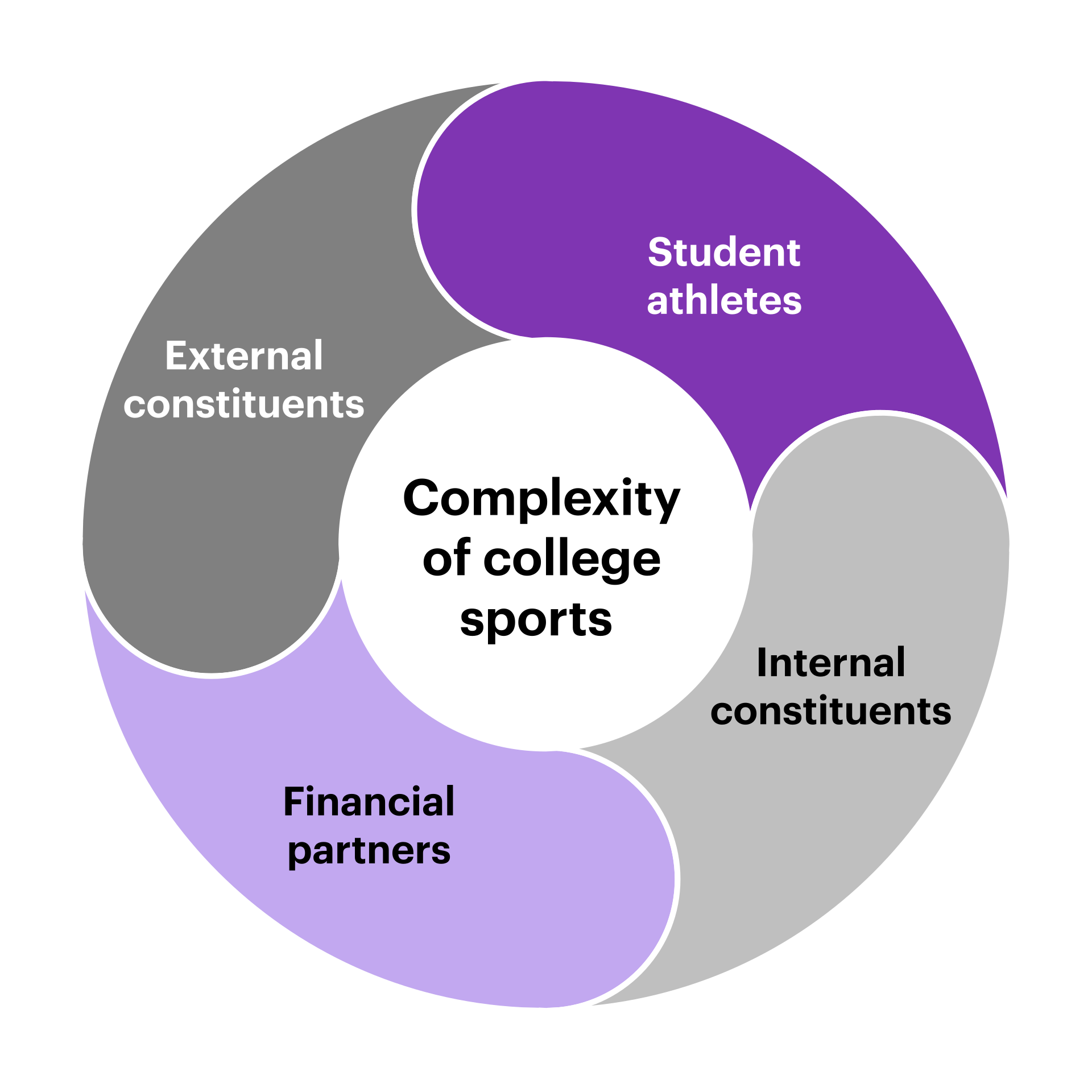
In the emerging field of PE investment in college sports, the commercialization of athletes and their teams presents new opportunities and challenges that are in many ways like these research-driven university/industry partnerships. The benefits of these investments may extend to various stakeholders in college sports (Figure 1).