
At the start of every year, Canadian companies and their boards of directors finalize and approve the vesting outcomes of performance share unit (PSU) awards. This also is a good time to assess whether the PSU plan’s performance metrics still align with company strategy.
We examined the two most common types of PSU metrics: relative total shareholder return (TSR) and financial metrics that focus on probability (e.g., return on capital, earnings per share (EPS) growth). We also explore key factors for optimizing plan design.
Our findings are based on PSU awards granted in 2021 by Canada’s largest companies (S&P/TSX 60) that were paid out in 2024. For context, these PSUs were designed and awarded only 10 to 12 months into the pandemic. This was a time of great uncertainty and volatility, making setting performance targets more difficult. Given ongoing political and economic uncertainty, we see parallels to the challenge of setting performance targets today.
PSU vesting outcomes
In 2024, PSU performance vesting outcomes were 115% of target at median, excluding share price appreciation and dividends. At the 25th percentile, outcomes were 86% of target and 149% at the 75th percentile (Figure 1).
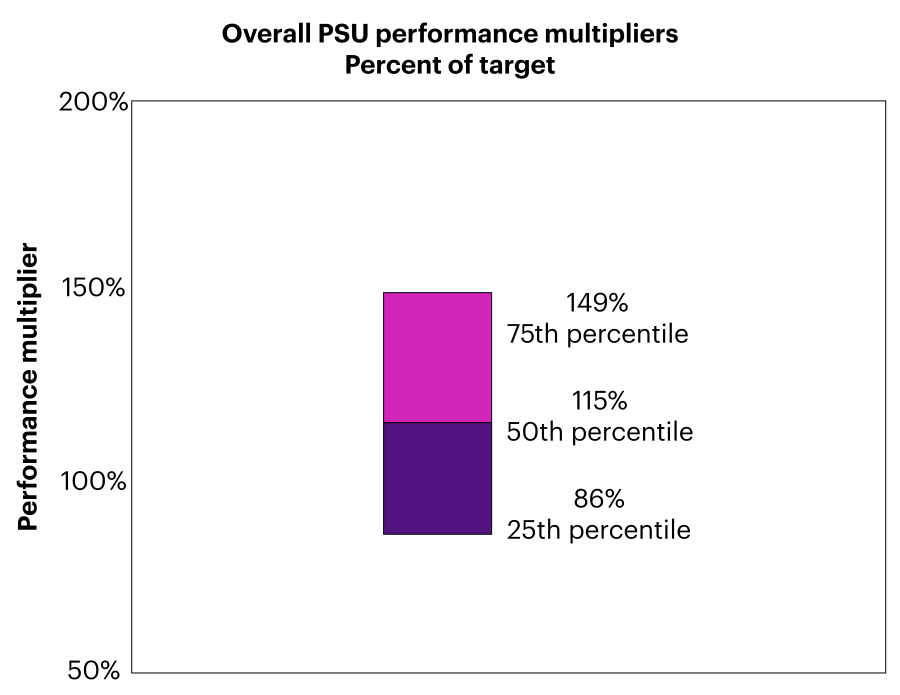
Figure 1. Bar chart reflecting overall PSU performance multipliers as a percent of target. Among organizations, 149% were at the 75th percentile, 115% were at the 50th percentile and 86% were at the 25th percentile.
Importantly, because most PSUs include two to three metrics, these overall results conceal the different contributions of individual performance metrics. We illustrate below the different impacts of the two most common PSU metrics, relative TSR and financial performance, which varied materially by metric type (Figure 2).
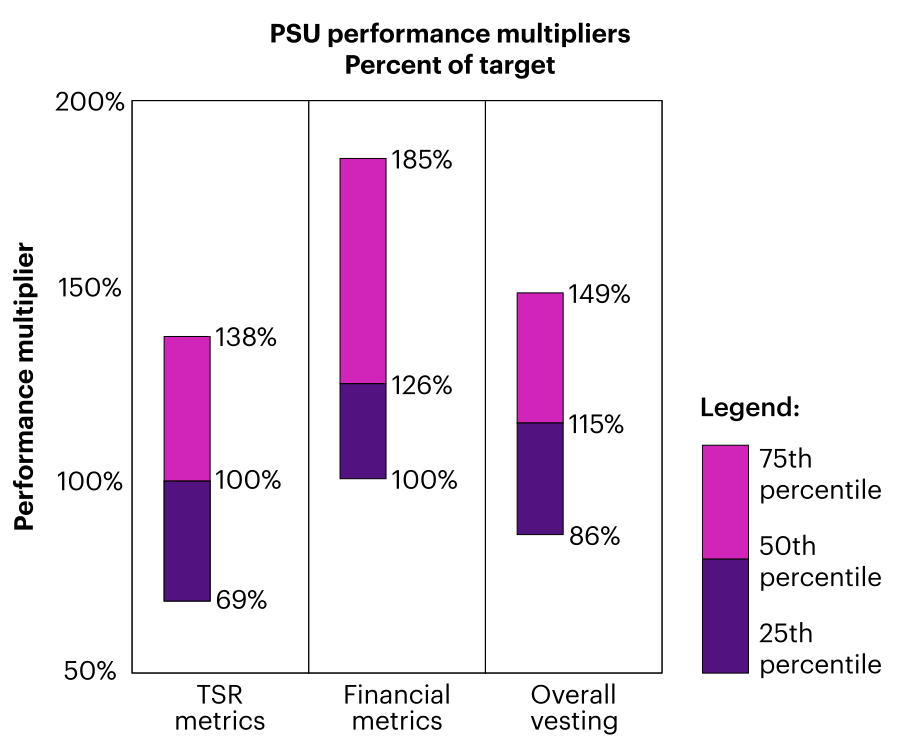
Figure 2. Bar chart reflecting overall PSU performance multipliers as a percent of target across TSR metrics, financial metrics and overall vesting. For TSR metrics, 138% were at the 75th percentile, 100% were at the 50th percentile and 69% were at the 25th percentile. For financial metrics, 185% were at the 75th percentile, 126% were at the 50th percentile and 100% were at the 25th percentile. For overall vesting, 149% were at the 75th percentile, 115% were at the 50th percentile and 86% were at the 25th percentile.
Relative TSR
Used by 56% of S&P/TSX 60 companies with a PSU plan in 2021, the median performance vesting multiplier was 100% of target, with an equal number of results above and below target. We consider this normal distribution to be an advantage of relative TSR, as it:
- Offers a standardized approach to target setting
- Mitigates concerns of targets being set without sufficient stretch
However, a potential downside of relative TSR is whether a company’s performance peers are relevant comparators and sufficiently robust. This has become increasingly challenging because of the continued market consolidation in several Canadian industries (e.g., energy and mining).
Financial metrics
Used by 52% of S&P/TSX companies with a PSU plan in 2021, these metrics had a median performance vesting multiplier of 126% of target. Performance skewed above significantly above target, driven by three key contributors:
- A more rapid than expected economic rebound
- The challenge of setting appropriate financial performance targets in late 2020 and early 2021
- Boards adopting relatively conservative approaches on financial and goal setting amid the uncertainty of the pandemic
Takeaways for PSU plan design
PSUs are the largest component of executive compensation, so are subject to ongoing design evaluation. Our findings in combination with our client work support several considerations for your PSU plan design:
- Diversity but don’t de-risk: Using two to three metrics can offer a solid view of long-term company performance and clarify key objectives for management that align with shareholder interests. Adding more than three metrics can reduce the program’s focus and may unintentionally de-risk it if the metrics offset each other in most performance scenarios.
- Broader relative TSR peer groups: A peer group for relative TSR should represent a company’s market for investor capital. Forming robust peer groups has become challenging as industries become increasingly consolidated. Expanding peer group composition to include broader North American market indices (e.g., as individual peers or as a separate relative TSR component) align with the shift toward passive investing.
- Uncertain times support wider financial metric performance targets: Like the uncertainty when granting 2021 PSUs, the unpredictable political and economic environment on both sides of the North American border support wider performance targets to ensure incentives remain effective. Setting targets annually, rather than for a three-year period, is another way to ensure targets remain relevant.
Enhancing the link between executive pay and performance requires a strategic and objective approach to make defensible decisions. Ensuring you have the right advice to get the job done is paramount.
Authors