

This episode explores how ANI evaluates advanced nuclear technologies, siting decisions, and new ownership models, highlighting why early insurer engagement and strong safety culture are essential for project approval and long term success.
Transcript for this episode
SETH BREITMAIER: A common misconception is that we only insure big reactor facilities. And while ANI was originally created to provide financial protection for those reactors, we've been insuring a wide range of operations since the 1950s. That includes fuel fabrication, waste processing, service facilities, and even the early tests, research demonstration, and pilot reactors of the 1950s, 60s, and 70s.
SPEAKER: Nuclear is back, not as a theory, but with new technologies and new risk frameworks as the energy industry looks to close the gap between demand for electrification and clean, dependable supply. This is The Atomic Effect.
KATE FOWLER: Thank you for joining our episode today. I'm your host, Kate Fowler, Global Head of Nuclear at Willis Towers Watson, helping developers, operators, and investors navigate and mitigate the long-term risk of fusion and nuclear energy life cycles. New nuclear projects don't fail or succeed on technology alone. They hinge on confidence-- confidence in design, confidence in siting, confidence in how risk is understood, mitigated, and ultimately ensured. Today's conversation goes deep into a part of nuclear development that rarely makes headlines, but quietly determines whether projects move forward.
Engineering due diligence from the insurer's perspective. Today, we're joined by Seth Breitmaier, Director of Specialty Risk Engineering at American Nuclear Insurers, or ANI. Seth has been with ANI 15 years in various engineering and fire protection roles supporting the existing operational nuclear fleet globally, including nuclear materials facilities and new technologies. Seth sits at the crossroads of design review, property protection, and insurability. Today, we'll unpack how ANI evaluates new nuclear technologies and what engineers look for early in the project life cycle, and where developers most often underestimate risk. Thank you for joining me today, Seth.
SETH BREITMAIER: Thanks for having me, Kate.
KATE FOWLER: All right. So we'll get right into it. So first off, for anyone who doesn't know ANI, would you mind giving us an introduction to the organization and how it fits into the nuclear industry?
SETH BREITMAIER: Yeah, that's a great place to start. So, as you said, ANI, or American Nuclear Insurers, we were founded in 1956 when Congress passed the Price-Anderson Act, which at the time was a landmark law requiring commercial nuclear reactors licensed by the NRC to maintain financial protection for the public in the event of a nuclear accident. To meet this need and to support the emerging nuclear industry, insurers came together to pool resources and underwrite the nuclear risk. That collaboration is now what we call ANI.
So in short, we've been here from really the very beginning of the industry. For nearly seven decades, ANI has provided nuclear liability insurance to the vast majority of the commercial nuclear industry, offering a cost-effective way to stay compliant and manage their nuclear risk.
KATE FOWLER: Can you elaborate a little bit on what your policies cover exactly and what parts of the industry you're insuring today?
SETH BREITMAIER: Yeah, that's a great question. So when it comes to nuclear risk, ANI covers far more than just large power reactors. In fact, we take on the risk starting at uranium enrichment and carry it all the way through to waste burial, and pretty much everything in between. A common misconception is that we only insure big reactor facilities. And while ANI was originally created to provide financial protection for those reactors, we've been insuring a wide range of operations since the 1950s.
That includes fuel fabrication, waste processing, service facilities, and even the early tests, research demonstration, and pilot reactors of the 1950s, 60s, and 70s. So before we dive into maybe the specific policies, it's probably important to note that ANI exists primarily to meet the requirements of the Price-Anderson Act. So when you look at our liability coverages, they're really built around that purpose. And to accomplish that, we provide four main policies. The first is the Facility Form Policy. And this is ANI's core coverage for nuclear facilities.
It protects against offsite third-party bodily injury and property damage caused by the nuclear energy hazard at the site. And an important feature of that is that it serves as the facility's primary radiological shipping policy. And each site gets up to $500 million in primary protection under that policy. So the next is the Master Worker Policy. This policy provides coverages for operators of nuclear facilities insured by ANI for radiation tort claims of bodily injury to contract workers caused by the nuclear energy hazard, and this basically not employees of the insured.
But unlike the Facility Form Foreign Policy, which is a per-site policy with a single lifetime aggregate limit of $500 million, the Master Worker Policy has a single industry wide aggregate limit of $500 million. Then we have the Secondary Financial Protection Policy. This is required for certain reactors under the Price-Anderson Act. ANI administers this policy when claims exceed $500 million of the primary limit. This policy is funded by participating reactors and currently totals just over $16 billion in coverage.
And then finally, there's the Supplier and Transporter Policy, or what we refer to as S&T. This policy is for companies that deliver goods and provide services to nuclear facilities. It covers third-party bodily injury and property damage, and environmental cleanup related to nuclear hazards during transport or work. Think of this as a gap policy, and it really fills exposures outside of the facility form of the master worker coverage.
KATE FOWLER All right. So ANI is very accustomed to the legacy industry. Specifically, what are your efforts now as they relate to new nuclear?
SETH BREITMAIER: Yeah, so that's a great question. ANI has really been focused on new nuclear for several years now. About three years ago, we launched the new reactor technology working group, or as we like to call it, both commonly and comically, the "nertwig." But this group is responsible for reviewing and evaluating all new business at ANI. It brings together experts from the underwriting, engineering, and legal and claims department to make sure we're ready for what's next. And our priorities are really pretty straightforward.
We review ANI's products to ensure they fit the emerging technologies. We research and assess the new nuclear markets. We assess other avenues for financial protection. And then lastly, we educate newcomers to the industry about ANI's products and services. And that's really a point to stress here that education is a top priority for ANI. Our products and services have unique features that deliver real value. The existing fleet of reactors knows that well. But many new technology companies are still learning what sets ANI apart and why it matters.
So earlier engagement with these companies gives us a chance to highlight the experience of our team, especially in the areas that add real value like loss control, claims management, and emergency response. And we also like to point out some key features of our policies. For example, the continuous until cancel feature. Our policies remain in effect from the original inception date until either the insurer or ANI cancels them. And this ensures ANI would respond to an occurrence going back to the inception of the policy. We also like to point out the omnibus coverage feature.
Our policies provide broad nuclear liability coverage at insured sites, including for contractors working there. Instead of issuing separate policies for each exposure or each party, everything is consolidated under one policy. This approach channels liability through ANI, both simplifying coverages and the claims handling process. And then lastly, we like to talk about the Industry Credit Rating Plan, or what we call the ICRP. And under the ICRP, approximately 75% of each insured's liability premium is set aside in a reserve fund, which can only be used to pay losses or loss expenses.
These reserve premiums are held for 10 years, after which a portion is returned to the policyholder based upon, really, the industry-wide historic loss experience. So the net effect of this program is that it's significantly reduced cost of ANI insurance for the industry over many years.
KATE FOWLER And I will say, I have done some historical benchmarking of nuclear pools around the world, and I think dollar-for-dollar, particularly with the ICRP return, ANI probably has the cheapest nuclear liability insurance of any pool in the world, which, I know you guys specifically focus on the US, but I think it's a unique feature to something that we have here and is a really great thing to share with potential new insurance. So before we get into some finer details of the due diligence process, just broadly, can you tell me what is your due diligence process and why is this so important to pre-underwriting for new nuclear technologies?
SETH BREITMAIER: The thing to understand about ANI's due diligence process is that it takes time, and for a good reason. The process itself is a thorough, multidisciplinary review by our engineering, underwriting, and claims teams covering both technical and non-technical aspects. And another thing to know about it is that it can really take time, and that depends on three factors-- the location of the facility, especially if a site was previously used for radiological or industrial activities. The complexity and awareness of the technology.
No surprise that some of this technology is complex and unfamiliar to ANI, and that can make the review take a little longer. And then lastly, the availability of resources. So ANI is a small team with limited resources, and so it can take time to get through a due diligence review. But probably the most important point to understand about our due diligence process is that ANI does not rubber-stamp new policies. Working through that due diligence takes time, so it's critical to engage with us early to make sure we can meet the industry's insurance deadlines.
KATE FOWLER So let's start breaking down some of those pieces you mentioned there. You specifically talked about siting. So are there siting parameters that can actually shift the risk scoring of what you guys are looking at?
SETH BREITMAIER: Yeah. So why don't we take that in two pieces? Let's talk about the underwriting perspective, and then maybe talk about the engineering perspective next. So from the underwriting perspective, siting matters really both for basic qualifications and for rating. So what do we mean there? If a facility is located somewhere that doesn't meet our requirements, then we may not be able to offer coverage. Now, for all facility form policies, population density is factored into the rating process. So siting does matter from the underwriting perspective.
Now, on the technical side, our engineering team takes a broader view. We look at climate and natural hazards, not part of again underwriting, but to assess overall risk. That means evaluating potential hazards and how the facility plans to manage or mitigate them. If hazards aren't properly addressed, it could impact insurability, or it could impact the site's engineering rating factor, which then could have an impact ultimately on premium.
KATE FOWLER So when new developers or existing companies are looking at siting locations, do you guys take a different look at things versus if they're greenfield, brownfield, existing reactor site that's going to add an SMR? I guess, how does that process differ based upon where it's actually going to be located?
SETH BREITMAIER: That is a big consideration for us. So it's probably best to start with the brownfield side of this. So there's two big considerations when we're considering a brownfield site. And really, that's the residual radiological material that's left at the site, and does it fit into ANI's risk appetite? And the second is really the availability of technical data. So is there enough information to clearly separate previous radiological hazards from new operations? So it's important to note that ANI insurance does not cover radiological or industrial hazards from prior operations before the policy begins.
That's why our due diligence process is so thorough. We work closely with insurers to make sure we have a clear understanding of the current site conditions, so including the types and levels of contamination, the potential new contamination risks from the new operations that are going on the site, and then, really importantly, is the ability to distinguish the impacts from new operations versus prior ones. And for that reason, reviewing a brownfield site can take months, can take time.
And in contrast, greenfield sites or existing operating sites that we're already familiar with, those can move through that process really much faster.
KATE FOWLER When you're talking about brownfield sites where there's been something there before, there's been a lot talk about SMRs going to legacy coal sites, repurposing that location for new technologies. And obviously, there's a lot of work going on with the Department of Energy and their pilot program. So government-leased property. Are there any factors that raised concerns with ANI with some of those kind of paths forward for new projects?
SETH BREITMAIER: Yeah. That's another great question. So let's start with talking about siting on government property. So it's not an automatic deal breaker for ANI, but there are some extra considerations if someone's planning to build on a government site. Before we get into those, it's also important to note that we do not ensure government operations. This includes reactors licensed or authorized to operate through the DOE or DOD. But now, to maybe narrow it down a little bit, let's focus on commercial operations on leased government land.
So the biggest consideration there for ANI, especially after the last question, is whether the property was previously used for radiological or hazardous operations. Beyond that, we also look at things like the proximity to nearby operations. Particularly those, again, involving a radiological or industrial hazard. For ANI too, we also spend time understanding the terms of the lease and any special requirements contained within the lease. As an example, what indemnification agreements might exist, or what obligations for the potential insured there are for controlling and remediating the radiological hazards they put on the site.
And now we can probably shift to coal, but locating a nuclear plant at a legacy coal site definitely has some big advantages for the potential operators, especially the existence of a previous electrical and grid infrastructure, so that's all great. From ANI's perspective, though, we need to understand how the previous operations were shut down and whether all environmental hazards were properly remediated. This is another reminder, again, of why earlier engagement with ANI is so important, especially for any site that isn't a true greenfield, to give us the time we need to work through the siting concerns and make sure everything is in place for insurance approval.
KATE FOWLER And you did mention that you guys don't cover Department of Energy assets, so which, of course, with the pilot program going on, I'm sure anyone who's listening who may be within that process may perk their ears up a little bit. So the reason you don't do that is because of Price-Anderson under the governmental side. Correct? It's not that there is an issue you guys have with it, but there's financial protection in place for those assets already outside of ANI. Correct?
SETH BREITMAIER: That's correct.
KATE FOWLER Awesome. So, final question on siting and location. Of course, we're looking at nuclear for all kinds of different things, and data centers is the topic that comes up most frequently. Do you guys look at data center co-location, and how does that fall into the review process and insurability of nuclear assets that may have co-located data centers or some other type of asset that's an offtaker of the energy?
SETH BREITMAIER: So the short answer is, yes, we definitely look at that. And yes, it can have an impact. So co-locating a non-nuclear asset typically doesn't affect our technical review process, but it can influence the overall rating and premium. And the big question as well is why, right? And it's because having a very high-value asset close to the insured facility changes the potential loss scenario, thereby impacting the risk profile, and that can get factored into the rating.
KATE FOWLER All right. Let's go ahead and shift now to the technology and design side of things. When you're looking at a new nuclear technology, what are the primary technical risks that you're looking at and evaluating when you're looking at that new technology?
SETH BREITMAIER: OK. Yeah, that's a great question. So when ANI conducts a due diligence or even inspects an existing facility, we really focus on two main goals. And that's reducing the likelihood of a claim and ensuring we can defend a claim if it arises. So both of these claims avoidance and claims defense have technical and non-technical components. Now, from the facility form perspective, we look closely at certain primary technical risk factors within certain programs that really tie closely to our policy.
And an example of those would be the effluent or environmental monitoring program at the site, the groundwater monitoring program, fire protection program, the ability and how the site's managing waste on the site, especially radiological waste, the radiological shipping and transportation program. And then, of course, something really important to ANI is the emergency response capabilities of the facility. And now shifting over to the Master Worker Policy, our focus primarily is on the on-site radiation protection program, which includes subprograms like the bioassay program, contamination control, external dosimetry, worker training.
I mean, there's many others, but when you look at the two policies we're inspecting to, which is the Facility Form and the Master Worker Policy, that's probably a good slice of what we're looking at from the technical side.
KATE FOWLER: All right. So are there unique liability exposures for the different types of fuels that are going to be used? So we're very accustomed to the uranium dioxide fuels, but now everyone's talking about HALEU, and TRISO, and molten salt. Do these non-water-based coolants and some of these non-- I guess-- standard or typical fuels impact the assessment? And are there additional reviews that you guys have to go through for things that are unique to what you're covering today?
SETH BREITMAIER: Yeah. That's a really good question. The short answer is yes. New technologies do bring unique liability exposures, but from our perspective, that doesn't mean they're necessarily riskier. They're just new. And keep in mind that ANI has been insuring reactors and fuel cycle facilities since the 1950s. In fact, some of the technologies being revisited for new reactors are ones we've insured before. Of course, there's a lot of truly new technology out there, and even some of the recycled technology has evolved in significant ways.
We've been doing our best to track the developments in fuel design, fuel handling, reactivity control, and primary coolant, but there's plenty of work to do. What I can say is that while the exposures are unique, our approach to loss control won't change. It will continue to be grounded in proven standards, standards that we've consistently maintained over many years, standards that have really been successful at minimizing claims and helping us defend against meritless ones.
KATE FOWLER: All right. Let's go ahead and shift a little bit to ownership and the organizational piece of things. We're seeing a lot of new entrants into the nuclear space, not just on the technology side, but operators. We're going to see a lot of people operating nuclear plants who historically have not done so. So with the new wave of technologies and some of the new ownership structures and operational models, what is ANI's viewpoint on those new models and new entrants into the space on the operational side of the business?
SETH BREITMAIER: Yeah. This is a great topic. There is definitely some new and exciting ownership and operational models emerging. Interestingly enough, this kind of feels a little bit like what we saw in the nuclear decommissioning markets a little more than a decade ago. Lots of variety and innovation in how projects are structured. What's important to note from that period is that ANI worked with the industry as it experimented with different ownership and operational models. Through it all, we did make one thing clear, which is that ANI would always hold the name insured, which is the licensee responsible for managing the nuclear liability risk.
If Gap's concerns or issues were found at the site, it was up to the name insured to address them. Now, fast forward to today, we're going to take the same careful approach as we did then in evaluating new ownership and operational models. We're currently still working through what impact, if any, they may have on our policies. One thing I can say for certain is that the site's ownership or operational model won't change how we apply our loss control standards at the site.
And probably one more point worth emphasizing is that since the 1970s, the existing fleet of reactors has built and maintained a strong nuclear safety culture. That commitment to safety is part of what makes today's opportunities possible. So regardless of who owns or operates these new facilities, ANI expect them to embrace that same safety culture because it's what is going to ensure a successful and safe future for the whole industry.
KATE FOWLER: So as you're looking at that operational readiness, are there any benchmarks that you're using for new entrants into the nuclear operations space?
SETH BREITMAIER: Yes, absolutely. So first, when we're looking at readiness, the first thing we do is we look at the NRC's efforts as they evaluate operational readiness. We'll follow along with the NRC. And then, when available, we'll also review the work of other well-recognized third-party evaluators. For example, we'll look at the work from the Institute of Nuclear Power Operations, who's played a real vital role in ensuring high-quality operations. From ANI's perspective, we also make sure our insureds either meet or exceed the requirements tied to having a policy with us.
One important point to note, it's not unusual for ANI to issue a policy before all programs are fully developed. Operational readiness for us isn't a single inspection. It's the result of years of efforts as we review a site's progress in building out its programs on the path to operations. So that's another reason why we want to engage early, so that we have time to get through the review of the programs, and the design, and all the things that ANI ultimately cares about as part of ensuring a facility.
KATE FOWLER: So you mentioned the regulatory tie-in, the NRC tie-in. So I wanted to talk about some of those impacts. Obviously, there's different licensing strategies out there now. There's Part 50, Part 52. We've got the DOE licensing process with the pilot programs. Do those licensing strategies affect the risk profile from ANI's viewpoint for those different projects?
SETH BREITMAIER: Yeah. So, as we previously discussed, we don't provide policies for facilities that are going to operate under DOE or DOD authority or approval, but for those licensing through Part 50 or Part 52, the short answer is really no. The licensing pathway doesn't change ANI's view of the technology or the overall risk profile. What it does affect is when a policy may be needed. So each pathway has its own requirements for the timing of insurance and when financial protection is required. Probably a quick thing to note here is that the DOE is planning to authorize operations of 11 new pilot projects.
And ANI understands that some of those pilot projects may eventually seek an NRC license for commercial operation, so that's something that ANI is currently following pretty closely to determine what that handoff is going to look like and how and if we can insure those facilities when they do roll over to commercial operations.
KATE FOWLER: So for those going through the traditional Part 50 or Part 52 licensing, at what point in the design or licensing process with the NRC is most critical for those new developers and those new projects to actually start engaging with ANI?
SETH BREITMAIER: That's a great question, and one that we get all the time. So from the Part 50 perspective, which is really the original step-by-step licensing process for nuclear reactors, under this approach, the licensee gets their construction permit first, and then later gets a separate operating license. It's really during construction that ANI usually and typically provides a $1 million standby Facility Form Policy to the site, which shows the NRC that the licensee has financial protection in place before the operating license is issued. Part 52, on the other hand, streamlines things with a combined license.
And this is a single license covering both the construction and operation. Before the NRC issues the combined license, the applicant must already have and maintain $1 million in financial protection to demonstrate they can meet financial requirements. So typically, they would be approaching us for a policy before they get their combined license. And maybe just for context here, to date, the only reactors built in are currently operating under Part 52 are Vogtel's Unit 3 and Unit 4. And in their case, their site already had maximum financial protection in place from the start, so they were fully covered right out of the gate.
KATE FOWLER: All right. So I'm going to go ahead to my final question here for you. And there's a lot of information you guys have, and I know we've probably barely just scratched the surface here, but really overall, what is the best advice you can give to those looking to deploy new nuclear technologies?
SETH BREITMAIER: The best advice I can give here is that to remember that ANI is a small team, and there's a lot of exciting activity right now in the industry, which is great, but ANI never wants to be the reason why a project gets delayed. As I said, when we started, the timing for review depends on really three things-- the site radiological conditions, the complexity and awareness of the technology and design, and the availability of ANI staff. And the first two factors there are really fixed.
So I know I've probably beaten this point to death at this point, but it's worth repeating, the single easiest and most effective way to make sure obtaining a new ANI policy goes smoothly is to start the process early and engage with the right people. And that probably leads me to my last point. It's been our experience that having a qualified, experienced broker, like yourself, involved early can make a big difference. And that's not just about the timing. An experienced broker does help with timing, but there's a lot to get through the process, and an experienced broker will understand that and can really be helpful as you work through that.
KATE FOWLER: So one of my biggest takeaways from today is that insurability isn't a box you check at the end. It's something you design toward from day one. From site selection and reactor design to operational assumptions and safety philosophy, this insurer-led engineering due diligence plays a critical role in shaping nuclear projects as they ultimately move to construction. Just wanted to give a big thank you, Seth, to pulling back the curtain on how ANI engineers are assessing new nuclear risk, and for joining us on the podcast today.
SETH BREITMAIER: Well, thanks for having me, Kate. This was so cool and so fun. And I really appreciate being here today.
KATE FOWLER: And thank you to all of our listeners for joining us today on The Atomic Effect. We'll see you on the next episode.
SPEAKER: Thank you for joining us for this WTW Podcast featuring the latest perspectives on the intersection of people, capital, and risk. For more information, visit the insights section of wtwco.com. This podcast is for general discussion and/or information only, is not intended to be relied upon, and action based on or in connection with anything contained herein should not be taken without first obtaining specific advice from a suitably qualified professional.
Podcast host
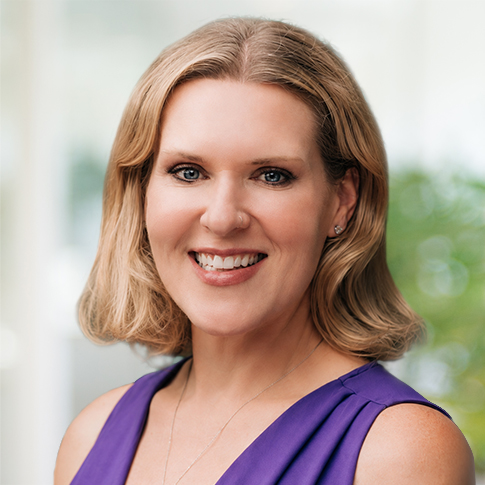
Kate Fowler
Global Head of Nuclear, Willis Global Construction Specialty
Kate is the Global Head of Nuclear, based in Charlotte, NC, USA, as part of the Global Construction team. She brings 16 years of commercial nuclear industry experience to Willis including underwriting, client management and nuclear engineering within the power and insurance industry. Previously, she held the global nuclear leader role at Marsh, served the US Nuclear industry for nine years as a property loss control engineer and senior nuclear underwriter at the US Nuclear Mutual, Nuclear Electric Insurance Limited (NEIL), and as a fire protection and safe shutdown engineer at a nuclear power facility in Nebraska.
In her role with our current nuclear team, Kate is instrumental in fostering connectivity and delivering innovative solutions for our nuclear-focused clients within Willis' Global Construction and Natural Resources Specialty businesses, further enhancing our support for clients.
Kate Fowler
Global Head of Nuclear, Willis Global Construction Specialty
Kate is the Global Head of Nuclear, based in Charlotte, NC, USA, as part of the Global Construction team. She brings 16 years of commercial nuclear industry experience to Willis including underwriting, client management and nuclear engineering within the power and insurance industry. Previously, she held the global nuclear leader role at Marsh, served the US Nuclear industry for nine years as a property loss control engineer and senior nuclear underwriter at the US Nuclear Mutual, Nuclear Electric Insurance Limited (NEIL), and as a fire protection and safe shutdown engineer at a nuclear power facility in Nebraska.
In her role with our current nuclear team, Kate is instrumental in fostering connectivity and delivering innovative solutions for our nuclear-focused clients within Willis' Global Construction and Natural Resources Specialty businesses, further enhancing our support for clients.
Podcast guest
Seth Breitmaier
Director, Specialty Risk Engineering
Seth Breitmaier
Director, Specialty Risk Engineering