

Federal policy is reshaping U.S. nuclear energy. Benton Arnett explains bipartisan support, permitting reform, financing tools, and the ADVANCE Act driving deployment, reducing barriers, and building the foundation for rapid clean energy expansion.
Transcript for this episode
BENTON ARNETT: Whether you're on the Democratic side of the aisle and you're looking-- really prioritizing carbon-free sources of energy, trying to decarbonize energy systems, or you're maybe more on the Republican side and really just wanting to achieve that energy dominance and have that really reliable backbone for which we can build a lot of this economic growth on, nuclear serves both of those purposes really well.
SPEAKER: Nuclear is back not as a theory, but with new technologies and new risk frameworks as the energy industry looks to close the gap between demand for electrification and clean, dependable supply. This is The Atomic Effect.
KATE FOWLER: Thank you for joining our episode today. I'm your host, Kate Fowler, global head of Nuclear at Willis Towers Watson, helping developers, operators, and investors navigate and mitigate the long-term risk of fusion and nuclear energy lifecycles. With electrification and energy demand increasing, the US is facing a once-in-a-generation question-- how do we scale clean, reliable baseload power fast enough to meet what's coming?
Nuclear is being highlighted as the technology to answer that question. And federal policy is playing a defining role in how, where, and how fast that happens. Today on The Atomic Effect, I'm joined by Benton Arnett to help us unpack the federal playbook for nuclear expansion, from how nuclear has risen on the national priority list to the policies shaping new project development and what legislation, like the ADVANCE Act, means for growth, certainty, and speed.
Benton is a senior director of markets and policy at the Nuclear Energy Institute, or NEI. In this role, he covers issues relating to federal and state energy policy, nuclear energy capital formation, and industrial nuclear applications. Welcome to the podcast, Benton.
BENTON ARNETT: Thanks for having me, Kate. It's great to be here. And I'm looking forward to our discussion.
KATE FOWLER: All right. So we'll kick things off here. We started to see some growing support of the nuclear industry with the Inflation Reduction Act in 2022. And it seems like it's just continued to grow over the last few years. Why has nuclear re-emerged as a federal priority now?
BENTON ARNETT: I think there's a lot of different ways to take that question. But I actually want to maybe back up a little bit because I think one of the major trends that we've seen recently is that energy has become such a big federal priority, full stop. And I think when we look at the kind of energy that we really need in this country, it's firm, reliable power, always on, available to meet those 24-hour demands that we increasingly see coming onto the grid. And nuclear is just second to none with-- compared to other energy sources when it comes to delivering that kind of energy.
And so whether you're on the Democratic side of the aisle and you're looking-- really prioritizing carbon-free sources of energy, trying to decarbonize energy systems, or you're maybe more on the Republican side and really just wanting to achieve that energy dominance and have that really reliable backbone for which we can build a lot of this economic growth on, nuclear serves both of those purposes really well. And so we've seen nuclear emerge as this-- one of only maybe a few bipartisan issues here in Washington, DC. And that's been a really exciting development. And as a result of that, we've seen a lot of federal legislation and administration policies that have really created a lot of this resurgence.
KATE FOWLER: So at a high level, what defines the federal playbook right now for nuclear in support of that growing need for energy availability?
BENTON ARNETT: I think there's a few pieces. And some of it's evolving. But I think if we look to a couple years ago, we saw the Inflation Reduction Act come through. And that was the first time that we really saw nuclear energy put on parity with other carbon-free sources of electricity.
So we saw the tax credits, the Production and Investment Tax Credits, come through for new nuclear. We saw a new tax credit introduced to help preserve our existing fleet and make sure that that can continue to provide the reliable baseload power that it has for the last 50 years. And so having those credits created a lot of certainty and a lot of optimism in the industry.
As we worked through the end of the Biden administration and the beginning of the Trump administration, we had the One Big Beautiful Bill come along. And so that OB3 made some changes to some of those credits. But we saw nuclear still be preserved. And so nuclear is still eligible for that Production and Investment Tax Credit for new. The existing fleet still receives their Production Tax Credit out of that bill. And that was really just a recognition that this is such a critical asset for the country.
And so we're seeing those kinds of incentives move forward to spur new growth. We also saw a lot of funding go into what was the Loan Programs Office, and now the Energy Dominance Financing Office. When you're thinking about a large capital investment like a nuclear project, having that low-cost financing is going to be a really key part of all of this.
And then we've also seen a lot of efforts to streamline regulation and remove red tape from deploying these reactors. And we saw the ADVANCE Act come through, which I know we'll probably talk about a bit later. But we've also seen a lot of administrative actions, like executive orders and other directives, that are really making this kind of change, both at the Nuclear Regulatory Commission, and also at the Department of Energy, that are going to help reduce some of those barriers to entry and those costs associated with really building out this industry going forward.
KATE FOWLER: So you mentioned ADVANCE Act and removing barriers. What does the ADVANCE Act actually change, in practical terms, for nuclear deployment? And what does that mean for NRC engagements and timelines to deployment, because we've historically seen those be longer than what most people would reasonably want them to be, particularly with the urgency that we have right now for nuclear?
BENTON ARNETT: I think one of the big importances of the ADVANCE Act is actually just the message that it sent. So it certainly had a number of directives from Congress to streamline regulatory timelines, commit to those timelines, reduce the amount of review time for some of these. A lot of our concerns with some of those processes revolved around redundant requests. So once something's been reviewed, we should be able to not have to rehash that every time you come in for a licensing decision.
So the ADVANCE Act made some directives around those kinds of things. But I think more importantly, it gets down to the culture, which is if all you did was pass a bill and say, we want you to stick to firmer timelines, well, that just might mean that you end up getting to "no" faster. And that's not really what we want. We want a regulator that we can engage with and walk through some of these new technologies and make sure that they're up to speed with how they work and that we're using risk-informed regulatory decision-making.
And so having the ADVANCE Act go through in such a bipartisan way was a big signal to the NRC and to the broader nuclear community that there is leadership support for this and that we want this to be a better environment for nuclear regulation. And so that really kicked off a lot of the other actions that we've seen since then.
So I mentioned executive orders earlier. And those executive orders have directed a lot of change. We're also seeing a lot more collaboration between the NRC and DOE now. So the Department of Energy has a program where they're using some of their own authority to license some demonstration facilities or some test facilities. And that is also informing a lot of that NRC rulemaking.
And so I think the ADVANCE Act really kicked off a lot of this just collaboration that we didn't see before. And it's really been the building block on which we're seeing a lot of the actions that are being taken today. And so I think we're going to get to a really good spot on this. We're hearing some great things out of the NRC as far as improvements to their timelines. And I think interaction with the agency has been very smooth. And so I'm excited to see what comes out this year and coming forward-- but looks to be on the up.
KATE FOWLER: When you talked about the NRC and some of the things they're doing to expedite some of the activities, I think one of the other big sticky points, which continues to be a topic of discussion just about everywhere I go-- and probably, you're hearing it, too-- is cost overrun of projects simply because we don't have a lot of experience in building new nuclear here in the country. And the experience that we do have-- there were significant cost overruns and schedule overruns. Is the federal government doing anything with policy to address the overrun risk or backstop overrun risk or anything to address that big concern that a lot of developers have?
BENTON ARNETT: We certainly are hearing a lot of interest in what additional policy tools are needed to break this bottleneck we're seeing right now or bridge this chasm of investment to get these first handful of plants built. And one of the big pieces there is, what are driving those costs?
And I think when you think about the nuclear industry, it's easy to think about the fact that we're producing about a fifth of the US electricity right now. But we're doing that on the backbone of reactors that were built 50 years ago. And so we, at one point in time, ramped up this industry, and then we just stopped. And that created a lot of atrophy in the system.
And so if you need to go order supply components or supplies for your new nuclear build, a lot of the times, those suppliers may have to retool equipment. They may have to make investments into new factories, or at the very least, they have to retrain their employees on what they're building now. And so that comes with a lot of upstart costs.
You also have a lot of atrophied workforce as far as experience in building these reactors. These are large mega-projects. And so having that experience and that knowledge really goes a long way. And that's something that we have to rebuild.
And so you mentioned some of the cost overruns. I think a lot of folks look at Vogtle 3 and 4 in Georgia. And those are two AP1000 units that Southern Company is incredibly happy to have online right now. I think it's benefiting the country, providing firm, reliable power. But they did experience some cost overruns during that construction process, which has made a lot of investors, I think, say, well, we want to see what you're going to do to improve this going forward.
And so I think the first onus was on the industry. And NEI has done a big effort to put together lessons learned from the Vogtle build and make sure that as we're going forward, those lessons are being applied by our members to make sure this construction is really efficient.
Even given that, I think the next piece was about valuation, finding customers that really value the kinds of power that nuclear provides and are willing to compensate those owners for that. And we're seeing that come in from these industrial customers. I think a lot of the hyperscalers have been very involved in this. You've probably seen a lot of announcements from them wanting to work with more nuclear companies and deploy these reactors for their builds because they see that value.
So we've done the industry lessons learned. We've got a bit of the pull now coming from the industry. So why aren't things getting built? Well, we've got to make this downselection. And that's a big process, thinking about what technologies these companies want to deploy for their purpose, making-- really making that final decision to say, I'm going to go reach FID and move forward with the project.
And you're looking at having to have all of those supply chain costs, all of those learning costs, weigh on those first couple reactors. And that's not really a recipe for success. I think we've got to make sure we're aligning incentives here.
And I think this is a great role for the government to play. I think coming in and filling some of this gap for these first couple reactors, it builds up our own domestic capacity. It builds up our own workforce. And then it enables us to not only build all of these great reactors that we want to build here domestically, but export them abroad, which has significant national security implications and benefits and is a role that I think this administration wants to see the US playing.
And so we do see this kind of federal nexus come in. And so we've seen the bill the ARC Act, which was introduced by Senator Risch, I believe, two years ago now. And we're hopeful to see that reintroduced in this legislative session and move forward to provide some of that cost certainty to these first movers.
KATE FOWLER: You talked about some of the friction points with financing and overruns. I know you mentioned workforce. Is there anything that's being done right now to reduce some of the friction around workforce and supply chain for nuclear, because we haven't talked about fuel, but fuel is obviously a bottleneck as well?
BENTON ARNETT: This is really where you get into a bit of the chicken and the egg problem, which is these suppliers and all of the skilled labor that's going to be required to make up this workforce-- they're ready to go. I think the question is, do they have orders to actually go build to? And we need those orders before you build up your supply lines. You need those orders before you're going to go pay to retrain your workforce to get them nuclear certified for these construction projects.
And so we need the orders. Obviously, the costs of building up the supply chain and the workforce is something that is on the mind of the folks that are in charge of actually building those order books. And so we've got to break that dynamic.
But there are a lot of skilled workers out there. I think if you talk to any constructor or any industry that's looking at building a lot of projects, you'll find that workforce is tight everywhere. It's hard to get welders and pipe fitters and electricians. And so we do need a larger effort, I think, to build up that capacity around the United States. But for nuclear project-specific, we're confident that we can get these first handful of plants built and then scale once those are happening. We just need to break this chicken and the egg problem first.
KATE FOWLER: And I think with that chicken and egg problem, I think some of that goes to regulatory certainty. So this is something I've talked about over the years-- is if you don't have consistent regulatory certainty, and maybe changes in administration will change viewpoints and can push things back-- and I do recognize that there is bipartisan support for nuclear.
How durable do we think this support is if we change administrations again? And is this really a-- the beginning of some momentum and a long-term shift, or is the potential that things could roll back and we lose a little bit of that regulatory certainty over the next four to eight years?
BENTON ARNETT: We certainly hear that, particularly from the investment community. I think investors really want to see certainty as they're investing in these long life assets, like nuclear. I think when you think about even a construction timeline for nuclear of five years, that could span an election or a few elections. And so we want to make sure that these policies are durable. And I think that's really where you lean on a lot of this bipartisan support.
I mentioned the ADVANCE Act was passed in a bipartisan way. And so the actual impetus for a lot of these changes isn't a Republican or a Democratic priority. It's a US priority. And so I think that is going to help create a lot of durability here.
I also think it's important to realize that a lot of these changes are building on either changes that have happened within other regulators, they're building on lessons learned from risk-informed regulation in the US and abroad, and they're also building on industry recommendations. As we've built these projects and we've learned and we've innovated, as AI has come in and given us a lot of tools to do new simulations and new approaches to building these reactors, I think we need to be able to incorporate a lot of those learnings into the regulatory process.
And there seems to be broad agreement that that is a good direction to go. So if I lean on that bipartisanship, I lean on that industry interaction. And I think we're going to end up in a spot where this is pretty durable going forward.
KATE FOWLER: All right. So we've talked a lot about the federal side of things. So before we wrap up today, I just want to talk a little bit at the state level. So I've seen some states create nuclear initiatives and nuclear groups. Can you speak to any recent or meaningful state-level policy? And where are we seeing those individual states actually prioritize nuclear expansion in the US?
BENTON ARNETT: I'm really excited to see what's happening in the states. I think there is a federal priority here and, obviously, a federal nexus. But when it comes to state energy policy, that's really where the rubber hits the road. And we don't have a national electricity system. We have regional grids. We have regional operators. We have different kinds of electricity markets in this-- in the United States. We have regulated markets. We have merchant markets.
And all of these markets do things well. And the states have learned to deal with them. And so it's hard for the federal government, I think, to really direct wholesale electricity policy change. So that really, really does rely on the states. And one thing that we're starting to see is that states are recognizing the economic imperative here.
If you want new industry coming into your state or your district, you need to be able to provide them power. And so if you're a state that can do that, you've already set yourself up for success when those opportunities come knocking. And we're starting to see a lot of governors' offices really realize this.
I don't want to call any specific state because I do think that we've seen great action across. But maybe I'll point to one particular state action and say Texas made a big investment this last legislative session into nuclear. We're seeing the same things happening in Virginia. We're seeing South Carolina made a big effort recently to move forward with reconstruction of VC Summer. We're seeing Tennessee. We're seeing Idaho. We're seeing Wyoming.
It's really just across the country, we're seeing all of these actions start to take place. And it's because of this realization that the role the states play is so important in where energy gets built and has such big ramifications for the people living in those states.
KATE FOWLER: So looking ahead, what is the next policy milestone the industry should be watching out for? And what would success look like five, 10, 15 years down the road?
BENTON ARNETT: So I mentioned the ARC Act earlier. And I think that's something that we're really excited to see reintroduced, really hopeful we see that in this Congress. And I think seeing something like that move forward is going to expedite, I think, a lot of the decision-making on the part of these big industrial customers and the IPPs or the utilities that are going to possibly be owning these assets as well. And so I think seeing that federal policy move forward, seeing some dollars actually put towards a federal backstop will help build that order book. And we're excited for that.
I think there's an opportunity to do some other modifications, as well, to the existing tax credits, which we've advocated for in the past. So I think when we think about how different claimers of these tax credits have access, there are things like normalization opt-out.
There are some things around depreciation and some other nuanced tax policy changes that we're hopeful to see. They've been included in the ARC Act in the past. We could see that possibly moving forward through some kind of other tax bill. I hear rumblings around a reconciliation, too. We'll see how that moves forward. That might be somewhere where we see some additional action.
I like how you framed the question in thinking about what this means five, 10, 15 years in the future. And I think it's incredibly important what we're doing now because when we think about the timelines for building nuclear, an expedited nuclear build is still probably going to be five years for an SMR or a large reactor, or longer.
And so we're making these investments now to have the validity points in the early 2030s that are then going to drive the massive expansion in the mid 2030s. And if we don't get those validity points, then that just kicks out that expansion a little bit further. And as we keep kicking the can down the road, we're dealing with competition from around the world on AI and AI dominance. We're dealing with competition around the world on new industries and industrial manufacturing.
And so we risk losing a lot of those economic advantages if we aren't in a position to deliver this power in that mid 2030s timeline. And so I think it's one of those things where it's hard to see the big picture right now. But the actions being taken now are going to have huge ramifications for the US's positioning on the global stage here in 10 or 15 years.
KATE FOWLER: So let's talk about financing and investment. From a federal policy level, what is being done at the government level to incentivize or support private investment, investment from banks that historically haven't been involved in nuclear? How are we trying to drive new dollars into the industry?
BENTON ARNETT: So I started engaging with the financial community here at NEI about four years ago. And I've got to say that the conversation has shifted dramatically. I think when we first started having these discussions, a lot of them were around ESG exclusions. So if you operated an ESG fund, you probably had some legacy exclusion for nuclear, which didn't make a lot of sense. It bundled it in with all these things like tobacco and firearms and other sins. And it just didn't make a lot of sense.
And so we had a lot of these conversations about trying to get folks to modify those policies. And one of the early themes that we recognized was it was really hard to get a financial institution to take up this exclusionary policy if they didn't have real projects or didn't see the prospects for real projects on the horizon. It wasn't so much that they maybe disagreed with the narrative. But it was really just that it wasn't worth it for them to go make the modification if they didn't have something tangible coming down the pipe.
I think seeing all of the government interest in this and seeing all the government support has been a big part of getting folks to change that kind of mindset towards nuclear. And so if you are a large investment bank or a large financier and you'd written off nuclear in the past, you've got to go take another look at it now because the government signing $80 billion deals with Japan, the-- there's federal legislation moving on this front. And so it has been that impetus to make these folks come back to the table.
I also think just the market conditions have changed dramatically. I think as we look at the caliber of companies that are making real investments into this space, they're some of the biggest companies in the world. And investors take notice of that. They take notice of that theme. And they're willing to start thinking creatively about how they structure investments or other financing vehicles. And so I think it all plays together. I think it's all interconnected here. And it's all trending positively for nuclear.
KATE FOWLER: So today's discussion makes one thing clear-- nuclear expansion and investment in the US isn't happening by accident. It's being shaped intentionally through policy, prioritization, and long-term federal commitment. From bipartisan support to permitting reform to clear signals for investors and developers, the playbook is coming into focus. The challenge now is execution, turning policy momentum into projects and projects into power on the grid. Benton, thank you so much for joining us today and for helping us to break down how policy is evolving and what it means for the future of the nuclear industry in the US.
BENTON ARNETT: Kate, it was wonderful to talk to you, and a big thanks to you and Willis for having me on the podcast today, and looking forward to chatting more in the future.
KATE FOWLER: And thank you to our listeners. We'll see you on the next episode of The Atomic Effect.
SPEAKER: Thank you for joining us for this WTW podcast featuring the latest perspectives on the intersection of people, capital, and risk. For more information, visit the Insights section of wtwco.com. This podcast is for general discussion and/or information only, is not intended to be relied upon, and action based on or in connection with anything contained herein should not be taken without first obtaining specific advice from a suitably qualified professional.
Podcast host

Kate Fowler
Global Head of Nuclear, Willis Global Construction Specialty
Kate is the Global Head of Nuclear, based in Charlotte, NC, USA, as part of the Global Construction team. She brings 16 years of commercial nuclear industry experience to Willis including underwriting, client management and nuclear engineering within the power and insurance industry. Previously, she held the global nuclear leader role at Marsh, served the US Nuclear industry for nine years as a property loss control engineer and senior nuclear underwriter at the US Nuclear Mutual, Nuclear Electric Insurance Limited (NEIL), and as a fire protection and safe shutdown engineer at a nuclear power facility in Nebraska.
In her role with our current nuclear team, Kate is instrumental in fostering connectivity and delivering innovative solutions for our nuclear-focused clients within Willis' Global Construction and Natural Resources Specialty businesses, further enhancing our support for clients.
Kate Fowler
Global Head of Nuclear, Willis Global Construction Specialty
Kate is the Global Head of Nuclear, based in Charlotte, NC, USA, as part of the Global Construction team. She brings 16 years of commercial nuclear industry experience to Willis including underwriting, client management and nuclear engineering within the power and insurance industry. Previously, she held the global nuclear leader role at Marsh, served the US Nuclear industry for nine years as a property loss control engineer and senior nuclear underwriter at the US Nuclear Mutual, Nuclear Electric Insurance Limited (NEIL), and as a fire protection and safe shutdown engineer at a nuclear power facility in Nebraska.
In her role with our current nuclear team, Kate is instrumental in fostering connectivity and delivering innovative solutions for our nuclear-focused clients within Willis' Global Construction and Natural Resources Specialty businesses, further enhancing our support for clients.
Podcast guest
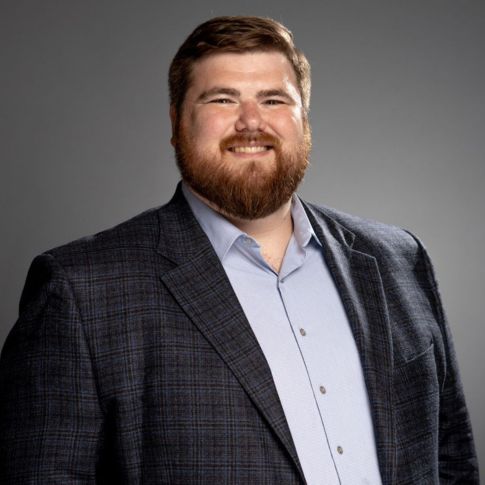
Benton Arnett
Senior Director at Nuclear Energy Institute
Benton Arnett
Senior Director at Nuclear Energy Institute