
Bringing the employees back to the office is among the most pressing items on many organizations’ agendas today. But employee needs and expectations have changed greatly since COVID-19, even as employers strive to redefine workplaces. For instance, WTW’s 2022 Global Benefits Attitudes Survey found that a majority of employees would rather work remotely (58%) than onsite (42%).
Balancing the needs of remote, hybrid and onsite workers has left many employers feeling overwhelmed. Many companies continue to grapple with making the workplace attractive and keeping employees connected when so many are working remotely.
The good news is that benefits and wellbeing have proved invaluable in supporting employee needs regardless of work style. But if you’re like many employers and want to encourage employees to work onsite, consider the role your benefit and wellbeing programs can play.
Remote work and employee wellbeing: What we know so far
According to the WTW’s 2022 Global Benefits Attitudes Survey, over half of employees want to work remotely most or part of the time, but such working arrangements have had mixed effects on wellbeing.
Most employees favor remote work because it cuts commuting times and costs, allowing them to manage commitments at home. Compared to 2019 results, our 2022 data show a significant increase in the number of employees who say they have a healthy work/life balance. Women, younger and low-income employees are more likely to prefer remote work than their counterparts.
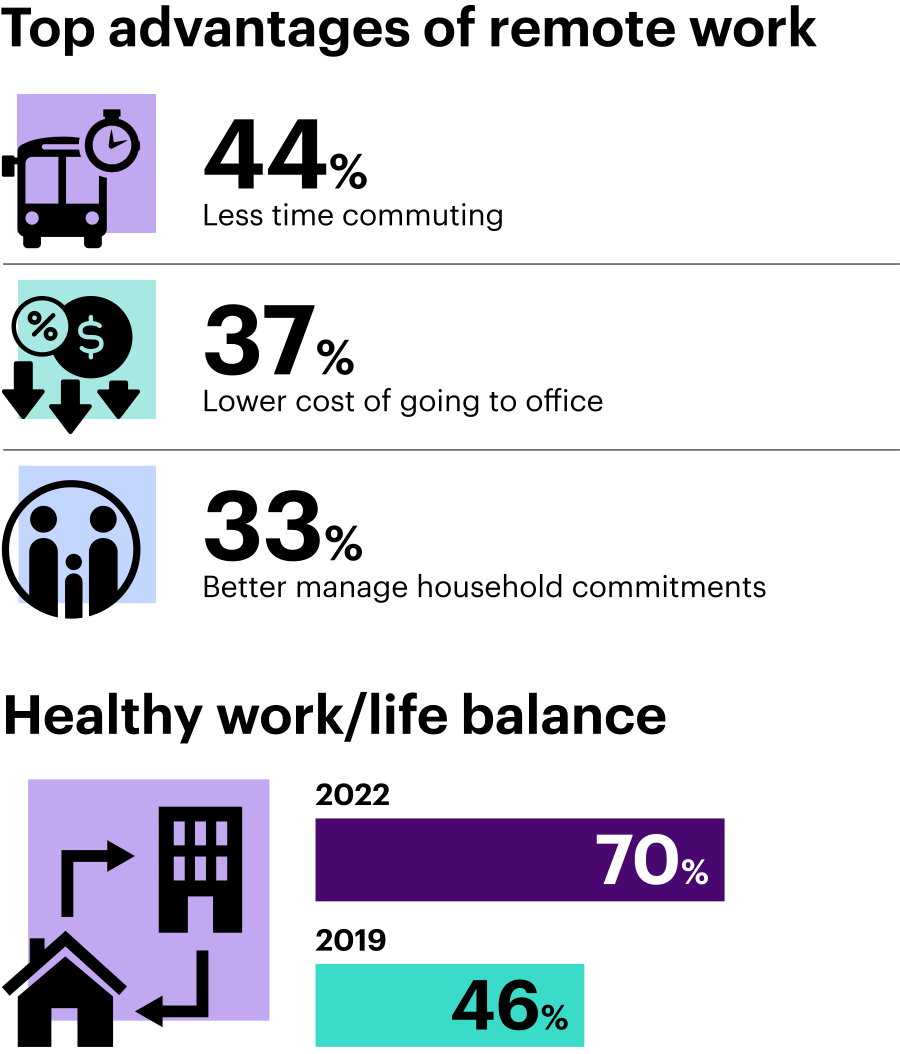
The top advantages of remote work include less time commuting, lower cost of going to the office, and better management of household commitments.
Source: WTW 2019 and 2022 Global Benefits Attitudes Survey
On the other hand, employees report that remote work negatively affects their social wellbeing. Many lack social interactions, feel disconnected and find building new relationships difficult. The percentage of employees who feel connected took a double digit fall from 41% in 2019 to 28% in 2022. Men and younger generations are more likely to feel disconnected from their colleagues than their counterparts.
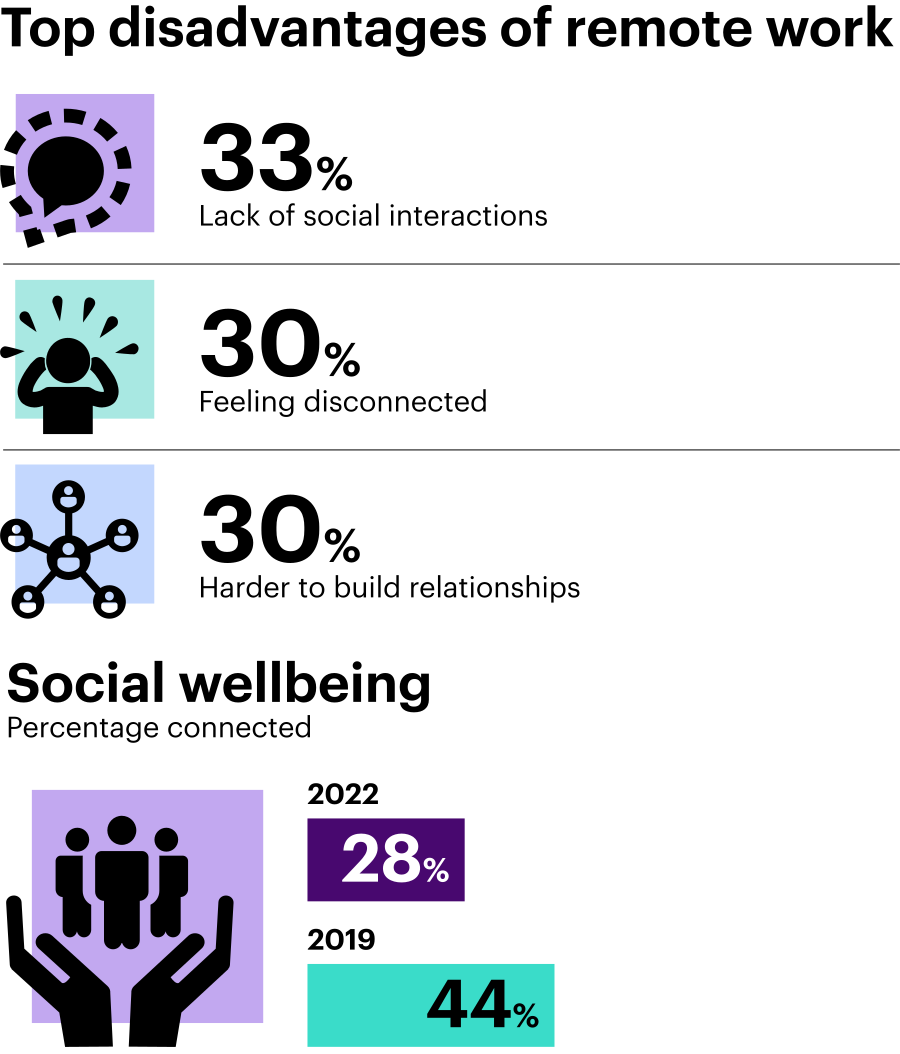
The top disadvantages of remote work include lack of social interactions, feeling disconnected, and harder to build relationships.
Source: WTW 2019 and 2022 Global Benefits Attitudes Survey
A significant number of employees also think that onsite work provides more opportunities for career growth. Our surveys reveal that 44% of employees worry that working remotely is detrimental to their career development opportunities. This concern is heightened among workers with disabilities and neurodevelopmental issues as well as younger employees.
How to make working onsite worthwhile
What can your organization do to ensure benefits meet your people’s needs and align with business goals? To help make onsite work attractive and convenient, consider the following measures:
According to our 2022 Best Practices in Healthcare Survey, over half of employers provide onsite health promotion activities, and one in four offer onsite health clinics.
Key takeaways
Offering benefits that meet your employees’ expectations is key to enhancing onsite work and encouraging them to return to the office. Be ready, however, for continual learning and change, as no one-size-fits-all approach is available.
Individual employees have their own unique experiences and challenges that shape their ever-changing needs. Listen to their voices, examine your wellbeing strategy, and make sure that you are offering inclusive and equitable benefits. Doing so not only enables you to maximize your investments but also lets your employees know and feel that you are committed to supporting their wellbeing — no matter where they work.
Contact