In today's world, long-term care and senior living operators face an evolving landscape of emergencies, ranging from natural disasters and weather to infrastructure failures, public health crises, and unexpected facility incidents. For providers serving our aging population, preparedness isn't optional. It's a responsibility, a mindset, and a commitment to safeguarding residents, staff, and operations.
Today, we will sit down with the industry's most experienced emergency management professionals, thought leaders, and recovery specialists to break down the concepts that matter the most. Today, we will be discussing all-hazards planning, lessons learned, critical partnerships with first responders, vendors, and utilities.
We'll be talking about continuity of operations, and what it truly takes to bounce back after an adverse event, and most importantly, what keeps experts up at night, and how providers can stay one step ahead.
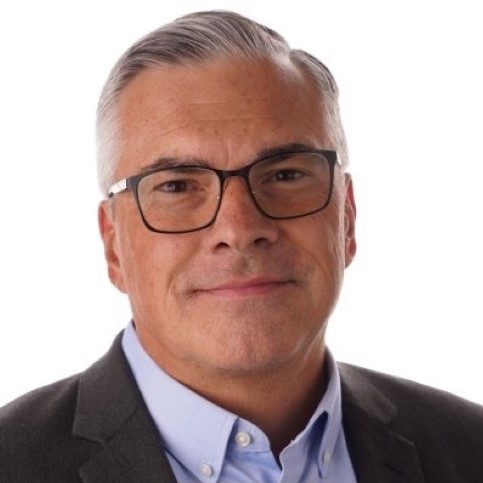
With that said, I am pleased to introduce you to our first guest. Our first guest is Stan Szpytek. Stan is the president of Fire and Life Safety, Inc., a consulting firm that provides life safety, risk management, and emergency preparedness programs for organizations of all types, with special focus on health care, long-term care facilities, and senior living communities. Stan is a former fire chief and fire marshal with a Chicago area fire department, having served the community for 26 years and honorably retired in 2003.
He's also the life safety disaster planning consultant for the Arizona Health Care Association, California Association of Health Facilities, Utah Health Association, American Assisted Living Nurses Association, and works with several state health care associations and provider groups around the country. Welcome, Stan. Welcome to our podcast. We appreciate you being here today.
STAN SZPYTEK: Certainly my pleasure.
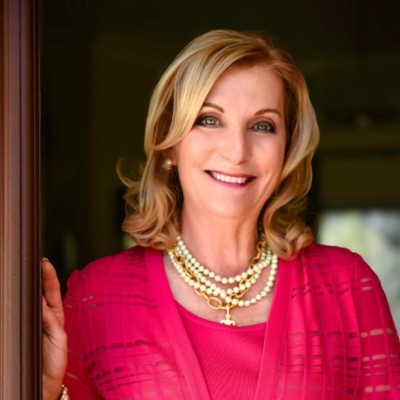
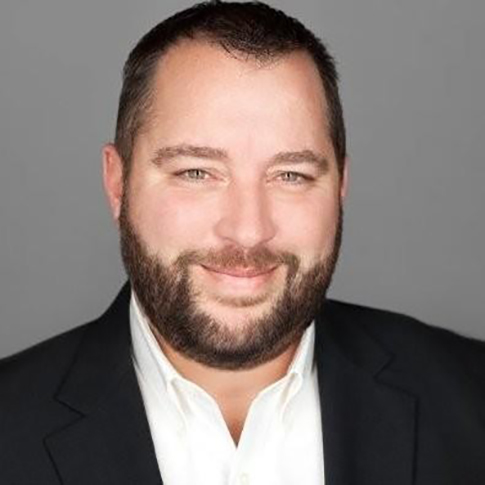
RHONDA DEMENO: And our next guest is Cal McCarty. Cal for ServiceMaster Brands. He's the senior vice president of Commercial Sales and Disaster Response. Cal has over 10 years of experience in the insurance industry and risk management industry and is now working as a senior vice president of sales for ServiceMaster, the nation's leading provider of 24/7/365 residential and commercial disaster restoration services. Welcome both, Stan and Cal. So happy to have you join our call today.
So before we get started, I wanted to highlight some of the recent disasters affecting senior living communities, such as the Fall River assisted-living fire, widely referred to as the Gabriel House fire.
This was a five alarm fire that broke out at the 100-unit Gabriel House assisted living facility in Fall River, Massachusetts. The fire was reported at about 2150, or 1:50, central time and quickly spread through the three story wood frame building, with residents visible at upper floor windows when firefighters arrived.
The next area I'd like to highlight, we all know about the California wildfires that occurred last year. And we all are very familiar with Hurricane Irma. These disasters really required all hands on response. And keeping those disasters in mind, I'd like our guests today to consider lessons learned, share that information, as they delve into real-time preparations and solutions that could mitigate terrible losses that surfaced due to these emergencies.
So with that said, my first question goes to Stan. Stan, with a wide variety of emergencies and disasters impacting long-term care and senior living communities, what are some of the key concepts that providers need to be adequately prepared?
STAN SZPYTEK: Rhonda, that's a great question, because with the wide variety of emergencies and disasters that can impact a long-term care facility, a senior living community, or any occupancy for that type, we've got to be prepared for everything.
I think about my time when I started as a firefighter in the late 1970s. Being a firefighter was put the wet stuff on the red stuff. We responded to fires. And then it evolved into providing emergency medical services. And then firefighters needed to become hazardous material techs, and then ultimately first responders to weapons of mass destruction.
Think about the wide variety of emergencies that can occur in a senior living community, long-term care facility, nursing home, memory care unit. The power goes out. A fire starts. A wildfire is approaching. A hurricane alert is issued. A tornado warning has been issued for an area. Anything and everything can happen in these types of facilities.
Our first responders in our communities take what's called an all-hazards approach to emergency management. It doesn't matter if it's a fire flood, mass casualty incident, active shooter. They've got a protocol of managing the emergency. So the circumstances of the emergency don't manage them. They respond proactively. They've got an approach that identifies all the things that can happen in their facility. And we call that hazard vulnerability assessment, knowing the threats and perils.
And once we identify what happens at each individual, community or facility, then you can adequately plan to respond to the types of emergencies that can happen there. I think of some of the other tragedies that have occurred in long-term care. One of them was that a client facility in Southern California.
It came in as an activated fire alarm. It turned out to be a bona fide fire. When police were on the scene, it was determined that it was an intentionally set fire with gasoline. And when first responders started to make their way up the senior living facility's stairwells to go fight the fire on an upper floor, they were met by an elderly resident who had a firearm and opened fire on those first responders.
So what came in as a fire alarm, typical kind of scenario that all of our members and insured on the calls today deal with, turned into a bona fide fire, turned into an active shooter situation. How do you manage that kind of chaos?
Well, first responders utilize a system called incident command, something that we'll probably talk about as we get through the conversation today. But that all-hazards approach, it starts with preparedness. And it ends up with what Cal is going to talk about today, recovery and restoration.
RHONDA DEMENO: Thank you for sharing that situation or that case study. Again, you have to be prepared for any type of disaster. And I think there's a heightened awareness or heightened emotional response during these types of events to that we have to train our staff and the first responders to how to handle those type of situations. So, great response.
My next question goes to Cal. Cal, considering what Stan had just talked about, having an all-hazards emergency management posture, how does that factor into recovery and restoration and the restoration side of the equation? Can you elaborate on that?
CAL MCCARTY: Yeah, sure. I think it's very synonymous. It runs very parallel with what Stan said. And it all starts with that word "preparedness." I think when you're working with your fire protection people, with your fire safety folks, up front, it's important to have your recovery partners in that same conversation.
I always say it's got to be on what's called the agenda. Everybody has one at home, in a meeting midday, end of business day with a team or yourself. You look at what's important to you that day, what your goals are for the week, month, year, whatever that might be. And you relate to that daily.
Your preparedness and recovery and your preparedness up front to be better in recovery, it starts on the agenda to make sure you're looking at it every single day. The more prepared you are up front, obviously, the less recoveries you're going to have. And we've seen that happen over the years.
The folks that have-- their bona fide partnerships and their readiness plans constantly talked about, and it has good continuity. It's digital and available to everybody. They have less incidences, which leads to a better, quicker recovery in the end, to keep it broad.
But yeah, you need to keep it on the agenda, constantly talk about it, and have a good roster of folks that you're constantly meeting with. Know who you're calling. Know who's going to be there when you need them, what the process looks like. It's that simple to get started.
And I've seen a good change to a lot of people getting to that agenda and knowing their roster and knowing their partners. But there's still a lot to be had out there as far as preparedness and being ready for recovery and knowing what to expect.
RHONDA DEMENO: And thank you for that. The thing that really surprises me-- and I always share my personal experience. But I have the luxury of going to communities all across the country and doing risk assessments. And oftentimes, I see where the emergency operations plans are.
They're in a back corner in the administrator's office. And they haven't been looked at reviewed. They have dust on them there or sometimes they're not even anywhere to be found-- so just stressing the importance of conducting that hazard vulnerability assessment.
So they do have a good process for incident command. And I can't stress enough that those systems need to be put in place, and a thorough assessment needs to be conducted on an annual, if not more often basis to really get a good touchpoint as far as where you're at with your readiness plan.
So my next question will go, then, to Stan. When we're talking about these disasters, we know that there were significant incidents that occurred in senior living space, the one fire that we mentioned, the Gabriel House fire, where there were residents that died from this event.
And then there was a nursing home explosion in Pennsylvania where three people were killed, including two residents in a caregiver. So, Stan, what are your key takeaways from these incidents, as well as major wildfires that you've experienced in Southern California in early 2025?
STAN SZPYTEK: It really is all about a mindset of readiness. One of the things that I do-- and I'll be doing it later this week at a couple of communities here in Arizona, I'll be doing all staff training. And when I start out staff training, the thing that I remind everybody-- well, the two things that I remind everybody are this.
They are all first responders. And it's a normal day until it isn't. That gas leak in Pennsylvania that ultimately killed three people in a skilled nursing facility, two of the decedents were residents. One was a staff member.
I don't know about Cal, and maybe he'll address it, but whenever you think something is just routine, just another call, just another fire alarm, just another wildfire alert, just another hurricane warning, that's when you get behind the eight ball.
And what I mean by that is during the preparation phase, you've got so much time to think about things like response, recovery, continuity of operations. The fire in Fall River is-- the information is starting to come out.
And one of the things that was definitely a factor in the death of 10 people and the injuries to dozens of others is it appeared, according to published reports, that the fire safety systems may not have worked in accordance with their design and with code requirements.
One of the things that we know a fire sprinkler system requires a specific amount of inspection, testing, and maintenance. We cannot take for granted how important it is to make sure that those systems are reliable. And in the case of the Fall River Gabriel House fire, it appears that fire sprinkler systems fail to activate, that there were a number of fire sprinkler heads that were on a national recall that ultimately did not operate.
And again, all this information coming from published reports just indicates to me that we can't take for granted our levels of readiness, that when that wildfire warning comes, you've got to take it seriously.
And when I speak directly to our senior living professionals, our long-term careforce, and the people that work in any type of organization that provides care, comfort, and essential services to vulnerable populations, if an evacuation is required, you need to think about being the first out of dodge, not the last out.
You need to be proactive. You need to do training, drills, and exercises. You need to have partnerships with people like Cal and other restoration and continuity professionals, because I'll finish this segment with what I started out saying. It's a normal day until it isn't.
RHONDA DEMENO: No, that's a really good point. And that's so true. We always start out a lot of our risk management training with that statement, "an ordinary day." But as that day unfolds, terrible things can happen. So Cal, based on that feedback from Stan, are you seeing the same types of attitudes where providers simply think it happens someplace else, so it's not going to happen here?
CAL MCCARTY: : Absolutely. I think there's two factors in that-- it's never going to happen to us, or it's never happened to us, so we don't really need to put a lot of time into that planning, preparation, or agenda. And nothing can be further from the truth. Stan said it best, it's always a normal day until it isn't.
And the other side is when somebody does-- when a lot of these providers get into reviewing an agenda, they're afraid when we start to review plans, when Stan starts to review plans with them, of that they've never started one, or it's very incomplete.
Well, that's OK. That's our job to go there and help them plan and set plans and review them. So if you have not really started the process or you've got one page into it, congratulations. Myself, Stan, we're there to start to complete that and review that for you.
So I see that a lot where, well, we never really did that. We don't want to get in trouble. We're going to really push forward or share that with them, or it's not going to happen to me. And then I think some of what Stan said that's very important is, in a case of a wildfire, say, that's on that side of the Coast, it will never get to us.
Well, some of the most affected hospitals, nursing providers, health care providers that I've ever seen are far away from, say, ground zero of the fire. But they forget things like moving their patio furniture or things outside that their residents use inside or into containment, or even turning off their HVAC system.
So they were not in the path of the wildfire or burned in the wildfire per se, but taking their eye off the ball because of the air quality took their outside patio furniture or rec area away, or it caused more damage to air quality inside that they had to evacuate, the same as if a wildfire was down the block. So that all goes with thinking through the preparation, making sure you don't take your eye off the ball on the small stuff because that leads to the big.
STAN SZPYTEK: Rhonda, can we share the story that we all experienced collectively?
RHONDA DEMENO: Absolutely. We'd love to hear it. Yeah, absolutely.
STAN SZPYTEK: Well, you were there. Cal was there.
RHONDA DEMENO: Oh, yes.
STAN SZPYTEK: I was there.
RHONDA DEMENO: Yes, that's right. That's correct. We had a wonderful experience.
STAN SZPYTEK: Yeah, it was just a great experience. But to the point, and the whole purpose of sharing this story was when I was on stage front and center at about 10:15 in the morning, I was talking about all-hazard response. I was talking about the hazard vulnerability assessment and the importance of utilizing a standardized framework that's interoperable with our community's first responders. And of course, that is the Incident Command System.
And right mid-sentence, the chandelier started to sway. The room started to shake. The ground started to rumble. And lo and behold, the three of us, along with other peer professionals, insurance professionals, providers, it was a 5.4 earthquake in the middle of a session on emergency preparedness. Cal, what was your first thought?
CAL MCCARTY: Yeah, my first thought was, wow, how clever of the host to prepare something so real! And then me being one that's not prepared for it, everybody kind of from California did the squat and cover your head thing. Well, I stood up and started to walk out of the facility, because I thought, OK, nothing over my head, out in the clear area, which is a complete wrong thing to do.
So yeah, I went from, wow, how did they put this together to oh, this is a real earthquake to doing the completely wrong thing because I was not prepared per se for an earthquake. So that's a great point. That's a really good story to bring up right now.
STAN SZPYTEK: Well, what they tell you to do, just like when I was a fire safety professional, going to your kids, your grandkids, school, I would teach them to stop, drop, and roll. But in California, everybody needs to know drop, cover, and hold.
RHONDA DEMENO: Well, that was a perfect example of why emergency preparedness and readiness is so important. And a true story, too. So, Stan, why is cooperation and collaboration so important in the emergency management continuum?
STAN SZPYTEK: When I'm at a state association doing a keynote on emergency management or in the dining room at a facility, facilitating a tabletop exercise, one of the key points that I always stress is, the last time that you want to be exchanging business cards with your first responders is in the midst of an emergency.
Cal continues to focus on preparedness. And even though his discipline is on recovery, the preparedness side of the equation, or the emergency management continuum, is where we have got the time. We're not under the gun.
We've got the time to invite those first responders into our communities, to get them familiar with our environment of care, to get them focused on the true vulnerabilities that each of our communities presents or skilled facilities have.
So those relationships will pay dividends. In a crisis or during a disaster, sometimes it's just a matter of knowing who to call. But in your industry, Rhonda, in Cal's and mine business, having those relationships fostered to the point that I can make a phone call, I know the person that I'll be calling. They're not just a fire chief. They're just not a county emergency manager or a state or federal official. They are someone that we know.
And when we think about this, for those of you on the podcast today that are skilled nursing facility providers or any of the 17 different provider types that receive CMS funding, you've got regulatory mandates. One, under Appendix Z, CMS emergency preparedness requires.
E007 says that you need to cooperate and collaborate, along with E009, which promotes the same thing, with peer facilities, with first responders, with stakeholders across the continuum so that in that moment of crisis or emergency, those relationships just click in. And like I said earlier, they'll pay dividends when it's crunch time.
RHONDA DEMENO: Good comments there. Cal, do you have any comments that you want to expand on from Stan's remarks and how they apply to companies like yours that help communities and facilities recover and maintain continuity of operations following an adverse incident?
CAL MCCARTY: Absolutely. I agree with everything Stan said. When it comes to collaboration, we almost force it when we do our community walkthroughs or real estate walkthroughs, because the first thing I look at when reviewing a plan is, what does your roster look like? Meaning, to keep everything in continuity when something goes wrong or fails, who are the people, your Mount Rushmore? Who do you call?
I relate that to building safety, building code to start off with, even up to looking to see if their elevator provider, elevator maintenance people are on that roster. Because a lot of times to code, you cannot open a facility unless your elevator is working properly. So, do you know who to talk to? Do you have a relationship with that person if things should go that south?
So we make sure that if we're looking at our tag outs, making sure what your water shut-off, your gas shut-offs are properly tagged. When's the last time your fire safety system or fire protection system was checked? It's been a while. Well, then I would collaborate right then and bring somebody like Stan in.
So fire safety inspections, fire protection systems are not our specialty, but if they are not in line and we don't look at that in the plan, our recovery is going to be much harder, and the safety of the residents, safety of the client will be in much more danger. So to agree with Stan and went a little long there, but you cannot do it without proper collaboration. You need everybody on that roster to be in, understand and know what their role is.
STAN SZPYTEK: Hey, Cal, I bet the lack of focus on fire protection systems recently during hard freezes and stuff. The irony is those systems sometimes are the genesis of the loss. Why don't you talk about that for a second, when a fire sprinkler system freezes? Causes a little bit of a problem in a building, doesn't it?
CAL MCCARTY: Caused a little bit of a problem in depth outside of just flooding it. But also it's considered in cleanup a lot of times, cat 3 water, because it's not treated per se as cat 1 water would be.
So it causes for a much heavier recovery than a cat 1 water would be. And that obviously creates more downtime, more money. And yes, I would say through this last polar vortex that we just went through, definitely half, if not upwards of 60%, of our responses were to failed fire protection systems. 100%.
STAN SZPYTEK: Holy moly.
RHONDA DEMENO: Wow. So let me ask both of you the million-dollar question. What keeps you up at night when it comes to the common hazards that you're seeing in long-term care and senior living communities? Let's start with Stan.
STAN SZPYTEK: Well thanks, Rhonda. Just like everything else in modern times, technology is such a focus of day-to-day life, from the device that we've got in our pockets, known as the cellular phone, to the different things that are operating in our households.
And that's the one thing I remind my clients. We can't forget that the communities that they operate, it is our beloved residents' homes. And the technology that we're seeing our seniors embrace today includes the same things that we have in our homes.
And if there was one thing that's kind of emerging that really is troublesome to me, because we have seen a preponderance of incidents, fire departments are responding to them all the time, and what I'm talking about are fires involving lithium batteries.
Think about that chair that resident has, or that motorized scooters. I've got several incidents at client facilities just in the last year alone, where overcharging or a malfunction of a battery causes a fire. And you know what? A lithium battery fire is not like the typical ABC fire, common combustibles, flammable liquids, and energized electrical fires that I teach our first responders in our senior living communities and long-term care facilities to be prepared for.
Think about it. That electric vehicle-- what keeps me up at night? Well, here's the scenario. The Amazon Prime truck pulls up to the canopy of the assisted living facility. And all of a sudden that lithium battery fails. And the next thing you know you've got a fire that is significant.
Back in the day when I was on the fire department, if I pulled up to a car fire-- let's say your car catches on fire, and it's a typical gas combustion car-- if we couldn't put that fire out with half the Tank water that we carried on the fire engine, which is 250 gallons, we weren't very good nozzles. We weren't very effective.
But today, an EV catches on fire. There was one here where I live in Phoenix, where the Phoenix Fire Department, I think, had to use 60,000 gallons of water to put this fire out. They ultimately had to call in a dumpster. They put the vehicle in the dumpster, and they covered it with sand.
And Cal, I don't know if that's what keeps you up at night, but lithium battery fires and the residue and the impact that they have on the environment-- you're just not cleaning up the dirt and moving on. There's probably environmental testing and a whole litany of things that needs to happen.
CAL MCCARTY: No, I fully agree with you. To touch on that, when we're doing our walkthroughs, we'll get into, say, some maintenance areas where-- our maintenance teams, our maintenance partners have lots of tools, whether it could be scrub cleaners on the outside for landscaping or the drills that they use inside leaf blowers, whatever it is. They all have 20-volt lithium battery systems.
And how these things are charged-- I've seen just some major fire hazards. One, those things just charging can fail all the time. They are not failsafe. And then they'll be in areas of highly combustible areas, sometimes with flammable materials in that same area, cleaning products, whatever that might be.
Daisy-chained a different outlet chargers, I've seen that a ton. And then, like you said, when those fires happen, it's a totally different fire, completely. It's not the ABC fire, like Stan said. All the way from that to just an outside smoking area for employees, throwing a cigarette in a trash can, things like that. And that seems very basic, but you'd be surprised how many large, large insurance fires have started that way.
So that all keeps me up at night from the cause and the safety of our partners and our clients. But mainly just the preparedness, making sure that my partners know how to say help when they need it so it can be quick and in line and keep from that business interruption.
That's why I don't stop talking about it. I coach it all the time, is how do you say help when it goes down? Who do you say help to? That's the most important thing, is just know who your partners are, how to use them, and know where they come from.
RHONDA DEMENO: So no charging of batteries in the room where there's oxygen storage, for sure. I have walked into that exact scenario. So my question for Stan and Cal, if you could please tell our guest how to get in touch with you.
STAN SZPYTEK: Sure. The best way, I think, other than just direct email, stan@flsafety.org. That's Fire Life Safety, stan@flsafety.org. Connect with me on LinkedIn. As Cal and Rhonda know, I make a point of scouring the news every day. I monitor the feeds. And one of the things that I put out there is information about these incidents that occur on a daily basis.
Today, I posted about a shooting in a skilled nursing facility a couple of weeks ago. To Cal's point, it was all the frozen sprinkler systems that were causing nursing homes to do complete evacuations, to gas explosions, to vehicles that run into buildings. And Rhonda, that's one that we see pretty often. And some of them have got some fatal consequences. So connect with me, Stan Szpytek, S-Z-P-Y-T-E-K, common spelling, on LinkedIn, or just email me at stan@flsafety.org.
RHONDA DEMENO: And Cal?
CAL MCCARTY: Cal McCarty, cal.mccarty@sevicemaster.com. And again, love the LinkedIn connection as well.
RHONDA DEMENO: Well, thank you both very much. You've brought forward some great information for our listeners. And whether the listeners or the executive director or regional leader, corporate operator or frontline manager, this podcast is intended to support you in building safer, more resilient environments for the people who depend on you, like senior living organizations and operators.
And thank you again for listening to our Senior Advisor podcast. We appreciate your attendance. And please feel free to reach out to myself, Stan or Cal, if you have additional questions. Thank you, and have a great day.
SPEAKER: Thank you for joining us for this WTW podcast featuring the latest perspectives on the intersection of people, capital, and risk. For more information, visit the Insights section of wtwco.com. WTW hopes you found the general information provided in this podcast informative and helpful. The information contained herein is not intended to constitute legal or other professional advice, and should not be relied upon in lieu of consultation with your own legal advisors.
In the event you would like more information regarding your insurance coverage, please do not hesitate to reach out to us. In North America, WTW offers insurance products through licensed entities, including Willis Towers Watson Northeast, Incorporated, in the United States, and Willis Canada, Incorporated, in Canada.