Results from our 2026 Artificial Intelligence in Health and Benefits Survey
Current vs. future adoption
- 20% – Currently operationalizing AI in benefits
- 72% – Plan to operationalize within two years
- +52% – Expected growth in AI adoption
Top priorities for using AI in benefits
- 68% – Improving communication
- 59% – Enhancing data analytics
- 57% – Personalize benefits support
- 48% – Enhance decision support tools
- 38% – Improve navigation
Respondents selected top five areas of focus for using AI to manage, communicate and deliver employee benefits
Resource constraints
- 71% – of benefits teams have only limited or no access to internal AI resources and skills
Expected impact areas
Greatest anticipated positive impact:
- Claims monitoring – 100%
- Claims analysis – 88%
- Member communication – 87%
- Benefits education – 85%
- Budgeting and forecasting – 83%
% expecting large or moderate impact
Early adopters (16% of companies) lead the way
- 2x more likely to have AI roadmap and governance
- 3x more likely to have access to internal AI resources
- 2x more likely to work with external partners than to rely solely on internal resources
- 20K+ average employee count (vs. 12K for others)
Biggest challenges
- Data privacy and security concerns
- Risk of AI mistakes and errors
- Legal and compliance risks
Ready to explore your AI readiness? Connect with us to talk through the findings and implications for your organization.
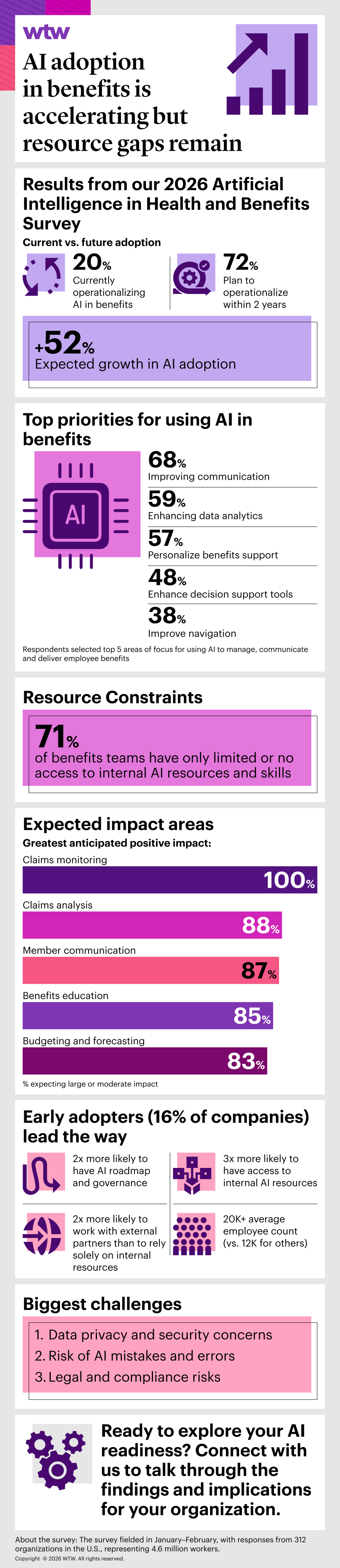
AI adoption in benefits is accelerating but resource gaps remain
Results from our 2026 Artificial Intelligence in Health and Benefits Survey
Current vs. future adoption
- 20% – Currently operationalizing AI in benefits
- 72% – Plan to operationalize within two years
- +52% – Expected growth in AI adoption
Top priorities for using AI in benefits
- 68% – Improving communication
- 59% – Enhancing data analytics
- 57% – Personalize benefits support
- 48% – Enhance decision support tools
- 38% – Improve navigation
Respondents selected top five areas of focus for using AI to manage, communicate and deliver employee benefits
Resource constraints
- 71% – of benefits teams have only limited or no access to internal AI resources and skills
Expected impact areas
Greatest anticipated positive impact:
- Claims monitoring – 100%
- Claims analysis – 88%
- Member communication – 87%
- Benefits education – 85%
- Budgeting and forecasting – 83%
% expecting large or moderate impact
Early adopters (16% of companies) lead the way
- 2x more likely to have AI roadmap and governance
- 3x more likely to have access to internal AI resources
- 2x more likely to work with external partners than to rely solely on internal resources
- 20K+ average employee count (vs. 12K for others)
Biggest challenges
- Data privacy and security concerns
- Risk of AI mistakes and errors
- Legal and compliance risks
Ready to explore your AI readiness? Connect with us to talk through the findings and implications for your organization.
312 U.S. organizations, representing 4.6 million workers, participated in the survey, which fielded in January–February 2026.
Download
| Title | File Type | File Size |
|---|---|---|
| Infographic: AI in Health and Benefits SurveyPDF | .4MB |