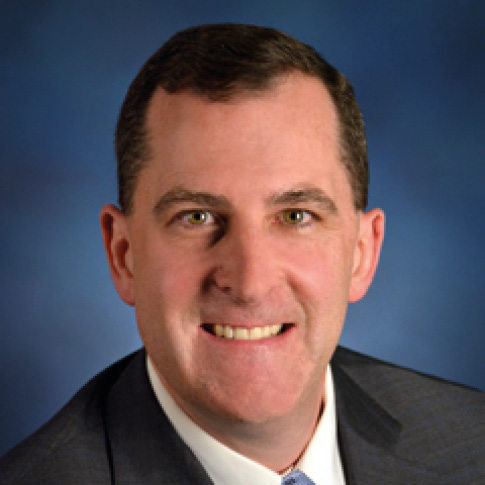
In this episode of the Construction Blueprints podcast series, our North America Construction team experts discuss the current state of the construction insurance market.
Transcript for this episode
RYAN HUCKER: There is plenty of capacity here in the U.S. And overall, the underwriting has been fairly consistent. But there are a lot of opportunities out there, so selectivity remains quite high for the carriers. I would say overall projects that are demonstrating really super strong governance and accurate project valuations. And definitely, early engagement with the carriers will achieve the best outcomes in today's market.
SPEAKER: Welcome to the Global Construction Market Update Special, a subset of the WTW Construction Blueprints podcast. In this short series, you'll hear from our experts on current market conditions for construction insurance.
JIM DUNLAP: Hello, and welcome back to our Global Construction Podcast Series, where we are discussing the current state of the market for North America. I'm Jim Dunlap, the North American Construction Broking Leader for Willis. And I'm delighted to be joined today by Justin Anderson, our North American Construction Excess Casualty Broking Leader, Ryan Hucker, North American Construction Builders Risk Broking Leader, and Cynthia Olinger, our North American Construction Professional Liability Broking Leader.
So welcome to you all and thanks very much for taking the time to share your thoughts and your insights. Today, each of the leaders will be focusing their comments on their particular line of business. Each will be discussing both the macro trends impacting the markets, as well as sharing some more granular insights.
We're going to be doing this in a rapid fire session. So we'll keep our comments deep but quick. But before we jump into the individual lines of business, here's some general takeaways from the current marketplace. The construction insurance market entering 2026 continues to reflect a challenging but evolving environment.
While certain lines such as workers' compensation, property builder's risk are showing some signs of stabilization, following years of more of a hard market cycle conditions, continued pressures from social inflation, rising claims severity, reduced capacity, and heightened underwriting scrutiny continue. Carriers remain very selective in their deployment of capital, with increasing differentiation between well-performing risks or sometimes with more distressed accounts receiving less favorable rating results.
Buyers should expect overall ongoing volatility and a continued emphasis on risk management, transparency, and program structure review to guide them through their renewal or placement process. So with that is an overall macro discussion of the marketplace. Let's get into the individual lines of business. And we're going to start first with casualty. So Justin, let's talk a little bit about the casualty construction marketplace in North America. What are you seeing? What are driving some of the results? Any recommendations or thoughts that you might have?
JUSTIN ANDERSON: Looking forward to 2026. In the casualty market, we're expecting the largest changes to be on primary program structure, needing increased retentions and deductibles for certain distressed classes of business, as well as excess capacity shrinkage in the market. So we've historically seen carriers willing to offer $15 million to $25 million of capacity on certain risks. But this is increasingly shrunk to $10 million and even $5 million, in some case, being the new normal.
When looking at your renewal excess tower, if you still do have $15 million or $25 million chunks of capacity from carriers, you need to look at those layers more proactively to think about the sustainability of that structure. Oftentimes, new capacity comes at an increased cost rather than legacy renewals with incumbents.
So it's imperative to start looking for additional partners interested in those attachment points where large chunks of capacity still exist. To think about getting them on the program, to break up those large layers before the incumbent carrier ultimately decides they don't want to offer that large of capacity on a single risk.
Increasingly with data centers and some of these other large infrastructure projects, these markets are looking at their limit aggregation. And they're very interested in spreading that limit out across multiple contractors and subcontractors on the job, as well as any wrap programs that are also on those jobs. So they'd rather have a little bit of limit everywhere than large chunks on just a few contractors or subcontractors on that job.
So moving into 2026, carriers remain highly selective on the types of programs and the types of contractors that they want to write. They focus on clean loss history, strong safety culture, detailed risk controls, and transparent submissions. Underwriters increasingly rely heavily on the reputation of the insured and their safety program.
They want to hear a compelling risk management and safety narrative, so it's really important that each contractor has that narrative ready and works with their safety team and their insurance broker to put together the best possible story that they can give to the market and constantly seek ways to improve that narrative and their practices, so that the results ultimately follow that story that they tell.
JIM DUNLAP: So Justin, thanks very much. That's a very good summary. So clearly, infrastructure work, data center work, increased costs are driving a lot of the overall casualty marketplace. And in the deployment of that capacity in individual geographies really lends itself really well towards a discussion. Moving over to Ryan Hucker, our Builder's Risk Broking Leader, on that capacity geography level, how are your carriers looking at that? Or is that something that's really driving your marketplace?
RYAN HUCKER: Yeah. Thanks, Jim. I wouldn't say it's necessarily driving the marketplace for builder's risk in North America, more specifically the US. Overall, the market is quite stable and actually has been for quite some time. There is plenty of capacity here in the US. And overall, the underwriting has been fairly consistent.
But there are a lot of opportunities out there, so selectivity remains quite high for the carriers. I would say overall projects that are demonstrating really super strong governance and accurate project valuations and definitely early engagement with the carriers will achieve the best outcomes in today's market.
There's capacity really for all types of construction, especially the non-combustible and masonry non-combustible. But even the wood frame space, we've seen a ton of new capacity entering the space through the likes of a lot of MGAs and MGUs. So overall, the marketplace is quite competitive and fairly stable.
In terms of the issues that we're seeing, the secondary Nat Cat risks certainly are a big driver in today's marketplace and has been for some time. The severe convective storm gets a lot of attention from underwriters and engineers. And obviously, hail, especially for the type of project, is certainly a key risk factor for our carriers today.
In terms of the coverage, it's been fairly stable, as you would expect, with a pretty competitive marketplace. What continues to drive some uncertainty is the cost of making good wording and leg wording, which is an evolving topic, which has been for some time now. But it certainly remains under a fair amount of scrutiny by our carrier partners.
Justin had mentioned the data centers and obviously the builder's risk, builder's risk world. It's no different. There's a tremendous amount of opportunities, and there has been for some time. And obviously, the future looks very bright for this particular class of business. I would also say we're also seeing some other lines of technology that's ramping itself back up, especially in the semiconductor space, which is great to see.
So I do anticipate that there's going to continue to be a fair amount of opportunities for the marketplace as we move forward into 2026 and beyond. A few other opportunities in this space, modular construction and mass timber, they certainly present growth potential, but it's still a relatively new and emerging technologies. So they certainly require proactive engagement and detailed risk mitigation to secure the best terms and conditions. Other than the potential for heavy Nat Cat activity or perhaps a market loss, we do anticipate 2026 to remain quite competitive for the remainder of the year.
JIM DUNLAP: So with that as a good summary, Ryan, is there anything, whether it's general construction, residential, commercial, or the data centers, is there anything that you would recommend to our clients that would really differentiate themselves or how they might help you present the risk in the marketplace? Are there any key factors that carriers are looking forward to drive terrific outcomes in the builder's risk space?
RYAN HUCKER: Yeah, I mean, we do struggle in today's marketplace to get complete and thorough underwriting information. The more information we can get, the clearer picture that we can paint for our carrier partners, the more favorable and frankly, the quicker response time we'll get is certainly the terms and conditions will reflect as such. There's so many opportunities and so many submissions on these underwriters desks that they have to weed through them all to get to the good ones. And the more incomplete underwriting data that we can get only positions our clients for the best chance of success.
JIM DUNLAP: Thank you. But let me ask you a quick question. As we came out of extended construction schedules, at first, potentially they were delays caused by COVID. Then there were some market conditions that were working against us. Talk to me a little bit about the availability of extension work. Does that still remain a challenge or is that getting a little easier as the market moderates.
RYAN HUCKER: That's a very good question, Jim. It really depends on the project and the project particulars. If it's a fairly straightforward extension and there's been no major issues on the project, we're not really encountering any major challenges when it comes to requesting an extension and getting favorable terms and conditions.
On the flip side of that, obviously, if there's a project that has required multiple delays up until this point, including losses, the marketplace is still very challenged in that respect and we are seeing some difficult situations. I would also go back to my earlier comment, though, about best in class submissions. With the complete underwriting data and information.
I would say it's just as important, if not even more so when it comes to an extension. A lot of the times we don't get the same level of data that we received at the project inception. When the extension is asked for which can present a host of challenges and perhaps does not lead to the best outcome for the client.
So I would also stress the same point I made before that the better information and the complete updated values and the updated schedule showing everything that's changed and showing the work that has been done to this point and what remains, telling the complete and accurate story really positions our clients for the best chance of favorable terms and conditions when asking for an extension.
JIM DUNLAP: Terrific. So your number one piece of advice there is start early with good information if you're going to think an extension is going to be required. Ryan, I appreciate your comments. Let's move on to professional liability. Cynthia, similar kind of questions. Marketplace, what's driving it? And what are your thoughts on the current marketplace? And where are we going in 2026?
CYNTHIA OLINGER: Thanks, Jim. The professional liability market in North America has been stable for quite some time from a pricing perspective, really. We have seen some restriction of limit deployment from certain carriers in particular. So whereas they might have deployed $25 million on a certain risk, now they're trying to cut that to 15 or even 10.
We have had new entrants into the marketplace. And in the recent past and another new one, in 2025, so that helps with the situation as far as overall capacity available. We're seeing increased scrutiny around limit deployment for particular types of exposures, in particular. We always underwrite to the overall risk for design, for example.
So design build projects, contractors that are involved with design build that are performing in-house design or CM at risk are all seen as an increased exposure from a professional liability standpoint. So you might see reduced limit deployment on those types of contractors or projects that are being performed under those delivery methods.
We expect the market to remain stable in this sense in 2026. But we do see a lot more challenges around these mega projects that we're involved with. Justin and Ryan have both mentioned data centers, of course, infrastructure. Some of the semiconductor manufacturing, these are getting into the tens of billions of dollars from a construction value standpoint.
And we have some carriers that will not participate in projects at all over a certain value. And then others are really looking at how much limit they're willing to deploy on a $13 million project. So I expect 2026 to bring some challenges in that regard as far as projects that are looking for project-specific policies, both for contractors and owners, especially for contractors. I have to say those are particularly challenging.
The added layer of complexity there is that these carriers are now also very sensitive to aggregation of limits. So if they're on a contractor program and we want to write a project policy either for that contractor or the owner, the carriers are getting very careful about having too much limit out on a particular project.
Justin also mentioned the geography of these data centers. They're now being co-located. That presents a challenge for us as well. And sometimes, they're even using the same design across multiple facilities. So that becomes a particular challenge for professional liability because if we have an error in that design and it's now been deployed in multiple multi-billion dollar structures, then it's a challenge, let's just say.
I just want to touch really quickly on claims. What we're seeing in the claims space is increased use of professional liability and a lot more overlap between claims on GL and professional liability. So we're getting into some complex claims situations that really require some specialty evaluation from brokers and the claims specialists.
JIM DUNLAP: I think that's tremendous insight. I think just to summarize, I guess, what I'm hearing for you guys as line of business leaders is the general marketplace is reasonably moderate. We're obtaining good outcomes for our clients. If we provide the carriers with good information and enough time, whether it's an individual renewable placement, professional liability, builders risk or casualty, we're showing some good signs that the market is strong.
However, as we talked about, Justin mentioned distress business or more challenging business. We're still seeing some overall rate increases. And the key to mitigating any rate increase by any line of business is to have good information in the marketplace, tell a very good story, and include the clients in the discussions as needed with the individual marketplace to assure the best outcomes.
So with that, I think we'll close it down for today. I'd like to thank each of you, Justin, Ryan, Cynthia, for joining today for your contribution to the episode of this Marketplace Insights podcast. Please be on the lookout for upcoming editions of our podcast series, where we'll be focusing on other important lines of business. So we'll see you in the next one.
SPEAKER: Thank you for joining this podcast from Willis, a WTW Company, featuring the latest thinking and perspectives on people, capital, climate, and risk in the construction industry. For more information, visit wtwco.com. WTW offers insurance-related services through its appropriately licensed and authorized companies in each country in which WTW operates.
For further authorization and regulatory details about our WTW legal entities operating in your country, please refer to our WTW website. It is a regulatory requirement for us to consider our local licensing requirements. The information given in this podcast is believed to be accurate at the date of publication.
This information may have subsequently changed or have been superseded and should not be relied upon to be accurate or suitable after this date. This podcast offers a general overview of its subject matter. It does not necessarily address every aspect of its subject or every product available in the market, and we disclaimer all liability to the fullest extent permitted by law.
It is not intended to be, and should not be used to replace specific advice relating to individual situations, and we do not offer, and this should not be seen as legal, accounting, or tax advice. If you intend to take any action or make any decision on the basis of the content of this podcast, you should first seek specific advice from an appropriate professional. Some of the information in this podcast may be compiled from third party sources we consider to be reliable. However, we do not guarantee and are not responsible for the accuracy of such. The views expressed are not necessarily those of WTW. Copyright, WTW 2025. All rights reserved.