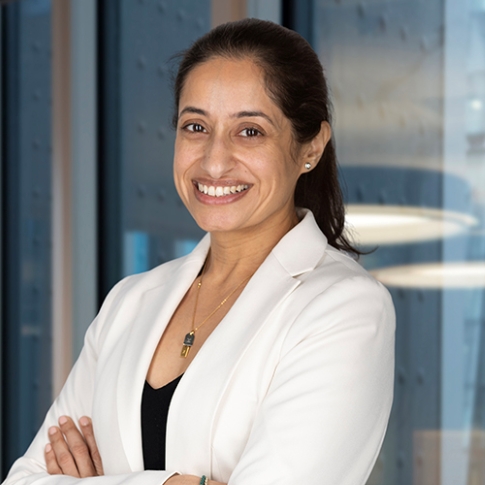
RUCHI ARORA: Hello. Welcome to our video series of Turbocharging HR. Today we are talking about the future that everyone's talking about and that skills. I'm Ruchi Arora, and I'm delighted to be joined by my colleague Charlotte Wheeler today. Hi, Charlotte.
CHARLOTTE WHEELER: Hi, Ruchi.
RUCHI ARORA: Let's start by one of the big questions. Skills is a topic that a lot of organizations are discussing and thinking about what they should do. So what does it actually mean to be a skills-based organization?
CHARLOTTE WHEELER: Good first question. So skills-based organizations, skills-focused organization terms that we're hearing a lot about in the market, particularly when we're talking to those in HR. What we have seen change is that they started being relatively theoretical, those conversations, then it moved into conversations that we were having with professional services firms, technology firms that were having a more of a focus on skills.
And now we've noticed that we really are into design and implementation, a lot of organizations want to think about skills. So coming back to your question about what actually is a skills-based organization, that could look really different depending on the organization that you're sitting in. So for those relatively early in the journey, it might mean just taking a bit more of a skills-based lens, thinking about which skills really add difference and help support deliver the organizational strategy, maybe linking that to L&D, for example.
For those that are further along in the journey, it really is thinking about that supply and demand you've got. In the organization, what skills have you got and what do you need to be successful? Moving away from purely jobs and traditional career ladders and thinking more about how skills can move people around the organization to work, to challenges, and supporting that with a technology. So typically that's a talent marketplace. And to use a phrase that we hear a lot about in the market, where skills are then your currency.
I think what's important for HR people watching this is to know how fundamental they are in helping establish that skills strategy for the workforce. So how do you define the skills that are required? How do you think about the skills that you already have? And how do you support the development of the strategies to move your talent around?
RUCHI ARORA: So mobility playing a really key role in being a skills-based organization. And like you said, organizations using it for different things like strategic workforce planning, thinking about the supply and demand. As you said, lots of organizations talking about being skills-focused or skills-based and that skill strategy being really important part of that thinking, it sounds like it's a lot to do for organizations, it's a journey to go on.
How would you describe the return on investment? If organizations decide to go down this route, what are they going to get from it?
CHARLOTTE WHEELER: Such an important question, and one that HR will be faced with if they're thinking of investing time, resources in developing a skills taxonomy. And to be honest, we wanted to know the answer to that question too. So we recently ran a global skills survey, we had over 1,000 responses from organizations showing how it really is on people's minds at the moment.
One of the questions we asked was about return on investment, and these numbers are self-reported. But organizations that think that they are using skills effectively were 1 and 1/2 times better than their peers, their competitors at attraction and retention, employee engagement, financial performance, and they believe that their employees were twice as productive. So fantastic numbers.
I think the question then is, well, where is that ROI coming from? And that's about being able to move your workforce more effectively. So you'll be able to move your talent around based on their skills. So what you don't need to do potentially is bring in people externally so you're saving on your recruitment costs.
You're motivating, you're engaging your employees. It's exciting to be able to move around and fulfill their potential. And so they're more engaged and they're more productive.
And lastly, you've got the information you need to direct investment. You've got the data that you need to be able to say, these are the skills that we need to be investing in to make the difference. And so that's where the ROI comes from. And that if I was building a business case would be where I would focus in on.
RUCHI ARORA: And a lot of organizations talk about skills and wanting to do something, but that business case is really important because there's a very tangible return. I know we've worked with organizations who have shared with us actual quantum numbers, hard numbers, are you able to share some examples?
CHARLOTTE WHEELER: Yeah, of course. So, as you say, an organization that did this relatively recently and they introduced skills along with other foundational elements, so it's not just skills alone, it's part of a broader framework. So job leveling, which we've talked about in another video that we've done recently, but they saved over a million pounds in external recruitment costs simply by being able to use their talent more effectively, be able to increase the mobility to give them exciting opportunities. Huge figure.
RUCHI ARORA: And that happened because they had visibility on skills, and they could see where there was a business need versus where someone had the skill. So that's ROI where they can be directing in other places of the business.
CHARLOTTE WHEELER: Yeah, absolutely.
RUCHI ARORA: So it sounds like a lot. How do organizations go about it? Where do they start? What's the journey look like?
CHARLOTTE WHEELER: It's really funny that you should ask that because I think a lot of the conversations we've been having with our clients and other organizations, there is almost a sense of overwhelm. The impact of skills can be so far reaching. We're talking recruitment, we're talking mobility, it can link to all of your HR processes.
[MUSIC PLAYING]