In this episode of the Global Marketplace Insights podcast, Trent Williams and Ollie Moore focus on the trends and conditions in the Australian insurance market.
Transcript for this episode
OLLIE MOORE: Now is the time to probably consider coverage enhancements. It's really an opportunity for clients to think and work with their brokers, to look at the breadth cover that they can negotiate.
NARRATOR: Welcome to Global Marketplace Insights by Willis, a WTW business, a podcast series showing the latest trends from the specialty and regional insurance markets.
View Full TranscriptTRENT WILLIAMS: Hello and welcome back to the Marketplace Insights podcast series, where we are discussing the current state of the market for the Pacific region. I'm Trent Williams, based in the Pacific region, and I'm thrilled to be joined by the newly appointed head of broking for the Pacific region, Ollie Moore. Ollie, great to have you.
OLLIE MOORE: Thank you, Trent. Excited about the opportunity of the new role and also pleased to be here.
TRENT WILLIAMS: Fantastic looking forward to it. Worked with Ollie for a number of years now. So looking forward to Ollie in the new role, and I won't throw you straight to the wolves on this podcast. I'd be keen to get your views on FINEX, where you come from prior to this role, but we looked at the Pacific region, Australia, New Zealand, and Pacific Islands. But let's focus on Australia, specifically, for this call.
And looking at, I guess, where we started looking at the year ahead back in February for Q1 and Q2. We were looking at particularly the property market. It's our largest premium throughput as a business and as an industry in this part of the world. So property, we saw that there was a lot more competition coming back into the local market. We've had really property for three or four years was the hardest hit, probably with D&O. I'll get you to talk about that space. That's rapidly moved.
But property, a lot of our larger and more complex programs were blended. So London capacity and some Asian capacity on a lot of our bigger programs, a lot more capacity has not only re-entered into the Australian market, but at really competitive and primary levels. So we're seeing an influx of capacity that's, obviously, put pressure on rate. I've got to be honest, has come off, I would say even further than the reduction expectations we had at the start of the year.
So some industries are looking upwards of 20% reductions on their annual programs, which is really significant when you think about the increases that they've had over the previous three or four renewal cycles. Again, depending on the industry, the level of risk information that's available and also site surveys and adherence to risk recommendations that have gone through. But the capacity, the rating environment, deductible structures, I think, are at a fairly stable environment.
I'm not seeing too much fluctuation with regards to retention structures, but the competition is great for clients. Our clients have been hard hit. They've been looking at self-insurance vehicles for the last number of years, so it's great to see them in a position. I guess what it does do, Ollie, is puts more pressure on the insurance industry, in general. We've gone through one hard cycle, we're into a softening cycle.
My advice to our brokers and clients and prospects alike is just prepare for this renewal cycle, but always look two to three cycles or years ahead, the next cycle ahead, is probably the right way to put it. Look at incumbency of your carriers that you have on your programs. You don't want carriers that are in and out. All of a sudden they've exited, but they're back and they're looking to write big chunks of your program. Be really cautious about the carriers and the structure and the makeup of your program.
And look at some of that history and look at where the market's going. Talk to your brokers about where the market's going. I think that's really important. The Australian market has a lot of large property programs to come. So end of Q3 now into Q4, big education programs, not just for Willis, but the whole industry. A lot of education. So independent schools, Catholic schools, universities, big mining programs are still to go through. Airport portfolios in this part of the world are still to go through.
So we're expecting really good results for those clients. But that will really not make or break, but there's a lot of carriers out there looking at budgets and filling holes. So it's advantageous for clients and brokers to get the right result. Touch wood, benign cat season. So is the rating environment testament to underwriting discipline and more focus, or is it that we've had a fairly benign, which has been great, that floods, while still out there, they haven't been as prevalent as they have in previous winter into spring cycles.
So that's been great. We're coming into bushfire season again. So hoping for a smooth season as we go through. The big three, I look at insurer results carefully. I look at the big three locally, QBE, Suncorp and AIG, bumper profits, all performing really well. Combined ratios are still a close watch as to how they're performing, but the hard measures that they, and the other internationals have taken in getting their property portfolios in a really sound position is working, it's paying off.
So where does the market cycle take us on large property? Is there more to come? I really don't think we've hit the bottom of it. I still think there's more to come. I think as we look ahead to tail end 2025 into 2026, I see further competition coming. I do believe there will be a settling process, but I don't think it'll be till late next year. We'll watch that closely and report back.
The one for me that's really surprised me is casualty. If I move from property to casualty, and primary liability really suffered at the hands of the hard market, the last hard market. So locally, and talking in local currency, AUD, for the sake of the podcast, like primary layers, we're going at 50 million limits. They were really high in significant limits, and that got pared back through the hard market. They were maxing out at 20 to 25 million that any insurer would look to deploy.
Now, there was caution around getting to 20 to 25, like most were more comfortable at the 10 mark, but that excess and umbrella capacity that sat on top of it, that was really hard to find. A lot of carriers started to hone in on limits above the primary. A lot of excess capacity was getting purchased out of London, both operationally and for construction. So that's come back into the market.
I think Australia has always been viewed as a mature marketplace and a lot of internationals have viewed this region over the last few years as somewhere they really want to be prevalent, be present, set up an office, have a presence that is not just London-based or Singapore-based. So we've seen a lot of talent in the underwriting space move around, which is telling because that creates more competition. So again, clients are getting great results.
Again, I would caution that on the long tail side of things, there's incumbency. There's tail. There's the claims. There's all sorts of issues and factors that come in. So the competition is great. But again, look at the incumbency. Look how long the carriers who are competing for your business have been in that space, been in that industry. The technical knowledge and understanding of the insurers is really important, but great results for clients.
So again, looking at Q4 and into next year, I see that competition remaining, I don't see that stabilizing anytime soon. Keen to get your views, I guess more with a FINEX lens on you. You and I have spoken at length about D&O and where that's been and where it's got to, and I guess where it's going. But, I mean, how do you respond to what I see in P&C and what your outlook is for FINEX?
OLLIE MOORE: Very similar themes, really. Probably slightly different part of the journey. I mean, as you know D&O market hardened very quickly. Come 2, 3 years ago, which led to multiple programs looking for capacity. We had certain carriers that were coming out of the space or reducing their appetite in the space, or even on elements of cover, removing that. So it equally, though, when it did turn around, it's come off, again, very, very quickly.
And again, same themes. It's new entrants into the market in Australia and growth of MGAs, potentially as well. It's kind of like being an oversupply. So it's really been a buyer's market for the last two years or so. I think the observation right now is are we seeing, we're still seeing reductions, but, actually, it's slowing down. The rate of those reductions is slowing down, and are we getting to the bottom of that.
One of the elements to watch carefully, though, is the macroeconomic environment and how that can impact clients and tariffs and inflationary pressure, is that still an issue? Obviously, thinking about the RBA's kind of decision this week to hold, they are, obviously, still worried about that. If those macroeconomic issues start to bite, then I think we could be in a different environment.
I would say, though, and I think it's a theme across all of the financial lines, professional lines kind of products, it's still a buyer's market, but now's the time to probably consider coverage enhancements. It's really an opportunity for clients to think and work with their brokers to look at the breadth cover that they can negotiate. That can come with reductions as well, but there may be a trade off around that. Absolutely echo your comments around be very cognizant about incumbency, longevity of relationships, and also carriers that are new to the market.
They haven't necessarily got a history behind them around claims handling. And we see that quite a bit in the professions market. So in the professional indemnity market, those higher risk kind of professions are still not challenging to place, but they have their nuances. And I think part of that is for clients to really demonstrate governance around their risk management models, etc , improving that accordingly and good results can be had, I think, in other areas within professional indemnity.
The spread of optionality on pricing has been quite extreme. And we've had some recent examples of clients that have had 20 year relationships with a carrier and that has come to an end, but really driven by price. And echoing your thoughts, again, consider the future of that in 2, 3 years time, especially when the market turns. So I completely understand. It is a buyer's choice to do that, but I would just be very, very considered around that incumbency, to your point earlier.
The FI world, again, seemingly less aggressive on the rate reductions. It's stabilized. There's measured discounts still available. But again, coverage is king at the moment. And work with your broker to try and get the broadest breadth of coverage you can now and lock it in now.
TRENT WILLIAMS: A couple of really good points. Double down on the claims comment that you made there. I think that's critical is to if you are considering a change in structure, a change in lead, a change in primary, that you get a full understanding of what the claims management, I guess, structure, and like you say, a lot of people who are entering the market, what does their claims process look like?
Are they using TPAs? Do they have in-house? Are they just starting to hire. I think that's really important is to look at how claims are structured within these carriers. Breadth of cover. That's a great point. I think as the market gets to its absolute hardest, it's, obviously, price goes up, retention goes up, but some of the cover that was there has been taken away. So I think, as brokers, we need to be really bullish and be asking for some of that coverage back.
Not asking, demanding we get that coverage back and really, really having a robust conversation with markets around some of those enhancements that were there that have been taken away. I think the some of the first things that go in a difficult market, so some really good points there. Look, obviously, we've got a close to the year coming up and we'll hit the Pacific region, again, for the start of next year, Ollie.
But congratulations again. Good luck in the new role and look forward to seeing how the rest of the year plays out and into 2026.
OLLIE MOORE: Thanks, Trent. Look forward to it.
TRENT WILLIAMS: Thanks, Ollie.
NARRATOR: Thank you for joining this WTW podcast, featuring our latest global market commentary. WTW offers insurance related services through its appropriately licensed and authorized companies in each country in which WTW operates. For further authorization and regulatory details about our WTW legal entities operating in your country, please refer to our website.
It is a regulatory requirement for us to consider our local licensing requirements. The information given in this podcast is believed to be accurate at the time of publication. This information may have subsequently changed or have been superseded, and should not be relied upon to be accurate or suitable after this date. This podcast offers a general overview of its subject matter. It does not necessarily address every aspect of its subject or every product available in the market, and we disclaimer, all liability to the fullest extent permitted by law.
It is not intended to be, and should not be used to replace specific advice relating to individual situations, and we do not offer, and this should not be seen as legal, accounting, or tax advice. If you do intend to take any action or make any decision on the basis of the content of this podcast, you should first seek specific advice from an appropriate professional. Some of the information in this podcast may be compiled from third party sources we consider to be reliable.
However, we do not guarantee, and are not responsible for the accuracy of such. The views expressed are not necessarily those of WTW. Copyright, WTW 2025. All rights reserved.
Disclaimer
WTW hopes you found the general information provided here informative and helpful. The information contained herein is not intended to constitute legal or other professional advice and should not be relied upon in lieu of consultation with your own legal advisors. In the event you would like more information regarding your insurance coverage, please do not hesitate to reach out to us. In North America, WTW offers insurance products through licensed entities, including Willis Towers Watson Northeast, Inc. (in the United States) and Willis Canada Inc. (in Canada).
Please note the observations in the Global Marketplace Insights podcast series are based on our experience with WTW clients and trends across the global markets, but they do not represent a full market study.
Podcast host
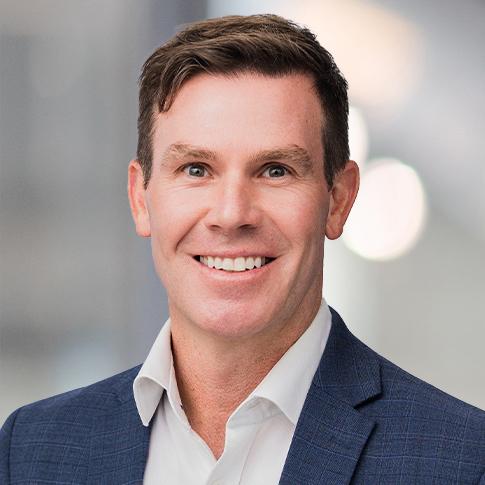
Trent Williams
Head of Broking, Global Construction
In his role, Trent leads our Global Construction Broking efforts and resources across all product lines and coverages. Bringing together a unified and connected Broking community of Construction placement experts. With a career spanning nearly three decades, Trent has invaluable technical expertise and market insights, supporting clients globally. Prior to this, Trent served as the Head of Broking, Pacific for the past 7 years, where he worked closely with the Australian and New Zealand businesses to provide tailored placement options for our regional clients’ unique needs. Trent first joined Willis in 2006 in the Construction Practice after an extensive career in both Australia and the UK.
Trent Williams
Head of Broking, Global Construction
In his role, Trent leads our Global Construction Broking efforts and resources across all product lines and coverages. Bringing together a unified and connected Broking community of Construction placement experts. With a career spanning nearly three decades, Trent has invaluable technical expertise and market insights, supporting clients globally. Prior to this, Trent served as the Head of Broking, Pacific for the past 7 years, where he worked closely with the Australian and New Zealand businesses to provide tailored placement options for our regional clients’ unique needs. Trent first joined Willis in 2006 in the Construction Practice after an extensive career in both Australia and the UK.
Podcast guest
Listen to this episode on:
Podcast series
Global Marketplace Insights – Insurance trends from Q3 2025