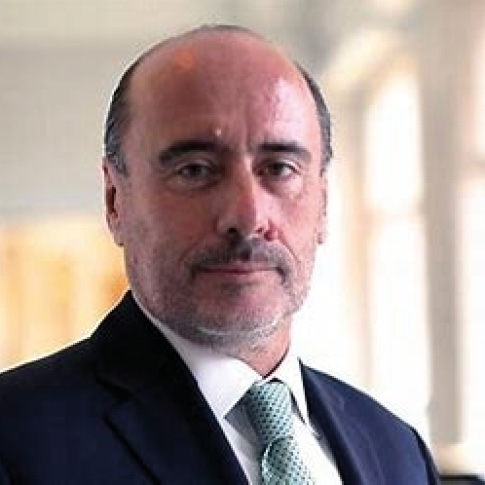
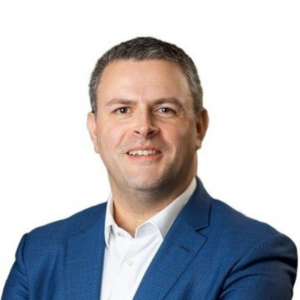
In this episode of the Global Marketplace Insights podcast, Neil Harrison, Global Head of Claims, and Michael La-Band discuss the current state of the insurance market for global claims.
Transcript for this episode
NEIL HARRISON: As always is the case on claims, we could pick on many things, many geographies, many areas of specialty. Tough to get this much content into such a short podcast period of time, but we continue to see, as you said at the outset, a challenging claims environment. One that is, perhaps, still driven a little bit too much, in our view, by the involvement of external counsel on behalf of insurers.
A little bit too much, perhaps adversarial activity in certain parts of the world. We see, obviously, the macro environment, global volatility as a challenging backdrop. We see things like tariffs starting, as you've said, to really now materialize in their impact on claims costs, claims process, and so on and so forth.
View Full TranscriptSPEAKER: Welcome to Global Marketplace Insights by Willis, a WTW business, a podcast series showing the latest trends from the specialty and regional insurance markets.
NEIL HARRISON: Hello and welcome back to the Willis Marketplace Insights podcast series. My name is Neil Harrison. I'm the global head of claims at Willis, and going to be leading a conversation today with Mike La-Band. Mike is London-based, plays an important global role for us in the area of complex claims and claims resolution. And so Mike, without further ado, I know you're going to be sharing with all of us today some of your recent experiences across the geographies and across some of the key client segments that we serve.
Before we get into any specifics, what's going on out there? Give us some of macro perspective, if you can, on what you're seeing and what you're experiencing. And then later on, we can think about what our clients and our market partners are likely to see as we look ahead to the rest of this year and also into 2026. So over to you to get us started.
MIKE LA-BAND: Yeah, sure. Thanks, Neil. So yeah, in the last quarter of 2025 to date, so at a macro level, the claims environment is challenging. We've seen insurers increasingly relying on external counsel for coverage decisions. Broad economic trends include, obviously, rising interest rates, which we're seeing manifest in increased volume of bankruptcies, which is leading to an uptick in trade credit and transaction liability losses.
And the impact of tariffs is being seen with costs becoming higher on construction materials, car parts, medical equipment, which is leading to greater values and longer settlement periods for claims. Concerns are being raised with regard to business interruption and complexity in the volatile tariff environment, and with regard to potential securities class action lawsuits that will lead to claims in financial lines arena.
Insurers are also noting the likely impact on claims frequency and the cost of losses related to algorithmic liability, given the increased use of artificial intelligence in influencing decision making processes across multiple industries. And then, obviously, in the geography specific geographies, we've seen a number of key trends and issues, but if you want to touch on Australia, Neil, I know you were out there recently.
NEIL HARRISON: Yeah. First I will. I'll take Australia first and then we'll hit a couple of other parts of the world as well. So look, I mean, Australia in many ways, exemplifies the broader global trends that you've already talked about. And I think there are the macroeconomic issues, Australia has suffered, obviously, as well from some extreme weather events. Overall, we see a pretty significant uptick in claims volume in that part of the world, both on frequency and on the severity of the losses.
There's an interesting shift that our team are seeing there from shareholder class actions into actions involving areas of privacy and data. It feeds back into your AI comments, Mike, but also issues around employment related liability, mass tort, consumer protection, product liability. It's a good example of a part of the world that doesn't necessarily always get the level of attention that it should, but there's plenty going on there. It's also a part of the world that is starting to see more and more regulatory development, both federal and state level, urging by regulators for financial services firms to strengthen governance around the use of artificial intelligence by way of example.
So I think our team in Australia are doing a great job against that backdrop, but the market overall somewhat challenged around both frequency and severity with a notable change, as I've just said, really, in the sorts of claims that are really driving that activity. But Mike, let's think more globally for a moment. You got a background in Latin America yourself. So talk a little bit about Latin America as another geography of interest.
MIKE LA-BAND: Yeah. Absolutely. So Latin America, and what we've been seeing is an increased rigor on the claims adjustment side, much more detailed focus on policy wordings from the insurer's claims teams right from the very outset, which is causing some challenges. Again, more use of lawyers for coverage. And that's a fairly systemic issue that we're seeing in a minute across all markets, really.
A specific note in LATAM, in Brazil, they've got the implementation of new legislation coming in from December of this year, which introduces strict timelines for claims adjustment. This has long been a feature in other countries in the region, most notably Chile and Peru. But in Brazil, even though this legislation is pending, it's already having a significant impact on insurer strategies, resource models and approaches when it comes to thinking about how they're going to manage claims going forward.
Obviously US, we've got a lot to say. I know, obviously, you're based in New York, Neil, if you want to take this one, or we can tag team it. It's up to you.
NEIL HARRISON: Yeah. Happy to do it. And look can't have a conversation about the claims environment in the United States without talking about litigation funding. I think we talked about it on the last quarterly podcast that I was a part of as well. So litigation funding continues to get a lot of headlines in this part of the world. I think the general view with litigation funding, making claims costlier, and in many ways slower to resolve across many lines of business.
Nuclear verdicts or social inflation, as people really want to use those phrases interchangeably. What we're now seeing is the impact of that in the middle market and the smaller commercial segment, as well as in the major corporate segment. There are other key trends in the US that I think, again, a bit of a microcosm of what we're seeing globally around mass torts.
We're seeing a lot of challenge around issues such as opioids, PFAS, or forever chemicals, which is certainly a global trend. And, again, many client industries are now being affected. I think in the past, you could be a little bit more narrow in terms of saying clients in certain industries are going to be impacted by these things. But what we're now seeing across our book, if you're a client and you have risk in consumer goods and packaging, food and beverage, textiles, personal care, petrochemicals, plastics, all of these things are starting to feed in.
The other US trend, in some ways a little bit specific because of the workers' compensation environment, is the role that medical inflation is playing. So it drives a major concern. And what we're seeing, what our team are seeing here, mental health claims and the impact of long COVID really starting to drive or continuing to drive claim activity and starting to draw down on claims resources from the carrier community, the adjusting community and others.
But so, again, as always, plenty going on here in the United States. But maybe, Mike, what we can do next is take a swing away from thinking geographically and talk a little bit about some of the key areas of specialty. Obviously, for us at Willis, specialization in claims is massively important. Our clients and our market partners appreciate that and benefit from it, but let's just pick on a couple of the industry segments, or the specialty segments and talk a little bit about what we're seeing there.
And perhaps, you want to start with, say, aerospace by way of example?
MIKE LA-BAND: Yeah. So in aerospace, so we've, obviously, had the UK high court decision on the war risks, insofar as the Russia and Ukraine conflict is concerned. And that's led to a significant number of aviation claims being settled recently, with many others advancing towards closure. Obviously, all such matters are being dealt with on without prejudice basis and subject to strict non-disclosure agreements, so there's not much more we can say about those.
Litigation remains ongoing in the high court with regards to the operator's policies and subrogated rights and interests, and that's going to go to trial at the minute, at least predicted in October 2026. Overall, the market, most notably London, is moving more towards the use of external coverage council and to centralisation of levels of payment authority. So that, at least, is going to make things easier as those decisions come out and money starts to flow to our clients.
Another specialty segment, cyber. So interestingly, whilst the industry has seen a higher loss volume throughout 2025 within the Willis book, most significantly in the US, it's actually down year on year. I think that's due, in part, mainly to the absence of any widespread event. You think back to 2024 where you had CrowdStrike. We've not seen anything like that so far in 2025.
Activity that is driving the frequency on that book that we have seen is malicious data breaches, wrongful collection, misuse of data, and ransomware, with that latter actually being the largest driver of claim cost in that segment. Leading client industries for cyber claims in the last quarter have been, as you probably expect, financial institutions, but also health care and manufacturing.
Do you want to touch on marine as well?
NEIL HARRISON: Yeah. Carry on and take marine and I'll take the subsequent one, perhaps.
MIKE LA-BAND: Yeah. Sure. So yeah, marine. I mean, this isn't new, but I think we're starting to see a bit of an uptick in it. So obviously, as the world pushes towards decarbonization, there's been a lot of new cargo out there on the seas, and most notably is the lithium ion batteries, which are clearly an essential component to drive clean energy technologies, above all in electric vehicles.
And so we're starting to see this is a growing contributor to much higher claims costs with several fires at sea. So that's been notable one for us of late. Yeah. Maybe you want to touch on transaction liability now? I know you've got quite a few things we can probably say about that.
NEIL HARRISON: Yeah. That's-- in the interest of time as well, we'll make this last one. We could, as always is the case on claims, we could pick on many things, many geographies, many areas of specialty. Tough to get this much content into such a short podcast period of time. But transaction liability is an interesting one, again, for us, driven a little bit, perhaps, historically as a business line here in North America, but certainly has some global applicability as well.
It's an area where we are certainly seeing some changes in insurer behavior, for want of a better phrase, but also in the losses that are coming through. Claim severity certainly rising. We've seen and are aware of several tower losses that exceed, say, $300, $400 million. So big numbers that are coming into play. And what we're starting to see, as this part of the industry gets a little bit more mature, we are starting to understand better all of the key loss drivers.
So financial statements, material customers, compliance with laws, condition of assets, those are really the drivers of some of these higher value claim events that are starting to come through. What's pleasing for us is that many insurers, including some of the specialist MGAs that play such an important role in the transaction liability arena, are really starting to position claims management, claims expertise, claims specialization as a market differentiator.
Others, perhaps, differently, view transaction liability as purely a spin off of a broader financial lines book or something else, but the specialization in transaction liability claims massively important in our opinion. And certainly, I think, as our clients are starting to go through some of these claims processes, the ability of certain insurers to bring experts who understand, not just transaction liability insurance, but the core transactions that are underpinning it to the table is hugely important.
Transaction liability, frankly, is also a part of the business right now that's got so much dynamic activity with private equity firms and investor groups coming in and out of the business, different capacity providers getting involved, and so on and so forth. So a very dynamic and interesting area of the book for us. And again, I know our clients are benefiting greatly from the specialization that our team brings to the table on that. So look, again, Mike, in the interest of time, I think we'll probably have to bring this to a close.
I'm sure that next quarter, whoever is fortunate enough to join the podcast conversation, can touch on some different parts of the world and maybe some different areas of specialization as well. I think just to wrap up from my perspective, I would say that we continue to see, as you said at the outset, a challenging claims environment, one that is perhaps still driven a little bit too much, in our view, by the involvement of external counsel on behalf of insurers.
A little bit too much, perhaps, adversarial activity in certain parts of the world. We see, obviously, the macro environment, global volatility as a challenging backdrop. We see things like tariffs starting, as you said, to really now materialize in their impact on claims costs, claims process, and so on and so forth. But on the more positive side, we do see many insurers coming to the table for discussion in a constructive way, not just about new arising claims, but about matters that have been out there for some time.
And, again, no better proof of the value of the insurance industry or the value of insurance than actually seeking to resolve large, open, complex matters. So our chance here to thank those insurers who are working with us on behalf of our clients in that regard. So to bring it to a close, again, Mike, thanks for joining. Really appreciate you contributing to this episode and look forward to any feedback that we get for doing this and also look forward to contributing to the next quarterly review myself as well. Thanks, again Mike.
MIKE LA-BAND: Thanks, and cheers.
SPEAKER: Thank you for joining this WTW podcast, featuring our latest global market commentary. WTW offers insurance related services through its appropriately licensed and authorized companies in each country in which WTW operates. For further authorization and regulatory details about our WTW legal entities operating in your country, please refer to our WTW website.
It is a regulatory requirement for us to consider our local licensing requirements. The information given in this podcast is believed to be accurate at the time of publication. This information may have subsequently changed or have been superseded, and should not be relied upon to be accurate or suitable after this date. This podcast offers a general overview of its subject matter.
It does not necessarily address every aspect of its subject, or every product available in the market. And we disclaimer all liability to the fullest extent permitted by law. It is not intended to be, and should not be used to replace specific advice relating to individual situations, and we do not offer, and this should not be seen as legal, accounting, or tax advice. If you do intend to take any action or make any decision on the basis of the content of this podcast, you should first seek specific advice from an appropriate professional.
Some of the information in this podcast may be compiled from third party sources we consider to be reliable. However, we do not guarantee and are not responsible for the accuracy of such. The views expressed are not necessarily those of WTW. Copyright, WTW 2025. All rights reserved.
Disclaimer
WTW hopes you found the general information provided here informative and helpful. The information contained herein is not intended to constitute legal or other professional advice and should not be relied upon in lieu of consultation with your own legal advisors. In the event you would like more information regarding your insurance coverage, please do not hesitate to reach out to us. In North America, WTW offers insurance products through licensed entities, including Willis Towers Watson Northeast, Inc. (in the United States) and Willis Canada Inc. (in Canada).
Please note the observations in the Global Marketplace Insights podcast series are based on our experience with WTW clients and trends across the global markets, but they do not represent a full market study.
Podcast guests
Listen to this episode on:
Podcast series
Global Marketplace Insights – Insurance trends from Q3 2025