

In this episode of Geopolcast, our host Pete Bransden is joined by Tom Clementi, CEO of Pool Re, the U.K.’s government backed terrorism reinsurer.
This episode focuses on the role of public-private partnerships in terrorism risk management. Whether you're a broker, underwriter, risk manager, or policymaker, this episode offers valuable insights into the intersection of insurance, security, and public policy.
Transcript for this episode
SPEAKER 1: You've got this gray zone that you refer to this blurriness, where it's becoming harder to draw a line of demarcation as to where terrorism ends and war begins.
PETE BRANSDEN: Welcome to Geopolcast. The podcast from WTW exploring geopolitics and its impact. My name is Pete Bransden. I'm the head of crisis management in North America for Willis, a WTW company.
In each episode, we're joined by experts who can help us better understand geopolitically-related issues of the day. Today's episode focuses on the role of public-private partnerships in terrorism risk management, and I'm delighted to be joined by Tom Clementi, CEO of Pool Re, the UK's government-backed terrorism reinsurer.
Whether you're a broker, underwriter, risk manager, or policymaker, this episode offers valuable insights into the intersection of insurance, security, and public policy. Before we dive in, a brief introduction to our guest. Tom brings a wealth of experience and insight to the conversation, having led Pool Re since April 2022.
Prior to this role, he served as CEO of MS Amlin, a Lloyd's underwriting business, where he spent over a decade in senior management positions. Tom's career spans law, insurance, and public service. He began as a solicitor at Linklaters before transitioning into the insurance sector.
He has served as the director of the Lloyd's Market Association, a common counselor in the city of London, and currently contributes to several influential bodies, including the National Preparedness Commission, the CBI's Financial Services Council, and the OECD's high-level advisory board on catastrophic risks.
Tom, it's a real pleasure to have you with us today. I think your leadership at Pool Re comes at a time when the terrorism risk continues to evolve, and the role of public-private partnerships is more critical than ever. And I think to start us off, I'd love to hear more about your perspective on Pool Re in managing today's threat landscape, and more broadly, the importance of PPPs in the face of modern terrorism risks.
TOM CLEMENTI: Well, thanks, Pete. Yeah, it's great to be here. I mean, I think public-private partnerships in the insurance sector can be a permanent feature of the risk management landscape if they're designed well. What they absolutely should not do is crowd out the private market. Quite the opposite. I think if they're well designed, they should be dynamic vehicles for crowding in the private sector and enabling private markets to grow and flourish.
But to your point, I think this is an interesting time in the terrorism space, given where the threat is. And we've recently had in the UK, anyway, the Strategic Defense Review published by the government, where the prime minister himself talks about the threats which we face today, having never been quite so serious and so unpredictable, and that this is not just an issue around national security, but actually a question of economic security, because global instability is damaging to economic security and drives up the cost of living for hard-pressed families and drives down growth.
So this is a really big focus for government at the moment. And I think that PPPs and insurance can play a role. In fact, I think the national security strategy, which talked about the UK and the world entering an era of radical uncertainty, kind of characterized by authoritarian aggression and a return to great power competition and the erosion of international norms.
I think in that context, there's a really, really important role for the private sector to play in helping the government to bolster national resilience. And that national security strategy even talks about the UK requiring a whole-of-society approach, where there's a shared responsibility between government and industry and civil society to step up and really help prepare the country for war.
And I think it's important that government helps to explain to the private sector, particularly those parts of the private sector that are not traditional or conventional members of the national security community, what role they can play, what helpful contribution they can make, but I think much of corporate Britain will be up for it, including the insurance sector. So I'm a fan of PPPs as long as they're well designed, but I think we might see more of them potentially.
PETE BRANSDEN: Very good. And maybe let's take a step back. So for listeners that might not be familiar with Pool Re's inner workings, can you walk us through how the organization operates and how it's evolved over the last 30 years?
TOM CLEMENTI: Yeah, sure. I mean, we were set up in 1993 as a result of a market failure caused by the IRA's mainland bombing campaign, which led to the total withdrawal of capacity by the private reinsurance and then the insurance market. So we are, as I was saying earlier, a public-private partnership.
The unlimited backstop, which we enjoy from the Treasury, allows us to provide unlimited reinsurance cover for terrorism to our members. We have hundreds or so members. Membership is entirely voluntary, but it's open to anyone that is authorized to transact insurance business in the UK. So we're able to offer that unlimited terrorism cover to our members so that they in turn can provide that same cover to UK businesses.
We charge a premium to those that we reinsure under a new treaty reinsurance scheme that we operate as 1st of April. Those premiums have built up over the last 30-odd years into this pool that's now a 7.3 pounds billion fund, and only where our resources to be exhausted would we call upon that government guarantee.
And it's the government guarantee that sits at the cornerstone of our scheme, because it's the government backstop that ultimately provides the confidence to Pool Re and to our members to provide that unlimited cover, which includes CBRN, to the UK economy. We supplement that 7.3 pounds billion fund, which Pool Re is amassed, through the purchase of our own reinsurance and, more recently, through ILS issuance.
And when you combine our fund, the outwards that we buy, together with the members' retentions and the monies that we have paid to the Treasury in return for the backstop, we have actually built, over the last 32 years now, a private sector capital buffer that's just shy of 13 billion.
PETE BRANSDEN: Well.
TOM CLEMENTI: So it would take a 13, or close to a 13 pounds billion, loss event following a terrorism event before we called upon any taxpayer money. So yeah. So we're a public-private partnership. And not only do we provide reinsurance cover to our members, we're also involved in risk mitigation. We have an in-house consulting arm called Pool Re Solutions that provides threat analysis and risk management services to our members and their policyholders.
And we also have a good relationship with the home office. And we support something called the counterterrorism allowance, which is where Pool Re uses a small proportion of its funds to pay for National Resilience Initiative.
PETE BRANSDEN: Do you see that the fund or the buffer continuing to grow over time? Or are you going to reach a point where you plateau and say, at this point, the premiums that will see that or not see that, but take from the members can level out?
TOM CLEMENTI: Well, I think the fund has grown over the years clearly. But now, actually, it's broadly plateaued because we pay quite a lot of our premium to HMT in return for their unlimited guarantee. So 50% of our premium goes straight to the government, and we also pay 25% of our profits to HMT as well, which includes the investment return on the investment portfolio.
We also pay a dividend to our members. So we only retain a fraction of it, if you like, the profits that we make. And with inflation running at-- what it was running at certainly a few years ago, actually the size of the fund in real terms is broadly stable.
PETE BRANSDEN: OK.
TOM CLEMENTI: So it's not growing in real terms by a significant margin. But it is a good question. It is an open question that the Pool Re and the government have never really addressed, which is how big is should the farm be, and how big is big enough?
PETE BRANSDEN: Yeah. And you mentioned the change in the reinsurance scheme. So I understand this is-- you describe it as the biggest operational change in Pool Re's 30-year history. Can you provide an overview as to what those changes were, what kind of feedback you've received from members so far, and what do you see as the long-term benefits of this new treaty scheme?
TOM CLEMENTI: Yeah, well, I think it's been well received by members. Certainly, members voted unanimously in favor of moving to this new scheme. So we used to operate a [? FACA ?] [? big ?] reinsurance scheme with a tariff pricing approach, which is a fairly rudimentary model, very much similar to the one that we started with back in 1993, where members passed risks to us on a risk-by-risk basis, and using a zonal rating matrix, we then applied a tariff depending on whether it was in Zone A, Central London, all the way through to zone D, which is in the sticks.
And we've moved from that to a catastrophe treaty aggregate excessive loss model, where we charge a single price to reinsure the portfolio of risk that's ceded by a member. And members, crucially, have much greater flexibility under the new model around retentions and therefore pricing.
So under the old scheme, we would allocate the aggregate member retention down to individual members in proportion to their premium contribution pool in the preceding year. Whereas now, subject to a minimum, we allow our members to pick whatever retention they want to take. If they take a bigger retention, then they get a corresponding reduction in premium.
We have seen a big increase in member retention. So under the old scheme, I should say we cut over to the new one on 1st of April, but prior to 1st of April, the member retentions was 275 million. And now, as 1st of April, it's moved to more like 450 million, so quite a big increase--
PETE BRANSDEN: Yeah
TOM CLEMENTI: --under the new scheme.
PETE BRANSDEN: So pricing that quota share presumably relied on some in-depth analytics and modeling. Was that something you had to build out for the new scheme, or was that part of the original capability?
TOM CLEMENTI: Well, we've been building our in-house pricing model for some years, but it's now really being used in anger, as it were. And we model apparel that's pretty hard to model because there's not a lot of data, thankfully. But we model 27 sub-perils of terrorism across 350,000 postcodes. I think we modeled something like 100 million simulations.
So we think it's a pretty sophisticated model. We rely on our in-house consulting arm, Pool Re Solution, to inform some of the frequency and severity assumptions which underpin each of those 27 sub-perils. But we also have external experts that we call on and work with at Cambridge University and from RUSI. We used to work very closely with Cranfield as well. So there's a lot of external as well as internal expert judgment that goes into those assumptions which underpin the model.
PETE BRANSDEN: And is it fair to say that success with this new scheme could be measured in part by seeing those retentions increase over time?
TOM CLEMENTI: Yeah, absolutely. That's one of the big, big reasons for doing it is to pass more risk back to the private market. That's a mandate we have from Treasury, because whilst they give us a backstop, they've been clear that the guarantee they provide to us is conditional upon us proactively returning risk back to the private market. So yeah, that is definitely one success criteria.
I think another reason we moved to that new treaty scheme, which I didn't mention, is to try and encourage the take-up of terrorism insurance amongst SMEs. And that's a real focus for Pool Re at the moment, only 4%. This is based on a fairly recent survey done by the Federation of Small Businesses, the FSB. But only 4% of SMEs in the UK are covered for terrorism. Many more than 4% will think they're covered for terrorism.
So there's quite a big perception gap, not to mention a very big protection gap. And we're seeking to try and address that. And we have greater flexibility within this new scheme to do that because the members have much greater flexibility around pricing. Whereas in the past, they would have tended to just to adopt our tariff pricing and add on a bit to cover their admin costs.
PETE BRANSDEN: And I would imagine overall goal here is that you don't want members to-- or you don't want SMEs-- to be buying separate terrorism policies. You want it to be covered within an all-risks or property policy.
TOM CLEMENTI: Yeah, so what we're proposing to do actually, and we're still working through a lot of the detail, but we're looking to incentivize our members to reintegrate terrorism cover back into standard commercial property policy wordings, because that we think is the way to get SMEs covered. It's a supply-side route.
The alternative is to go around the demand side and try and drum up greater awareness and understanding of the peril and the hope that SMEs will buy it. But I think we could spend a huge amount on a campaign to drive up awareness and move the 4% to 5%.
PETE BRANSDEN: Sure.
TOM CLEMENTI: If you really want to move the needle, I think a supply-side solution, where you reintegrate cover back into those standard commercial property policies, is the way to go. And, of course, before the IRA came along in 1993, when you bought your standard commercial property policy, terrorism, which is part of it, it was included. It was only when the IRA came along that it got thrown out and excluded. So we're trying to go back to the future.
PETE BRANSDEN: And what might those incentives look like? Can you say?
TOM CLEMENTI: Well, I mean, again, we're working through them, but they will be pretty significant pricing discounts for SMEs with a particular focus at the smaller end of SME. That's the thinking at the moment.
PETE BRANSDEN: And you mentioned the genesis of Pool Re being the IRA bombing campaign. And I think that leads to a fundamental question that we grapple with a lot, which is-- what is terrorism today? I wonder how you think about that, particularly in the context of what we're seeing more of, which is, we call it gray zone threats or gray zone attacks. Where is it terrorism? Is it state sponsored? What's the kind of internal thinking within Pool Re about definitions of terrorism?
TOM CLEMENTI: Well, look, this is-- I mean, we could do a days podcast on this. I find it quite interesting, partly because I'm a former lawyer, and I like getting involved in wordings and definitions. But yeah, it's not easy because we are a very pure terrorism reinsurer. We have explicit exclusions for riot. There's a separate scheme for that, the Riot Compensation Act. And we have an explicit exclusion for war.
But I think given that over the last five years or so, state threats have become increasingly prominent. You've got this gray zone that you refer to this blurriness, where it's becoming harder to draw a line of demarcation as to where terrorism ends and war begins. But it's something that we've been working on for some time, and we are in the process of trying to determine where we think the perimeters of our scheme lie, and we're going to socialize that with members and reinsurers, and then hopefully share it with HMT so that they have an understanding of what we think the scheme covers and what it doesn't cover.
So we are looking to address that. But look, these things will probably never be black and white. There's always going to be some judgment required. But I have full confidence that the Treasury will-- because it's the Treasury, and only the Treasury that can trigger the Pool Re scheme and bring us into action-- but I have full confidence that they will make a sound decision, certification based on the facts in front of them, in conjunction with the relevant authorities, if and when the time comes.
PETE BRANSDEN: Tom, you've mentioned Pool Re Solutions and how it engages with the business community. What are some of the best practices that you see some of your largest or sophisticated policyholders engaging in when it comes to threat assessments and preparedness and modeling?
TOM CLEMENTI: Yeah. Well, yeah, we think, as I said earlier, risk mitigation is really important. It's a core part of our strategy, preventing this stuff from happening in the first place, or mitigating the impact should it occur. Prevention is cheaper than cure.
I think a lot of the larger businesses that will be covered by Pool Re have got pretty sophisticated security operations. Not to say that there's not room for improvement. And we work with a number of high profile venues in the UK to help them better understand credible scenarios that they might face. But I think where there's a real focus is to try and help SMEs.
Now, you might be familiar with Martyn's Law, which has hit the statute book recently, and we're currently in a grace period before it becomes enforced. But there's a lot of quite simple measures that smaller businesses can take, which are either low cost or no cost. And I think there's home office guidance coming out soon, and certainly, the guys at Pool Re Solutions are going to be supporting the home office and helping SMEs understand what action they can take, what reasonable steps might constitute. But a lot of it is, I say, quite simple-- training, education, it's awareness. Pretty basic stuff that's not going to cost a lot of money.
PETE BRANSDEN: And Tom, so Pool Re perpetually makes headlines as the largest buyer of retrocession coverage in the world with your cover and with the landmark terrorism cap bond. And I'm wondering if you can talk about how you navigate, as the largest buyer in the market, this retrocession market, and do you see an expansion of the cap bond on the horizon? I note that it's air quotes, "only $100 million."
TOM CLEMENTI: Yeah.
PETE BRANSDEN: Is that something that you'd like to expand in the future?
TOM CLEMENTI: Still the largest terrorism cap one in the world.
PETE BRANSDEN: The only one.
TOM CLEMENTI: Well, the French have issued something. Look, I mean, buying reinsurance is a really core part of our strategy of returning risk to the market because we do it in two ways-- firstly, through member retention, but secondly by buying reinsurance, and now complementing that with ILS.
And our strategy is quite simple-- it's to try and buy as much reinsurance as we can, subject to value-for-money considerations. And we started buying in 2015, and over the last 10 years, we've grown the size of that reinsurance program. It's now 2.75 billion plus the 100 million in ILS.
We tend to buy a-- well, I think we've always bought a three-year program, but have tended to cancel and replace on an annual basis. Not always. We rolled from '22 into 2023 and '24, and then renewed a three-year deal in the early stages of this year.
But look, we've had great support from the market. We're really grateful to our reinsurers. We've got a panel of 60-plus reinsurers that back us and a growing number of people on our bond. To your question about the bond, yeah, we'll always think about whether we could increase the size of the bond, clearly. And not least since we've become an arm's-length body of government, value for money is right up there.
And that, to some extent, constrains the size of the bond that we want to buy. But we may think about a more regular issuance. So hitherto we've issued every three years. So we may keep the bond the same size and still buy a three-year deal, but buy every year rather than every three. So you've always got capacity rolling on and off. And that's something we're giving thought to.
Part of the reason for wanting to think about an annual issuance is, I think it increases the regularity of your dialogue with the ILS market. If you're wanting to go to market and build a relationship with investors, talking to them every year is better than talking to them once every three years, where they've probably forgotten who you are and what you do and how you work.
PETE BRANSDEN: Tom, turning to a subject close to my heart, and I imagine of interest to much of the audience, is the US market. And I presume you are somewhat in the loop on these things. Do you have an outlook that you might share for what might be in store for the next TRIA renewal?
TOM CLEMENTI: Well, it's absolutely not my place to say, really, is it? I'm not a FIRE employee, and TRIP's not my baby. But we have a really good relationship with the US Treasury and the FIRE team. My recollection, you'll know better than me, is that TRIP expires at the end of 2027. My understanding-- but take it with a pinch of salt-- is that will probably get renewed well before, probably prior to the end of 2026.
I know there's been some discussion around whether or not TRIA should be extended to include a federal backstop for catastrophic cyber. I think that might still be on the table. I think it will be tough, tough to get that done, tough to get that through. But I think, as I understand, it's still on the table. But yeah, you're better off asking the guys at FIRE.
PETE BRANSDEN: Willis is a keen supporter of if TRIP, and that Pool Re is. Can you talk about some of the value that you get from sharing best practices with administrators of similar pools around the world?
TOM CLEMENTI: Well, yeah. Shout out to Fergus Critchley and the team here for the fantastic Willis compendium that's done on all the pools, which I would recommend as bedtime reading. But yeah, I mean, TRIP we think is a real force for good. We come together as a community, actually twice a year, but the conference is annual.
And you're right, we share best practice because we're all dealing with the same threat by and large, and all of our models are quite different. But I think we are interested in seeing what other pools have done. The Australians widen their pool to include cyclone. TRIP, of course, is a post-funded rather than a pre-funded model. Consorcio in Spain covers pretty much everything under the sun from earthquake risk to terrorism risk to wind in the Canary Islands.
So everyone has different models, and we can learn from that. But I also think that coming together and putting on a conference can help build confidence with the reinsurance community that a lot of these pools do what they're doing and are doing a pretty good job at addressing terrorism risk and are worth supporting. So yeah, a long, long way if TRIP carry on.
PETE BRANSDEN: You've mentioned the nat cat exposure in the Spanish and Australian pools. Has Pool Re laid a framework that might be applied for non-terrorism perils in the UK?
TOM CLEMENTI: No. There's no framework. I mean, we are periodically reviewed by the Treasury. And, of course, we have evolved our cover over the last 30-odd years as the threat has evolved. We started off fire and explosion, then included CBRN. Then it was non-damaged BI following Burrow Market, and then also the remote digital interference, i.e. the cyber cover, cyberterror cover, that we provide to a limited extent.
So it is possible to evolve. And it's right that we should evolve the scheme as the threat changes. But there's no formal framework outside of having a conversation with the Treasury and with our members as to what might make sense. But we're not sniffing out opportunities that need to be genuine market failures that PPP like Pool Re can usefully address.
If the private market can do it, or has a realistic prospect of doing it in a short time frame, then my instincts are we should stay well away. But certainly, there are protection gaps that get discussed in the insurance press quite regularly when it comes to systemic risk. And I think that public-private partnerships and insurance are worth considering as a means of addressing other systemic risks. But ultimately, when it comes to Pool Re and changes, it's down to the Treasury ultimately.
PETE BRANSDEN: Tom, perhaps a personal question to close this out. I know a lot of my colleagues here in Willis derive a keen sense of purpose, knowing that they are playing even a small role in protecting our clients against some of the scariest threat that the world faces. So I'm curious, what does it mean to you personally to play a leading role in developing the UK's economic resilience against terrorism?
TOM CLEMENTI: Well, I'm proud that I work for a company that is a part, an important part, and hopefully a successful part of the UK's national resilience and national security apparatus. And we stood the test of time. So, look, it gets me out of bed, gets a lot of the team I work with out of bed in the morning. It's one of the reasons I love Pool Re.
The other reason is that we just engaged with a really diverse range of stakeholders from Willis and various other reinsurance brokers to 100 members, to regulators, to reinsurers, to all the government stakeholders that we deal with, whether it's the Treasury or the home office or parts of the intelligence community, and then all the international pools around the world.
So, yeah, purpose is absolutely central. But the range of stakeholders that we deal with makes this a really rewarding and interesting job.
PETE BRANSDEN: Excellent. Tom Clementi, CEO of Pool Re, thank you very much.
TOM CLEMENTI: Pleasure.
PETE BRANSDEN: That was Tom Clementi, CEO of Pool Re. Thank you for listening to the Geopolcast. To get episodes as soon as they are released, make sure to subscribe to the Geopolcast. You can find us via your usual podcast players, and please recommend us to your friends and colleagues.
SPEAKER 2: Thank you for joining us for this WTW podcast featuring the latest perspectives on the intersection of people, capital, and risk. For more information, visit the insights section of wtwco.com.
SPEAKER 1: Willis Towers Watson offers insurance-related services through its appropriately licensed and authorized companies in each country in which Willis Towers Watson operates. For further authorization and regulatory details about our Willis Towers Watson legal entities operating in your country, please refer to our Willis Towers Watson website.
It is a regulatory requirement for us to consider our local licensing requirements. The information given in this podcast is believed to be accurate at the date of publication. This information may have subsequently changed or have been superseded and should not be relied upon to be accurate or suitable after this date.
This podcast offers a general overview of its subject matter. It does not necessarily address every aspect of its subject or every product available in the market, and we disclaimer all liability to the fullest extent permitted by law. It is not intended to be, and should not be used to replace specific advice relating to individual situations, and we do not offer, and this should not be seen as legal, accounting, or tax advice.
If you intend to take any action or make any decision on the basis of the content of this podcast, you should first seek specific advice from an appropriate professional. Some of the information in this podcast may be compiled from third-party sources we consider to be reliable. However, we do not guarantee, and are not responsible, for the accuracy of such. The views expressed are not necessarily those of Willis Towers Watson. Copyright 2025 Willis Towers Watson. All rights reserved.
Disclaimer
WTW hopes you found the general information provided here informative and helpful. The information contained herein is not intended to constitute legal or other professional advice and should not be relied upon in lieu of consultation with your own legal advisors. In the event you would like more information regarding your insurance coverage, please do not hesitate to reach out to us. In North America, WTW offers insurance products through licensed entities, including Willis Towers Watson Northeast, Inc. (in the United States) and Willis Canada Inc. (in Canada).
Podcast host
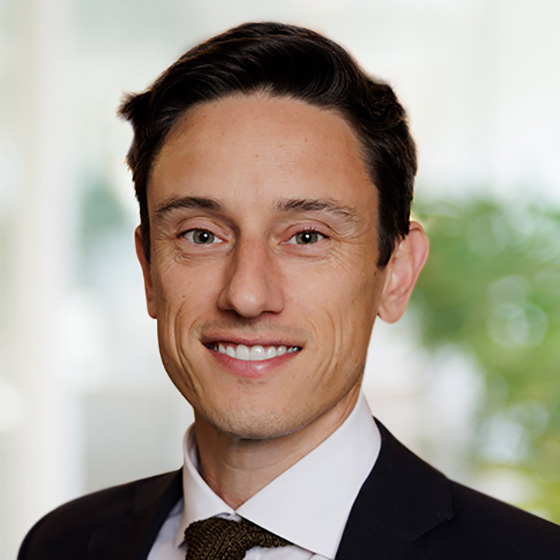
Peter Bransden
Head of Crisis Management, North America
Peter Bransden
Head of Crisis Management, North America
Podcast guest
Tom Clementi
Chief Executive Officer of Pool Re.
Tom Clementi
Chief Executive Officer of Pool Re.