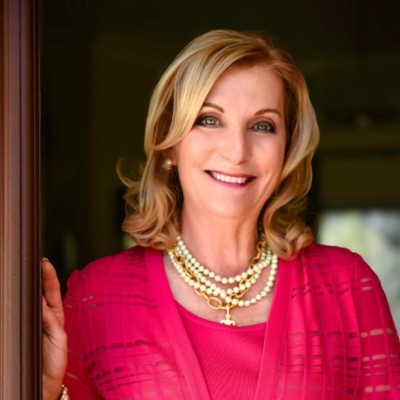
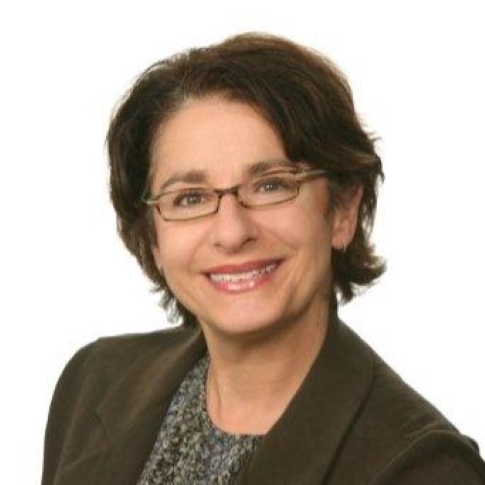
MICHELLE MADDA: Thank you, Rhonda. So happy to be here and to talk about this important subject.
RHONDA DEMENO: Well, we are so privileged to take some of your time today and talk to you about this very important topic, elopement. When these adverse events occur, they cause a lot of safety risk for residents. They cause a lot of reputational damage for senior living communities.
WTW just recently published its senior living claims study, and in that claim study, we're still seeing elopement claims to be one of the highest severity claims in the industry. So that's why I thought it would be very helpful to interview you today, Michelle, to talk through what's made Mather successful in managing and mitigating elopement risk.
So I'm going to start off our conversation by talking about giving a definition of elopement. I know oftentimes, I'm very privileged to go to communities throughout the country and do assessments.
And oftentimes, when we start to peel away the layers of the onion of an incident, so to speak, I'll hear staff members say, well, we didn't really call that an elopement because we found the resident in the parking lot of the community. So to better frame that and to give a good definition, could you walk us through what Mather’s definition of an elopement is?
MICHELLE MADDA: Sure. In our protocol, we define an elopement as a situation in which a resident with impaired cognition or a demonstrated lack of safety awareness or judgment leaves a secured area undetected or unsupervised by a team member or other responsible party.
And I will add in that we also call this a behavioral expression. The person is trying to get to something or do something. There's something driving them to try to exit seek. So I think that's an important component of the definition as well.
RHONDA DEMENO: Yeah, that is very, very important. And I'm going to circle back to that behavioral component of the wandering or hazardous wandering. One thing we're noticing in our claim study is we're seeing an uptick in independent living claims.
So, do you have a definition of hazardous wandering for independent living? Or are you seeing any activity in that area? Or having to put any guardrails around residents and independent living because they can come and go, but we're seeing residents sometimes stay in those settings too long. So can you give me any feedback on that?
MICHELLE MADDA: Yeah, we do define hazardous wandering as a situation where cognitive impairment, memory loss, impaired decision making, impaired judgment put the person at risk. So that's across any part of the continuum.
And we don't-- because independent living is not a secured area, we don't define elopement as including independent living, but we do identify hazardous wandering in independent living. And we call those concern reports. And our team members document those in the electronic incident reporting system so that we can begin to track and trend when residents are having these types of events.
RHONDA DEMENO: That's good to know. Very good. So there's a definite difference with defining based on the level of care that the resident is at. So do you have environmental controls that are in place to assist in managing elopement in assisted living?
MICHELLE MADDA: We do. Obviously, we use the technology of the wander guard or personal safety system that residents who are identified during the risk for elopement assessment are given if they are identified as a high-risk for elopement.
But we also use other strategies besides that technology, because the hazardous wandering can lead to a exit from the community by tailgating somebody or people are remarkable, they find ways to sidestep the system.
So we do try to use things like engagement programming as a strategy, for example, purposefully having programs at change of shift while team members are giving report so that residents are engaged during that time and not wandering about.
All our secure neighborhoods also have walking paths and outdoor spaces so that people can walk about, feel that they're not constrained, but have the opportunity to move and get rid of some excess energy.
RHONDA DEMENO: So, Michelle, when you were talking about behaviors, it really brought back memories of a personal situation that I have with my mother. When my mother was in a memory care unit, the staff would come to me and say around 4 and 5 o'clock every day, my mother was really trying to go to the doors of the memory care unit and trying to get out.
And so during that time, what we decided to do was put my mother in a cooking class. So they simulated a cooking, an area where she was either baking cookies or working in a kitchen type of setting.
And that really helped mitigate her restlessness, any behaviors, if I can impart anything to our listeners really agreeing with you on the engagement activities and the importance of those activities. Michelle, we were talking a bit about an environmental safety and hazard surveillance self-assessment questionnaire, could you walk us through that?
MICHELLE MADDA: Sure. I think we want our environments to be as unrestrictive as possible. So one of the things that we do as a safety and hazard surveillance self-assessment, one of the things that we saw when we were doing that was we had put planters into the garden in the walking area, and guess what? They could also be a stair step to get somebody over a fence if they're so inclined.
So those are the types of things that you might observe while you're doing this hazard assessment that could provide some safety measures that you might take so that people can walk about and not encounter a safety issue.
Another thing that we found doing this assessment was during a construction project on an adjacent wing. The construction workers were leaving the doors open, and so that led to a previously secured door being open and providing the potential exit for somebody who might be wandering about. So there's a lot of things that those assessments can help you identify that could be hazards you might not think about on a day-to-day basis.
RHONDA DEMENO: Yeah. Here we are trying to put all these activities in a setting for a resident, like you mentioned, the garden. That's very good information. And because, again with construction, we know a lot of our communities are under renovation.
So we can't let our guard down for sure, especially when we're dealing with memory care units or residents that have some cognitive impairments. So, Michelle, is it part of the Mather's policy to do the assessment? And on that assessment, what's the frequency of the assessment?
MICHELLE MADDA: Yeah, we do a pre-admission risk for an elopement assessment because it's really good to whether people have exit-seeking behaviors prior to being admitted into the area. And then we do an assessment-- a reassessment on admission in assisted living or memory support areas.
We screen monthly for exit-seeking and hazardous wandering. In skilled nursing, we also do this. And we do that on admission and quarterly. And then of course, with any significant change of condition or after an elopement event or attempt, I should say, as well.
RHONDA DEMENO: Have you seen this exit-seeking? Or when these behaviors change, does that trigger a need to advance to a higher level of care?
MICHELLE MADDA: It really does. When we notice it, a lot of times, it's the concierge reporting that the resident has come down and said, I don't know where I am or I don't where my apartment is. That triggers a set of events where team members-- the interdisciplinary team gathers, talks about it, contacts family.
We try to keep people in independent as long as possible that it would require some additional care services. And then if it can't be managed safely or their safety can't be managed, then we have the discussion about transition to a higher level of care.
We do have a decision tree, not so much applied in independent living. That's more an event-focused decision-making. But in the care areas, we look at things like, is the resident independently mobile? If they can't mobilize themselves, then the elopement risk is pretty low.
We have noticed that residents that come to us from independent living have a higher exit-seeking behaviors because they're wanting to go back to their independent living apartment home. If they have a spouse that lives there and visits regularly, that really triggers that exit-seeking behavior as well.
So there are things that we have seen through history that we say, even if they didn't score high as an elopement risk on the tool we use, which is in PointClickCare, some of those other questions help us to say they might be a higher risk than the tool identified.
RHONDA DEMENO: So we talked about the engagement activities which would be considered interventions. We know one intervention is not going to work for every type of resident. So can you give us some examples of effective interventions that you have used for your residents?
MICHELLE MADDA: Yeah, I honestly have to hand it to our team members. They get to the residents so well. And really, as you said, it's an individualized plan of care. Sometimes the use of diversion or distraction, like you mentioned with your mom, getting them involved in something, using conversation when somebody says, I have to go meet the kids' school bus, bringing them to the point of talking about the kids' childhood and their activities at that time.
Sometimes it's just taking them out for a walk and saying let's go get them. And then team members can say, well, the bus looks like it's been delayed. Let's go back inside and wait for them there. So trying to distract or divert them in a different pathway is important, but sometimes you just have to go along because there's a need there.
RHONDA DEMENO: Yes. For sure. So Michelle, is there something that you post to notify your team members at the community of a resident that may be at risk for elopement?
MICHELLE MADDA: We put it in a variety of places so people see it. We talk about it in morning huddle for the CNAs. We put it in their task list as a thing to be aware of. We put it in the care plan.
We identify it in morning report and for independent living, because it's equally as important that the team members, they are aware, we also have them talk about it in the independent living huddle. Just it's not a long discussion. It's just mentioning the residents who are at risk.
And in the concierge area, we do put pictures behind the desk so nobody else can see them, of residents that are elopement risks, so team members can watch for them if they manage to get to the front door.
RHONDA DEMENO: Are you performing elopement drills? And if so, how often?
MICHELLE MADDA: Yeah, we perform an elopement drill monthly on different shifts. Twice a year, we also include the whole community, including independent living, because once somebody is identified as missing, all team members are involved in the search for them. So every month, we have it in memory assisted living and skilled nursing. And then twice a year, we do a full community drill, so everybody is participating.
RHONDA DEMENO: I think that's great. I know oftentimes, I'll again go back to being very privileged to visit communities across the country. And oftentimes, they're not doing those elopement drills.
And I think it's so very important to do those drills to really identify if there are any gaps in your program. So do you involve the residents during those drills? Or can you give us a bit of insight into-- you mentioned your team members, the independent living residents, the assisted living memory care residents, but walk us through a drill like team members or families involved. Could you give us some specifics on that?
MICHELLE MADDA: That's a really good question about involving the residents. We usually use a resident as our missing resident. So they like to have fun with that. Our drills are pretty detailed, so we have a three-phase drill.
The first phase is the first 10 minutes while we're doing this localized search of the area, checking the sign out logs, making sure the person's not in the salon or having that kind of stuff. And then the next phase is up to 30 minutes where we activate all the other team members, we will call the police, we will call the residents family member to see if they have come and pick them up or if they're at their house.
And then in the last 30 minutes or after the 31 minute, we extend outside of the building in partnership with the local police and that kind of information. We haven't really included independent living residents in the process. But you made me think that might be a fun activity for them.
RHONDA DEMENO: OK, Michelle, it sounds like you have a very comprehensive approach by conducting those elopement drills. Can you elaborate on the type of technologies that your organization is using to help manage residents that have been identified to be at risk for elopement?
MICHELLE MADDA: Right now, all we're doing is the wander guard, although just something that came up recently was a resident refused to wear the device on their person and the team members put it on the walker, but the walker was left behind. And so the resident was able to make their way through the community undetected.
So we did start looking at some other types of technologies. There's so much out there now, but even something like the-- I forget what they're called, the tags you put in your luggage. I think they're called AirTags.
But we were contemplating putting one in the person's pocket so that they wouldn't detect it because they didn't like anything on them or tying it onto the shoelace, some way that we could monitor their location without restricting them.
RHONDA DEMENO: Michelle, setting expectations for residents and family members is very important. A way to do that is through providing educational materials. Do you provide any training materials for families and visitors to warn about tailgating and making sure that the doors are closed and secure whenever visitors come and go?
MICHELLE MADDA: We do have a one-pager that we put into the admission packet about tailgating. I hate to use that word, but people do kindly hold the door open for others when they're leaving an area.
And we have created some signage that just says be mindful when leaving the area. We don't want to say, don't let anybody out. We don't want to make it sound terrible. But reminding people that people might be trying to leave with them and to let the nurse know if that happens, escort them back in.
RHONDA DEMENO: Yeah, that tailgating brings up a really-- triggers another memory as residents-- oftentimes, the concierge may not be at the front desk or the concierge may not know every resident in the community.
And the example of using my mother again, she really did not look like she had dementia or any type of cognitive issues. She was very good at covering that up. So my mother did successfully elope-- a family member was visiting the community and just let my mother out. And my mother walked out with her. So that brings up a very, very good point.
So even though your program may be very comprehensive, things do happen, unfortunately. So when you do have an event like this, Michelle, are you conducting a root cause analysis?
MICHELLE MADDA: We do. Every time we do an elopement drill, we also do an audit process. What went well. What could we do better? One of the things that we came up with after doing one of our drills is we had a team member outside just doing around the grounds and the resident was found.
But nobody told the team member they could come back in. So the poor person was out there still searching. And one of the things that we came up with from that is creating a list of where people are sent to do the searches and to carry a radio so that we can alert them if the person is found and they can come back in.
RHONDA DEMENO: So that's a very good recommendation to ensure that your staff members have communication devices on them. So we're coming towards the end of our conversation today. And there's a lot of talk now, even in new construction projects, about not having secured memory care units or memory care support venues. In regard to elopement, what do you think this looks like? What are your thoughts on that?
MICHELLE MADDA: Yeah, that is definitely my dream to be able to have an unsecured memory area. The programming piece is one part of it. And most residents aren't really exit-seeking. So having that secured environment is really something that I think we can do away with.
But as you mentioned, when we're building these communities, we have to put the technology in place where people can be identified in terms of location throughout the community. And then we need that other piece of technology to help keep their location if they're outside on our grounds. So I think the technology, as it becomes more and more available and inexpensive, that's going to lead to this unsecured memory care area, I think in the future.
RHONDA DEMENO: Very good points. Very good points. Michelle, thank you very much for sharing your time today and giving us these really good tips on elopement mitigation. We really appreciate you being with us today.
MICHELLE MADDA: Oh, thank you for having me. It was a great conversation and hope I offered some good tips for people.
RHONDA DEMENO: You certainly have. And this closes out our podcast for today. And I want to thank all the listeners who are listening to The Senior Advisor podcast. Thank you.
SPEAKER 1: Thank you for joining us for this WTW podcast featuring the latest perspectives on the intersection of people, capital, and risk. For more information, visit the Insights section of wtwco.com. WTW hopes you found the general information provided in this podcast informative and helpful.
The information contained herein is not intended to constitute legal or other professional advice, and should not be relied upon in lieu of consultation with your own legal advisors. In the event you would like more information regarding your insurance coverage, please do not hesitate to reach out to us. In North America, WTW offers insurance products through licensed entities, including Willis Towers Watson Northeast Incorporated in the United States, and Willis Canada Incorporated in Canada.