

In Episode 42 of "Talk to Me About A&E," CA as a Risk Management Tool – Cornerstone #4, Dan Buelow continues his discussion with Mark Blankenship wrapping up this series with the 4th cornerstone of managing A&E risk with a discussion on construction contract administration. Dan and Mark review the core responsibilities of the design professional when providing CA services and discuss best practices design firms should consider in order to effectively manage their risk when on the job site ranging from important contract considerations, documentation practices and communications with project team members and staff.
Transcript for this episode
MARK BLANKENSHIP: Hey, you, don't you need a hard hat? You guys should be tied off. We need a trench box over here. All of these things might be true, but unfortunately, on a job site, no good deed goes unpunished. And if you start giving these kind of warnings, it can be construed that you assumed responsibility for job site safety, which you otherwise do not have, according to the contract.
ANNOUNCER: Welcome to Talk to Me About A&E, a podcast series focused on risk management for architects and engineers. Host Dan Buelow, Managing Director of Willis A&E, will engage experts across the A&E spectrum on topics ranging from contract details to the broadest trends impacting design professionals in North America.
DAN BUELOW: Hello, and welcome back to Talk to Me About A&E. I'm Dan Buelow, managing director for Willis A&E. And today Mark Blankenship and I will continue our discussion on the four cornerstones of risk management for design professionals.
Again, those four cornerstones are, number 1, risk identification and evaluation. Number 2, allocating risks by contract. number 3, QC and documentation. And the fourth cornerstone, CA as a risk management tool. Mark and I have covered the first three cornerstones, risk identification and valuation, and allocating risk by contract, and communication and documentation. In our last three podcasts. And today we will discuss the fourth cornerstone, CA as a risk management tool.
If you haven't listened to the first three podcasts Mark and I did on this cornerstone series, you might just want to check them out. All of our Willis A&E podcasts, along with our webinars and on demand programs and technical briefs, et cetera, can be found in the education center of our Willis A&E website. www.wtwae.com. Again, Willis A&E is the Center of Excellence for WTW. And we are exclusively dedicated to providing insurance and risk management solutions to design professionals in North America.
So CA, or Construction Administration, is a very important topic, and that it's probably, if not the most, severity driven as far as where claims are coming against design professionals will be routed in this area of CA. Design firms need to educate their staff as to their standard of care when it comes to their conduct on the job site. And as discussed in the past in our podcasts and other education programs, the design professionals standard of care-- let me do that sentence over.
And as discussed in past podcasts, the design professionals professional liability insurance is very broad. It's very broad coverage that will cover the design firm for their professional negligence for essentially everything that they do within the standard of care. The concern is that a firm can take themselves over and above that standard of care, by contract or by their actions on the site, creating potentially uninsurable risks.
There's a lot of firm needs to think about when it comes to their contracts, communications, and documentation, and their staff's conduct on the site. A very important topic and a good time for me to bring back my special guest, Mr. Mark Blankenship to dig into this. Hello, Mark.
MARK BLANKENSHIP: Hello, Dan.
DAN BUELOW: Welcome back, Mark.
MARK BLANKENSHIP: Thanks, Dan. All right, so Mark Blankenship is the director of risk management for Willis A&E. And he is responsible for advocating on behalf of our clients, our design professional clients and supporting our clients when it comes to claims, contracts and education. Mark has over 30-plus years of experience working with design professionals as a senior claims manager back in the DPIC days where we met, and then as a senior underwriter for Liberty Mutual and also as a broker, all exclusively for design professionals. So he brings a great deal of experience and perspective to this very important topic of CA.
DAN BUELOW: So Mark, the title of this program, as I noted, is CA is a risk management tool. We often hear the term CA for Construction Administration. We also might hear the term CCA, or Construction Contract Administration. What's the difference here?
MARK BLANKENSHIP: Well, I think the difference is that the term CCA more accurately describes the service that the design professional is providing. We're not administering the construction. We're administering the contract for construction. And I think the importance of describing the service as CCA is that in the event of that job site accident, then what we're going to want is a summary judgment, meaning no material question of fact that the defendant is entitled to judgment in their favor.
And so the ideal path towards that goal starts with a description of our service as being construction contract administration rather than construction administration, which could imply to some that we have actual safety responsibilities over the construction site.
DAN BUELOW: So they really are interchangeable, I would say. But I think CCA is definitely a more accurate description. I think that's what your point there and something were going to talk about here specific to contract administration. So, Mark, what are the core responsibilities of a design professional during construction contract administration?
MARK BLANKENSHIP: Well, generally, we're there to observe the work and verify that it's being conformed to general conformance with the contract documents. And we're not there to be the safety police. The contract typically will also provide that the design professional will certify the work that's been completed for payment. And so we want to make an honest evaluation of how the construction has progressed in terms of the percentage work completed.
DAN BUELOW: So Mark, you really coined this phrase, but also the cornerstones, the four cornerstones of risk management. And you've done some great presentations on this. And in fact, you did a full webinar for us on the whole-- on all of these four cornerstones. And for this on the CA side, I broke it out listening to that, reviewing the last one you did on this breaking it out, in this discussion as well, site visits and documentation, safety and liability, and shop drawings and payment certifications.
So if we break this discussion out a little bit, let's start off with sites visits and documentation. What are some best practices for conducting and documenting site visits without overstepping your contractual role as a design professional?
MARK BLANKENSHIP: Well, I'd say the first thing would be to prepare your report timely while things are fresh in your mind. It's, of course, acceptable to comment on the quality of the contractor's work. You want to keep it professional and be objective. And avoid hyperbole, such as this is the shoddiest example of attempted work that I've ever seen. Anything that we would not want to face as a trial exhibit later, we don't want to put in a field report.
The next thing is to avoid assuming responsibility for job site safety. You don't want to put in reports and comments about safety into the field reports, such as "observed contractor using a rickety ladder." Now, I actually had an example of a case where somebody wrote that in their field report, and there was that accident. And when we tried to get out of that case on summary judgment, the judge ruled that the design professional had created a question of fact by virtue of observing and reporting this rickety ladder.
And so he wouldn't give a summary judgment. And because you could never put a dollar value on a personal injury case, it's always going to be at the whim of the jury. You're probably going to want to settle that case, rather than let it go to a jury trial. And that's exactly what happened.
With regard to photography and video, these are useful tools, we'll not deny. But what we don't want to put in our report, in our pictures, is pictures of people, pictures of temporary conditions. I can tell you a story of a demolition project that was happening down in Louisiana, where an architect and an engineer both came through this building, which involved demolition of a vault in the basement.
And the engineer saw the construction workers not following the specs, which called for this. This vault to be demolished with hand tools and subject to temporary supports while they were removing the walls. And what he observed is a guy with a jackhammer up on the roof with no temporary support. Engineer didn't say anything, kept moving.
The architect stopped, took a picture, and then put this in his field report. And when that accident happened and that worker sued, the engineer got out immediately on summary judgment because his contract says he was responsible for job site safety. He didn't do anything to assume that responsibility.
The architect had a much bumpier ride. He took those pictures. They were in the project record. And so while the trial court ruled in his favor, there was an appeal. The appeals court ruled against him, said there's a question of fact here. He obviously documented this unsafe condition. We're remanding.
Finally wound up at the Louisiana Supreme Court, where the architect was eventually absolved of liability. But it was a much bumpier road than it needed to be, because he took pictures of people and temporary conditions that created a question of fact.
DAN BUELOW: Excellent points. And again, I think when we talk about overstepping your contractual role, it really is stepping over and above the standard of care, isn't it? And thus potentially finding ourselves in an uninsurable risk as a design professional.
And so, as noted earlier, by assuming unreasonable contractual obligations in writing, such as stop work authority or liquidated damages, or by your actions on the site, we can find ourselves in a potentially uninsurable position. And so we're going to continue to drill down on that, Mark. And that was some great examples there, which leads me to this next question, Mark. Why is it important to avoid terms like inspection or supervision in your documentation and particularly in field reports as well?
MARK BLANKENSHIP: Well, these words are loaded words. They have implications for the people who will be deciding our fate in a dispute resolution proceeding, be it a judge or be it a jury. And when we hear the word inspect, we think of Sherlock Holmes walking around with a magnifying glass, looking at every last detail. That's just not what design professionals do on a job site.
They are observing the work for general conformance. And so that's what we want to say. We observe the work. It was in general conformance.
The other word, "supervise," that's a loaded word also, because, literally, it means that you have control over someone when you are supervising them. We do not have control over the contractor forces typically, so we're not supervising the work. We could be described as reviewing that work, observing that work, but we are not supervising them and directing them how to complete their job.
DAN BUELOW: Again, great points. And again, you're stressing how important words are and how important it is for firms to educate their staff and so they understand that. So not only are these words important in your agreements and your contracts, but as you've illustrated here, they're important in your field notes. They're important in your emails and your documentation. And so understand what your responsibility is, what your scope is and what you're not responsible for, and again, what the standard of care is so important here.
And in fact, on this point of observation, underwriters will ask in most all professional liability and architects and engineers applications, what percent of your work do you observe? And they're looking for a high percentage of that, aren't they? Because if that design professional is on the site, the likelihood of that project being on time and on budget is greater than if they're not.
MARK BLANKENSHIP: That's right, Dan. The stats are in. And what we have found as underwriters is that firms that perform a high percentage of construction contract administration services on their projects have a better overall claim result than those that don't. Even though if you never go to the site, you're presumably insulated from those job site injury claims.
But time has told us that firms that observe and reject non-conforming work protect their clients against defects in the construction and thereby protect themselves against claims.
DAN BUELOW: So important, and so important that in every one of your contract contracts, we talk about deal makers and deal breakers often, don't we, Mark? And a deal breaker for us is not having in your agreement, as a consultant, as a design professional, that it is the sole responsibility of the general contractor for construction means and methods and job site safety. There's very specific language out there, but it should be in every one of your contracts. You don't ever want to go forward without that in your agreement. Are you really opening yourself up?
And if the design firm's client wants to save money for whatever reason and skimp on having the design professional provide CA services, or they want to bring in the dreaded third party CM, they should really be adding some language, right, Mark, to their contract to hold them harmless, to ensure that-- because the absence of them providing that-- being out on the site and providing that service.
MARK BLANKENSHIP: Yes, that's an option available to design professionals. When the owner wants to reduce the scope of services, to save money, that does increase the risk to the design professional. And yes, you could ask for indemnification against site events, which are totally within the control of the contractor and totally out of control of the design professional.
DAN BUELOW: And as you said, the votes are in here, but there is actuarial data showing, again, the likelihood of a project being on time on budget is much greater if the consultant is providing CA services. So it certainly is in all parties' best interest to have the design professional on the site observing the work. And as they say, Mark, if you aren't on the site, guess who they're all talking about, right?
MARK BLANKENSHIP: That's right, Dan. In Chicago, we say if you're not at the table, you're on the menu. So if a problem arises, it's best if you're there to tell your side of the story.
DAN BUELOW: Right. So, Mark, here are some other important contractual considerations when it comes to CA-- observation versus inspection, we talked about that. Intervals appropriate to the stage of construction.
MARK BLANKENSHIP: Yeah, that's AIA language. I think it's good language because, again, it accurately describes the ideal role of the design professional. You don't necessarily have to be there every day. But when the mechanical systems have been installed and now they're going to drywall them over, that would be an interval appropriate to the stage of construction.
DAN BUELOW: You're not going to be there necessarily every Monday at 9:00 AM or whatever it is. You're going to be there as appropriate, right?
MARK BLANKENSHIP: Mm-hmm.
DAN BUELOW: OK. How about this one, guarding the owner against all defects?
MARK BLANKENSHIP: Ooh. Endeavor to guard the owner against defects in the construction used to be included in the AIA docs. I believe they've taken it out now. I had a very unfortunate case that demonstrates the power of those words.
And that case was a condo case, Dan, where we had a 1987 AIA Contract that said we would endeavor to guard the owner against defects. That was paired with once a month site visits. And what happened was the contractor did what contractors do, that is to say deviated and didn't install the true wall flashing details correctly. The result was the building leaked. It had to be reclad at a cost of $3.3 million.
We had an arbitration clause. I went to trial and arbitration on this case because my lawyer told me, hey, everybody agrees, there's no design error. This is a contractor problem only. I think we got a winner. Well, think in your own mind. What percentage of liability would you assess to the architect for failure to detect this deviation with this once-a-month site visits? Do you have a number? Be the jury.
Here's what the arbitrator said, 1/3 liability. You get 1/3, because in your AIA document, you agree to endeavor to guard the owner against defects. I know that means you are only going to try, but you failed. So I'm giving you a slice of the pie here. And so that's the power of those words. So we want--
DAN BUELOW: Bad language. It should be struck, I agree. Yeah, I think, too, of another claim we had, Mark. It kind of ties in with we've talked about the importance of documentation and contract formation and all that. Now with CA, we had a situation where one of our clients, and she did a very good job negotiating this contract. It was for a renovation of a high rise.
And unfortunately, her owner told her that, the client said, hey, my attorney is on vacation. I've got your contract. It's sitting here in my in-basket. But when my attorney comes back, we'll take care of this. In the meantime, we need to go forward with this project on Monday. Ever heard that before.
And so unfortunately, she did go forward with the project. And on Monday, as luck would have it, that first day, an employee of the contractor fell down an elevator shaft and died. And so in comes plaintiff attorney, widow in tow, and sues everyone, including our architect.
Now, you could say that, hey, she clearly had no responsibility. It was the employee of the contractor and so on. But unfortunately, she had no contract. And in the in-basket, she had a great contract, but it wasn't executed. And in that contract, it was very clear that she was not responsible at all for job site safety and construction means or methods.
Unfortunately, she was dragged through depositions and so forth and ended up spending her entire deductible and having a bad relationship with the client at the end of all of this. And so if she just would have had that executed, I guess the lesson there is don't go forward on a verbal basis, right? It is that important to have this language in there.
So let's shift gears a little bit here. Well, before I do, we keep stressing about the importance, Mark, of getting named on the contractor's GL policy. And this is also certainly fits in all this, is that this is where the responsibility of the contract, they're in the position to manage this risk. That's where this insurance should be. And design professionals really need to learn how to negotiate that and strive to through an A201 or similar contractual vehicle to get named on a primary non-contributory basis on the contractor's GL policy. We've seen it really save the day, if you will, for the design team when they've succeeded in doing that.
MARK BLANKENSHIP: Yeah. That's right. You mentioned about insurance coverage. Now I would expect that design professional is sued on a job site accident. The allegation is going to be that he or she negligently supervised the work of the contractor.
Now because that's the word that typically appears in the pleading, it's not going to be covered under a design professionals general liability because supervision of the work is considered a professional service. So I would expect coverage under the professional liability policy.
But there you have a substantial deductible, typically 1/2% to 1% of your annual gross receipts. And it doesn't seem fair for the design professional to have to pay that deductible obligation and then get into insurance money to defend a claim that was completely beyond their control.
And so it is wholly appropriate and fair for the design professional to require the owner to have their contractor name the design team as additional insureds on a primary and non-contributory basis for the limits required in the contract from that contractor. Then if that accident happens, we could tender our defense to the contractor and sit back and not spend our money and let the contractor deal with it.
DAN BUELOW: Because that's where the coverage belongs. Absolutely. And most GL policies for contractors will have in the policy additional insured by contract. So if you just succeed in that-- and you're not asking for anything more than what the owner is getting. Rest assured, they're getting named as an additional insured on that contractor's GL policy.
MARK BLANKENSHIP: Absolutely.
DAN BUELOW: Yeah. And if you're doing it right too, and you're the prime, you should also be getting your subs on that as well.
MARK BLANKENSHIP: Yes.
DAN BUELOW: OK. Next question here. How can field reports be structured to protect the design professional while still being informative?
MARK BLANKENSHIP: Well, we want to talk about what the weather conditions were, how much of the planned work has been completed. At a high level, we might even talk about what we expect to see on the next visit, because somebody else might be called in to take your place, should you be sick or on vacation. So that's what we want to see.
And what we don't want to see would be things that relate to temporary conditions and safety violations, quite frankly. We only want to even comment on safety violations if we see somebody that's at risk of imminent harm. And that's a whole separate discussion.
DAN BUELOW: Right. And then whenever addressing issues of workmanship by the contractor, the comments should really be framed in the context of compliance with the contract documents and not the process of something being done wrong.
MARK BLANKENSHIP: Yes, I would agree. We're looking to see if the work, when completed, will be in conformance with the requirements of the contract documents.
DAN BUELOW: And are these reports being sent to the client, or the contractor, or both?
MARK BLANKENSHIP: It can be distributed to all concerned.
DAN BUELOW: Do you specify that in the agreement?
MARK BLANKENSHIP: That should be part of the agreement, yes.
DAN BUELOW: Right. All right. Shifting gears a little bit to safety and liability, the category of safety and liability. So what are the risks of being perceived as responsible for site safety? And how can professionals avoid this?
MARK BLANKENSHIP: Well, you can be perceived as having site safety under the doctrine of apparent authority. In other words, if you act like you're in charge and people have a reasonable belief in accepting your authority, then you could be legally liable.
And so if you, as an engineer or an architect, come on a job site and you tell a contractor to stop work, then you have assumed responsibility for means or methods. It might be that you tell them that the work is not in conformance with the requirement documents. And they ask you, should I stop? And the answer is I'm not going to tell if you should stop. I'm telling you that we're going to reject the nonconforming work and then they can draw their own conclusions.
The other thing would be to start telling contractors how to enforce their safety responsibilities. Hey, you, don't you need a hard hat? You guys should be tied off. We need a trench box over here. All of these things might be true, but unfortunately, on a job site, no good deed goes unpunished. And if you start giving these kind of warnings, it can be construed that you assumed responsibility for job site safety, which you otherwise do not have, according to the contract.
And there is a fundamental problem if more than one person is in charge, then really nobody's in charge.
DAN BUELOW: Yeah. I mean, there's a lot to really unpack here. And this is so important is that, as we will always advise, we don't want to accept as a consultant language to accept this stop work authority. But to your point, you may be successful in not having that in your agreement. But if your staff doesn't or not educated on, for whatever reason, it does in fact stop the work.
There's a lot of precedent out there where OSHA has come in and has determined that the design professional has, in fact, taken control of the site and has penalized the consultant for that. And so that's not where you want to be in that situation. So I think you raise that, which is a very important point.
And also, you brought up the scenario of don't be that cape crusader out there telling folks to straighten your hard hat or let me help you with this and so on. But what's your advice in the event that-- as I always say, there's always like two scenarios, isn't there, Mark?
There's the one scenario, as you described it, you go out on the site and the contractors slob. Are you seeing people that are not tied on properly or not wearing hard hats or whatever it might be, but nobody is in imminent danger or harm. In that scenario, what do you do? How do you-- as a young person or anyone out on the site, you see that, what do you do?
MARK BLANKENSHIP: Well, this, I believe, is the prime dilemma for design professionals, because they are all aware that Their primary responsibility is to protect the health, safety, and welfare of the public. Now, I would submit to you that is within their scope of services.
For instance, if you're driving to work in the morning and you see a horrible accident, you're not under any obligation, moral or otherwise, to hop out of your car and apply a tourniquet to stop somebody from bleeding to death, because it's not within your scope of responsibility. Now, if we apply that to a job site, what that means is you are responsible for a design that will stand up and is safe to occupy, protects human health, safety, and welfare in that fashion.
But according to the contracts, and there's been many, many cases now upholding this allocation of responsibility, design professionals are generally not responsible for job site safety, meaning that they don't have to give these warnings. I would support this with an argument that the ethics of the design profession also say that they will not provide services or give advice in areas where they're not qualified by experience or training to give that advice.
Most of our folks are not 40-hour HAZWOPER trained. They do not have construction means or methods expertise. And so there's an argument they should not be involved. But what we have found is that when there is a job site accident, this case is going to go before a jury if there is a trial.
And the bar to be a member of a jury is you have to have a driver's license. It's not a very high bar. And these-- so these are average people with emotions. And what we have found is that juries and sometimes judges will let their emotions drive their decision-making process, even when the right decision is that the design professional was not contractually responsible, had no obligation, even though they might have seen unsafe conditions. Judges and juries have found a way to impose that liability because they thought it was just result.
And by example, Dan, I will tell you, we had a very serious accident case in Wisconsin recently, so serious that we decided to conduct two mock trials, where basically we put on the plaintiff as an actor and the defense before 24 people that we recruited from Milwaukee County.
And in the first case, the jury foreman came back and said, I felt so sorry for that injured worker. I just had to find a way to compensate him. And he found liability against the engineer despite all the good contractual protections. In the second case, the jury foreman said, I hate freaking corporations. Let's stick it to them, which is even more horrifying.
So this is what we're up against. So the qualified recommendation is that when you see somebody that is at risk of imminent harm, give the warning and then follow up with a note to your client saying, reporting what you observed. And, again, reminding them that you're not responsible for job site safety.
And the reason for doing this, again, is because cases have shown us that a design professional, who's present in an imminent harm situation, does nothing or says nothing, can be punished by the trier of fact, despite what the law and the contract say.
DAN BUELOW: All right, great points. Agree with that all. I think that's very, very well stated. And to break it down, again, the two scenarios, you're out on the site, nobody's in imminent harm. The contractors a slob or you see something that just-- they're not wearing hard hats or whatever. What do you do?
Our advice is what you don't want to do is go and try to fix the situation. You want to go talk to the foreman and just say, hey, this is I'm not comfortable in this, or you need to take care of this, this is your responsibility. And if it's not addressed, we'll need to address it with the client here, the owner.
Scenario number 2 is that somebody is in imminent danger or harm. I like using the scenario, which was a true story where somebody is having lunch, some guy in an unsure trench and sand is falling in their sandwich. What do you do? Well, our advice is tell the poor slob to get out of the ditch before they-- because life is too short. Don't hurt yourself in the process.
There's also the argument that you've made very clearly that you have the responsibility of the welfare and safety of others. But then, as you stressed, I think it's so important, then you need to huddle up with your project team and document that with the client because something will come back. Anybody gets hurt on the site, anything that happens like that, a big serious injury and/or a collapse or anything like that, there's going to be attorneys coming in to you sooner or later that are going to be asking and who did what. And so to have this well documented cannot be overstated.
One last question I would ask is kind of same situation, but you might have an employee of a firm that's out on the site and they themselves don't feel safe. What's your general advice on that?
MARK BLANKENSHIP: Well, under OSHA, there's a non-delegable duty to maintain the health and safety of your employees and your subconsultants. So I think employees should be advised. If they feel that their personal safety is in danger, they should remove themselves from that situation and report back for further instruction. There's just really not a situation where it's worth putting your employees' life at risk.
DAN BUELOW: No, they should be again educated. So we're not suggesting you should not participate in these safety meetings. It's the responsibility of the contractor to lay out that plan. It's your responsibility to follow that and educate your staff, again, to keep them safe.
And then also, we see a scenario, we talked about this in the past, but where our clients and design professionals in a project meeting, and then they start talking about site safety. And then later on some third party generates the minutes to that meeting. And if you read those meeting, it's not clear. If you read those minutes, it's not clear what the role or participation level of the design professional was in that discussion specific to site safety.
In that scenario, it really would be in your best interest as the consultant to send an email back to everybody that was on that chain clarifying that, hey, regarding this subparagraph whatever of these minutes regarding job site safety, we did not participate in that discussion because, per the contract, it's the sole responsibility of the general contractor. Good follow-up, I think. Something to think about in that area.
Which leads me to this next question with you, Mark, kind of leads into this. But field reports are crucial, aren't they? And we have often emphasized document wisely. What are some common documentation mistakes that turn helpful records into legal ammunition against the design professional?
MARK BLANKENSHIP: Well, primarily, it has to do with site safety issues. It's noting safety violations and implying that the design professional had authority to supervise, direct, control, or stop the work. So those are the things we want to do.
And so we have, with photography, the 3 or 300-foot rule. We want to take pictures of things from 3 feet away so that it's just focused on that one component or 300 feet away to show that the general state of progress of the project. And that intermediate zone is where we start capturing things like temporary works and people, maybe doing dangerous things. And so those are the kind of things that later become ammunition for a plaintiff's attorney.
And I want to touch on this subject of unsolicited photographic or webcam evidence that's being provided to design professionals. That's happening a lot these days. And sometimes when there is an accident, somebody's going to go through all of that footage and say, aha! You should have seen this. And so if that's a situation that's happening on your project, I think we want it somewhere in the project documentation that we have no responsibility to review unsolicited webcam footage or photographs submitted by others because we don't want to be responsible for any unfavorable evidence that might be included in that documentation.
DAN BUELOW: Very good points. So shifting gears, again, let's discuss a bit about shop drawings and payment certifications. What are the key risks associated with reviewing shop drawings and how can they be mitigated is the question to you. And I would just stress here that we have done a couple of podcasts and seminars, webinars that are available with Dale Munhall, who really went pretty deep into this whole subject here. But Mark, kind of hit some of the high points for us on that.
MARK BLANKENSHIP: Yeah. I would say the high points have to do with delays in responding and processing change orders in the shop drawing process. So first, with regard to timing issues. Hopefully, you're maintaining a log. You're asking the contractor for a schedule of submittals. And enforcing that.
Because in the largest claims that I see, the seven-figure-and up variety, there is typically an element of failure to timely respond to shop drawings and RFIs. Now, what frequently happens is the contractor saves them up, and we get a pile, and then it becomes very difficult to process them all timely.
That emphasizes the importance of calling out for a schedule, adhering to that schedule. At a minimum, keeping a shop drawing log in your shop, so you're aware of how long shop drawings have been in your control.
The second aspect has to do with processing change orders through the shop drawing process. This is dangerous. It happens, and sometimes it doesn't work out well for design professionals. I think there's a different mentality that you take when you're looking at a change order request from a shop drawing review. And in particular, it has to do with integration of the other elements.
If we're changing a system, are the electrical requirements the same? Are the space requirements the same? Do we need more support under that equipment? A number of integration issues need to be consider. And usually, there's a fair amount of time pressure associated with shop drawing turnaround. And so those tend to get missed. It's just the wrong process. So I think we want to put in the specifications that shop drawings shall not be used as a vehicle to process change orders.
DAN BUELOW: And sometimes we'll see this of onslaught of RFIs. And what do you recommend as far as if RFIs come in outside the scope of services, and/or what if the RFI is not warranted?
MARK BLANKENSHIP: Well, we have a couple of options, but the one I would prefer is that we return them with a note that this is outside of scope, so we took no action. This would apply to shop drawings that are not within our scope as well as RFIs.
I think there's been a general trend among contracting forces to try and push as much work onto the design team as possible. This occurs in the RFI process. And a lot of times, we see that the answer was already included in the contract documents, but the contract was just too lazy to go and find it.
Now, one potential defensive technique that you can employ is to have a contract provision that says, time spent reviewing and responding to RFIs, where the answer was already reasonably ascertainable from the contract documents, shall be built as an additional service to the owner. And once the owner gets a few of these charges, you can expect that he's going to get on his contractor and start asking him to do his job.
DAN BUELOW: OK. Payment certifications also can be a minefield for design professionals. What are the key contractual protections needed before taking on this responsibility? And what verification steps would you say are essential?
MARK BLANKENSHIP: Well, you want to get paid for doing the work. Otherwise, you're going to be tempted to shortcut it. And so what we want is compensation to go view the materials once installed at the job site and approve them for payment.
And what we don't want to do is to do this from the office. Oh, they sent us invoices for a pile of drywall and plumbing equipment. Well, is there any guarantee that that's going to wind up on your job site?
And the risk here has to do with contractor defaults. Sometimes contractors default and sometimes they declare bankruptcy. And that's why we have a surety market.
And the first thing that a surety company is going to do when they're called in at a default is they're going to look at the percentage of work completed and what has been approved for payment. And they're going to look to make an argument that the design team overcertified payment to the contractor. In other words, he's been paid for 60% of the work, but he only did 40% And that would reduce their obligation by 20% if they can prove that.
So that's the danger, if you will, is overcertifying a payment to a contractor who later defaults. And how do we protect ourselves? We rigorously look at the work. We only approve that which has actually been installed on our job site.
DAN BUELOW: Great points, Mark. Really, this has been an excellent discussion here on this. Give me some any final words of wisdom that you might have on this topic, advice to a young architect or engineer about contract administration.
MARK BLANKENSHIP: I would say remember what your role is on the job site there. It's to observe the work for general conformance with the contract documents. You are wanting to protect your owner against defects in the construction, without telling the contractor how to do his job. Your concern is that the work, when completed, will be in general conformance with those contract documents, and that's the limit of your role.
DAN BUELOW: Well, thank you. And this concludes our discussion on CA as a risk management tool or rather CCA. And this being our fourth-- the fourth of our four cornerstones of risk management. This concludes our series on this particular topic. I want to thank my special guest, Mr. Mark Blankenship. Thank you, Mark.
MARK BLANKENSHIP: Thank you, Dan.
DAN BUELOW: Keep in mind also that if you are a Willis A&E insured, you and all your staff have access to all of our Willis A&E on-demand programs. And we will provide test for all of these to allow you to get CE credits. And we also have a webinar series on this four cornerstones topic that Mark has done. These are all available to you.
And all of our Willis A&E on demand programs are available, along with our webinars and these podcasts and technical briefs on our website at www.wtwae.com. And these are great for onboarding new staff as well as project manager development, and just an easy way to get some good credit.
So thanks, again, for joining me. Thank you, Mark Blankenship. And I am Dan Buelow, and I will talk to you soon.
ANNOUNCER: Thank you for joining us for this WTW podcast, featuring the latest thinking on the intersection of people, capital, and risk. For more information on Willis A&E and our educational programs, visit willisae.com.
WTW hopes you found the general information provided in this podcast informative and helpful. The information contained herein is not intended to constitute legal or other professional advice, and should not be relied upon in lieu of consultation with your own legal advisors.
In the event you would like more information regarding your insurance coverage, please do not hesitate to reach out to us. In North America, WTW offers insurance products through licensed entities, including Willis Towers Watson Northeast, Incorporated in the United States and Willis Canada, Incorporated in Canada.
Podcast host
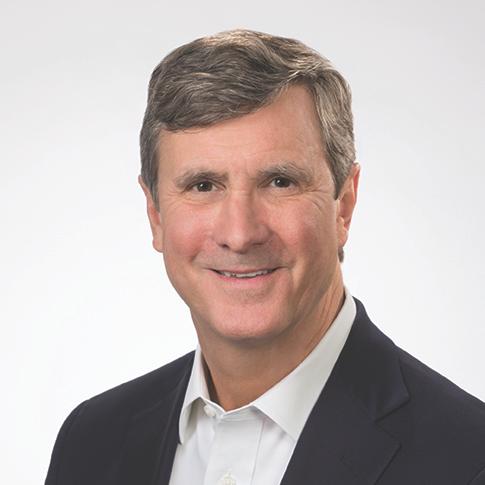
Dan Buelow
Managing Director, Architects & Engineers practice
Dan Buelow
Managing Director, Architects & Engineers practice
Podcast guest
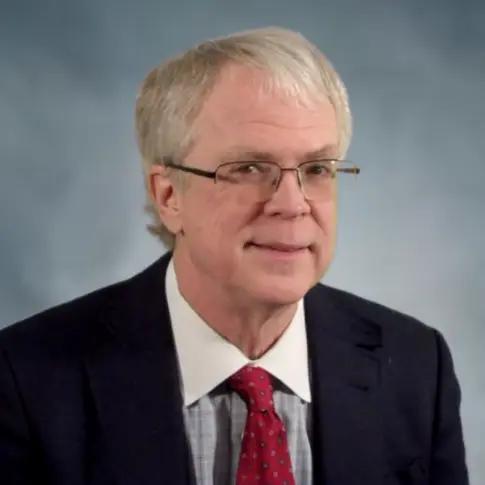
Mark Blankenship
Director of Risk Management
Mark Blankenship
Director of Risk Management