Today’s workforce has unprecedented access to a wealth of insights about current and prospective employers thanks to the rise of employee-review platforms. While employees are taking advantage of this valuable public data to make important career decisions, these platforms remain an under-used resource by employers.
Employers have a unique opportunity to gain insights into how former and current employees perceive their organizations. These reviews also open opportunities to develop more tailored talent acquisition, retention and engagement strategies.
To respond to that opportunity, we have developed a Talent Perception Index that captures employee sentiment from employee-review websites across six key HR-related dimensions:
- Career growth
- Diversity, equity and inclusion (DEI)
- Total rewards
- Senior management
- Work culture
- Work wellbeing
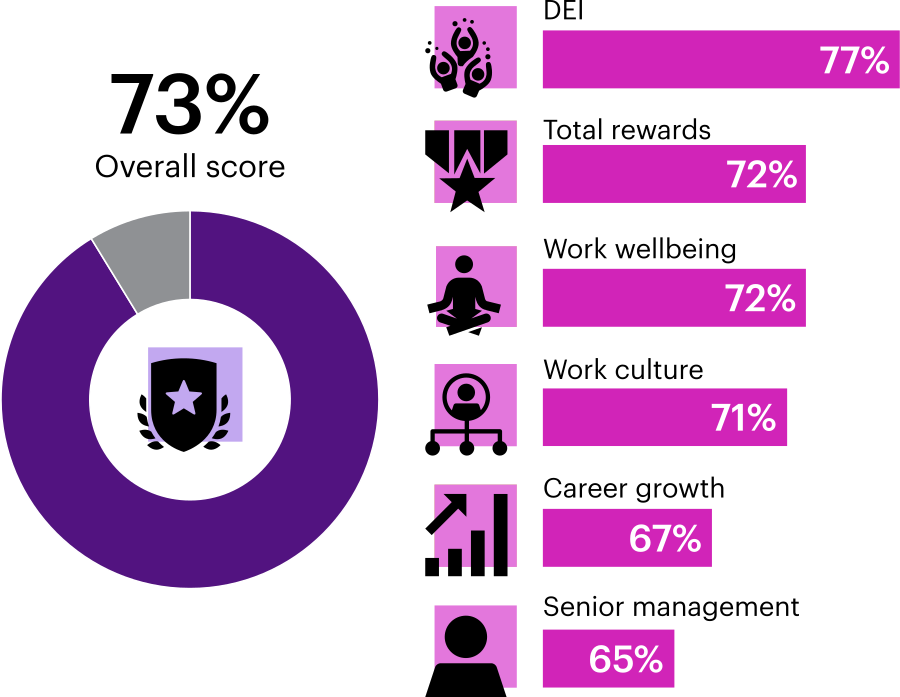
By leveraging the power of artificial intelligence, we were able to gain an understanding of how employees broadly rate organizations (Figure 1).
Figure 1. Average talent perception index ratings across all companies
This data also reveals several compelling industry-level themes that provide a unique perspective on what talent truly values and how organizations can respond.
Tech, Media and Gaming: Empowering talent to flex, innovate and grow
The technology, media and gaming (TMG) sector tops the Talent Perception Index with the highest overall rating as well as strong scores in DEI, career growth and work wellbeing. These results reflect a culture of innovation, flexibility and inclusivity, all of which are key differentiators for digital-native talent.

Strength
Double-down on employer branding that highlights an inclusive culture alongside opportunities to learn, grow and work autonomously.

Opportunity
Senior management scores are lower, suggesting a need to strengthen the leadership capabilities of senior talent through targeted recruitment and upskilling programs. By investing in a strong bench of business leaders, TMG organizations can ensure that agile, fast-moving teams are aligned under a clear vision.
Financial Services: Career progression that pays
Financial Services firms perform strongly in the total rewards and career progression categories, reflecting an industry in which employees are rewarded for their efforts both financially and with attractive advancement opportunities.
Strength
Continue to use generous compensation packages and well-structured career trajectories to attract driven, high-performing talent.
Opportunity
Work culture slightly lags other industries, suggesting room for improvement when it comes to fostering supportive working practices and shared values.
Energy and Natural Resources: Leaning into the green transition
Strong DEI and total rewards scores reflect progress in a transforming sector. Wellbeing also is a bright spot, key for field-based roles where safety is paramount.
Strength
Leverage these strengths to attract environmental, social and governance (ESG)-conscious talent, emphasizing that working to support the green transition can be personally fulfilling as well as financially rewarding.
Opportunity
With a traditionally long-tenured workforce in technical and leadership roles, lower scores in career growth indicate a need for stronger career pathways and opportunities for talent to upskill and reskill in new technologies.
Retail: Building community and belonging
Fast-paced and diverse work environments in the retail sector foster a sense of cultural cohesion reflected in strong scores for work culture and DEI.
Strength
Use these strengths to foster cultural belonging among employees. This is essentially for sustaining a highly engaged frontline workforce that can positively represent their employer’s brand and satisfy customers.
Opportunity
Lower scores in senior management, work wellbeing and career progression hint at systemic issues that could be addressed by investing in store- and company-level leadership, flexible scheduling and career ladders.
Biopharma and Life Sciences: Rewarding work for purpose-driven experts
This industry scores well on total rewards, work culture and work wellbeing, suggesting that tis high-stakes, innovation-centered sector offers financially and personally rewarding work.
Strength
Promote these strengths to attract mission-driven talent with a strong sense of purpose and belonging.
Opportunity
Lower scores in career growth suggest a need for clearer progression pathways to help this highly skilled workforce develop and stay on top of their game.
Talent talks. Are you listening?
Talent perception data offers a powerful, real-time view into what matters most to employees in your industry. For HR, talent and rewards leaders, these insights are not just diagnostic, they’re directional. By aligning your HR and rewards strategy with employee sentiment, your organization can build more resilient, inclusive and future-ready workforces.