

In Episode 40 of "Talk to Me About A&E," Dan Buelow, Managing Director for WTW A&E is joined by Mark Blankenship, Director of Risk Management for WTW A&E, for a discussion on allocating risk by contract, which is the second cornerstone of managing design professional risk. The episode delves into the importance of contractual risk management and how it can help design professionals mitigate potential liabilities.
Transcript for this episode
MARK BLANKENSHIP: The contract is important because it establishes the legal obligations of the design professional. It starts by defining the standard of care. It will define any indemnity obligations. It will describe the services that are to be offered. And always, if there is a problem in the event of a claim, the insurance company and the judge are going to ask for a copy of the contract as a place to begin their analysis of the legal liability.
SPEAKER: Welcome to Talk to Me About A&E, a podcast series focused on risk management for architects and engineers. Host, Dan Buelow, managing director of Willis A&E, will engage experts across the A&E spectrum on topics ranging from contract details to the broadest trends impacting design professionals in North America.
DANIEL BUELOW: Hello, and welcome to Talk to Me About A&E. I'm Dan Buelow, managing director for Willis A&E. And our topic today is on allocating risk by contract. I will continue my discussion with Mark Blankenship, director of risk management for Willis A&E, on the four cornerstones of risk management for design professionals.
We covered the first cornerstone on our last podcast, which was on risk identification and evaluation, where we reviewed some important go/no-go considerations. If you haven't had a chance to listen to that first podcast of the four cornerstone series, you might want to check it out. Again, the four cornerstones of managing design professional risk that Mr Mark Blankenship came up with is risk identification and evaluation, allocating risk by contract, QC and documentation, and CA as a risk management tool.
In our last podcast on risk identification and evaluation, one of the important go/no-go considerations was whether or not a design firm's prospective client was willing to negotiate and agree to a fair and insurable contract. The importance of having an insurable contract in place when a claim is made against the design firm cannot be overstated.
Using the negotiation process as a vehicle to establishing expectations is so important, given the fact that most claims against design professionals are rooted in client expectations not being clearly established and met. If at this early juncture of your relationship, when you are negotiating your agreement, you learn that your prospective client is an unreasonable, difficult, or generally unpleasant individual to work with, it's safe to say that things will likely not improve after you sign the dotted line.
Contract formation is so important. We have, in fact, covered this topic in a number of podcasts, including deal makers and deal breakers, negotiating the dreaded indemnity clause and limitation of liability, as well as negotiating contingencies in a review of emerging contract issues. If you haven't listened to those podcasts, I suggest you check those out as well.
I would also suggest, if you are a Willis A&E client, that you check out all of the on-demand education programs that we have available to you on this topic, including our annual Willis A&E Halloween special, Contracts From Hell. All of these programs can be found in the Education Center of our website at www.wtwae.com.
So let me now bring in my special guest, Mr Mark Blankenship. Hey, Mark. How you doing?
MARK BLANKENSHIP: Doing great, Dan. Thanks.
DANIEL BUELOW: It's great to have you back. So as director of risk management for our Willis A&E group, Mark is responsible for advocating on behalf of our clients and supporting them when it comes to claims, contracts, and education. Mark has over 30 years of experience working with design professionals as a senior claims manager for DPIC.
A long time ago, Mark and I worked together there as well as he worked as a senior underwriter for Liberty Mutual for their architects and engineers underwriting division and as a broker. So Mark brings a lot of experience and perspective to this topic of contracts, and we are fortunate to have him with us. So Mark, you reviewed a lot of contracts, don't you? Talk to me About the importance of contractual risk management for design firms and how it impacts their operations.
MARK BLANKENSHIP: Well, the contract is important because it establishes the legal obligations of the design professional. It starts by defining the standard of care. It will define any indemnity obligations. It will describe the services that are to be offered. And always, if there is a problem, in the event of a claim, the insurance company and the judge are going to ask for a copy of the contract as a place to begin their analysis of the legal liability.
DANIEL BUELOW: So I find it interesting that different firms will handle this process of contract formation and negotiating contracts in a variety of different ways, and some of them may be seated off to the project managers, and others will take a more centralized approach.
Regardless of the firms approach, though, the more a firm staff is included in the process somehow and understands the basics of contracts and it has a good grasp of the standard of care, it really goes a long way-- doesn't it?-- to mitigating risk. And I've always felt-- and we've talked about this in the past, but that you should have a dramatic reading of every contract with the project team that will be working on the project.
Arguably, how else can you manage scope creep if they are not really aware of what's going on in the contracts? Would you agree with that, Mark?
MARK BLANKENSHIP: I absolutely would. I think it's great that everybody should know what the contractual obligations are. It could be with regard to giving notices in terms of time allowed for shop drawing, review or response to submittals, in terms of the standard of care, in terms of the frequency of construction administration visits, and the purpose of those visits, all kinds of reasons that everybody should know what's going on with the contract.
DANIEL BUELOW: Yeah, I often see it's not done that way. That it's almost there's this ivory tower approach where there's some individual or individuals in a firm that really know and do a great job negotiating a contract. And then they put it in a drawer. And where this needs to be amended as scope creeps, but again, to have your project team in the loop, if you will, as Mark stated there.
For all those reasons, I think is a real opportunity to mitigate risk. So Mark, next question here. What would you say are the key principles of contractual risk transfer? And how can design firms effectively apply them in their contracts?
MARK BLANKENSHIP: Well, it starts with defining the professional standard of care. Typically, when owners draft a contract, they will try to shift a certain amount of risk onto their vendors or design professionals, and especially if they have legal counsel involved, legal counsel can get very enthusiastic about risk transfer.
And so one of the things that they might try and do is increase the professional standard of care, from beyond the generally accepted standard of care to the highest standard of care. And while the owner's lawyer might think that they're doing their client a favor, in reality, they're not, because what they're doing is jeopardizing the insurance coverage that's been bought and paid for and is the liquid asset backing the promises that the design professional makes.
What we would prefer is the generally accepted standard of care. Shall we know insurance is going to be there and not have a reason or an excuse to deny coverage based on a contractual assumption of liability above and beyond the generally accepted standard of care. Moving on to the indemnity clause, we want to limit the duty to indemnify to the client for damages to the extent caused by the negligence of the professional.
First part of that equation is based on the economic loss rule. In most states, you can only sue somebody for purely economic loss if you have a contract with them. And so any obligation to indemnify a third party to the contract for purely economic loss would be a liability assumed under contract and exceed the legal liability of that design professional.
Next, we could look at the defend obligation. There's no obligation under the law to defend somebody against mere allegations. Until you've been adjudicated liable, there's no obligation to make payments. And so that's a pretty clear assumption of liability under a contract. And we see other devices employed by owners and their lawyers too.
Examples would include, you will indemnify us against your mechanic's liens. Well, most states, as a matter of public policy, want to maintain the right of service providers to file mechanic's liens against property, against real property, for services that they provided. This alleviates the need to sue your client for fees and basically waste your recovery on attorney's fees.
And most states say, as a matter of public policy, you can't be required to waive your mechanic's liens rights. Well, what's the dirty trick to get around that? I'm not going to ask you to waive your mechanic's liens rights, but you will indemnify me in the event that you or one of your sub-consultants file a mechanic's lien.
On a related topic, right to set off. In America-- God bless America-- we have the right of due process. Again, you're not obligated to pay anything until you've been adjudicated to be liable for those damages. So what some owners like to do is they say, well, we get the right to set off against amounts due to you any claims that we think we might have.
Basically, you now become the insurer of the project and put your fees at risk. And so those are a couple of the commonly used risk transfer devices that I see. Now conversely, we can balance the risk reward equation of doing a project by getting added as an additional insured on the contractor's general liability policy.
Specifically, the contractor controls job site safety. That's his or her responsibility. Part of that responsibility includes insuring that risk. And so if we put it in our agreement with the owner that the owner is required to have the design professional named as an additional insured on a primary and non-contributory basis for the amount of the limits required in the contract under the contractor's policy, then if that job site accident happens, we have a place to tender that lawsuit and get defended for something that was not within our scope of responsibility or within our control.
And that is a good alternative to paying for that defense, incurring your professional liability deductible, and eating into your own insurance limits to defend that case.
DANIEL BUELOW: Very good points, Mark. And I know we had a podcast in which you were on this earlier on emerging risks that we get into some of the weeds out there-- into the weeds, if you will-- on negotiating the getting named on the contractor's GL. (General liability) I think it's something that firms really need to think about because it really is worthwhile, if you will.
And some firms have proven a little better than others, in fact, in executing that in their agreements with that. You laid out quite a bit there. And I think one big point of it is that, there's a lot of over lawyering going on. And we are often see our clients faced with these onerous owner drafted agreements or modified agreements that are chock full of uninsurable language.
And so I think a key couple of takeaways there is, know your dealmakers, deal breakers. And you touched on a number of those. We'll touch on some more as we discuss this. But a major point in all of this, I think, is often lost is that, it's in nobody's interest to enter into a contract that is uninsurable, and that includes the owner.
And in fact, the professional liability coverage was which the owner is relying on, there's no assets. There's no bonds. It's the professional liability insurance. It's third party insurance. It's, in fact, for the owner, if you will. And to somehow cloud that coverage in any way or impair that coverage through some onerous or nebulous language is not in the client's best interest.
So one clause they're going to ask for several million dollars of insurance. And then the next clause, they'll have an uninsurable agreement. Unfortunately, it's lost often on the clients that our design professionals have to work with. But I think it's a very important point. So, Mark, the next question I have here is, this topic of the standard care, which is so important.
And we talk about it quite often. But, what is the standard of care and professional services agreements? And how can firms protect themselves from elevated liability?
MARK BLANKENSHIP: Well, the standard of care is generally defined as that degree of skill shown by similarly situated professionals practicing in the community at the time services are offered. And so the beauty of that is that it provides us with some wiggle room there. The standard of care is something less than perfection.
And we could measure that typically by contingencies. It is absolutely normal for there to be change orders on projects. Even new out of the ground average difficulty projects, I would expect to see change orders arising from design issues totaling 3% to 5% of total construction costs. If you're doing a renovation and you have hidden conditions, I would expect that number to be more in the range of 10% to 15%
And if you are doing a fast track project where you're beginning construction before you're done drawing, that number could be as high as 25%. So one of the most powerful tools that a design firm would have to establish reasonable expectations and protect themselves against claims is to have that conversation about design contingencies and build that into the contract.
DANIEL BUELOW: Excellent point. You can have a conversation about contingencies without having a conversation about the standard of care, as you've pointed out there. And I also think that it's a good advice for design firms as they look at these contracts is, you don't want to be the highest person in the room.
And so when you talk about this language, like the highest level of professional service, work free from omissions or defects, compliance with all laws, codes, and statutes and to the client satisfaction. These are often wording that we'll see in these owner-drafted agreements that are just over and above the standard of care, and/or they're really arbitrary and if not impossible to meet.
And so I think that's a very good point. And it's something to think about, though, Mark, is you could push back and say, if you're a client and you think about it on the negotiation side here is that, hey, wait a second, Mark. You know, you guys are the best firm out there. That's why I'm hiring you. So what's wrong with this language heist? What's wrong with that, Mark?
MARK BLANKENSHIP: Well, what's wrong with that is it establishes a standard of care that's higher than the legal obligation of the design professional. And professional liability insurance only covers legal liability. Now, that's pretty broad coverage to start with. But the point is, you can't assume a higher obligation that would not be insured.
And so for instance, Dan, you had the example of design professional will comply with all codes, laws, and standards. And I see that in every owner-drafted contract. But I would like to revise that statement to say that we will comply with the professional standard of care relative to applicable codes, laws, and standards because codes and laws are subject to interpretation.
And who amongst us has not seen an example of where a permit official differs with an occupancy inspector over code interpretation? Reasonable minds can differ.
DANIEL BUELOW: Yeah. And you'll see also language for future codes or statutes, won't you?
MARK BLANKENSHIP: Oh, I've seen that. But that's truly impossible to comply with.
DANIEL BUELOW: So another phrase you see often is, time is of the essence. Right? And I always say, not only do you want to strike that, but read on. It probably gets worse. And what they're ultimately going to stick you with is performance based exposures that can be significant from an economic loss standpoint. But why is time of the essence something that you want to strike?
MARK BLANKENSHIP: Well, time is of the essence is a term of art. And basically what it means is, if you are one day late with your deliverables, you are in breach of contract. So this is not reflective of the standard of care. And if you look at the professional association agreements such as the AIA contracts, you'll see the time of performance generally says something like, the architect will perform as expeditiously as is consistent with sound professional practice and the orderly progress of the work.
This balances the obligation to move the project forward with professional practice. Another term of art I want to reference here is, arising out of. We see this in indemnity agreements all the time that you will pay for all claims arising out of the work. The courts have interpreted arising out of to mean that you will pay for your own fault, plus the fault of others, because it all arises out of the services. The preferred language in an indemnity agreement is always, to the extent caused by the negligence, as opposed to arising out of the negligence.
DANIEL BUELOW: So I mentioned earlier, deal makers and deal breakers. What are some examples of favorable and unfavorable terms in client contracts? And how can firms negotiate to include more favorable terms? You touched on some already, but give us some more examples of that.
MARK BLANKENSHIP: Well, we talked about the standard of care defined already. Let's talk about ownership of copyrights. If you retain ownership of copyrights and grant the owner a limited license to use your documents, provided they comply with their obligations under the contract, then you have retained leverage in this business relationship because if the owner refuses to pay you, you can suspend their license to use the documents.
Now, this is an atomic option, because you can use it to shut down the project, but it gives you leverage in the relationship, as opposed to work for hire, which means you give up the copyrights as soon as you create the work. Now, the owner owns everything. And if you're doing a work for hire, you probably want to exclude ownership of your standard details or else the owner now owns all of your intellectual property, and you've lost virtually all of your leverage in that relationship.
Other favorable terms would be right to suspend or terminate for cause. Sometimes I see contracts that say that the design professional will continue to work during the pendency of any dispute. Well, geez, we can't even quit if they're not paying us. That's not favorable to the design professional. We would like protection from unknown site conditions and hazardous materials.
If that's not your scope of services, if that's not your area of expertise, then we want the right to stop should hazardous materials be discovered on the job site until the owner remediates the site. And furthermore, we want no obligation to investigate or discover hazardous materials. Typically, that's not the specialty of an architect or an engineer unless they're an environmental consultant.
We want to say also that the agreement is for the sole benefit of the client. We want to disclaim any third party beneficiaries. I made a comment earlier about the economic loss rule, which is based on the idea that as a professional, you only owe professional obligations to your client, with the possible exception of the overarching duty to place the health, safety and welfare of the public paramount.
But generally, for economic loss, again, the only party that could sue you is the client and any agreement to designate a third party as a beneficiary of your agreement would be a liability, assuming you're under the contract, and probably not subject to coverage. This is particularly important in sub-consultant relationships.
A lot of owners will try to put into the prime agreement that the owner will be designated as a third party beneficiary of any sub-consultant agreements. While this would appear to be giving a benefit to the owner-- allowing them a direct cause of action against the sub-consultants-- in reality, it could be jeopardizing the insurance coverage of the sub-consultants and thereby not really benefiting the owner.
Last subject of favorable contracts, mediation required. Let's talk about dispute resolution. In terms of dispute resolution, we like to see mediation as a required first step in any dispute resolution proceeding. Most PL policies today will provide a mediation credit. In the event you have a dispute and it's settled at mediation, you will get half your deductible back up to some threshold, such as $15 to $25,000. So that's a significant financial benefit.
Mediation also incentivizes everybody to focus their attention on the problem early on, which goes a long way toward getting matters resolved. The next question we might ask is arbitration versus litigation. In a survey of defense counsel by one of our major carriers, the majority of defense counsel preferred civil litigation as the most favorable way to resolve disputes against their clients.
The reason that arbitration was not favored was, A, the rules of evidence do not apply. B, there's no appeal from a bad result. With civil litigation, you have certain protections built in. And I might add C, that it's not necessarily cheaper or faster. In civil litigation, the judge is paid for by tax dollars. In arbitration, you pay the arbitrators fees out of your pocket, and arbitrators have a tendency to split the baby to keep everybody coming back for arbitration. I think we stand a better chance of getting a not guilty if we're actually in civil litigation.
DANIEL BUELOW: All very good points, Mark. And I think it also raises the importance for having a checklist, if you will, when you're reviewing contracts because you're often looking at the what is presented in the agreement to you. And you might miss some things that are absent. So often, an owner is not going to volunteer that hazardous material clause that you touched on, which is so important to have in your contract, and arguably a pretty reasonable one, an easy one to negotiate in.
But if you don't have it and you get pulled into a suit where we've seen it like, hey, we found this crazy substance here, come and clean it up, and tell us when it's safe for us to come back. No. That's the owner's responsibility. That's not our responsibility. So if you don't have that wording in there, you're hanging out there pretty good. And also on that checklist, you would have the issues you raised and clauses but also limitation liability. I mean that's something also we're going to want to have in there.
MARK BLANKENSHIP: Excellent point, Dan. And a couple of other favorable terms that we'd like to consider is that limitation of liability. We could put a cap on damages in the event of a claim to the multiple of your fees or any dollar amount certain or at the high end, the available limits of your insurance policy. And we want to add the following to any limitation of liability.
That this limitation shall apply to claims based in negligence, breach of contract, strict liability, warranty, or any other theory. Because if I'm plaintiff's counsel and I'm trying to attack your limitation of liability, I'm going to say, hey, that's great. You limited your liability and contract, but my claim isn't based on breach of contract.
A couple of other clauses that we would want to consider as favorable include waiver of consequential damages. This is a standard feature of the AIA documents. This basically would prohibit the owner from coming after you for things like loss of use, additional interest charges, loss of rents or occupancy, and that, we think, balances the risks and rewards of doing the project.
Another favorable clause that I like to see in every contract is what I call, the Corporate Protection Clause. That in the event of a problem, the owner agrees to bring its claim solely against the assets of the corporation and not against the individual assets of any employee, partner, officer, or director of the firm.
DANIEL BUELOW: It also raises all of this. I talked about the checklist, but also affirm the use of terms and conditions, which I would say would be your greatest hits on one page or so. And we have samples of checklists and terms and conditions. And so if you're listening to this and you want a copy of that, just reach out to Mark or me, and we'll share that with you.
But in those terms and conditions, what I like about that is you never want to work on a verbal basis. And if you're in that proposal stage or that early stage, you're back and forth and you're negotiating an agreement, having something in front of that prospective client saying, hey, until we execute an agreement here, we'll be going forward based on the attached.
And it's going to have in there that you're not responsible for job site safety and construction means or methods. So if anybody gets hurt in the interim there, you know where they should be going for that. And so I think the use of the terms and conditions is an important point. And also in all of this, I think it's important to recognize, isn't it, Mark, where you're going to have public agreements versus these private agreements. We recognize that.
And we talked about the go/no-go. And there are some firms that unfortunately, these public agreements in this country are sadly one sided, unfair, and generally uninsurable. And sadly, little has changed, hasn't it? Over the years. And so firms are left with this go/no-go sort of decision. And I understand where a firm can ultimately decide to go forward even with this bad contract, if in fact they're in a position to assume and control that risk.
Specifically, they have experience working with that public entity. They have experience in that project type, and they have the right team in place, and they know how to implement certain workarounds, including in the area of documentation. However, there are some real risks, aren't they? Given an uninsurable agreement.
MARK BLANKENSHIP: Right. Well, I wouldn't say that public agreements are typically completely uninsurable, but I would say that they typically include uninsurable elements. Typically, in public agreements, I will see a duty to defend. That's applicable to professional liability claims--
DANIEL BUELOW: Or strict liability. Where they're their judge and jury.
MARK BLANKENSHIP: Compliance with all laws, which would be a warranty statement, I will see that. I will see right to set off. And Dan, another thing I want to point out that's happening in public contracting, especially right now is that, owners, meaning public entities, are asking architects and engineers to take on sub-consultants such as geotechs or environmental consultants, who insist on limiting their liability.
And I'm not sure if this is solely for their convenience or if this is a nefarious attempt to get extra insurance and avoid that limitation of liability as to the public entity. But the problem is, if you, as a prime professional, do not have a limitation of liability clause in your agreement, but you take on a sub-consultant who does have a limitation of liability, then as the prime, you are accepting and biting off any liability excess of that LOL amount included in your sub-consultant agreement that arises from the sub-consultant services.
That could pose a coverage problem because in the absence of the sub-consultant LOL, you should be able to pass through any liability to your sub-consultant. So we want to be careful of that.
DANIEL BUELOW: Excellent points, Mark. So Mark, last but not least is the integration clause. Talk to us about that. And how should design firms approach the integration of sub-consultant agreements to ensure consistency and to manage risk effectively?
MARK BLANKENSHIP: Well, there's two topics there. There's the integration clause, and then there's flow down. The typical integration clause will say that the contract that we're looking at constitutes the entire agreement between the parties and supersedes any prior discussions, proposals, et cetera.
So we've seen situations where firms have drafted extensive documentation regarding what was to be done and what limitations were to be included and what conditions were imposed upon the owner. And then that all gets thrown out the window, if that agreement is not brought forward and is superseded by an integration clause. So we want to understand the implication of that.
And then with regard to sub-consultants, there will be a flow down clause. And quite frankly, where I stand on this issue depends on whose interests I'm representing and where they are in the food chain. And so if I'm speaking to a prime consultant, of course, I want all of the obligations of your prime agreement to flow down to your sub-consultants-- duty to indemnify, standard of care, timeliness, all of that. I want it to flow down.
But if I'm representing the sub-consultant, then I want to look at how big is their slice of the pie, and is all of this flow down acceptable in terms of the proportionality of risk? And so things that I might want to limit in terms of flow down would be indemnification. I only want to indemnify my client, the prime consultant, the standard of care.
I only want to be held to an acceptable standard of care. Timeliness of performance. I don't want time is of the essence to flow down. You can have different opinions about what is appropriate flow down depending on where you are.
DANIEL BUELOW: But I would say also, Mark, we are very consistent in our advice. I mean, the points we really are in the arguments are the same regardless if we're representing the prime and/or the sub, because we represent all of the design firms out there. And in fact, we have a real issue where we're seeing some design firms out there that are trying to have subs enter into what we would say are unfair and unreasonable contracts, and certainly taking a page out of the onerous owner-drafted agreements that we see.
And we don't think that's a good idea. We think we see sometimes unreasonable insurance limits. And I think firms need to consider that. What they're asking I think it's important to understand and know what your subs are caring for insurance and as you say, the consistency of docs. Let's make sure we have a fair and balanced agreements across the board. But I think that we're very consistent with our approach and looking at all these agreements.
MARK BLANKENSHIP: Right. And so when we talk about integration of subcontracts, we want to look at issues, ownership of copyrights. If the prime is obligated to give them up, then the sub probably needs to give them up to obligations to give lien waivers. Who's doing site visits? What are the payment terms? Is this a pay when paid or pay if paid?
And then agreements to arbitrate disputes. Arbitration is purely a creature of contract. If you don't agree to it in your contract, you cannot be compelled to arbitrate. So if a prime is obligated to arbitrate, he wants to flow that down. And then we previously discussed limitation of liability. And how it all works out in the end will depend on the relative bargaining powers of the parties.
DANIEL BUELOW: This has been a great discussion. To recap I think some important points that really these agreements, these contracts are probably the very best vehicle that the design firm has to establish expectations and educating their clients as to the standard of care. I think it's worth noting that a verbal agreement is worth the paper it's written on, as well as the importance of using standard terms and conditions with key words and phrases as a baseline for your negotiations.
We talked about that, as well as knowing your deal makers and deal breakers, and stressing the point that it's in nobody's best interest to enter into a contract that is uninsurable. That includes the owner. And I would add to all this is to get legal advice. As a broker, we can't practice law. We're not providing legal advice. We're focusing on what's insurable.
And I would recommend that you identify an attorney that understands the professional liability insurance and the standard of care of a design professional in the state you're working in. We talked about the economic loss doctrine a little bit. Well, the laws in states will vary. The economic loss doctrine isn't alive and well in every state.
And states will and can vary when it comes to laws, statutes, practice, acts, and so on. So I think those are very good points. And so, Mark, before I let you go, any final words of wisdom on this topic?
MARK BLANKENSHIP: Well, to continue your thought about knowing your state laws, yeah, there are certain states that imply a duty to defend in every indemnification agreement. California and South Dakota come to mind. So if you're drafting an agreement there, you want to specifically disclaim that duty to defend in your indemnity.
In a few states, they go farther in imposing job site safety responsibilities on firms than in other states. And that's kind of determined by court cases. So you should know the law in your state regarding that. You might also like to comment briefly on indemnity. We have three forms of indemnity-- limited, intermediate, and broad form.
Starting with limited form indemnity, this means that you will only pay for damages to the extent caused by your negligence. This is insurable all day long. This is your legal liability. You can also sign an intermediate form indemnity, where you agree to pay for damages that you cause, plus the damages caused by your client or others, provided they are not the sole cause of that damage. And then there's broad form indemnity, which means you agree to pay for the sole negligence of your client.
Now, most states prohibit broad form indemnity because it's against public policy. If you could contract away all responsibility, nobody has incentive to maintain a safe job site anymore. But we want to be careful of intermediate form indemnity that would be represented by a rising out of. That you agree to pay for damages arising out of the services. We always prefer, to the extent caused by, which defines limited form identity.
DANIEL BUELOW: Well stated. Wise words, indeed. So I want to thank you, Mark, for joining us again for this discussion today.
MARK BLANKENSHIP: Thank you, Dan.
DANIEL BUELOW: So this concludes our discussion on allocating risk by contract, which, again, is the second of the four cornerstones of managing design professional risk. And we'll be back with Mark to discuss the third cornerstone, which is on QC and documentation. This program is brought to you by Willis A&E-- the center of excellence for WTW that is exclusively dedicated to providing insurance and risk management solutions to design professionals throughout North America.
And thanks again for joining me for another episode of Talk to Me About A&E. I'm Dan Buelow, and I will talk to you soon.
SPEAKER: Thank you for joining us for this WTW podcast, featuring the latest thinking on the intersection of people, capital, and risk. For more information on Willis A&E and our educational programs, visit willisae.com. WTW hopes you found the general information provided in this podcast informative and helpful.
The information contained herein is not intended to constitute legal or other professional advice and should not be relied upon in lieu of consultation with your own legal advisors. In the event you would like more information regarding your insurance coverage, please do not hesitate to reach out to us. In North America, WTW offers insurance products through licensed entities, including Willis Towers Watson Northeast, incorporated in the United States and Willis Canada, incorporated in Canada.
Disclaimer
WTW hopes you found the general information provided here informative and helpful. The information contained herein is not intended to constitute legal or other professional advice and should not be relied upon in lieu of consultation with your own legal advisors. In the event you would like more information regarding your insurance coverage, please do not hesitate to reach out to us. In North America, WTW offers insurance products through licensed entities, including Willis Towers Watson Northeast, Inc. (in the United States) and Willis Canada Inc. (in Canada).
Podcast host
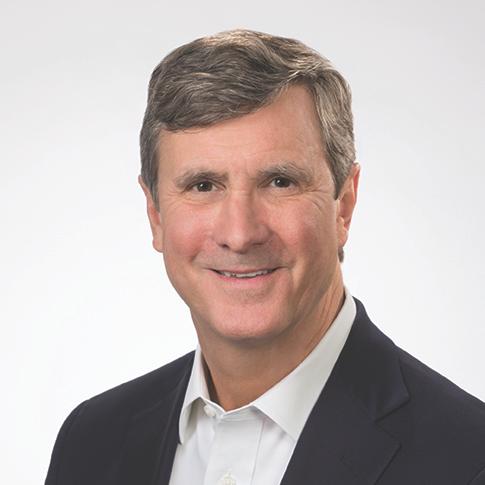
Dan Buelow
Managing Director A&E
Dan Buelow
Managing Director A&E
Podcast guest
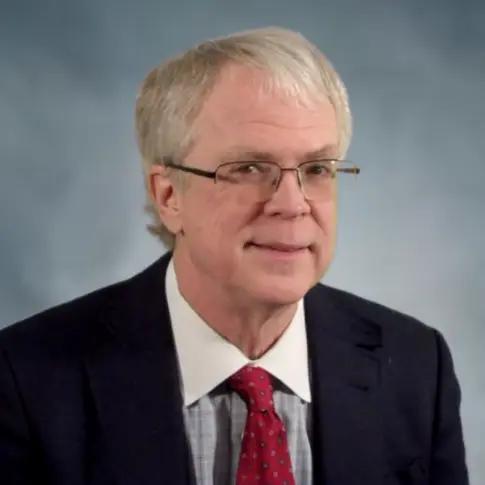
Mark Blankenship
Director of Risk Management
Mark Blankenship
Director of Risk Management