
The Financial, Executive & Professional Risks (FINEX) team of Willis, a WTW business, collaborates with professionals across the fidelity/crime insurance space to better understand the many facets of our industry. We aim to shed light on how shifting business and economic trends are impacting fidelity/crime risk and the industry at large.
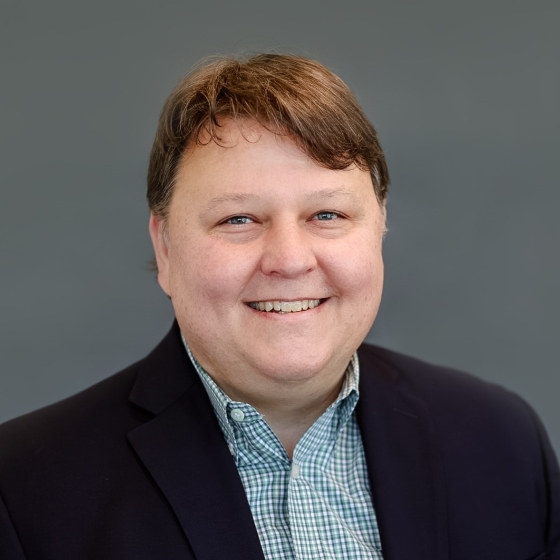
In this edition, we feature Mike Beranek, Vice President, National Practice Leader at Berkley Crime. Mike leads a team of focused fidelity/crime underwriters within Berkley Crime, a division of Berkley Financial Specialists.
Willis: Looking ahead, what is your short-term and long-term fidelity/crime market outlook?
Mike Beranek: Defining the short-term as the next 12-18 months, we expect modest evolution in the broad market. Growth in the matured fidelity/crime market is extremely limited. Renewal rates are very high across the industry. A few new carriers in the market are attempting to disrupt the status quo, with aggressive tactics. There will be a small percentage of accounts in the market looking for premium reductions, and those with favorable claim and loss histories in preferred classes will likely obtain lower premiums. However, there are challenged classes and poorly controlled risks that will be seeking alternatives in the market, only to struggle to renew with favorable terms.
Willis: Have there been notable changes in buying patterns for insureds, such as increases or decreases in limits or retentions?
Mike Beranek: The one area we’ve seen buying patterns change is in the social engineering fraud arena. Providers are limiting capacity to under $1 million or at times, even lower. Demand isn’t being met, as exposures continue to grow to that peril. We’ve seen some providers, including us, offer higher social engineering fraud limits, provide excess stand-alone social engineering limits, or offer creative quota-share approaches where larger limits are purchased to spread the social engineering risk across multiple providers.
Willis: Are there any emerging exposures across commercial crime or financial institution bonds causing profitability pressures?
Mike Beranek: While not really an emerging exposure anymore, social engineering fraud continues to put pressure on fidelity/crime books of business across the industry. We’ve seen a leveling off of losses the last couple of years based on data captured by the Internet Crime Complaint Center and Federal Bureau of Investigation, but the industry is by no means at a level of maturity to predict losses. Hence, we’ll continue to see individual markets tack in differing directions in efforts to find stable returns to their capital providers.
The other thing we’re watching is the overall economy. History tells us loss ratios move upward during economic downturns. At the time of writing, the first quarter GDP moved into the negative territory. Something carriers will watch and adjust to.
Willis: What are the most common types of check fraud you are seeing amongst your insureds?
Mike Beranek: Berkley Crime has a unique view of claims due to their experienced claims adjusters, each averaging 25 years of adjusting experience. This team is active in the Fidelity Law Association and the Fidelity & Surety Law Committee, a sub-set of the American Bar Association. Participation in these organizations allow for an exchange of knowledge amongst fidelity/crime practitioners, keeping our team at the cutting edge of what’s happening. The insight from these organizations highlights the sudden increase in the number of check fraud incidents.
The Financial Crime Enforcement Network reported in 2024, that the number of suspicious activity reports was up to 680,000, from just 96,000 in 2014. Check fraud is back with a vengeance. As the adage goes, “Everything Old is New Again,” check washing, which was very prevalent in the 1990’s, is now commonplace again as the rush to provide ease of doing business by those cashing checks has created an avenue for the fraudster. Despite the dramatic drop in the volume of paper checks being issued today, the industry is seeing an uptick in the incidence of forgery or alteration of checks.
Willis: What tips would you suggest to your Insureds to mitigate against check fraud (forgery or alteration) losses?
Mike Beranek: Consider moving to electronic bill pay(automated clearing house) services from your financial institution. If that’s not possible, a positive pay feature including confirmation of all information on checks issued. Use gel ink pens when making out a check, that practice makes it more difficult for a fraudster to wash a check. If you’re mailing checks, drop them off in the post office building, not in a blue U.S. Postal Service box.
Disclaimer
WTW hopes you found the general information provided here informative and helpful. The information contained herein is not intended to constitute legal or other professional advice and should not be relied upon in lieu of consultation with your own legal advisors. In the event you would like more information regarding your insurance coverage, please do not hesitate to reach out to us. In North America, WTW offers insurance products through licensed entities, including Willis Towers Watson Northeast, Inc. (in the United States) and Willis Canada Inc. (in Canada).
Featured professional
Contact