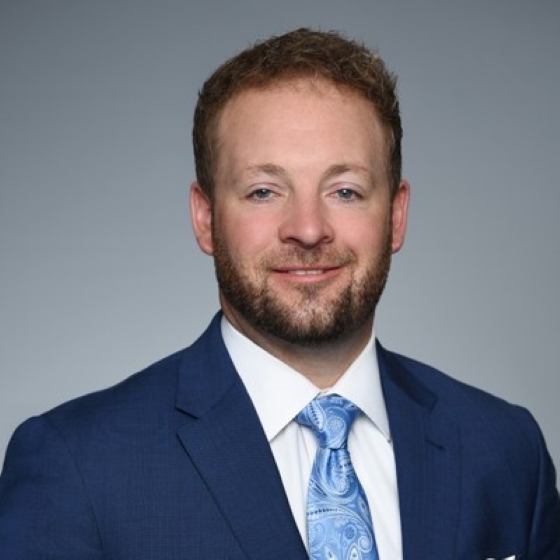
SCOTT MEYER: Thank you, Rhonda. Nice to be here.
RHONDA DEMENO: We're excited to have you. And our next guest is Eric Johnson. Eric is the Managing Director for Ziegler Senior Housing and Care Services. Welcome, Eric.
ERIC JOHNSON: Thank you. It's nice to be here today.
RHONDA DEMENO: Today's topic is 2025 creative financing for senior living. And we will be addressing creative financing strategies to unlock growth opportunities and overall financing improvements. When senior living operators leverage financial stability during any type of transaction, they can fund development projects that lead to improved service offerings, modernize campuses and care outcomes.
Today's conversation will explore creative financing options, such as read partnerships, tax exempt status and state and federal programs that can be helpful financing options, with promise for return and achievement of positive financial results.
I'd now like to turn the conversation over to Scott. Scott, the floor is yours.
SCOTT MEYER: Thanks, Rhonda. Eric, just to start us off, I know the market's been very hot for senior living. I think demand has is at an all-time high. But what can you comment about-- where are you seeing the most development and where are you seeing the most need maybe regionally?
ERIC JOHNSON: Sure. We're certainly at-- depending on whether you look at some of the stats from Nick or any of the other stats that are out there, there's obviously a lot of demand coming with the baby boomers. And with current levels of construction, I think we're at the lowest level since going back to 2013, '14, coming out of the great financial crisis. So, no matter how you look at it, we're at a shortage of units.
And there's a lot of groups trying to get stuff started. We're still at a point where we're between construction costs. Financing costs have come down, but they're still higher than they were. There's not as much equity capital in the market. So they're still certainly challenging to get construction projects started. But where people can, they're obviously going to have an advantage coming out of the ground sooner than most.
We're seeing obviously demand going down into the Sun Belt areas in the southeast, where you're seeing higher demand on single family and multifamily housing as well.
There's always demand in the luxury markets. Up in the northeast or along the coast, there's a lot of projects relatively coming out of the ground compared to other markets. But some of those, they may have been in the entitlement process for six, seven, eight, even up to ten years on some of the deals we're working on. So, I think there's good demand across the market.
The hardest thing is obviously figuring out how to make those pencil. We're seeing different groups do things like modular construction or just even terms of different phasing of projects to get things started now.
You'll see there's more and more projects coming out that aren't necessarily the traditional financing model, but are using a non-traditional, not-for-profit approach to have as the ownership for properties, where they're accessing some of the tax-exempt markets to start construction. And then for-profit developer operator comes in alongside that not-for-profit ownership group.
So, a lot of different creative ways trying to get things started. It's just we've seen such high, high cost and things, and there's so many deals still out there for sale, that it's hard to compete where replacement costs are on purchases versus new construction today.
SCOTT MEYER: Are you seeing anybody-- you had talked about the Sun Belt and obviously the west. Are you seeing any retreat due to the hurricanes or due to the wildfires? I know that that's been in play now for a few years, but are you seeing some of your folks retreating from that area?
ERIC JOHNSON: Yeah, there's some of that. It certainly affects the cost. Depending on if you're building in an area that's prone to hurricanes, you're going to end up with even higher cost of construction.
The insurance, as you guys know, obviously insurance is a big factor in these projects. And so, some of that, maybe people are going more inland or areas that aren't quite as affected by wildfires.
We still have some projects in California where there was recent wildfires, but there's ways to mitigate the sites, through the vegetation, through construction, through different things, because they are in areas where people still want to live. But that's certainly a factor, and some of that obviously goes into the cost, which is making things harder and harder to get started.
SCOTT MEYER: Thanks for that. That's helpful. PE seemed to be a big influx to the senior living communities the last few years. And then are you seeing them retreating, maybe the business isn't quite as easy as they had thought?
ERIC JOHNSON: Yeah, I think they're certainly not as active on the construction side. They've been very active in purchasing communities. And when you look, we don't have as many distressed communities in the market now as there was a couple years ago. And there was never the big wave of distressed communities that some people predicted after COVID. But a lot of those groups are the ones that are out there purchasing communities at somewhere, anywhere from 100,000 to 200,000 or so a unit, when you're looking at new construction costs that are 400, or 500, 600, maybe even higher in some of the high barrier to entry markets.
And so, they're there and they're active, but they're not, in the traditional sense, where we would have looked for them for LP equity and new construction deals. We don't see them today in that space. I think hopefully within the next year or so, those will pick up and get started again. But right now, they're all mainly focused on the acquisitions.
SCOTT MEYER: That's helpful. Are you seeing any other headwinds in terms of-- obviously interest rates have been in flux. And then there's also a shortage, I think, of really solid management companies to run the senior living facilities once they are built. Are you seeing those same headwinds?
ERIC JOHNSON: Yeah, interest rates have certainly gotten better. But I think the rate decreases have come a little slower than some people had hoped, obviously. I think there's still projections for two more cuts this year, and then a couple more next year.
That side is-- while it's improving, you combine that with higher construction costs, higher labor costs, not knowing what's going on with the tariffs today, that certainly can cause a problem in getting the projects. Just the overall budgets for projects, I think hopefully if that stabilizes a little bit. And while we're not going back to where rates were zero, if they're somewhere in a range that works. And we've seen a little improvement here recently in the 10-year on some of the longer term deals.
There's different things we can do. Knowing that the future projections for the short-term rates are to come down, we can do some interest rate swaps and things to take advantage of that to lower some of the cost.
There's also, that's why I mentioned earlier, the nontraditional not-for profits who are using a not-for-profit ownership and then tax-exempt financing. Those are lower cost of capital than traditional for-profits get. So, you're seeing some of these larger projects get started today using that. And then your cost of capital is 200 basis points or so lower, using the tax-exempt rates. So that's been helpful in projects.
You mentioned the operators. Just with all the costs, not just construction costs, but when you look at cost of labor, cost of insurance, cost of running operating companies, and these groups that haven't been able to expand as fast as they wanted, you'll continue to see the consolidation of some of these management companies. We've seen there's been some big ones that have done it with over 100 communities. There's also some of the smaller ones just due to scale, maybe have 5 to 10 communities are merging operations with larger operators to get better efficiencies.
We've seen a number of different third-party groups that are taking some back office operations, whether it be IT or HR or different things that can help take some of that off the plate of some of the operators. That cost a lot to have that infrastructure behind them. And so being able to send that stuff to a third party, they can lower some of their costs and focus more just on the day-to-day operations, and not necessarily the back-office costs that have gotten so high for a lot of them.
SCOTT MEYER: Really good conversation yesterday talking about the deal flow. Obviously, Ziegler has a dominant market presence in this space. And you were talking about some of the challenges and how deals are taking much longer to get done and to get closed. Can you just comment a little bit, maybe highlight some of the stuff that we talked about yesterday, in terms of what you're seeing from a deal flow perspective and stacking of deals and how things are just taking a little bit longer to get to the finish line.
ERIC JOHNSON: Sure. There's a couple different things that are extending those timelines. The M&A market, depending on the state you're in, the license transfer, some states could be 30 to 60 days. And in other states, it can be well over a year. So, some of the regulatory hurdles have caused a lot of slowdown in that and just makes those deals a lot harder to work. When you sell it now and you can't transfer ownership of it for over a year, that's pretty difficult for the parties involved.
There's also just the entitlement process of projects. If you're working in places like California or others, we have projects that have been going on seven, eight, nine, ten years just to get to the point where they're looking at financing.
So just in general, put together a capital stack to get everything going, to get prices where you need them to be just takes longer. I think everything, regardless whether it's construction, acquisitions, whatever, we've seen just the extended timelines. There's a lot more back and forth, more due diligence, more parties involved. And so it's just created a bottleneck in a lot of these projects to get pushed through. Where typically we would have seen them happen in six months or less, now feels like the majority of them take a year or longer to get finished.
SCOTT MEYER: Yeah, it's a challenge for sure. So where do you see opportunities for new capital coming in from your vantage point? Because you guys are so heavily involved, where do you see opportunities that really stand out to you?
ERIC JOHNSON: The groups that are providing more options for people, with little different types of models where maybe you're unbundling a lot of services, whether it be in independent living or providing active adult settings that can provide home health care and things for people, there's a lot of opportunity there. There's the different structures we mentioned, people that are willing to look at the non-traditional, not-for-profit models can have more flexibility and more options in financing.
We also, at Ziegler, we have our Ziegler linkage funds, which provide funding for senior housing technology companies. So you're seeing a lot of advancement in that space. And some of it is to keep people home longer. Some of it could be telehealth, could be a lot of different things that affect communities.
We know we're not going to catch up just in terms of total number of units built and the demand that's needed in 2030. So there'll be a lot of different people coming into the market with different ideas. We're working on some, like I said, on the active adult side, where they're looking at-- construction costs obviously are high to do a traditional three or four-storey community. So they are building modular, independent cottages, so they get shortened construction period. They can be built offsite in a factory, delivered to the site and set, so their construction period overall is half.
I think if you look at Nick's data, it takes anywhere from 28 to 29 months on average to build a traditional community today, where if you're doing modular construction, you can cut that down to 12 to 14 months.
And then in their case, they're providing home health care options. So if people need some added services and things, they can get that, but if they don't, then they don't have to pay for that. Where if you were in a more traditional, independent or assisted living setting, you'd have those higher costs built into your rent. And so on average, I think they're coming in about half of what the market rate is for assisted living. So quite a bit more of affordable option.
Plus, it's an easier sell. In general, if someone is selling their house, if they've been in there for 30 years, and you're telling them to go to an 800 square foot apartment, that's different than if they can get into a larger cottage, which they still have their own space, but have the benefit of the extra care or potentially meal options in some places if they need it. Or maybe it's just help with some meal prep.
SCOTT MEYER: Yeah, a little easier transition, right?
ERIC JOHNSON: Right.
SCOTT MEYER: We serve the market, from nonprofit, HUD-subsidized housing all the way up to very high end luxury senior living. Are you seeing any trends towards-- there's obviously a need on the full spectrum. But are you seeing any area there growing faster than others?
ERIC JOHNSON: Yeah, I think the luxury market, like you said, there's definitely a need for that. Those projects tend to take longer, tend to be larger. Some of the ones we're working on, especially you mentioned the not- for-profit model, if those are a for-sale product, from the time they start sales, it can take 18 months pretty easily to get to a point where it's ready to be financed.
On the lower end of side of things, we haven't seen any reduction in some of those programs that the government provides. There's definitely a need for that. I think the hardest thing is everybody in between, it's not at a point where the government is covering a lot of it, and it's not a point where on the luxury side, people are trying to figure out, how do you create something that's affordable to more people? And that's where the modular side of things comes in. Those can be built for a lower per cost unit basis.
Hopefully we'll see some more investment from cities and places. If you're doing conversions, I know the multifamily market has seen, depending on the city, quite a bit of interest from cities and counties and helping out in those conversion costs of office buildings, in general, to housing. So you'll probably see more of that in senior housing.
Like I said, the HUD program, I think, so far the only thing that's really been proposed that affects what we're doing in senior housing is there's been talk of getting rid of the green program. And the green MIP program just is a reduction. If your community qualifies under one of the energy savings programs, you can get a reduction in your MIP, from the 60 basis point range down to 25 basis point range. So if that goes away, obviously the interest rate will go up a little bit for borrowers but not affecting the overall HUD program for those communities.
SCOTT MEYER: The other interesting point is, I know there was a thrust to try to keep seniors in more urban atmospheres to keep them aging well, and access to social things and access to restaurants and theaters, all of that kind of stuff. Are you seeing that slowing down a bit, or is that still in play?
ERIC JOHNSON: It's still certainly in play, but a lot of those are the more expensive, higher barrier to entry markets. And so if you're building a luxury product, then a lot of those are still going forward. But you're competing with a lot of whether it be hotel purchasers, multifamily purchasers. So you get more cost into the land before you even start. So those, while it's still attractive, definitely are hard to pencil today.
I do think the one thing we've seen a lot of growth in recently, and I think you'll continue to see it, is the university-based housing. And those can be various-- the partnerships can look different, depending on the university and if the community is actually directly on university-owned land versus adjacent to it.
But there's been quite a few, probably more on the entrance fee side. But there are some rental projects in the works that bring seniors onto the campus, where you've got mentorship programs, you've got students in the communities learning everything from hospitality to nursing, to just being there with mentors and people.
So depending on the university, maybe you have older professors or people who have worked at the university or people who just want to be lifelong learners. And I think that there's a lot of land available obviously with the universities.
So I think that'll continue to grow. There's been some really successful ones recently in New York and other places where people-- it seems like an easier transition for some people to go to where they have that and not just being stuck in a senior living community that off on the side of the community, but still being right there involved and being around younger people, being around restaurants and things that the cities offer, the universities offer.
SCOTT MEYER: That makes a lot of sense. So you spoke earlier about the financing game changing and where you saw things going with FHA, CPASE, REIT partnerships, that kind of stuff. Can you comment on some of those other areas?
ERIC JOHNSON: Sure. Everybody involved knows we need more units. And so I think people are trying to figure it out. I think CPASE can be a really good tool. It's been around several years, but it continues to grow. I think last year, there was around $2.5 billion invested across all commercial real estate in the CPASE program. And that can be used-- typically it's for new construction.
And so you're bringing in the CPASE financing as part of the capital stack, which accounts for on average, 30% or so of the capital stack. And the uses that qualify for it are different energy-certified things, could be just the insulation. It could be the HVAC systems, water systems, windows and things. And it's replacing, in a lot of cases, the older, maybe mezzanine or preferred equity pieces of the stack, where today the limited LP part of the stack, some banks will add that on to what they would allow for loan-to-cost. Some will take that as a reduction of what they're using and loan-to-cost numbers.
The hard thing with CPASE and lenders is as CPASE is tax assessment financing, and so that portion of the stack is senior to the senior lender. So that's caused an issue obviously with a lot of lenders.
The CPASE portion of the stack could never be accelerated. It would be if there was a portion of it that senior to the senior loan in a bankruptcy or the worst case scenario, would be any payments that are missed alongside the taxes. So I think more and more banks are getting comfortable with that. They see that obviously if it's a lower cost if your pricing is 300 to 400 basis points or so over the 10-year treasury, that's going to be half or certainly less than what mezzanine financing would be.
Another way that banks have been comfortable with that, there's been a lot of deals that may have been overlevered or just didn't lease up as quick as people thought since COVID. And so you can use CPASE as a retroactive financing tool, and it varies by state that has it approved, somewhere in one to three-year period. There's some states that are doing away with that. So you could look back at any period of time.
But if a lender needs-- just say, they've got a $30 million loan and they're looking for a $5 million pay down, then bringing in CPASE to do that versus having to have the borrower write the check for that can be helpful.
And I think in general, CPASE, while in the past it may have been smaller, under $10 million checks, there's been $100 to $200 million financings over the last couple of years. And so I think it's become a lot more mainstream, which will help the industry just have another source of capital.
You mentioned REITs. REITs have certainly been active, one of the most active buyers in the market for communities. There's also, as they're looking to grow their portfolios, partnerships are coming back with operators, whether it be through lease deals or [INAUDIBLE] deals, with the REITs to get construction started. So that's been helpful.
SCOTT MEYER: Great, thanks. Obviously a lot of changes going on in Washington. Understatement, right? [CHUCKLES]
ERIC JOHNSON: Yeah.
SCOTT MEYER: People are nervous obviously with the tariffs. Just lots of uncertainty around government agencies. Obviously HUD is a huge player in senior living. We had talked the other day about increased costs of lumber, things coming in from other countries just from a supply chain standpoint, which is really causing pause for some of the investors, as well as the whole timing of the projects and the profitability of them.
But are you seeing any of your clients across your portfolio in terms of worrying about HUD perhaps getting less funding or anything else? Or how's the mood in the market around Washington? And obviously it's slowing some things down. But are you are you seeing it more as just everybody's waiting to see what shakes out or people are trying to take advantage of that uncertainty and act when everyone else is nervous?
ERIC JOHNSON: There's two parts to that. The tariffs certainly have caused uncertainty. And if you're at a point where you can price deals in now and get them going, that's obviously easier for you.
I think people don't know exactly what the changes will be there, and it seems to change from week to week. So that obviously a little hard to plan for, on whether it be lumber, steel, aluminum, concrete. Whatever it is, that's certainly up in the air.
The HUD program, so far, the senior housing program hasn't been affected as much as some of the other housing areas. Like I mentioned earlier, if the green MIP program goes away, that will increase costs for some of the borrowers.
In terms of staffing, I think there's been a few people, it sounds like, take some of the early retirement buyout, some of the senior people. And so that might slow down the approval process even more.
They also have a pretty large contractor base that hasn't been utilized as much recently. And some of that will take off some of the burden on just the overall of HUD.
A lot times, especially on the refinance program, it can be a long time of sitting in the queue of just waiting to get your project looked at, to get to an approval. There's not as many projects in the HUD construction pipeline. Those are two separate pipelines for them.
Down the fairway, typical HUD construction project can easily take 12 months to close. And so if people have other options, usually they do that, and then go to HUD later as a refinance option.
So luckily, we haven't been affected too much. But hard to say what will happen with everything that keeps changing out of Washington.
SCOTT MEYER: Yeah, TBD, I think that's what everyone's feeling. And so you guys obviously have a healthy deal flow going now. And you had talked about trying to get some of these closed during the balance of '25.
Any other crystal ball question in terms of where you see things settling out for the rest of the year? And then going into '26, where do you see the overall industry going?
ERIC JOHNSON: I think you'll still see a lot of M&A volume. Like I said earlier, the distressed stuff is not as prevalent, but there's more and more communities that maybe they're not quite at the margins they thought, when they were planned during COVID, or maybe they're not in the 93%, 94% occupancy range, but in the upper 80s, people are finding those in the market in a time that they can sell those and get a healthy return on them. And so I think that'll continue.
You'll see there's been some announcements of some larger portfolios being sold, and some of that goes along with the consolidation of some of the operators and their communities.
I do think there's a number of people are obviously trying to get construction projects started, given the high demand that we'll see over the next 5 to 10 years. So there'll be different ways. Banks are certainly coming back, and they want to lend. If borrowers have the equity to do that in a, say, 55% to 65% loan to cost deal, those guys will be able to get started in the next year or two. If you're waiting for larger LP equity checks to come in, that's probably not until sometime in 2026, when that'll come in.
But that leads to the non-traditional, not-for-profit, back to that of being able to get projects started using tax exempt financing, that we've seen a number of projects announced there. And you'll continue, I think, to see those as long as there's money coming into that mini market, which has been pretty good this year.
So I think overall, obviously the industry is going to continue to grow, and there's a large need obviously for senior housing. So as communities get more advanced and people are building to what people want in the future, so it'll be a very active market. It's nice that there's less distressed stuff out there and working on more typical stabilized deals or the typical new construction deals.
SCOTT MEYER: I think there will certainly be a need for smart people like you and for Ziegler to get involved and help these people think through it because it's obviously a market that's not going anywhere.
ERIC JOHNSON: Right.
SCOTT MEYER: Well, thanks, Eric. Thanks for being on the podcast this morning. We appreciate it.
ERIC JOHNSON: Thank you. It's great to talk to you guys.
RHONDA DEMENO: Well, thank you both for taking time out of your busy days. Sounds like there's a lot going on in senior living and financing, and trying to get some more properties and monies provided for growth and development, which is very badly needed.
Just want to thank you both for joining us today. Scott, thank you very much for moderating. I really appreciate it.
SCOTT MEYER: Thank you, Rhonda.
RHONDA DEMENO: Also, thank you, Eric, as well.
ERIC JOHNSON: Thank you guys for setting it up.
RHONDA DEMENO: And thanks for spending time with us and giving us insight into some of those creative financing options for senior living communities.
And for those of you listening in, if you'd like more details or you want to find out how to get in touch with either Scott or Eric, please go to our podcast page. Their information and emails will be on our page, so you can get in touch with these two experts.
We hope you really enjoyed this information today. We hope you found it very helpful. And again, many thanks for attending our Senior Advisor podcast. This concludes our discussion for today.
ANNOUNCER: Thank you for joining us for this WTW podcast, featuring the latest perspectives on the intersection of people, capital, and risk. For more information, visit the insight section of wtwco.com.
WTW hopes you found the general information provided in this podcast informative and helpful. The information contained herein is not intended to constitute legal or other professional advice, and should not be relied upon in lieu of consultation with your own legal advisors.
In the event you would like more information regarding your insurance coverage, please do not hesitate to reach out to us. In North America, WTW offers insurance products through licensed entities, including Willis Towers Watson Northeast Incorporated in the United States, and Willis Canada Incorporated in Canada.