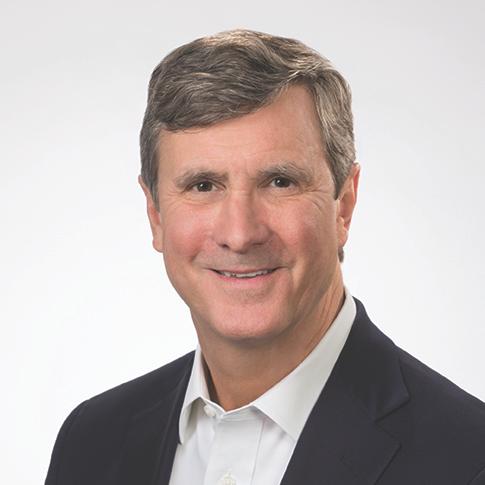
DOUG PALANDECH: Dan, thank you for having me again. It's good to be here.
DAN BUELOW: Back 30-plus years ago, DPIC came out with the contract guide authored by D. Crowell and Sheila Dixon, who I had the pleasure of working with Dick back in the DPIC days. And the guide came out, and they listed these dealmakers and dealbreakers. And so to tee this up, what I want to do is just read what a dealbreaker and dealmaker is.
Beginning with a dealmaker, and this is how the DPIC guide-- certain contract clauses that are so important to the protection of your firm that you want them included in each agreement you sign. We call these clauses dealmakers. If your client won't agree to these vital provisions, you may want to seriously consider whether to accept or decline the project. And then a dealbreaker is a client clause. So this is a client drafted clause that is so burdensome and onerous that you must insist it be deleted from any agreement. If your client refuses to delete or substantially modify such a clause, you'll need to seriously consider refusing the project.
So again, I think as we get into this, Doug, I'm going to ask Doug to really give us a lot of insight to each of these clauses from a legal perspective. But I think it's also fair to say that every firm is going to have their own appetite for risk and their ability to assume and control risk when it comes to these clauses. But some of these clauses really are dealbreakers and dealmakers as we get into this.
So Doug, before I turn you loose and talking through these, let me list these out. The seven dealmakers we'll talk about here-- mediation, hazardous materials, job site safety, limitation liability, ownership of instruments of service, termination, and getting named on a contractor's GL policy. And then we'll go into the deal breakers after this. But let's focus on these dealmakers here. And well let's begin with mediation. Doug so Doug talk to us about mediation. What is mediation?
DOUG PALANDECH: Mediation is a voluntary process, Dan, where owner and architect come together for claim resolution. I think we have to become-- how shall we say this-- we don't want to be pessimistic; problems are going to occur. That is the nature of construction. We're going to have problems. How do we resolve those problems?
The industry has spoken with a vehicle that is totally volitional called mediation in which the parties engage a neutral. And again, there are a number of people we are down in Chicago who are exceptional, who the industry and can talk business and talk law, and bring the parties to resolution, volitionally avoiding court, avoiding arbitration so that it is an opportunity with a reasonable owner and a reasonable design professional to compromise a claim. You don't have to do it, but we highly recommend its inclusion. And if we have a good mediator, chances are we're going to get some work.
DAN BUELOW: Yes, important to note that many professional liability carriers will often offer a mediation credit. And carriers aren't going to offer you a credit unless they have pretty good actuarial data to back this up that it does work, and it is an effective dispute mechanism. And to the point where we have been saying mediation yes, arbitration no because we've seen some really unfortunate turnouts through an arbitration process where it seems that the design professional maybe were not entitled to all avenues of discovery. This seemed like the deck was stacked and they split the baby at the end. And is that a fair assessment of that?
DOUG PALANDECH: Arbitration was sold to US in the 1980s, Dan, and it was a panacea. Every problem, and this is the only way we need to go, and for the reasons that you've identified it's proven to be false. We don't have full discovery. We may not have discovery against third parties.
The decision may not necessarily be rational, and you can't appeal it. So you are left holding the arbitration bag wondering what just happened. So mediation, again, is volitional. And I will tell you something, Dan, sort of a little secret, but a lot of times people want to yell. They're unhappy. And mediation seems to be the first hour are people yelling and then after they decompress, we start talking.
DAN BUELOW: Yeah, so important to have that clause in there-- in my opinion, I think that it makes sense to let's mediate and if that doesn't work, then let's litigate so that we're not just going to burn through mediation to get to arbitration. But I think that's another discussion maybe. But it just seems that if you have this sort of process, let's mediate, and then arbitrate, and then finally litigate. To me, arbitration and litigation are-- maybe I'd prefer litigation. I don't know.
DOUG PALANDECH: Yeah, it's done in the client's interest. The client's interest is to get resolution, and that's why mediation is so important. We have a number of very, very good people that are skilled at this. And once we've identified them and we're able to act like, I said, vent and get the issue discussed, resolution becomes very real.
DAN BUELOW: All right, so the next clause, let's talk about, is hazardous materials. And this is such an important clause that is often not volunteered in an owner-drafted agreement. And in the absence of this clause, you're in a pretty precarious position. Can you talk to us a little bit about this?
DOUG PALANDECH: What you want to do is you want to exclude from any kind of responsibility dealing with hazardous materials. So that's an honor issue. And so that should they be discovered on the site.
This is not something that-- how do I say this-- it doesn't even relate to what design professional service is going to be. It's got to be owner-recognized that if there's presence of hazardous materials, and are identified, the owner is going to address it. And it it's outside of the ambit of anything that the design professional has responsibility. It has to be included.
DAN BUELOW: We've seen claims come up, and we're silent on that. And it just creates all sorts of problems. Well, I think it is a clause that is-- it should be fairly easy to negotiate that on the front end.
DOUG PALANDECH: I agree with that too. The owner will typically, if the design professional includes it, it's never a pushback item.
DAN BUELOW: OK, all right, the next one on this list here is job site safety. And again, if I had to rank these dealmakers, this certainly would be near the top of the list just because the level of risk on this and the absence of any meaningful insurance as far as the design professional is concerned.
DOUG PALANDECH: You're correct. And this is, again, where you negate. This is the thou shall not. The contract forms should always say that contractor means and methods and workplace safety is outside of the responsibility of design professional. That is the quintessential obligation of the general contractor.
Many times owners, again, it may not even be conscious, introduce language making the design professional have some sort of responsibility or supervision over the contractor's operation. All of which opens the door to claims at the workplace. These are terrible claims, Dan. And let me explain why.
They go line for five years, and there's a million depositions. And the discovery is forever, and the damages are uncertain. We can get you out on summary judgment if we have the language that says the architect does not have this duty. That's why, again, this is the thou shall not that is tremendous dealmaker.
DAN BUELOW: And I think that really have to be very specific in your wording on how you word this, and that is the sole responsibility of the general counsel.
DOUG PALANDECH: Yes.
DAN BUELOW: And it's also very important for design professionals to educate their staff as to the conduct on the site. And we'll have and we do have separate programs, in fact, some on-demand webinars that you've helped us with, on construction administration job site safety and so on. But it's so important that the staff doesn't cross that line, if you will, by their actions. Because you might have, in your contract, which we hope you do, that you're not responsible for job site safety and construction means or methods. But if you have an employee, take some control of that site, stopping the work or whatever, it probably doesn't matter what's in the agreement. Is that true?
DOUG PALANDECH: You're correct. What you've just identified is what they call duty assumed by conduct so that if you have a duty excluded by contract, your conduct can create that duty.
DAN BUELOW: All right, so let's talk about this next one is Limitation of Liability, often referred to as LOL. So this is again kind of like mediation where it's a nice to have-- and in fact, I would say with some projects, it's very important to have. And I would also say that some of our clients seem to do a better job than others in negotiating this clause into their agreements because it does take some effort where it is an appeal for fairness and a conversation around what you think is fair.
You're going to make only x on this project and everybody else is going to make y. Why would I put my entire firm at risk for this project? Talk to us a little bit about, is this enforceable? And what are some of the maybe negotiation tips that you might have specific to limitation liability?
DOUG PALANDECH: Thank you because this is to answer the first question, it is enforceable. So again, contracts and courts are going to enforce limitations of liability. So they're fully enforceable, a number of cases have reaffirmed the principle over and over again. Where do we really see this as vital? What about the project that's $100 million and it's a big one, and you, the design professional, have a $3 million policy?
Anything can go wrong. There are many, many cases with catastrophic loss, uninsured, what do you do? You're at risk, horrible risk. Is it so hard, is it so wrong to prevail upon the owner to say, look, in the event that there's a problem, my liability is capped at insurance?
No, I think that is a very, very saleable thing. Your business partner should also understand that because he should appreciate the fact that a $100 million project, should something go south, just destroyed your firm. So Limitations of Liability are first, legally enforceable, and second, vital when you're dealing with the larger scope project.
DAN BUELOW: So you want that as a separate clause and very clear in the contract so there's no uncertainty around the terms of that. And it's not buried in some other clauses or language.
DOUG PALANDECH: Should have its own heading, Limitation of Liability. You can make it a fixed dollar amount, $50,000 might be. The easiest one to sell is that my limitation is capped, my liability is capped by the proceeds of my professional liability insurance. That's really the easiest sell.
DAN BUELOW: That is the easiest, and the available proceeds at the time of settlement is how you might worded in. And again, the dollar amount is nice, but also it gets into that conversation of, well, how much insurance are you being required? Well, that's what I would like to limit my liability to. And then if you need more insurance, then go get more insurance rather than have everything at risk on that.
So OK, it's not on this list but it comes up when there's a conversation often around limitation liability, but its waiver of consequential damages. Talk to us about that, a little bit about the distinction between the two and where you might want to really push hard for that because, again, it seems like that might be a little more of a difficult discussion or nuanced, if you will, but talk to us about waiver of consequential damages.
DOUG PALANDECH: What are the risks, Dan, is very uncontrollable consequential loss. And let's just take an example that we can for conversation purposes. Let's just simply say that the owner has in his mind the idea to take his project to market on a certain date. For whatever reason, he doesn't make the date. He says he lost his market opportunity, he never got his tenants, he never got occupancy, and he has all these loss warrants or is all this business interruption.
Oh, by the way, Mr. Architect, that's your fault. Well, wait a minute, I'm providing you a building. I wasn't responsible for market, was I? That is why we want to take consequential damages out of the equation, it should not be part of our risk reward, and make it mutual.
I will not hold you responsible for any consequential loss. You will not hold me responsible for any consequential loss. So let's have a mutual waiver of consequential damages. Again, that's the conversation between design professional and owner. Our experience has been, it's not a pushback item. You typically will get it.
DAN BUELOW: That's great. OK, so this next one on the list is ownership of instruments of service. And there was a couple of few clauses that really came to light in the last economic downturn, '08, '09. And this one was popping up when we saw a lot of supplanting of other design professionals, projects coming on and offline, and so forth. But just to back up here, the importance of ownership of instruments of service, talk to us about that.
With the understanding that owners like to own things, don't they? But I think that I always say it's important to really have a conversation with them. What do they really want? And then what are you prepared to give, and when are you going to give it?
DOUG PALANDECH: You're exactly correct. The concept of that's your intellectual property, you work, our debt represents what you did, you have an ownership. Is the owner being prejudiced by getting a license? Of course not. They need a license in order to access the intellectual work, but they don't need ownership. And it creates a situation where, wait a minute, if you do a design that looks like something you did earlier, did you just create a situation where you're subject to liability for copyright or that you've now created a liability because you've infringed on someone else's intellectual property? After all, you transferred it, didn't you?
DAN BUELOW: And of course, worst case scenario, and we've seen it, is where an owner will reuse a project, as you just described there, where the liability will follow. They didn't get compensated, and this a claim is on this other project, which was not suitable for. And so you really want to have specific language in there about mutual that it's by consent, right? And if you are, and you don't want to give anything without being paid in full.
DOUG PALANDECH: Exactly. But again, talk to your owner. This is your work. The interest in your work can be limited to a license, perfectly satisfactory.
DAN BUELOW: OK, so the last one on this, actually number six on this list is termination. And termination, the problem is your agreement does not adequately address the subject of termination. If it doesn't, it's an invitation to a dispute. And so we often will see one-sided termination drafted, owner- drafted language, and so on. So talk to us a little bit about the importance of this clause.
DOUG PALANDECH: It's something nobody wants to talk about. It's like talking about divorce at the moment you get married. It's a very difficult conversation. It's possible that there'll be a termination for convenience. There may be a termination for cause. But thinking worst case, and nobody wants to do it, OK, we're no longer happy with each other, are we now going to be paid appropriately? What are the termination expenses that we should be entitled to on termination?
Set them forth so that when you terminate-- and the other side too, what is the owner expecting in terms of design? Are you thinking about a release of liability on termination for the adequacy of design?
Uncomfortable topics, all of which need to be addressed.
So again, although nobody wants to do it, think about what are going to be the consequences of a termination for convenience and a termination for cause. And you're absolutely right. Unless you define them, you're going to have all kinds of heartache at the end.
DAN BUELOW: So our last of our dealmakers, and this is one that I actually added on here because I think it's often overlooked and very important is getting named on a contractor's GL policy, and a primary and non-contributory basis. And so that is something that is often overlooked and not negotiated in. And it's something that's a little more difficult because you're not a party for a traditional design, bid, build, you're not privy with the contract, with the contractor.
So this has to be done through an 801 or similar contractual vehicle with the owner where you're essentially saying to the owner, know you're going to get named as an additional insured on this contractor's GL policy. We want to also be on there along with all of our subs. And the reason you do is that if there's an injury, a worker is injured on the site, invariably somebody and everybody is going to get sued including the design professional, and this coverage belongs with the party that can manage the risk. And that's the contractor.
And so the contractor's GL policy will often have, with the understanding this, they will often have, in their contract, additional insured by contract provision. So if you request and get this in the contract, you would have coverage and be able to tender that claim to the contractor's GL policy. If you don't have this, what you end up trying to do is getting it into your professional policy with a high deductible and all the impact it's going to have on your policy. It's a sweet thing when you can just tender it over where it belongs.
And so I don't know what you're experiencing in that is. And I know it's difficult. I know a lot of these public agreements won't even allow it. But we've seen it where it really has come into play in a big way.
DOUG PALANDECH: It's huge for the reason you identified. The risk does belong with the contractor. With the design professionals in AI, the underwriting doesn't change, the premium doesn't change, but the defense certainly does. So now it's dollar one on your CGL. It has nothing to do with your PL.
Illinois, again, is a very favorable state, if there are any allegations that are, if you will, are in the general liability vein, there's potential for target tender and you want to get that out and you want to be able to target tender to the contractor's GL. It's a critical thing, critical in our formation.
DAN BUELOW: You referenced Illinois, and I think it's important to stress to everybody to understand that all these states can and will vary when it comes to the different laws and practice, acts, and statutes, and having an attorney that understands and can help guide them through these different state laws. Do you agree with that?
DOUG PALANDECH: Absolutely. Every jurisdiction will have its unique laws.
DAN BUELOW: So this is going to conclude our program on the dealmakers. And be sure to listen to our next program on the dealbreakers that we're going to have with Doug here. And thank you for joining us, Doug.
DOUG PALANDECH: Dan, thank you very much for having me.
DAN BUELOW: And Thanks, everyone for joining us for our Willis A&E podcast Talk to Me About A&E.
SPEAKER 1: Thank you for joining us for this Willis Towers Watson podcast featuring the latest thinking on the intersection of people, capital, and risk. For more information on Willis A&E and our educational programs, visit willisae.com
Willis Towers Watson hopes you found the general information provided in this publication informative and helpful. The information contained herein is not intended to constitute legal or other professional advice and should not be relied upon in lieu of consultation with your own legal advisors. In the event you would like more information regarding your insurance coverage, please do not hesitate to reach out to us. In North America, Willis Towers Watson offers insurance products through licensed subsidiaries of Willis North America Inc., including Willis Towers Watson Northeast Inc. (in the United States) and Willis Canada, Inc.