Every design firm is faced with managing scope creep and the challenges of project management to control resources to meet a certain objective by a specific date within a finite budget. Dan and guest Andy Mendelson from Berkley DP engage in an interactive discussion on how to manage the change process to maintain your client relationships and your firm's profitability through the use of some invaluable risk management tips, effective communication and documentation practices.
Choose your location
Select the location and the language that you prefer
| Location | Languages Available |
|---|---|
| Argentina | |
| Bermuda | |
| Brazil | |
| Canada | |
| Chile | |
| Colombia | |
| Costa Rica | |
| El Salvador | |
| Guatemala | |
| Honduras | |
| Mexico | |
| Nicaragua | |
| Panama | |
| Peru | |
| United States | |
| Venezuela |
| Location | Languages Available |
|---|---|
| Australia | |
| China | |
| Hong Kong (China, SAR) | |
| India | |
| Indonesia | |
| Japan | |
| Korea | |
| Malaysia | |
| New Zealand | |
| Philippines | |
| Singapore | |
| Taiwan | |
| Thailand | |
| Vietnam |
| Location | Languages Available |
|---|---|
| Austria | |
| Belgium | |
| Croatia | |
| Czech Republic | |
| Denmark | |
| Finland | |
| France | |
| Germany | |
| Greece | |
| Hungary | |
| Ireland | |
| Italy | |
| Kazakhstan | |
| Luxembourg | |
| Netherlands | |
| Norway | |
| Poland | |
| Portugal | |
| Romania | |
| Serbia | |
| Slovakia | |
| Spain | |
| Sweden | |
| Switzerland | |
| Turkey | |
| Ukraine | |
| United Kingdom |
| Location | Languages Available |
|---|---|
| Cameroon | |
| Congo | |
| Egypt | |
| Ghana | |
| Ivory Coast | |
| Israel | |
| Jordan | |
| Kenya | |
| Kuwait | |
| Mauritius | |
| Nigeria | |
| Saudi Arabia | |
| Senegal | |
| South Africa | |
| UAE | |
| Uganda |


What can we help you find?
main content, press tab to continue
Podcast
Managing scope creep
Talk to me about A&E: Episode 6
December 7, 2023
How to manage the change process to maintain your client relationships and your firm's profitability
Managing scope creep
Transcript for this episode:
Talk to me about A&E: Episode 6 Managing Scope Creep
ANDY MENDELSON: So, if your fees are not increased, your profits are going to be diminished. And in fact, it can be diminished so much that it could put your project into a loss situation overall, compromising not only the financial expectations of the project, but if it gets really out of control and you've got enough of them, it can even threaten the financial integrity of your firm.
SPEAKER 1: Welcome to Talk to Me About A&E, a podcast series focused on risk management for architects and engineers. Host, Dan Buelow, managing director of Willis A&E will engage experts across the A&E spectrum on topics ranging from contract details to the broadest trends impacting design professionals in North America.
DAN BUELOW: Hello and welcome to the podcast series Talk to Me About A&E. I'm Dan Buelow, managing director of Willis's architects and engineer’s division. And my guest today is Andy Mendelson, vice president and chief risk management officer for Berkley Design.
And our topic is on managing scope creep. Andy joined Berkeley Design Professional in July of 2013. And after 36 plus years as a career as a licensed architect, and firm principal with a diverse background and practice project financial operations and risk management experience, particularly in the large A/E firm environment.
Andy was on the AIA documents committee as well as the AIA large firm roundtable, LFRT, at the legal committee. And he's an active member of the National ACEC Risk Management Committee. Fellowship is bestowed by AIA to those AIA members who have made an outstanding contribution to the field of architectural education, and Andy is a fellow AIA. In other words, this guy knows what he's talking about. And certainly, on this topic of scope creep.
Andy, how are you doing?
ANDY MENDELSON: I'm doing well today, Dan. It's a pleasure to be with you and helping to contribute to your podcast series.
DAN BUELOW: This is great because Andy and I actually go way back. I've actually had the pleasure of knowing Andy dating back when I was on the underwriting side, back when I was with DPIC, headed up the underwriting. And he was the head of a large architecture firm in Chicago. And then later as his broker in 2000. And now over since he's joined Berkeley, as one of our carrier partners.
So, we've had a great relationship working together. And he's one of our frequent flyers on our Willis A&E webinar and education programs. So, in our first podcast on contracts, the first one we did, if you recall, was on critical basics. And we discussed the importance of defining your scope of service in every contract-- considering what services you will be providing, what additional services you will provide for an additional fee, what services won't you be providing.
The problem design firms face is that even with a well-defined scope of services in your contract, scope can and will often creep on a given project. And a firm must really actively manage this to mitigate the risk against costly professional liability claims and client disputes.
Hey, let's slap a gymnasium on this. OK, let's slap a gymnasium on this. But let's also make sure we amend our original contract to account for this additional work. Because if we don't, there's a very good chance the firm's not going to get paid in full and you might very well find yourself outside the original contract and certainly vulnerable for more risk.
Andy, talk to us about what a firm must consider when we first are thinking about defining scope, should a firm be as detailed as possible when describing the services, they will provide? And is there a risk in being too detailed or not detailed enough in the description of these services?
ANDY MENDELSON: You know, Dan it depends on the complexity and size of the project and the scope of services you are planning to provide. I've always been of the philosophy that the larger the project, the more succinct you need to be in definition of scope of services. Your clients, the project owners, if you're an engineering consultant, the architects you're working with, these are going to be more sophisticated parties on the larger projects.
And keep in mind that the model contracts, and you mentioned that I served on AIA Documents Committee. I was actually on that committee for 15 years. We put a lot of effort into defining the front end of the project, the criteria of the project through a very robust Article 1 with project information. We call it initial information.
And it really starts with establishing and understanding, with your client the project owner, in terms of what their expectations and goals are. It's funny that you mention this issue of maybe a school project and slapping a gym on it. That does happen. Some owners get into a project without a clear definition of their program-- the functional needs, the technical needs. What about their budget-- the project budget, the construction budget?
Now, what about other important owner requirements such as a sustainable design gold, a LEED certification goal, or any other types of energy performance criteria that of course are very important factors, and quite frankly, are a part of really most commercial, institutional, public projects these days and many private projects as well.
So, there's all kinds of factors that can come into play. Does the project exist on a site where the owner maybe doesn't own all of the parcels of the site? Are they dependent on like entitlement for roadway interchanges, traffic lights, things like that? Things that can-- if they're not addressed and are left open can create scope creep issues, because you're going to be providing more services to get to that end when these aspects are defined.
So, the model contracts done by AIA, and well there-- as we updated them in 2007 and 2017, we did expand the definition of services. It's up to about four pages now. But it's an-- overall, it's a 20-page document. So, these are model agreements that are general in nature.
And for many firms, that kind of general nature works fine. But for again, the larger and more complex projects, it's necessary to get into a more clear definition of what you are doing for the basic services, and what you can do as an additional service. And sometimes those additional services can be incorporated into basic services.
We created at AIA this term supplemental services. So as an example, that LEED certification, which is common. We can build that into the basic fee, the fee would go up if it didn't have those services, but it was known at the beginning of the project. So, the front end is really, really important because that's where your wheels can spin. And so, you want to be as concise as you can at the front end.
DAN BUELOW: So, I want to touch on the additional services, but before, I think you raised a great point. Your client, who's your client with. And as you use the example, there's some great association agreements in the case of AIA excellent agreements that we know tried and true. However, we also know that firms will often find themselves having to work with a client drafted agreement.
And firms need to be careful, don't they, when it comes to these agreements and contracts where they attempt to use overly broad language in their work scope provision such as consultant will provide any and all engineering services necessary for the completion of the project. That's something we see in these owner draft agreements, or the scope of services proposed will be adequate to meet the project needs.
Such language makes your services difficult to quantify, to price, or even to know when you are done with your duties. So that's another important point about that. Andy, as far as identifying in your scope, those services you won't be providing. This could be a long list. How detailed does a firm need to be, and wouldn't there be a concern that any services that are not enumerated may be implicitly included for as a basic service required under the contract?
ANDY MENDELSON: That is a risk that if you start listing a whole bunch of excluded services and then you miss one, can it be implied that because you didn't list it under excluded that is it is included. So, you need to have a statement in your contract that says, maybe there's an exhibit that's further enumerating your scope of services, and simply saying any services that are not included in this list of services we are providing are excluded.
So, there can be times when it's important to specifically exclude services, particularly when the owner is hiring its own consultants, or maybe there's a construction management, or preselected general contractor, where their priority is also of course retained by the owner. And they're providing cost estimating services and other services that might otherwise be the expectation that the design professional will provide.
So, I think there are certain key areas where it is important to list the excluded services. Again, the AIA documents have an article, Article 4. It's an additional services section. And it actually lists about 25 different services. And it's requested that the architect fill out every column, every cell in that form. So, it says architect owner or not provided. So that's another way to clarify it.
DAN BUELOW: So that's a good point. So, we in the document, you're going to have this wording along the lines that, hey, this is an example of the services not provided. And again, if you're working with an owner drafted agreement, you want to make sure of that.
And one of those services I would guess would certainly be geotech, that we would want to maybe single out if we are in fact-- which often, the design firm, arguably the owner should be hiring the geotech on most cases. But let's talk about additional services, how do you recommend addressing additional services that a firm might offer in a contract, and how do you justify what is in fact additional and deserving of an additional fee?
ANDY MENDELSON: It starts with a client that understands the design and construction process, understands that your fees, while they may be significant, they're nowhere near as robust as what the construction budgets are. And even with a strong design and construction economy that we had up until the March of 2020, and which economy, of course, is coming back rather strongly this year in 2021, margins are still very tight for the architecture and engineering industry. And profits are tight as well.
So, you need to be in business with clients that respect you in that regard. And understand that you need to define your services concisely so that you can manage the project in a way that allows your firm to attain a reasonable profit target. So, it really starts with that. And so again, contractual clarification of what's included, what's not included.
Again, at the front end of a project if a project needs to go through zoning or planning. And like you say, you don't want to say you're going to attend every public meeting that's necessary, of course not. You're going to tell your owner say, listen, we think this is going to take two or three zoning meetings. We'll build into our fee, our attendance at three zoning meetings.
Beyond that, we will notify you. And you'll need to pay us on an hourly basis for that. And most clients will understand that. They know that you don't have control nor do they over the public review process. So, there's an example of a front-end service that needs to be carefully defined, don't leave it open ended.
DAN BUELOW: That's a great point. And we're going to keep coming back to this as we have done in our past programs about just over communicating, and documenting, and so forth throughout this process. I know that some of our clients, and I think it's a great idea, they'll use a zero invoice as a vehicle for them to help manage getting sucked into the redesign trap and ultimately working for free.
And the zero invoice is just simply that, you did some work. You're not going to charge them. But rather than not communicating anything, they're going to actually send off a real invoice. And what I like about it is on that invoice, you have a project number. And that project number ties it back to our contract. But I also think it also allows a design professional to quantify all of this free work they're doing.
Hey, after this third, fourth, zero invoice maybe we should start charging. I think that's a good idea if they can get away with it. So, everything needs to be in writing. Let's not just slap a gymnasium on this, right? But what types of authorization should the design professionals receive for the additional services, Andy?
ANDY MENDELSON: Well, it has to be in writing. The best would be to have some type of contract modification form that you've established in your firm as a standard document. And sharing that with the owner up front. And saying that, hey, when we're in an additional services situation, where we need to charge you. We're going to send this to you and have you co-sign it.
Because what you're doing is really-- like you said, you're modifying your contract. You're modifying the scope of your services and your fees. Email can be a backup if you receive an affirmative response. So, in other words, per our discussion during the meeting yesterday, we are going to add this gymnasium to the school.
The additional construction cost is going to be $500,000. Our architectural and engineering fees are going to be $30,000. And we're going to need another three weeks in this phase in order to get that done. And so if you send it and you get no response that's not an affirmative reply. If you send it and you get a response that says, yes, we agree please proceed. That is OK.
But again, we prefer that you actually have a separate document that you can PDF, send to your client, have them affix their signature to and have it back. Because like I'm sure you talked about in the earlier podcast, it's a contractual change and the verbal is really not worth the paper it's printed on, because there is no paper.
DAN BUELOW: OK, so we have a well drafted scope. We've had some great conversations with our client. We've managed that up to this point. Let's now discuss scope creep. And how do you define scope creep, and what are some of the financial and/or client relationship ramifications a design firm can face?
ANDY MENDELSON: So, scope creep's a pretty simple concept. It means you're providing services beyond your basic services responsibilities as defined in your professional services agreement, which is a contract, without additional compensation.
So, if your fees are not increased, your profits are going to be diminished. And in fact, it can be diminished so much that it could put your project into a loss situation overall, compromising not only the financial expectations of the project, but if it gets really out of control and you've got enough of them, it can even threaten the financial integrity of your firm.
So furthermore, additional services that are not properly authorized by your client, before you provide them, if they are invoiced, it's going to lead to extended accounts receivable issues. And moreover, it's going to be frustrating to the client, saying, hey, I didn't realize that with this change that my people talked about, that was going to cost me another $30,000 and another three weeks in the schedule. You didn't tell me that. And now I'm seeing this invoice. Now I'm seeing a schedule it's not going to be made. I'm not happy. So that's going to create frustration.
So, getting back to the subject of documentation and communication, actually putting communication ahead of documentation. It has to be thorough. Your client needs to understand. And I like the strategy that you talked about a few minutes ago. You may not want to invoice for every little thing that's different, but you want your client to know that. And that's where the add zero invoice strategy can be very effective.
DAN BUELOW: And that's a great point. And we did talk about an earlier podcast about how the vast majority of claims against design professionals are really rooted in expectations not being properly managed, properly established on the front, and then managed, and using the contract as a vehicle to do just that. So, some great points. Specific to contracts, are their contractual measures that you can be taken by the design firm to manage scope creep, and what would you recommend in that area?
ANDY MENDELSON: Well, the base contract language needs to be fair. And I would say that in most situations, when I'm seeing, when I'm reviewing owner generated agreements, it generally is fair. When you put yourself in the owner's shoes, you can understand why they need to have the right to review and approve your additional services request before you provide the additional services.
So virtually, every contract is going to have that requirement, whether it's an AIA agreement, an EJCDC agreement, or certainly an owner drafted agreement. They need you to make the request and be authorized before you provide those services. So, then it becomes a question of behavior.
Behavior within your firm at the project management level, at the project team level. That you, in fact, are doing there. And not just going to a meeting, listening to somebody else on the owner’s team that wants to change a design from a previously approved milestone, and just starts making the changes, and causing your consulting engineers to make changes without anybody having authorization for the additional services.
So, there can be situations in contract where owners want you to go ahead and proceed even if they disagree with the additional services request. You've got to try to balance that out. And when I review these contracts, I say no. No, we're simply not going to proceed unless you authorize this. Our contract requires us to have your authorization for a change. This is a significant change; a meaningful change and you've got to provide us that authorization.
So, the communication is much of an art as it is a science-- maybe the project manager needs to get the project principles involved, maybe this is a good way for private principles that are dealing with higher level issues across the firm. But really, should have some client contact and help out in this regard. So again, once you get the contract language, it's really a question of how you're behaving as an architect or engineer.
DAN BUELOW: Great advice. And again, watch out for those, again, owner drafted agreements and where consultant needs to be careful not to raise its standard of care under the scope of their services. Certain words in the scope of services may create an absolute liability. Using such words as, ensure, experts, certify, so forth can raise your standard of care.
And again, we talked quite a bit about that on the contract discussions. And also, the inclusion of a reasonable termination clause should be in every contract which should include provisions for termination if you and your client cannot agree on changes in the scope of services or the resulting changes in compensation and schedule. So that's certainly as important.
So, Andy, I know that you and your team over at Berkeley have put a lot of thought into this. And you in fact have put together some thoughts around change management. You have a change management policy, in which in that paper that I saw, you've identified four key elements.
And this is all managing scope creep. But I think the point here is that every firm should have something in place, right, and how you're going to deal with this, because it's so very important. And you broke it down to identify, notify, authorize, and document. Andy, provide us an overview of your suggested change management policy in these four key elements.
ANDY MENDELSON: Well, those are the four most important aspects of a change management policy. So, the first is like you said identify, which has to do with awareness. The team-- the design teams’ awareness of what your scope of services are from a basic services standpoint and what would be an additional service.
The other thing they need to be aware of is the responsibilities of the parties, particularly the owner and any party that the owner may hire. Like you say, geotechnical consultant, environmental survey. You need that information. And if the information is not coming and it's causing a delay, your team members-- if the project manager, who tends to be managing multiple projects.
So, by getting the team aware of these key issues they can bring it to the project manager so that they can provide the notification to the owner. So, the identity and awareness-- notifying first your project manager. And then the project manager notifying your client. So that the third element, the authorize, that we were just talking about can in fact, happen in a timely manner.
And once the authorization is given, make sure it's properly documented. We went over a couple of the schemes for documentation. Some clients, particularly like the federal government, which of course, is a large bureaucracy, you've got a day-to-day project manager that may have limited authority in terms of what they can do, in terms of contract modification.
So sometimes you have to roll that up to a contracting officer at the federal agency. And you might only be able to talk to that person every three months or so. So, you need to have proper authorization and documentation from your day-to-day project manager. They can then roll up to whatever the powers that be at the client side if there is a multilevel, and get those documents in place with the actual design change modification. So, identify, notify, authorize, and document are the key elements.
DAN BUELOW: So, give us some parting comments on how the design professionals project leaders can engage their team in managing change and scope creep.
ANDY MENDELSON: Dan, I know you advocate for a quote unquote "dramatic reading of the contract" for the project team at the outset of the project. And that's an excellent idea, however we might not have the time to read a 20-to-30-page contract, verbatim, or have all our team members do it.
So, we at Berkeley DP have created a business term summary form. It's actually available on our public website. So that the PM can summarize these key business issues of the project, the program, the client expectations, schedule budget, your services, owner's consultants and contractors, those sorts of things. And again, bring these business issues to the front of your design team members so they can help you manage the project.
Again, project managers tend to be spread thin. They can't attend every user group meeting. And there's other members of the design team that are going to be interfacing with the client, so they can bring that awareness back to the PM. We have some situations at my firm where that did not happen.
And design team members started going ahead and making changes, going out of scope, in one case about two months before the project manager was even aware of it. And of course, it led to a whole bunch of unvoiced services and significant project losses. So, we really dialed up internal communication and strategies which kind of led to this practice tool that we've created for Berkeley design professionals.
So, we have found that most design professionals, even though they may be design or technically oriented rather than management oriented, they want to be part of a project that is successful financially. They understand that the firm needs to be profitable. They understand that their contribution to profitability of their project will work well for them in terms of their salaries, their bonuses, and the overall financial health of the company.
So, don't be afraid to talk with your team about this, in fact, be very open with it at the beginning of the project. We recommend you revisit it on a regular basis, no less than the phase milestone meetings, that startup design development, the start of construction documents.
And even on regular design team meetings, if there's issues that are outstanding, that the owner hasn't provided response to, that other members of the project team haven't provided response to when things are slowing down, that again leaves the scope creep. So again, your design team members, when properly informed and when properly aware can help the project manager manage the project.
DAN BUELOW: Great advice, Andy. And I think it's, again, dramatic reading of the contract, I do think that's a great idea. I don't want to read the whole thing, but let's at least read the scope, right? Also, my team got to manage this. And so, I think, but all excellent points. And that concludes our podcast at managing scope creep. Thank you, Andy, for sharing your expertise with us.
ANDY MENDELSON: My pleasure, Dan. You're welcome. Happy to contribute.
DAN BUELOW: It's always great to talk to you, Andy. And thank you for joining us and be sure to join us for our next Willis A&E podcast, Talk to Me About A&E.
SPEAKER: Thank you for joining us for this WTW podcast featuring the latest thinking on the intersection of people, capital and risk. For more information on Willis A&E and our educational programs, visit WillisAE.com. WTW hopes you found the general information provided in this podcast informative and helpful. The information contained herein is not intended to constitute legal or other professional advice and should not be relied upon in lieu of consultation with your own legal advisors. In the event you would like more information regarding your insurance coverage, please do not hesitate to reach out to us. In North America, WTW offers insurance products through licensed entities, including Willis Towers Watson Northeast, Inc. (in the United States) and Willis Canada Inc. (in Canada).
Podcast host
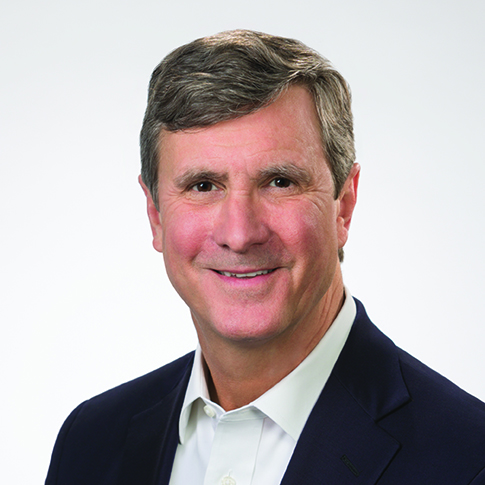
Dan Buelow
Managing Director, Architects & Engineers practice
Dan is the Managing Director of WTW A&E, the specialty division for WTW that is exclusively dedicated to providing insurance and risk management solutions to architects and engineers. Dan and his staff of A&E insurance specialists represent over 500 architectural and engineering firms located across the country and practicing throughout the world. Dan and his team provide tailored risk management services, including contract negotiation, claims advocacy and a wide variety of risk management education workshops. Dan is on the ACEC National Risk Management Committee (RMC) and chairs the Cyber Sub-Committee. Dan is active in ACEC, AIA and other associations that support the design community. Dan speaks frequently and has written and presented on a wide range or risk management topics for architects and engineers.
Podcast guest
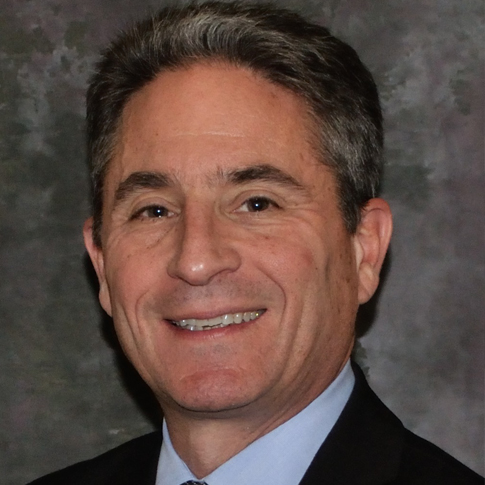
Andy Mendelson
Senior Vice President & Chief Risk Management Officer
Andy Mendelson is a design industry leader in risk management and contracts. Andy joined Berkley DP in July 2013 after a 35-year career as a licensed architect and firm principal. Andy directs Berkley Design Professional’s efforts to provide design professionals with leading-edge, risk and practice management resources, tools and training.
