Dan Buelow talks to Frank Musica, Risk Management Consultant for Victor, in a two part series on communication and documentation. In part one of this series, the focus is on the standard of care and the importance of documentation and effective communication in order to manage professional liability risk. Dan and Frank talk about why most claims against A&E firms are rooted in poor communications and documentation practices. This discussion includes a review of the fundamental tension between risk management and marketing, advice on the documentation and communication process in the contract formation and CA phases and managing client expectations.
Choose your location
Select the location and the language that you prefer
| Location | Languages Available |
|---|---|
| Argentina | |
| Bermuda | |
| Brazil | |
| Canada | |
| Chile | |
| Colombia | |
| Costa Rica | |
| El Salvador | |
| Guatemala | |
| Honduras | |
| Mexico | |
| Nicaragua | |
| Panama | |
| Peru | |
| United States | |
| Venezuela |
| Location | Languages Available |
|---|---|
| Australia | |
| China | |
| Hong Kong (China, SAR) | |
| India | |
| Indonesia | |
| Japan | |
| Korea | |
| Malaysia | |
| New Zealand | |
| Philippines | |
| Singapore | |
| Taiwan | |
| Thailand | |
| Vietnam |
| Location | Languages Available |
|---|---|
| Austria | |
| Belgium | |
| Croatia | |
| Czech Republic | |
| Denmark | |
| Finland | |
| France | |
| Germany | |
| Greece | |
| Hungary | |
| Ireland | |
| Italy | |
| Kazakhstan | |
| Luxembourg | |
| Netherlands | |
| Norway | |
| Poland | |
| Portugal | |
| Romania | |
| Serbia | |
| Slovakia | |
| Spain | |
| Sweden | |
| Switzerland | |
| Turkey | |
| Ukraine | |
| United Kingdom |
| Location | Languages Available |
|---|---|
| Cameroon | |
| Congo | |
| Egypt | |
| Ghana | |
| Ivory Coast | |
| Israel | |
| Jordan | |
| Kenya | |
| Kuwait | |
| Mauritius | |
| Nigeria | |
| Saudi Arabia | |
| Senegal | |
| South Africa | |
| UAE | |
| Uganda |


What can we help you find?
main content, press tab to continue
Podcast
Managing risk with effective communication and documentation part I
Talk to me about A&E: Episode 15
December 11, 2023
The standard of care and the importance of documentation and effective communication in order to manage professional liability risk
Managing risk with effective communication and documentation part I
Transcript for this episode:
Talk to me about A&E: Episode 15—Managing risk with effective communication and documentation part I
FRANK MUSICA: Architects, engineers, landscape architects, whatever, go through school with a pretty demanding program. But part of that program is not communication skills. So when they get out, they often don't have the skill set they need to properly communicate with the client.
SPEAKER Welcome to Talk to Me About A&E, a podcast series focused on risk management for architects and engineers. Host, Dan Buelow, managing director of Willis A&E, will engage experts across the A&E spectrum on topics ranging from contract details to the broadest trends impacting design professionals in North America.
DAN BUELOW: Hello and thanks again for joining me for another episode of Talk to Me About A&E. I'm Dan Buelow, managing director with the Willis A&E group, and our topic today is on documentation and communication, which arguably is the most important consideration when it comes to managing A&E risk. To help me tackle this rather broad topic I have with me a very special guest, Mr. Frank Musica, risk manager for Victor.
Hello, Frank.
FRANK MUSICA: Hello, Dan.
DAN BUELOW: How are you doing?
FRANK MUSICA: I'm fine. Glad to be with you today.
DAN BUELOW: Great to have you. So Frank Musica is a graduate of the School of Architecture of the University of Notre Dame. In addition to his professional degree in architecture, he holds a master's in business administration and a law degree. Frank's education and practice experience have been devoted to working with architects and engineers. And in 1991 Frank joined the staff of Victor Insurance Managers as program manager for the CNA A&E professional liability program, which has been going on for over 50 years now. In this role, Frank has led the group's risk management efforts in support of their design professional insurance across North America. Frank also served as the contact with Engineers Joint Contract Documents Committee, that's EJCDC and as insurance counsel to the documents committee of the American Institute of Architects, AIA.
We in fact have touched on this topic of effective communication documentation practices in many of our other Willis A&E podcasts, including on negotiating contracts and construction administration. And this is also a topic we address every year as one of our monthly Willis A&E webinar topics. And we have an extensive program available on the topic in our Willis A&E on demand education programs, all of which can be found in our Education Center in our website at willisae.com. And we're lucky to have Frank here because of his extensive background. And a design firm's communication and documentation practices are so important because of the simple fact that most professional liability claims are rooted in expectations not being adequately established or managed. In fact, the vast majority of claims against architects and engineers are not even rooted in technical error, but rather non-technical causes of loss.
And what we mean by that, the four non-technical causes of loss for example are number one, negotiation contracts. Number two, client selection. Three, project team capabilities. And four, communication documentation. Not necessarily in that order. In fact, communication documentation practices are rooted in all of the non-technical causes of loss. The good news in all of this is that design firms can take certain risk management measures, including educating their staff to address these non-technical causes of loss, and mitigate their exposures to costly claims and client disputes.
So why is documentation so important when it comes to design professionals? Well, let me list a few reasons here. First off, architects and engineers, professional liabilities exposure is a long tail exposure. It takes on average two to three years for the average professional liability claim to be resolved. So you better be able to tell your story in the future.
Another reason, because architects and engineers are not perfect. It may void or complicate coverage if you claim to be. And because anything you say can be used against you, and because you've never deleted an email in your life. A few good reasons right there, and some of which I'm going to talk to Frank about here today. So Frank, let's start off here. I'd like to have you field this question for me. The old DPIC question from the lessons and liability in 1987, back in the day. Over 35 years ago. True or false, design professionals tend to do a good job in educating their clients as to their professional duties and responsibilities. How would you answer that?
FRANK MUSICA: Well Dan, I think that answer is pretty clear. The Victor program with CNA has been around for over 65 years now.
DAN BUELOW: 65.
FRANK MUSICA: Yeah. And actually, by the time that question was published, the answer was clear. I looked in our archives and found the analysis completed 20 years before that question about the performance of the CNA program in its first decade. That analysis pointed out that one of the major difficulties in underwriting architecture and engineering firms was that most of the problems that led to claims were not technical issues, but rather management issues. In that 1967 analysis, and in a 1971 publication Victor did for the CNA program, the issue of communications was pointed out as the single most important aspect of running a professional service firm.
As you said, because it was clear back in 1967 that firms did not have the necessary skill set to communicate clearly, and to educate their clients on what duties were contractually included, what responsibilities were placed on professionals by licensing laws, and what expectations for the project were in fact reasonable. It is as true today as it was back in 1967, or back in 1987 when the PPIC was still in existence, that good firms have the ability to work with clients, guide their understanding, and shape their expectations about their services and the project. But many firms still do not properly educate their clients as to their professional duties and responsibilities.
DAN BUELOW: Yeah, why do you think that is? Here we are, and you pointed out DPIC no longer exists, CNA has been doing this and continues to do this with the help of Victor in educating their firms. But all the effort we've been putting in this, and firms are still getting sued for the same thing essentially. But why is that still a challenge for design professionals when it comes to taking responsibility? And would you agree, it is the responsibility of the design professionals to educate their clients as to the standard of care, for example?
FRANK MUSICA: Yeah. I think that's true. And I think one of the difficulties is the professions, architects, engineers, landscape architects, whatever, go through school with a pretty demanding program. But part of the program is not communication skills. So when they get out, they often don't have the skill set they need to properly communicate with the client to properly express themselves in writing or verbally. And as they rise through the ranks in the firm, sometimes they pick up those skills. But often they don't. And we often will see firms, especially smaller firms, where the person will say, well, they just don't understand me. Well that's because you're not communicating at the level the client needs that communications.
And you mentioned the standard of care. I think that too often architects and engineers and others think that the standard of care determination will protect them in all situations. But very few claims against design firms ever get to a stage of litigation where the standard of care is examined and applied. So it's vital for firms to really discuss with their clients what the expectations for services should be. And it's critical that they do not allow professional service agreements to modify that standard of care in a way that's unreasonable, or as you said, could constitute a contractual assumed obligation that exceeds the firm's normal liability in the professional services, and therefore it's insurance coverage.
A contract does not have to establish a standard of care. The standard of care exists, even if it's never mentioned in the contract. But it's critical to communicate with the client that the design firm's efforts to assist the client, and the client's effort to put a capital asset in place, has to be within the scope of reasonableness. And there's no guarantee of performance of services, or certainly no guarantee of success of the project. That discussion or explanation is not helpful if the client really doesn't care and sticks a contractually assigned responsibility that exceeds the standard of care, the reasonableness standard into a contract.
And that's one reason we see so many problems with design firms when they're subcontracted in design build projects. The contract often includes obligations that go beyond meeting the generally accepted standard of care for professional services. Design build entities have contractual obligations to a client, and they want those to flow down to the design firm. Even if those obligations exceed the normal standard of care that would determine the firm's normal liability and the performance of professional services.
DAN BUELOW: Right. And we're going to talk a little bit more about contracts, and you touch on how important it is to-- using scope, and defining scope, and using really that contract I think is important as a vehicle for establishing and managing expectations. It's so important, and we'll talk some more about that. And in seminars I'll often ask an audience of design professionals, true or false, is the standard of care for an architect engineer perfection? And they all tend to get that question right. But then I would ask-- well, you may get this right. What do you think if we had this room full of your clients or prospective clients, would they get this right?
And I think the point is that there is a responsibility to discuss what your role is, and using that contract as a vehicle. But let me shift a gear a little bit here, as far as documentation communication is important for any business, as we know. But I think the challenges for design firms are truly daunting, considering all the different parties that a design professional must communicate and work with, often with various standards of care even. And the various types of mediums and communications. If you think about it, a design firm is dealing with proposals, the contract, plans and specs, websites, field notes, meeting minutes, submittal reviews, emails, and advertising and marketing materials, and so on. Frank, in regards to this advertising and marketing materials, talk to me about the fundamental tension between risk management and marketing.
FRANK MUSICA: Yeah, I think that's very interesting, Dan, that now I think more than ever we're seeing marketing go off the edge. Back in the mid '70s, marketing wasn't part of what design firms could do. It was often considered an ethical violation to do marketing. It was only after the codes of standards and all that were thrown out in the '70s that lawyers, and accountants, and architects, and engineers, really pushed marketing. And now with online marketing and all that, we're seeing a lot of issues. And marketing must generate a reaction to win a project, that's clear. But it also needs to avoid the potential problems created by how a firm communicates its skills and experience.
When the project is being negotiated, it's critical to make sure the client understands that what is referred to by lawyers as the four corners of the contract, really do document the service to be provided. And that marketing hype or misstatements are not contractual obligations. Much of what is said during marketing is looked at by the law as mere puffery, or puffing. Saying you are the best firm, or that you care about the bottom line, those kind of examples aren't really held against the firm. But when marketing material-- and we see this on websites quite a bit-- states things like, a firm's projects come in on time and on budget. That firm can find itself in big trouble, because it can create a detrimental reliance situation. And some of that could even constitute a warranty obligation.
So now as firms, especially larger firms, have large marketing staffs that aren't one on one going out there and meeting prospective clients, but putting out all this material on websites, and through emails, and many other ways to communicate electronically. That can be a problem. So documenting the contract negotiation properly means that the contract really has to have something called an integration clause, that provides that the writing the contract contains the entire agreement between the parties. And the contract supersedes all prior oral or written information, so that you don't end up with that marketing stuff being seen as part of the contract. And a good contract should also require that no waiver or modification of its terms is valid unless it's contained in the writing signed by the firm.
And that helps to insulate a firm from altering its legal obligations by oral statements, which can happen on site, or can happen when someone calls the office. And reduces the likelihood that emails or other communications are binding and change the contract.
DAN BUELOW: These are great points. And I want to-- we're going to drill down, certainly on emails here at the end a little bit. But as you point out, the courts will allow a certain level of puffery perhaps. But we've also seen firms marketing materials become exhibit a against them. So it certainly is a good idea to look into what your website is saying, and what your marketing folks are doing so. Because they may not understand some of the nuances of what the standard care is and so on. So I think that's great advice. As we noted, we've had a lot of discussion on these podcasts about the importance of using contracts as a vehicle to establish and manage these expectations. As someone that's been active and a member of both the AIA and EJCDC documents committee, and who reviews hundreds of professional agreements a year. Talk to me, Frank, about the importance of avoiding promises and documenting expectations.
FRANK MUSICA: Of course. And writing contracts should be basic to every design professional's education. In fact when I went back to law school, I actually worked with the Department of Architecture and taught a course on contract law to try to show young architects, or prospective architects what you can and can't say. And one example I think is great, is what we faced years ago, maybe 20 years now with the green design movement. All of a sudden we saw design professionals buying into the hype that the US Green Building Council would put out. And they started marketing their services to achieve green design, including things that most clients care about, including the reduction in energy costs.
And it created a ton of problems, because goals were not met. Sometimes, maybe because of design errors. But more likely because of construction problems. But those commitments were often stated as promises made to clients, and they weren't met. It was not unusual for an architecture firm to say, we can design for energy efficiency in the school we're designing. We'll use 50% less energy than the schools you now have in place. And that would not happen. It would not happen, because the maintenance staff didn't know how to run the equipment or whatever. But they weren't met.
And often we got claims because of those kind of promises. Those commitments. The professional liability claims weren't just based on the deficiency of performance of a project, but clients even brought other kinds of claims as well. Without proper documentation of the services to be performed. And at times the services that were not going to be performed, or the contractual obligations that were not promises.
Firms became subject to legal exposure for things like misrepresentation when they would tell a client, oh yeah, this is what's going to happen. Or concealment of material fact, when they were designing green, but it meant a more sophisticated level of equipment, and that meant a more sophisticated person to run the equipment. And firms and owners would say, wait a minute, you never told me that the maintenance costs would increase, or that I needed a more professional staff. And we even saw fraud cases. Fraud and the inducement to sign the contract where the owner would say, but for what you promised me, I wouldn't have never signed the contract for your services. That was fraud. And those aren't professional liability exposures, those are other business exposures.
Now we're seeing clients attempting to establish a fiduciary duty on the part of design firms. Often it will be tainted in the way that it might not use the word fiduciary, but that's what the client intends. And the client is saying that, because design firm might be actually controlling the client's finances through both the design and construction phase. Review of the contractor's applications for payment, for examples. And fiduciary liability goes far beyond the scope of professional liability insurance. And so that's one reason why using the standard documents, or at least understanding what they are meant to do, and using them as a comparison to your own, or to an owner generate a contract is so important.
When we're working on those AIA and EJCDC contracts, they're crafted really to match the contractual obligation for the normal liability of a firm in the performance of professional services. They're using language that has been carefully construed over the years. And although I would never say this to the client of one of our policyholders, both the EJCDC and the AIA contracts have numerous provisions that really limit the liability of the design firm in ways that client generated contracts do not.
DAN BUELOW: Those are great points, Frank, on the contract side. And as we kind of recap on some of these contracts is again, a verbal agreement is not worth the paper it's written on. And knowing your agreements, and getting-- as you open this up, as educating yourself and your staff members on certainly the basics of contracts, I think is so important. In our podcast discussions on construction administration we talked about the importance of documentation throughout this process, including visits, agendas, and addressing site conditions and such. And even meeting minutes. Frank, talk to me about documentation during the performance. And I you've got this example of clowns in a helicopter. What is that?
FRANK MUSICA: Yeah, well. Yeah. Let me give you that example and then we'll talk a little bit more about this. We visit firms that we insure, larger firms. And before the pandemic, I was up in the New York City area visiting a firm that was redesigning power plants for electrification of the railroad, Long Island railroad. And they had to redo some of the power plants. And in one case after the contractor bid on the project there was a problem. And I just happened to be walking around the office with the head of this engineering firm, and he overheard one of his younger employees on the phone talking about putting a flue inside an existing smokestack. And he realized right away what was going on.
The contractor had signed the contract that included putting a flue into this very high, existing smokestack. And obviously the contractor wasn't sure how to do that. So he was asking the engineer how to do that. And of course, the engineer should not have commented. And the head of this firm interrupted, picked up the phone, and I'm not sure if he was just angry at the contractor or wanted to show off for me. But basically said, look, you bid on the contract. When you bid on the contract you said could do the contract. You got the contract, do it. Do it any way you have to, I don't care. You can hire a helicopter and put two of your clowns in it, and drop the flue in the smokestack if you want. And hung up on the guy. And about a week later, I get a call from him and he said, OK, I've got a kind of a problem. The client called me and said, why did I authorize the contractor to rent a helicopter as part of his services? And what's this thing about having to rent clown suits?
So right then he realized he was in trouble. Did he really authorize extra money for a helicopter? Or did he just simply destroy his credibility with his client. So those are the kind of things that can come up. So it is critical for those performing the construction phase services to understand what the limits are on communications, and to avoid documenting things like that. Or even performance that's less than expected. We've seen so many times when a high stakes lawsuit can be swayed by a single document, a recorded statement, or even an email. And the document doesn't have to be an outright admission of wrongdoing, or it may simply contain a statement from someone on site on which a client can later claim detrimental reliance. Or maybe a private thought between colleagues to affirm that somehow ended up in an email.
And if nothing else, you know sloppy communications during the construction phase can damage the firm's reputation, as it did in the case of that engineering firm. But there's a whole lot of other things on during the construction phase that come in. Photography can be inappropriate documentation. We paid a limits claim for a landscape architecture firm that had designed a privacy wall around an entire housing complex, and they put some young landscape architect out there to observe the construction of it. And that young landscape architect had no idea what he was doing, but he documented everything with photographs.
Later on, when the wall was falling apart and the owner brought a claim against the landscape architect and the contractor, defense attorneys looked into this file and found all these photographs that were documenting that it was being built incorrectly. At that point you've got no defense. And that became a $5 million claim against the firm that was paid. So that's the difficult part about being on site. And firms need to be cautious about documentation by others as well. Clients or contractors at times now record site developments through drones, flights, or on site cameras. And too often that information is provided to the design firm and placed in project files without consideration of the risks of doing so. If a firm has no obligation to review that kind of material, it should affirmatively reject the recordings. No firms should keep the information it does not need to carry out its contractual obligations. Keeping that in the file just means later on the chances of being held responsible for not looking at it may come into play in the claim.
And every firm's evaluation documentation can be corrupted by inappropriate photography because of the ease of using the camera. And you're out there with your iPad taking pictures of everything. And if the evaluation includes examining a detail, it's appropriate to photograph the detail. If the evaluation could include photography at a distance to show progress. But photography that's kind of randomly taken and stored in the project file can later show problems that were never anticipated, never examined during the time of the evaluation, and really weren't the subject of a site visit. So you put yourself into a big hole that way.
DAN BUELOW: Yeah. And we've seen it, right? Because you're sitting on thousands of photographs, and you put them away. And guess what? Through discovery that's going to be used against you.
FRANK MUSICA: Yeah. DAN BUELOW: Yeah.
FRANK MUSICA: Yeah. If they end up in the project file, someone's going to look at them eventually if a claim comes. And like in the case of that landscape architect, if they can be held against you, it's kind of just giving up the cause right there. Now most firms have standard construction contract administration procedures and forms. But sometimes documenting that those procedures were followed is lacking. And that gets you into trouble, because that's the first thing someone will ask during a dispute. Did you have procedures? Yes, of course, we do. Did you follow them? Well, maybe not completely that time. Destroys your credibility immediately.
DAN BUELOW: I think it's so important to continually have these conversations with all levels of staff, right? And I think what we've seen of late too is this these exposures continue to evolve over time here, for example with this working from home. The COVID deal. We've seen evolving technology around that. Video conferencing, social media. Maybe give some thoughts on all that as far as what are those risks, and what do firms need to be thinking about?
FRANK MUSICA: Now we're seeing more firms trying to force people back to a centralized office. But there's some that really adopted the remote working environment. But often there can be a problem, because during the centralizing of staffing there could be internal communication problems, and more importantly, documentation issues. Some firms we talked to routinely record Team meetings and save those recordings because they're just saved routinely without even thinking about it. And those kind of recordings often contain discussions that should never be made public. If you were doing it live, they wouldn't be recorded, they wouldn't it be in the record. Right? But the recording of those discussions done remotely are discoverable, and often they can be disastrous. So if a firm is recording, but not purging the recording in a timely manner it could really establish a record that could be held against it.
Now firms, I think many firms are going to continue working remotely. We have a lot of larger firms we talked to who actually found that they have project managers who can handle that really well. And what those large firms are doing now is, they're reaching for talent in places where they would never have gone before, because they know they can work remotely. It used to be-- I was out in South Dakota, and the firm out there routinely brought in engineers from larger cities because they would convince them that the slower lifestyle in that smaller city, and the housing costs are cheaper and the education system's good. So they would attract people from larger cities to their smaller cities.
And now we're seeing firms in large cities-- I was in New York recently with an engineering firm that is reaching out across the country, finding good people, assigning them to remote teams with a project manager who can work with them. And that really changes the dynamic. And if those firms don't have the procedures set up to communicate properly, to document what needs to be documented, and not document things that they should not, that could lead to a lot of problems in the future.
DAN BUELOW: Definitely raises some challenges. And I don't think we'll ever see it kind of back to how it was. I think we have one client, 150 plus architects no longer has an office, which is unusual. But they are 100% virtual. But I think regardless, to your point earlier is that, we're seeing video conferencing, and people need to be thinking about that. But also I would say, thinking about when it comes to communication documentation, the fact that an average firm might have a few different generations of individuals working together, and they all think about communication and documentation differently. And that's why you've got to keep talking about this.
For example-- the use of social media for example on the job site, right? Somebody that's young might have a Facebook page, and unwittingly is loading up pictures that they're proud about the project site. But they might have an NDA, a non-disclosure agreement. We've talked about that. Where that could be a real issue. And so without having these conversations and talking about all this, it's hard to manage it. And so I think those are some very good points on that whole technology here.
FRANK MUSICA: Let me point out one example of just what you were saying. We had a firm in Florida, an architecture firm that was working with the developer on a major project on land that the developer had not yet purchased. And the idea was that these drawings, these renderings, and this model would be used to really go after investors so that the developer could buy the land and do this project. And as you said, one of the younger employees in that firm thought this was a great project. What a fantastic project. And used his cell phone camera, took pictures of it, posted it, and about a month later those pictures showed up in the local newspaper. And that was the end of the project. Because there was no way that the developer could now buy that land at a reasonable cost, because everyone knew what the developer wanted to do with it.
So that developer sued the architecture firm. There wasn't even a nondisclosure agreement as such, but that's confidentiality. That's a violation of confidentiality. And that's not a professional liability claim. And that firm may be able to get out of it, but boy, I think that can really cause a problem unless you're constantly discussing things like that.
DAN BUELOW: Well, that concludes part one of our podcast on communication and documentation. Be sure to check out part 2 in which we will continue our discussion with Frank Musica, and focus on the risks associated with emails, and some important tips on document retention. I'd like to thank Frank for his excellent insights on this topic, and thank you for joining us for another episode of Talk to Me About A&E. Talk to you soon.
SPEAKER: Thank you for joining us for this WTW podcast featuring the latest thinking on the intersection of people, capital, and risk. For more information on Willis A&E and our educational programs, visit willisae.com. WTW hopes you found the general information provided in this podcast informative and helpful. The information contained herein is not intended to constitute legal or other professional advice, and should not be relied upon in lieu of consultation with your own legal advisors. In the event you would like more information regarding your insurance coverage, please do not hesitate to reach out to us. In North America WTW offers insurance products through licensed entities, including Willis Towers Watson Northeast Incorporated in the United States, and Willis Canada Incorporated in Canada.
Podcast host
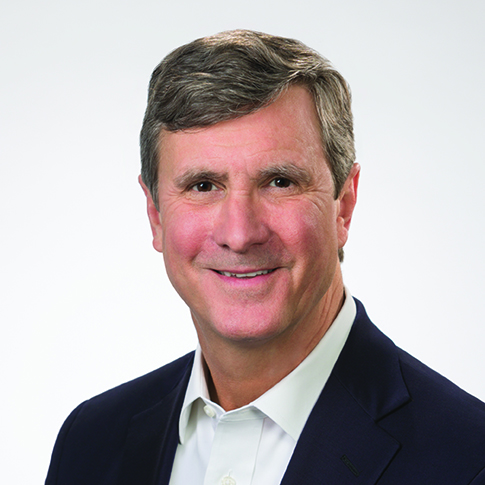
Dan Buelow
Managing Director, Architects & Engineers practice
Dan is the Managing Director of WTW A&E, the specialty division for WTW that is exclusively dedicated to providing insurance and risk management solutions to architects and engineers. Dan and his staff of A&E insurance specialists represent over 500 architectural and engineering firms located across the country and practicing throughout the world. Dan and his team provide tailored risk management services, including contract negotiation, claims advocacy and a wide variety of risk management education workshops. Dan is on the ACEC National Risk Management Committee (RMC) and chairs the Cyber Sub-Committee. Dan is active in ACEC, AIA and other associations that support the design community. Dan speaks frequently and has written and presented on a wide range or risk management topics for architects and engineers.
Podcast guest
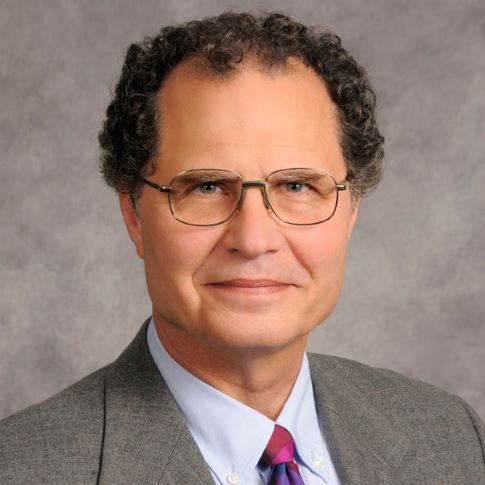
Frank Musica
Risk Management Consultant
Frank Musica joined the staff of Victor Insurance Managers, Inc. in 1991 to assist the program in identifying the transformations occurring in professional practice, the liability exposures created by contractual language, legislation, regulations and court rulings, and management processes and procedures to reduce the risk profiles of firms. In addition to working directly with policyholders, Frank crafts risk management information, blog posts and practice management programs for both the Victor design professionals insurance programs and contractors design liability insurance programs with CNA.
