Professional liability (PL) is by far the greatest exposure and P&C insurance spend for any design firm. In this episode, Dan has a discussion with Bob Stanton, VP of Claims for WTW A&E, on some important coverage features of an A&E PL policy that every A&E firm should be aware of in order to get the most out of this coverage and what they bought and paid for.
Choose your location
Select the location and the language that you prefer
| Location | Languages Available |
|---|---|
| Argentina | |
| Bermuda | |
| Brazil | |
| Canada | |
| Chile | |
| Colombia | |
| Costa Rica | |
| El Salvador | |
| Guatemala | |
| Honduras | |
| Mexico | |
| Nicaragua | |
| Panama | |
| Peru | |
| United States | |
| Venezuela |
| Location | Languages Available |
|---|---|
| Australia | |
| China | |
| Hong Kong (China, SAR) | |
| India | |
| Indonesia | |
| Japan | |
| Korea | |
| Malaysia | |
| New Zealand | |
| Philippines | |
| Singapore | |
| Taiwan | |
| Thailand | |
| Vietnam |
| Location | Languages Available |
|---|---|
| Austria | |
| Belgium | |
| Croatia | |
| Czech Republic | |
| Denmark | |
| Finland | |
| France | |
| Germany | |
| Greece | |
| Hungary | |
| Ireland | |
| Italy | |
| Kazakhstan | |
| Luxembourg | |
| Netherlands | |
| Norway | |
| Poland | |
| Portugal | |
| Romania | |
| Serbia | |
| Slovakia | |
| Spain | |
| Sweden | |
| Switzerland | |
| Turkey | |
| Ukraine | |
| United Kingdom |
| Location | Languages Available |
|---|---|
| Cameroon | |
| Congo | |
| Egypt | |
| Ghana | |
| Ivory Coast | |
| Israel | |
| Jordan | |
| Kenya | |
| Kuwait | |
| Mauritius | |
| Nigeria | |
| Saudi Arabia | |
| Senegal | |
| South Africa | |
| UAE | |
| Uganda |


What can we help you find?
main content, press tab to continue
Podcast
Getting the most out of your professional liability (PL)
Talk to me about A&E: Episode 7
December 5, 2023
Important coverage features of an A&E PL policy that every A&E firm should be aware of
Getting the most out of your professional liability (PL)
Transcript for this episode:
Talk to me about A&E: Episode 7 Getting the most out of your professional liability (PL)
BOB STANTON: Reporting a claim on a timely basis is probably the single most important act that has to be done by a policyholder. When it comes to professional liability, it's even more important.
SPEAKER: Welcome to Talk to Me About A&E, a podcast series focused on risk management for architects and engineers. Host, Dan Buelow, Managing Director of Willis A&E, will engage experts across the A&E spectrum on topics ranging from contract details to the broadest trends impacting design professionals in North America.
DAN BUELOW: Hello, and welcome to Talk to Me About A&E, a Willis A&E podcast series where we focus on a specific risk management topic for architects and engineers. I'm Dan Buelow, Managing Director of Willis A&E. Our topic today is on getting the most out of your professional liability insurance policy. Professional liability is, by far, the greatest exposure of any design firm. And the PL coverage is also, by far, the biggest spend when it comes to property and casualty for a design firm.
In our previous podcast, we had discussed how a design firm's professional liability insurance is closely aligned with their standard of care and the importance of managing your risk to ensure you don't take yourself over and above the standard of care and risk voiding coverage. For this podcast, we will continue this discussion and preserving coverage under the PL by understanding certain key coverage features of a professional liability policy. And to help me with this is our very own Mr. Bob Stanton, Vice President of Claims and Risk Management for Willis A&E. Hello, Bob. How are you doing?
BOB STANTON: Good, good to be here.
DAN BUELOW: Good to have you. When I think about topics, I want to cover for this podcast series, I also think about who would be the ideal person to talk to on a given topic. And this was a no-brainer for me in that Bob has over 30 years of experience in managing complex A&E claims on both the carrier and broker side. For the last 10 years, Bob has been Vice President of Risk Management for our Willis A&E group and is responsible for assisting clients in contract review, risk management recommendations, and claim advocacy.
And prior to joining Willis A&E, Bob worked as a Senior Claims Specialist for Liberty International, where he was responsible for claims in over 50 states and internationally. And also, he was a Senior Claims Specialist with both Travelers and DPIC. I, in fact, met Bob when I was on the Underwriting side and Bob was on the Claims side when we were with the carrier DPIC back in 1997. So we've had the pleasure of working together for quite some time and over the last 10 years, on the brokerage side together here.
So as part of our discussion on how to get the most out of our professional liability insurance policy, we will also be reviewing some of the responses we received from our recent Willis A&E survey of 12 senior claim managers from leading A&E PL insurance carriers here in the United States. So, Bob, my first question to you is typically the very last question we like to ask at the end of our monthly Willis A&E webinars. So here you go. True or false, the design professional should wait as long as possible before reporting a claim to their professional liability carrier.
Bob, how would you answer that?
BOB STANTON: Obviously, that's false for many reasons. One is because, when we talk about taking full advantage of the insurance coverage being provided, reporting a claim on a timely basis is probably the single most important act that has to be done by a policyholder. When it comes to professional liability, it's even more important because there are specific reporting requirements under the policy which must be met in order to trigger coverage.
DAN BUELOW: And that's a great point. So, I had four kids driving around in my cars back in the day, you know? And the last thing I want to do is report a cleaned my auto insurance carrier until I was ready to pay some more for my auto insurance. But that's a lot different. This doesn't get better. And we'll talk about some of the incentives for early reporting. But to your point, Bob, this is different, isn't it? This is professional ability which has claims made coverage. So, talk to us a little bit about the differences between occurrence and claims made claim reporting.
BOB STANTON: Well, let's start out with the reason why there's a difference. When you're in an auto accident, you know the date that the negligent act took place. It's the date that you drove the car in a negligent manner and hit something else-- a person, another vehicle, a wall, whatever. With professional liability, it's different because there's no definite way to pinpoint exactly when the negligent act took place.
Therefore, in order to avoid having confusion, what the insurance industry did was they decided that they would create a different kind of reporting requirement for professional liability where the date that the claim is made against the policyholder becomes the date of loss under the policy. So, let's talk about the requirements under the professional liability.
There are three coverage triggers for professional liability insurance. The claim must be made against the policyholder within the policy period. So, if it's January 1 to January 1, it must be between those two dates. The second thing is it must be reported to the carrier within the policy period or within a 60-day automatic reporting tail. That means the claim still has to be made within the policy period, but you have an extra 60 days to report.
The third trigger is that the actions giving rise to the claim, the services being provided by you must have taken place after what's called the retroactive date in the policy which is on the Declaration page. What the retroactive date is is it's the date either the policyholder first got insurance, or there was a gap insurance and then new coverage. So, it might also work if there's a merger or acquisition. Someone may say, we aren't going to provide coverage for that firm prior to the date of the acquisition.
So those are the three covers. And there's a couple reasons that it's important is because those have to be met before coverage can be triggered. But also, people keep on asking me, well, how was the insurance company prejudiced if I reported late? Well, the premium is structured on these three coverage triggers. So, the carrier technically is automatically prejudiced by late reporting.
DAN BUELOW: Some great points. And in fact, we put this in all of our webinars because it's really the worst-- if there's anything that keeps us up at night as a broker, it's the possibility-- especially a professional liability broker for architects and engineers-- is that your client failed to timely report. And so that is such a big issue for us. And somebody may not report a claim.
And I know, Bob, you've heard all of the reasons for that. But we've heard it. You know, well, this was going to be under our deductible, and so not a big deal. We're just going to make this go away, and it doesn't go away. Or we don't want our insurance rates to go up, and this is going to be a little dollar amount. it's something in our experience, isn't above, Bob, that just is something we want to avoid.
BOB STANTON: Yes, and reporting problems are the most difficult coverage issues, the challenge from a broker's perspective.
DAN BUELOW: Yeah, and that's a great point. In fact, the survey that we did of 12 leading A&E professional liability carriers, the heads of the claims group-- when we surveyed these 12 carriers, almost every single one had on the top of the list, and the question was, what are the primary reasons you might deny a professional liability claim? And nearly every one of them put at the top of the list, failure to timely report. And so that is what we're really stressing here. A claim is a demand for money or service.
And our position is, look at, we want our clients to call us with any questions that they have. Is this a claim? We'll talk them through it. But invariably, we're going to want to trigger that coverage. It preserves what they bought and paid for. And these carriers understand this. When you're working with carriers that understand their program, they understand that you really are put in a corner, if you will, as a design professional. To preserve coverage, you must trigger a claim. And we'll talk a little bit about pre-claim on that.
But before I do that, another issue that I have here is on the next hop reasons for denying a claim. And I want to talk to Bob about this is that-- and the next reasons are admitting liability prior to reporting a matter to the carrier and/or offering money or services without soliciting proper consent from the carrier. Bob, tell us a little more about that.
What are we talking about here? What are these carrier adjusters saying here?
BOB STANTON: Well, first of all, there's the perspective that what we are dealing with in professional liability is your professional careers. So, there's special policy considerations. The carrier cannot settle a claim without your consent. Well, correspondingly, you can't admit liability or offer money without their consent. That way, everybody is on the same page. The problem is that, especially when you delay in reporting a claim, you're more apt to have communications with the other side that can possibly imperil coverage. It's really important.
We understand that there are certain types of circumstances where a simple adjustment fixes whatever the problem is. Let's say that you have a circumstance where you have a door-- one door in an entire project that's a problem. Well, you might just make an adjustment to either your fee or whatever to adjust that one situation.
But what we're talking about is when you don't understand the parameters or the parameters are such that there's a fear that this could go into insurance, where you really have to make the call to contact the insurance company. We would prefer that, even if you had the one door, you reported because I think you have to be careful because if you decide that you'll resolve that one door issue, that might lead the owner to believe that they can ask for other things. But we understand that there are adjustments that need to be made, and it's part of doing business on a project. What we're talking about are facts or circumstances that could reasonably develop into a claim.
Examples would be your served with a subpoena. You find a problem with the design calculations that nobody else knows about. You have an owner that starts talking about impacts and delays. You have project meetings where they talk about impacts and delays. Your client isn't paying and isn't explaining the reason why they're not paying. These are all examples of circumstances that you might want to report even though a claim hasn't been presented. And that way, the carrier understands. You can explain your strategy with them. And then you have their consent to proceed.
DAN BUELOW: Some great points there, and I think it's really important to remember and stress, especially with our design professional clients, which, I think, really take a lot of pride in what they do and certainly take a lot of ownership and want to manage those client relationships very positively. But they have to remember, in the event that there's an issue or a problem, it's one thing to admit there's a problem on the project, OK? We have an issue here. It's entirely different to accept and blame or mea culpa, I always say. Be careful with taking blame. And you have to remember, not only that as the dust settles, most likely, you're not entirely at fault, that there are other mitigating factors and actors that are involved.
But you have to remember-- and this is kind of the bottom line, I think, in this too, isn't it, Bob, where this insurance policy is a contract, and there's two parties to that contract. There's the insured, and there's the carrier. And so that you cannot unilaterally go off and start settling an issue. And one of the things I think about we'll run into is the set off.
We don't want to have a set off provision in your contract, and we don't want the insurer to agree to set off something unilaterally in resolving a dispute because the carrier may not go along with that. And that would be a real coverage issue, isn't it?
BOB STANTON: Yes. As a matter of fact, when we talk about admitting liability versus acknowledging fault, if there's something that's really obvious a problem-- I actually had a situation where a structural engineer was called out to a site where a building partially collapsed. I mean, it's reasonable for you to say, yes, this is a problem. And I've actually had engineers who have not acknowledged the problem and created problems for themselves. There is a huge difference between admitting liability and acknowledging a problem. If you were called out to a site and you had a situation that was a really bad situation, you acknowledge it, but then you'd say, let's conduct an investigation to figure out the cause.
DAN BUELOW: Yeah, and I would say, hey, you pay a lot for this insurance. Engage your broker. Engage your carriers. Get their assistance, and support, and advice, and counsel. And also, be careful how your professional liability policy is worded, especially for larger firms with multiple offices under the notice provision there. It can be often overly broad, where notice of a claim, or a potential, or a circumstance, a way to define it, for any partner, or principal, and et cetera, well, that's an awful lot of people.
And what we like to do is try to narrow that down to the risk manager or something more specific under notice so that somebody that's maybe a principal or a partner, even, in an office may be not involved in the insurance and doesn't understand the nuances of this coverage in these coverage triggers. And so that's just something to think about.
So OK, Bob, so we've defined a claim as a demand for money or service and explained the importance of the timely reporting these matters in order to preserve coverage. Talk to us about pre-claim assistance, or, also, some will refer to this as loss prevention. How does this work? And what is the benefit of taking advantage of this coverage feature and circumstance reporting in an A&E, Architects and Engineers insurance professional liability policy.
BOB STANTON: Well, first of all, I think that pre-claim assistance or circumstance reporting is probably one of the most valuable features in the policy. In effect, what it means is there does not have to be a formal claim asserted against the policyholder in order to trigger coverage. If there is a reasonable basis by which a policyholder thinks there could be a claim developing, you can report the matter to the carrier. And there's a lot of advantages to this.
I already talked about examples such as the subpoena-- the owner talking about delays, and impacts, and those type of things. So, the issue is what you want to do is you want to report that as soon as you possibly can because the circumstance is it triggers the coverage for you in that policy year. And what happens is a claim may not come for two or three years. But you've already triggered the coverage, and the coverage goes all the way back to when you initially noticed because, remember, the date that the claim was made or the date that you reported it locks that policy period in.
So, what happens is, now, you've got that-- you go all the way back to that day. The carriers already had a chance to investigate the matter so that when the claim comes in, you've probably reduced the amount of expenses that'll have to be incurred in the defense of the claim. So bottom line is, reporting early has so many benefits.
As a matter of fact, Dan, if you could explain from the underwriting side how the shorter the life expectancy is affecting the loss run history.
DAN BUELOW: Yeah, well, before I go onto that, I just want to come back to that. But this survey, Bob, to your point here, is that according to these 12 carriers, less than 40% of matters that are initially reported as a pre-claim matter ultimately become a claim. So that means a lot of these are being shut down in that pre-claim status.
And the advantage of pre-claim assistance, really, for most carriers-- all the most good carriers will have this provision there-- not only allows you to trigger that policy early but allows you to get free legal advice, free counsel, and often, a counsel of your choice that you can help. And some of those examples, Bob, you touched on it. But as someone who wants to subpoena your records or being invited to a deposition, we don't want you to respond to that subpoena or go to that deposition without counsel. And this policy that you bought and paid for will give you the opportunity to have counsel at no charge, often, to your policy. So, I think that's really important, and it isn't it, Bob, on that?
BOB STANTON: Yes, yes, it is.
DAN BUELOW: So, the other thing, as we look into this, is some of the responses on our claim side here and some of the trends is that one of the questions is, what is the approximate percentage of matters settled through the following, mediation, arbitration, litigation? And the vast majority are getting resolved through mediation. And it's important to try to get this in your contract, that most of these claims-- very few will actually go to litigation, right? And we're going to resolve these disputes often commercially and/or through this process. Bob, on the mediation side, give us a few words on that.
BOB STANTON: The biggest advantage in mediation is it's the last clear chance that a person has to determine their own fate. What I mean by that is you still have the opportunity to resolve a claim, and it's within your power to do so. If it ends up going to arbitration or to litigation, then the decision-making part of it is out of your hands, period.
What mediation is it's actually facilitated negotiations in which a mediator-- basically, what they do is they argue against both sides hoping that they can have some common ground in the middle. And it can be a very effective tool. Arbitration is litigation without the right of appeal and the rules of evidence, applying. We're big believers that if you're going to be involved in arbitration, if you have no choice, that you should have an arbitration panel versus a single arbiter because we believe that you have a better chance with multiple decision makers in getting a proper decision versus a single individual.
DAN BUELOW: So, kind of winding down here and a couple of thoughts here just from the survey again here is that we're seeing, when we ask, how long does it take to resolve an average dispute or professional liability claim? And first, we learned through this survey that 25% out of 100 firms in a given year will have a suit against them. And that's the Claims. That's not even pre-claims reported. And these claims will typically take two to three years to be settled and resolved. And it can be even longer than that. And so, it's something to keep in mind.
And the other thing we're seeing, which was interesting, Bob, from this report is that referring to counsel seems to be up with a lot of these carriers. And in fact, a number of these carriers stated that they refer to over 80% of their files to outside claim counsel. I don't know, Bob. That just seems like it's a higher number. How does that compare from your experience back in the day when you were managing claims?
BOB STANTON: Well, it's been 13 years since I've been handling claims, and I would say that the referral to counsel has probably gone up 25, 30%. I would have said half of my claim files were with counsel.
DAN BUELOW: Yeah, and the other thing that you've seen a big change to is reservation and rights, aren't you? I mean, with those acknowledge, so Bob will handle the claims reporting for us often, and there seems to be a big spike in reservation rights, when that was unusual. Now, it seems commonplace. Can you explain that and talk through that a little bit?
BOB STANTON: I actually have not seen even an acknowledgment letter without some type of reservation or rights language. I look at that, and I think it's a bad precedent that as the claims departments have become more populated with attorneys, there's been an increase in the amount of reservation rights issued. It's a double-edged sword. I think that once we see that language as a policyholder, I would be wanting to have my choice of counsel involved in the project, and I would argue that the reservation rights letter allows my counsel to be involved. But like I said, I have yet to see even an acknowledgment letter that hasn't had reservation or rights language in it.
DAN BUELOW: Yeah, and some of this is just trends in the business. And one of the trends we certainly are seeing is it's a harder market. And when the market starts firming up, out comes a magnifying glass, maybe a little more, when it comes to looking at these coverage provisions. And that's why you want to preserve coverage. You want to get those claims reported.
I always say, we tend to see them kind of watering down the chowder when it comes to the coverage itself as well as a rise in actual reservation of rights or even claim denials. And that's why it's important to have somebody on your team like Bob where we can really get out there and advocate on behalf of our clients to make sure, again, that they're getting everything that they bought and paid for out of their coverage there.
BOB STANTON: I would recommend, because the reservation rights holders are getting so long, just go to the last couple of pages and check the last couple of pages before you panic. If it says that there's a reservation rights letter and that they're assigning counsel, then you know that you have time to breathe and to review it more thoroughly. But I've also noticed that they're citing a lot of policy language in these letters, which I think can be confusing.
DAN BUELOW: All right, well, just to recap then-- thanks, Bob, on this. But recapping here is that for professional liability, don't wait until it's too late when it comes to reporting a claim. And again, a claim is demand more money for money or service. We think you should report every claim and talk to your broker if you ever have any question there.
And take advantage of pre-claim assistance, that significant value of the program that you, again, bought and paid for, that coverage. And also, the fact that mediation does work. Strive to get the mediation in your contracts. And then, get that mediation credit that many of these carriers are actually offering additional credit off of your deductible in the event that a dispute is resolved through mediation.
And so that concludes our program. I'd like to thank Mr. Bob Stanton for joining us. Thank you, Bob. BOB STANTON: Sure, my pleasure.
DAN BUELOW: Great having you. And thank you for joining us for another episode of Talk to Me About A&E, and we'll talk to you soon. Thank you.
SPEAKER: Thank you for joining us for this WTW podcast featuring the latest thinking on the intersection of people, capital, and risk. For more information on Willis A&E and our educational programs, visit willisae.com.
WTW hopes you found the general information provided in this podcast informative and helpful. The information contained herein is not intended to constitute legal or other professional advice and should not be relied upon in lieu of consultation with your own legal advisors. In the event you would like more information regarding your insurance coverage, please do not hesitate to reach out to us. In North America, WTW offers insurance products through licensed entities, including Willis Towers Watson Northeast Incorporated in the United States and Willis Canada Incorporated in Canada.
Podcast host
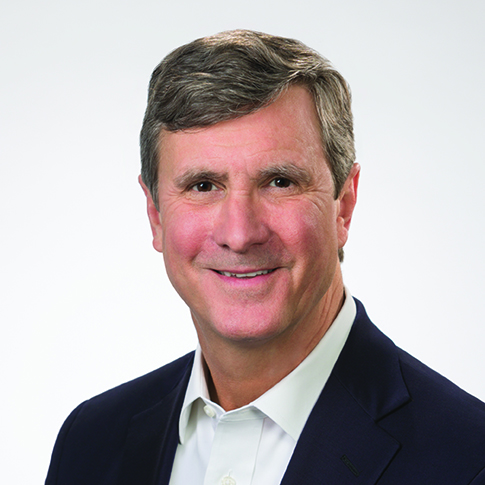
Dan Buelow
Managing Director, Architects & Engineers practice
Dan is the Managing Director of WTW A&E, the specialty division for WTW that is exclusively dedicated to providing insurance and risk management solutions to architects and engineers. Dan and his staff of A&E insurance specialists represent over 500 architectural and engineering firms located across the country and practicing throughout the world. Dan and his team provide tailored risk management services, including contract negotiation, claims advocacy and a wide variety of risk management education workshops. Dan is on the ACEC National Risk Management Committee (RMC) and chairs the Cyber Sub-Committee. Dan is active in ACEC, AIA and other associations that support the design community. Dan speaks frequently and has written and presented on a wide range or risk management topics for architects and engineers.
emailEmail
Podcast guest
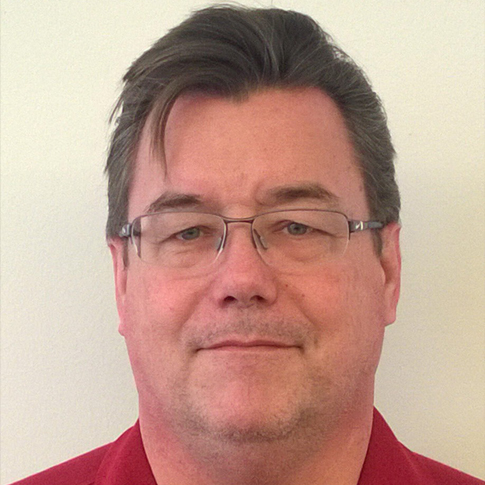
Bob Stanton
Risk Management Specialist
Bob is a Client Advocate and Risk Management Specialist for WTW A&E and is responsible for assisting clients in contract review, risk management recommendations and claims advocacy. He has over 30 years of claims experience and for the last 20+ years has specialized in the area of Architect & Engineers professional liability claims and risk management.
