Dan and David Hatem, a Partner at Donovan Hatem LLP, discuss David’s recent white paper release on addressing the inherent and unsustainable risks associated with DB infrastructure projects. Dan and David focus on the need for a more “progressive” approach to design-build along with the critical issues identified in David’s whitepaper including improving procurement and contractual practices.
Choose your location
Select the location and the language that you prefer
| Location | Languages Available |
|---|---|
| Argentina | |
| Bermuda | |
| Brazil | |
| Canada | |
| Chile | |
| Colombia | |
| Costa Rica | |
| El Salvador | |
| Guatemala | |
| Honduras | |
| Mexico | |
| Nicaragua | |
| Panama | |
| Peru | |
| United States | |
| Venezuela |
| Location | Languages Available |
|---|---|
| Australia | |
| China | |
| Hong Kong (China, SAR) | |
| India | |
| Indonesia | |
| Japan | |
| Korea | |
| Malaysia | |
| New Zealand | |
| Philippines | |
| Singapore | |
| Taiwan | |
| Thailand | |
| Vietnam |
| Location | Languages Available |
|---|---|
| Austria | |
| Belgium | |
| Croatia | |
| Czech Republic | |
| Denmark | |
| Finland | |
| France | |
| Germany | |
| Greece | |
| Hungary | |
| Ireland | |
| Italy | |
| Kazakhstan | |
| Luxembourg | |
| Netherlands | |
| Norway | |
| Poland | |
| Portugal | |
| Romania | |
| Serbia | |
| Slovakia | |
| Spain | |
| Sweden | |
| Switzerland | |
| Turkey | |
| Ukraine | |
| United Kingdom |
| Location | Languages Available |
|---|---|
| Cameroon | |
| Congo | |
| Egypt | |
| Ghana | |
| Ivory Coast | |
| Israel | |
| Jordan | |
| Kenya | |
| Kuwait | |
| Mauritius | |
| Nigeria | |
| Saudi Arabia | |
| Senegal | |
| South Africa | |
| UAE | |
| Uganda |


What can we help you find?
main content, press tab to continue
Podcast
Design-build: A path forward
Talk to me about A&E: Episode 13
December 7, 2023
Inherent and unsustainable risks associated with design-build infrastructure projects
Design-build: A path forward
Transcript for this episode:
Talk to me about A&E: Episode 13
DAVID HATEM: The uncertainties underlying conventional design-build can be reckoned with in a fairly effective way through the progressive approach. There is a tremendous amount of work that needs to be done.
SPEAKER: Welcome to Talk to Me About A&E, a podcast series focused on risk management for architects and engineers. Host, Dan Buelow, managing director of Willis A&E, will engage experts across the A&E spectrum on topics ranging from contract details to the broadest trends impacting design professionals in North America.
DAN BUELOW: Well, hello, and thank you for joining me for another Willis A&E Talk to Me About A&E podcast. I'm Dan Buelow, and our topic today is on managing design-build risk. This is actually part two in our series on this topic of design-build. In part one, I spoke to Valerie Onderka, a senior underwriter for Ironshore, to get an underwriter's perspective on design-build risk.
In that podcast, Val reviewed the reasoning behind why design-build is widely regarded by the professional liability insurance community as one of the most hazardous risks for design professionals, and why she and other underwriters out there are scrutinizing this risk, and even implementing different approaches to assessing, selecting, and pricing firms that engage in design-build.
In fact, Willis A&E recently released a report on emerging risks and claim trends in the design industry. And this report was based on a survey that we did of 12 claim managers-- senior claim managers-- from 12 different architects and engineers professional liability carriers. And design-build in that report, in that survey, was singled out as one of the very top concerning risks by all of these 12 senior claim managers.
So, we have, in fact, seen the insurance market severely constricted. In addition to this, on this project type, including the exit of one very notable carrier from the project-specific marketplace. And this carrier decided to exit the project-specific marketplace due to adverse trends and severity claims on design-build infrastructure projects. And we have seen design firms withdraw from competing on new design-build projects due to the risks and costs associated with this project type.
So, it's safe to say we have a real issue here that needs to be addressed. And that a business-as-usual approach simply won't work. My special guest today is Mr. David Hatem. And David will help us address these issues and concerns.
David, in fact, recently formed a task force consisting of approximately 32 specialized AE professional liability underwriters and brokers and in-house counsel for design firms to address the current reduction in insurance, specifically project-specific insurance, and capacity and risks in design-build. And David released a white paper detailing the group's findings on this subject of design-build risk.
I honestly can't think of anyone that knows more about this topic of design-build or has done more to advocate on behalf of the design community on managing this complex risk than David Hatem. Case in point is this white paper. And we've had the pleasure of working with David over the years at Willis A&E, and he's been a special guest in a number of our programs. Hello, David. How are you? Welcome to Talk to Me About A&E.
DAVID HATEM: Dan, thank you, and I appreciate the opportunity to be with you today to talk about this critically important subject.
DAN BUELOW: It's great to have you, David. Let me-- a little background here. Most of you know David. And you'll have to go on his website to see the full version of his bio here. But David is a partner in the Boston-based law firm Donovan Hatem, LLP. David's practice specializes in representing engineers and architects and advising professional liability insurance underwriters on project-specific insurance.
And David has authored and edited numerous articles and publications in his field of expertise, including the third edition of Public Private Partnerships and Design-Build Opportunities and Risk for Consulting Engineers. And most recently, the "Project-Specific Professional Liability Insurance on Design-Build and Private Partner Projects in North America-- A Path Forward." And that came out just in May of 2022. So, David, let's start off by, again, kind of giving us a recap on the mission of this task force, and why now?
DAVID HATEM: Thank you, Dan. This task force was established in January. But the idea for it emerged in late 2021 as a result of withdrawal in capacity in project-specific insurance, particularly on DB and P3 infrastructure projects. I certainly identified the need to establish a working group of knowledgeable individuals-- underwriters, brokers, such as yourself, AE risk managers, and in-house counsel-- who can contribute to an analysis of both the causes and the cures for the withdrawal in PSPL capacity.
You mentioned earlier that Val Onderka has characterized this situation as a crisis. I could not agree more. But it's also a challenge. And I think that the industry together-- those who want to work collaboratively, not those who withdraw, but those who have the integrity to stay in the arena-- are going to find a solution. And, as you can see, many of the members of the task force-- in fact, our professional liability underwriters committed to design professionals and committed to finding a constructive solution to these issues.
DAN BUELOW: On that, David, the task force focused its attention on 25 critical issues. For this podcast we'll focus on a handful of these 25 critical issues. And I would strongly encourage everyone to get a copy of this white paper. You can request it from us or David.
In your white paper, the task force expressed concerns and design-build procurement and contractual practices that produce elevated levels of professional liability risk for design professionals involved in these projects. What are these elevated risks for design professionals on design-build versus traditional design-bid-build?
DAVID HATEM: Well, there are several. The causes and the concerns that underlie this issue are multidimensional. They start with procurement and contractual practices utilized by many owners on DB and P3 infrastructure projects. That includes the requirement of fixed price contracting and imbalanced risk allocation.
Part of the issue that distinguishes, if you will, design-build infrastructure from design-bid-build, and actually, other forms of design-build, such as vertical, is the fact that in infrastructure projects, there's a high level of uncertainty as to the scope and the ultimate design and construction approach that owners will find acceptable.
That level of ambiguity and scope, uncertainty, results in misalignment between the design builder's pricing formulation and what becomes the final cost of the project. That mechanism, in turn, produces recovery, quote, "cost overrun," close quote, claims by design builders against design professionals, which over the last, I would say, 15 years, particularly on the mega-project or larger dB infrastructure projects, has resulted in very significant losses by project-specific professional liability insurers in the defense and indemnification of those claims.
DAN BUELOW: Yeah. Also, in the white paper, you noted that many owners supported by their advisors seem to push the envelope in terms of aggressive and imbalanced risk transfer to the design-build team. Is it ultimately in the best interest for these owners-- in this case, often, the state DOTs and so on that are on these public infrastructure projects-- to have these unbalanced risk allocations in owner's contracts?
This would seem inherently counter to the advantages of design-build, specifically, a collaborative approach to maximize efficiencies and innovations. Are the owners generally aware of these issues you believe that are raised in this report?
DAVID HATEM: I would say, for the most part, owners are not aware. Because the concerns that underlie the professional liability claims largely have been concerns that have not negatively impacted the owners. Owners have had a fairly robust and active competitive market in the procurement of these DB projects. That is changing, as contractors are withdrawing from DB infrastructure projects.
So, I would say, for the most part, owners have not experienced the negative influences that bring us here to this topic this afternoon. But I think that's going to be changing. As project-specific charges up in capacity, we're going to find that more and more owners who see the value of that coverage are going to have difficulty sustaining an appropriate risk management program for their project, in the absence of project-specific insurance.
The ripple effects of all of that-- when we put our task force together the end of last year, I reached out to a number of professional liability insurers, some of whom have always been more or less at various places in the project- specific market-- primary, excess, various layers of excess. I also reached out to practice insurers. And basically, the reaction from a number of them is, why are you coming to us? We've never done project specific. We don't have any plans to do it.
And my point was that it's simply a matter of time that if project-specific, which is provided the primary coverage is no longer available, practice coverage of the architectural and engineering firms on this project will be primary.
There's no reason logically to believe that those practice insurers will not have the same severity and frequency losses as experienced by project specific. That brought a much broader spectrum of the professional liability A&E insurance market into the fold of this task force because they understand what likely will be the ripple effects of a withdrawal in PSPL capacity.
DAN BUELOW: It's not sustainable, is it? I mean, you're going to at some point in time here-- and we're already seeing it. The market's going to constrict. You're still going to have these projects, the demand for these project type. If anything, with the recent infrastructure bill, we're going to see a greater demand.
And at the end of the day, if something is not addressed around managing this risk, and the owners flow-down provisions and some of the things that you really, I think, go into detail on this white paper, it's going to be a real issue. And it's going to-- if the owners don't know about it now, to your point, I think they're going to really realize it when they start finding that available capacity and the cost of this insurance is going to be significant here.
And in your white paper, you reviewed some specific corrective actions. So, let's talk about that-- your thoughts on this. And when I was talking to Val, too, as an underwriter, as I mentioned, is that she's saying-- and I think it makes sense-- is that look it, we really have to underwrite this a little differently. We want to stay committed to this market. We want to support the design community.
However, we can't afford to take on a risk certainly we'll lose on. And so there has to be a different approach to this. And that different approach-- we're using this term progressive design-build. Can you tell us a little bit about this? And do you see that as a recommended corrective action in all this?
DAVID HATEM: Certainly. As I said earlier, I think the causes of this PSPL crisis are multidimensional, as are the solutions. And prior to the formation of the task force, what really had been the case is that various project participants, direct participants, stakeholder participants, project insurers, surety companies-- we're all kind of looking at each other to solve their piece of the problem. And what became clear is that the problem is more multidimensional than any one of them can confront or deal with.
When it comes to procurement and contractual approaches, as I said, the major driver of a number of the so-called cost overrun professional liability claims against design professionals involves the risk associated with project scope uncertainty in final design and construction approaches.
Progressive design-build, along with other types of delivery methodologies, have proven to be approaches under which commitment is to fixed price and risk allocation are deferred until at least 60% design development, when significantly more is known about project scope and design and construction approaches than would typically be known in a conventional design-build procurement, in which fixed price commitments need to be made at a level 15% to 20%.
That really goes a long way toward making the project participants, the contractors, the design professionals, and also the insurers more comfortable about risk assessment at the point of contract formation. On the task force, we talked a lot about progressive design-build. We talked about it in the context of a study recently published by Travelers, a surety company, in which Travelers reviewed data over a 17-year period on 224 primarily infrastructure projects having construction values of $800 million or more.
One of the more promising parts of that study was the conclusion that progressive design-build was demonstrating increased profitability for contractors, because they knew and understood more about risk, and could realistically price it prior to the point of contract formation. In contrast, that study unequivocally demonstrates the conventional design-build is a loser for most contractors, which has caused them to-- some of the key contractors in the United States-- to withdraw from the market.
As for the professional liability insurers who were-- and again, commendably-- involved in this task force, and having a constructive and forward-looking view and perspective wanting to stay in the arena and solve the problem rather than flutter away, these underwriters approach progressive, see the positive indications, but their issues-- and legitimate-- are, what are the guidelines for the implementation of progressive?
How can we, as underwriters, know that simply because a contract uses those words, it's going to be implemented in a certain way, that there'll be quality control over the implementation? How do we know that the project participants are sufficiently qualified, experienced, and conversant in progressive design-build delivery to be able to fulfill the expectation?
So, underwriters are asking the right questions. And one of the recommendations-- the path forward recommendations of the task force-- is that the industry, through and among various organizations-- ACEC, ASCE, DBIA, and perhaps all of them, in a facilitated and collaborative discussion ecumenically if you will-- develop guidelines for the implementation of progressive design-build.
There was even the suggestion that there be a position within the project hierarchy of someone who can be a quality control certifier as to the implementation of the progressive process. These approaches certainly encourage underwriters to have more comfort that the root problems, the uncertainties underlying conventional design-build, can be reckoned with in a fairly effective way to the progressive approach.
There is a tremendous amount of work that needs to be done by various people in various disciplines with various talents. But there's ample precedent for this. And I refer in the white paper to the Joint Code of Practice for Tunnel Projects. And that refers to a problem that the tunneling industry was having with the insurance industry in the UK about insurability of risk under various types of coverages on tunnel projects because of severity of losses-- a similar scenario, different circumstances to what we see on DBP3 and PSPL.
The British Association of Insurers, in conjunction with the British Engineering Society, collaborated to develop a code of practice, guidelines, best practice standards, that then became not only standards of recommended practice for project participants on underground work, but also became the basis for underwriting criteria. And portions of that joint code would actually be adapted as endorsements to coverage. And there would be periodic evaluation of project execution measured against that set of criteria.
A model like that is, in my mind, quite adaptable to implementation of progressive with some of these underwriting approaches. And we talked about a host of other issues. I'm going to say, to the credit of the insurers, none of which would restrict coverage scope, none of which are premised on the notion of adding exclusions to coverage, the covered scope essentially remains the same. The underwriting is more tailored to specific approaches, to procurement and contracting, that makes the risk more palatable and the exercise more profitable for everyone.
DAN BUELOW: Really, the important point here is that certain things need to be addressed in the underwriting process in order for this to, again, be sustainable and be able to continue to support this area here. But back to the owner, at the end of the day, getting that low-cost contractor that's going to go in there and underbid something, and not have reasonable contingencies in place in order to win that deal, and go forward and have maximum pricing set in stone on some of these budgets on it-- as you stated earlier, incomplete set of drawings-- 20 or so percent of the drawings. There's no surprises.
I know you pointed out this a while ago, is that unlike other project types, we were seeing most of the claims rolling in on these design-build infrastructure projects prior to the start of construction even, right?
DAVID HATEM: Absolutely. And you say, will owners embrace this? I think the reality is that at the end of the day with progressive, owners are going to pay more than they may pay in a highly competitively charged conventional DB procurement environment, in which price is not realistically addressed. With a 60-plus% design, price will be more accurately addressed, and addressed in a more encompassing way.
Does that mean higher project cost for the owner? I wouldn't say higher, I'd say more realistic. To this point, project costs and commercial risk-- unfortunately, when it comes to professional liability, insurance has moved in the direction of liability insurance. You know better than I, liability insurance is not intended to cover commercial risk. It's not intended to provide a source of funding for inherent project cost.
Is there any likelihood that progressive will take root? Well, you only need to look north to Canada, which has had a more lengthy experience with both P3 and DB, with a fair amount of dissatisfaction along the lines we've been talking about, as well as in other respects. Some of the large projects in Canada now are being delivered utilizing progressive design-build. There's a $28 billion project called Go Rail, sponsored by Metrolinx in Canada, that's utilizing the progressive design-build approach.
So, the notion of progressive is spreading. If you talk to DOTs within the US, more of them are embracing the notion of progressive, principally to encourage qualified contractors to stay in the arena of going after these projects. Otherwise, they're exiting. Otherwise, the consulting engineers-- responsible consulting engineers themselves-- will exit this market.
Owners have all kinds of reasons to want to keep quality firms in play. And low price that causes them to exit the market or sustain financial loss of failure, which is one of the conclusions of that Travelers study is not good for the industry, and certainly not good for project owners.
How does that message get to owners? It's mechanisms like this that allow that message to be heard. It's balanced and collaborative discussion. And I'll say very candidly, some of the traditional organizations for engineers and contractors and maybe design builders, may have some conflicts, and may be stymied in their ability to realistically and candidly confront some of these issues. It may take a different organization or a facilitated discussion among those organizations to get to a balanced solution.
DAN BUELOW: Yeah. And to your point, there might be more costs. But I would argue that's a realistic cost, and that's on the front end. But the ultimate cost with some of these projects where I personally have seen where we've had significant claim activity around infrastructure projects-- and there is one that I was talking, again, with the last podcast with Val on about, we had a client-- billion-plus dollar roadway project. They were very excited until the envelope was opened. And they found that they were partnered up with a contractor that had grossly underbid this project.
And rather than the DOT sending everybody back to rebid it, they went with, call it the stock boy special or whatever, that was 30% or 40% underbid from the rest of the competition. And it was a disaster for everyone, including that DOT.
After 4-plus years of problems and issues, I would argue the cost was substantially more than if they would have taken a progressive approach in hindsight. And I think that was a real lesson learned, and one that everyone needs to be thinking about as they go forward here.
David, this has been great. And, again, I want to-- this is just a little bit of information on a significant effort by David and his task force. And I encourage everyone to see that white paper and look at some of the other deliverables that David has co-authored and authored himself on.
David, any parting comments you would want to give. You know, you mentioned-- I'm just kind of curious, what more can the organizations do out there? You mentioned that there could be some new ones that come up here. But any parting comments in what you hope can be done to address these issues raised by the task force?
DAVID HATEM: Well, I've told that the task force that the publication of the white paper is not an end. It's the end of the first phase, and likely to lead to something else. And they're likely to be summoned to active duty in the next phase.
What that next phase is, I can't exactly say. But I think there's going to be specialized groups of underwriters and those who advise them, and design professionals and contractors and owners, to have candid discussion about some of these issues and to resolve them.
This issue of project cost is critical. For the most part, these design-builder cost overrun claims against design professionals genuinely are not about fault, negligence, misrepresentation, or wrongful conduct on the part of the design professionals or any project participants. Rather, those claims derive and drive from the failure or inability to capture in the DB fixed price, a realistic basis to encompass the design and construction, scope, and cost, and associated risks inherent in delivering a project that meets the owner's ultimate requirements.
Viewed in this context, the very premise or foundation of a professional negligence claim against a design professional for cost overruns is just fundamentally flawed and misdirected. And the insurance industry, indeed, has felt the brunt of those kind of claims, not to minimize the self-insured retention deductible exposures and other transaction costs, reputational damage, to the design professionals.
We need a solution. Owners need a solution. Contractors need the solution, as well as the design professionals. And the ray of light here, the good news is, there are some responsible insurers that are willing to listen and participate and find solutions as well.
DAN BUELOW: Well, thank you, David. This has been a great discussion-- really appreciate your time.
DAVID HATEM: Thank you.
DAN BUELOW: Thank you very much. And thank you everyone for joining us for another episode here of Talk to Me About A&E. And we will talk again soon. Take care.
SPEAKER: Thank you for joining us for this WTW podcast featuring the latest thinking on the intersection of people, capital, and risk. For more information on Willis A&E and our educational programs, visit willisae.com.
WTW hopes you found the general information provided in this podcast informative and helpful. The information contained herein is not intended to constitute legal or other professional advice and should not be relied upon in lieu of consultation with your own legal advisors.
In the event you would like more information regarding your insurance coverage, please do not hesitate to reach out to us. In North America, WTW offers insurance products through licensed entities, including Willis Towers Watson Northeast, Incorporated, in the United States and Willis Canada, Incorporated in Canada.
Podcast host
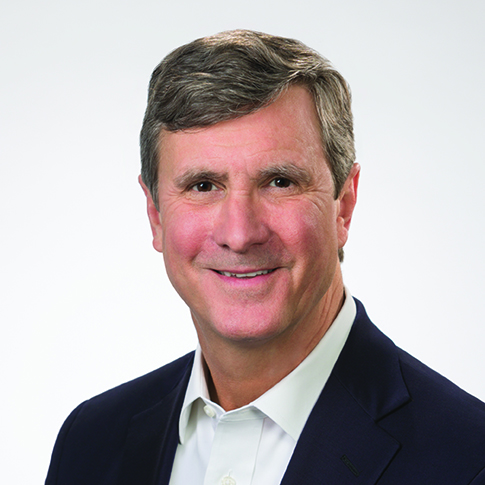
Dan Buelow
Managing Director, Architects & Engineers practice
Dan is the Managing Director of WTW A&E, the specialty division for WTW that is exclusively dedicated to providing insurance and risk management solutions to architects and engineers. Dan and his staff of A&E insurance specialists represent over 500 architectural and engineering firms located across the country and practicing throughout the world. Dan and his team provide tailored risk management services, including contract negotiation, claims advocacy and a wide variety of risk management education workshops. Dan is on the ACEC National Risk Management Committee (RMC) and chairs the Cyber Sub-Committee. Dan is active in ACEC, AIA and other associations that support the design community. Dan speaks frequently and has written and presented on a wide range or risk management topics for architects and engineers.
Podcast guest
David Hatem
Partner
David Hatem is a partner in the Boston-based law firm, Donovan Hatem LLP. Nationally recognized for his expertise in representing engineers, architects and construction management professionals, he leads the firm’s Professional Practices Group which serves design and construction professionals. He is regularly called upon by this country’s leading architect-engineering firms to provide risk management strategies and solutions, especially on major subsurface projects.
