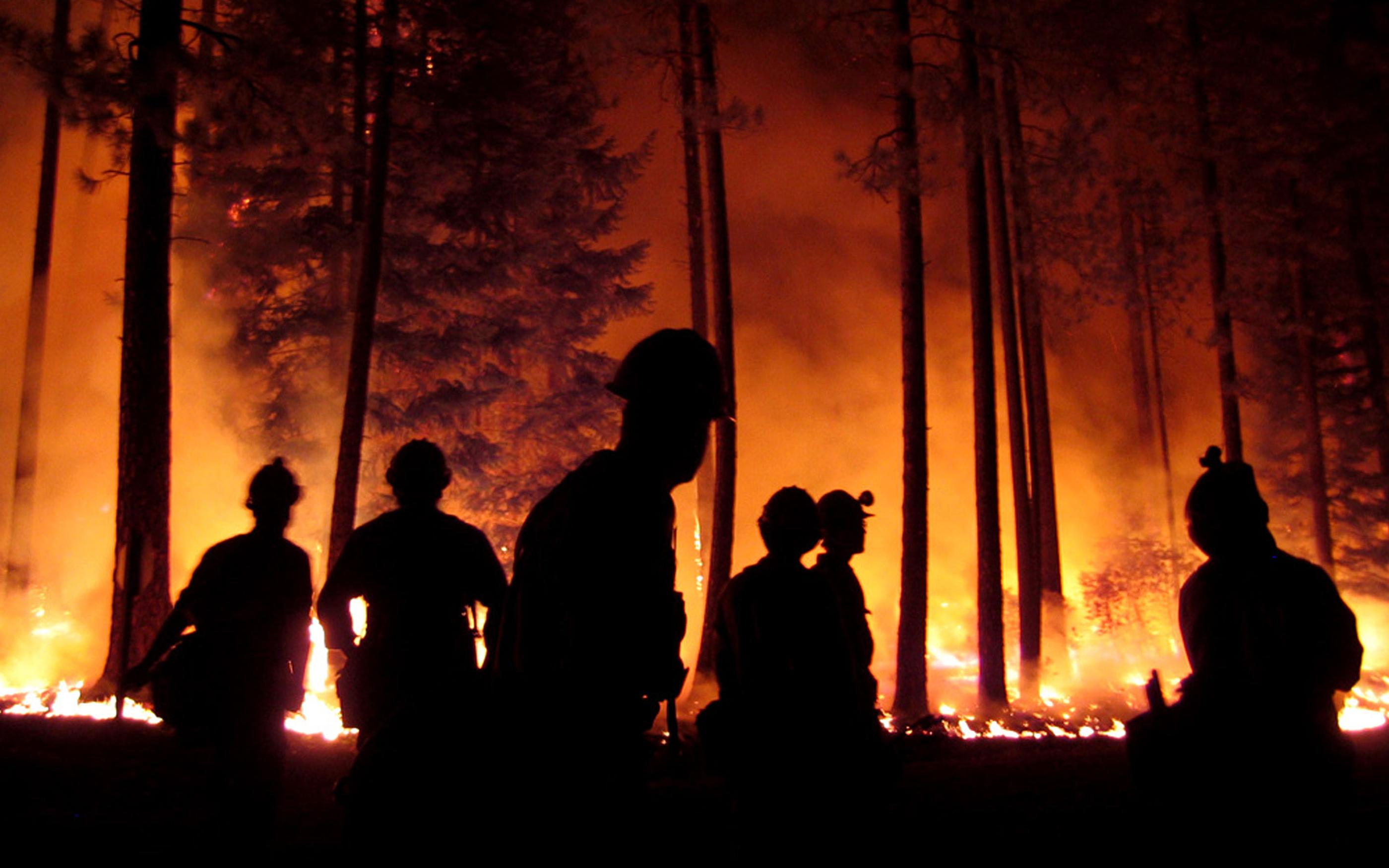
The unknown is scary, but what we understand is often less so. With climate change, we have both a growing base of knowledge (on drivers, impacts) and yet many unknowns (e.g., tipping points, feedback loops and dependency on projected emissions). There is a growing recognition that all this knowledge, while taken seriously, is not resulting in the urgent action needed to adapt to and mitigate climate change. What is missing? The answer has more to do with psychology and culture than with science.
The ‘levee effect’ or a false sense of security
In the 18th century, the Enlightenment ushered a wave of scientific progress, faith in knowledge and reason, and the belief that by understanding the universe, humans can improve their own condition. We have this urge to rationalize, categorize and quantify, and we get comfort that this knowledge somehow tames the natural world.
Up to a point. Improved understanding of natural phenomena (evidenced by risk maps, estimation of frequencies and severities, etc.) has underpinned the development of insurance, which provides a cushion against adverse events, allowing individuals, communities and organizations to recover and thrive after a flood or a storm.
Tremendous progress in the science of risk has improved our knowledge, but has this investment in modelling, quantification, prediction given us a false sense of security? This is akin to the “levee effect,” the paradox that the construction of a levee to protect an area from flooding might encourage owners to invest more in their property, thereby increasing the potential damages in case the levee is breached.
Even one of the Enlightenment philosophers saw his optimism shaken by the 1755 Lisbon earthquake and tsunami. Shortly after, Voltaire wrote Candide ou l’optimisme, an unrelenting satirical novel attacking the optimism of Leibniz that we live in the “best of all possible worlds.”
How can science help with the ‘unprecedented’?
The risk management and insurance professions have become very reliant on risk models and risk probabilities. Existing tooling and ways of thinking are constraining adaptation to “unprecedented” changes or events, with typical responses such as:
- Incremental adjustments to the frequency and severity assumptions of existing risk models for risks impacted by climate change (e.g., flood) – but what about tipping points?
- Continued underestimation of compounding risks – even with the proliferation of models, there are still glaring gaps and vast areas of unmodeled perils, e.g., wildfire
- Continued reliance on a terminology (“1 in 100-year flood”) that is misunderstood by the public and decision makers, limited by historical records, and statements that would need to be constantly readjusted because of other factors (e.g., growing exposure in areas at risk, climate change…)
Without meaningful complementary strategic action, these tweaks are akin to (well-meaning) analysis paralysis. As amusingly put by James Vaccaro, member of the Glasgow Financial Alliance for Net Zero advisory panel, “If you’re driving towards the edge of a cliff, it’s probably less important to calibrate instruments that will give you an accurate reading on how far you will fall and more important to steer in a different direction”.
Risk quantification remains important to support investment and risk transfer decision-making
Risk quantification remains important to support investment and risk transfer decision-making, but we should ask ourselves whether decisions can simply be based on numbers, or how ethical values can be considered? For example, a recent review of corporate environmental disclosures shows how reductive numbers can be, simplifying a lot of nuance and complexity in the environmental, social and governance (ESG) ratings awarded by rating companies.
The ‘never normal’ is the new normal
As the aftermath of the COVID-19 crisis shows, people naturally long for stability and the return to the “new normal.” Yet as the innovation expert Peter Hinssen argues, we should instead embrace the “never normal”1, an acceptance that would promote growth mindsets, flexibility, and elastic innovation.2

A range of analytical methods can help us qualify and qualify the extremes of the “never normal”: from extreme value theory (which is well used in natural catastrophe modelling, e.g., our flood research with Newcastle university3), to expert elicitation (e.g., the Delphi method) or even looking at science fiction for inspiration, as many human disasters go back to a “failure of imagination”.
In his book Superforecasting: The Art and Science of Prediction4, the Canadian-American political science writer Phillip Tetlock contrasted two forecasting styles: foxes are analytical and detail-oriented; hedgehogs are the big-picture thinkers. Our “eclectic foxes” work closely with “intellectually aggressive hedgehogs,” cultivating diverse sources of ideas, not neglecting imports from other fields, e.g., outside our insurance / risk management sector.
Risky thinking - where psychology of risk comes in
“Hard” sciences have done their bit to promote climate action, but seemingly can’t go all the way, and may need substantial input from those “softer” sciences: psychology, and behavioral economics.
At the recent American Psychological Association’s Convention in August 2022, the opening session was entitled: “Psychology can change climate change” – and psychologists have a point, on two fronts:
Psychology may help design the most effective ways to change human behavior and encourage individuals, citizens and decision makers to take action
Psychology may help design the most effective ways to change human behavior and encourage individuals, citizens and decision makers to take action. Even climate scientists can find it tricky to engage in policy advocacy as they fear it may result in the perception of bias in their science or abuse of their position. But sciences don’t have to be completely value-free, and there are ways that scientists can advocate well by clearly communicating what better policy looks like, as explained in this thesis of Lydia Messling: How can climate scientists engage in policy advocacy and preserve their scientific credibility and independence?5
Actual impact or the anticipation of climate change also affect mental health and wellbeing, so psychologists need to be prepared for a wave of climate anxiety. In an article published in the Lancet, psychologists surveyed children and adolescents on their views on climate change and action by governments, and were “disturbed by the scale of emotional and psychological effects of climate change upon the children of the world, and the number who reported feeling hopeless and frightened about the future of humanity”.6
Bridging the knowledge-action gap
A range of analytical methods can help us qualify and qualify the extremes of the “never normal”: from extreme value theory
Good leadership involves knowing when we have enough information to act and being comfortable with the remaining uncertainty. The “precautionary principle” (the Vorsorgeprinzip concept goes back 1970s in Germany in response to forest degradation and sea pollution) urges that where there is potential for irreversible harm to the ecosystem, preventive measures should be taken to prevent such harm, and that uncertainty on the likelihood or extent of the harm should not delay action. The cost of inaction is great: this means “act now or pay more later”.
Past climate may not be a good guide for future climate, but we can learn a few lessons from previous societal collapses
There is also a sense that incremental action is no longer sufficient for adaption and mitigation, and that step change actions (the more difficult ones) are needed. Climate change presents us with a non-linear challenge: temperatures do not increase in a linear way, and our ecosystems, infrastructure and human bodies have certain thresholds for operation, beyond which catastrophic failure is expected. To a non-linear challenge, we need a non-linear response, rather than tweaks to the system.
In the end, the conclusion is disarmingly simple (and difficult to implement). Past climate may not be a good guide for future climate, but we can learn a few lessons from previous societal collapses. In his book Collapse: How Societies Choose to Fail or Succeed, Jared Diamond identifies two crucial choices that determined whether societies failed or survived:
Longer term planning: .”.. the courage to practice long-term thinking, and to make bold, courageous, anticipatory decisions at a time when problems have become perceptible but before they have reached crisis proportions".
This has proved difficult, not least due to the shortness of electoral cycles (NIMTOO: “Not in my term of office”) or corporates’ focus on quarterly results.
Do more:
- Horizon scanning for emerging risks
- Scenario planning before a crisis
- Wargaming
Willingness to re-appraise core values: .”.. the courage to make painful decisions about values. Which of the values that formerly served a society well can continue to be maintained under new changed circumstances? Which of these treasured values must instead be jettisoned and replaced with different approaches?"
This re-evaluation of values is at the core of the resilience challenge: organizations, societies increasingly acknowledge the need to become more resilient, but how do they define resilience? For example, are First World citizens willing to compromise on their consumerism and living standards to live more sustainably? Bluntly, resilience from everything, for everyone is mere wishful thinking, and a realistic approach involves an open-minded, wide stakeholder analysis, and ultimately, trade-offs.
Do more:
- Stakeholder analysis
- Review risk culture
- Reflection on corporate purpose, and investment beliefs7
As dark as it is, Candide ends on a note of optimism: “we must cultivate our garden.” The meaning of this moral has been widely debated. With a severe drought across Europe this year, the advice may seem destined to fail. It may be a useful reminder that we should not succumb to “analysis paralysis,” denial or complacency, and should strive to act within our own sphere of influence: be it a private citizen’s garden, or a CEO’s company.
Footnotes
1 Peter Hinssen (2020) https://www.pcma.org/peter-hinssen-embrace-never-normal/
2 https://www.forbes.com/sites/johnbremen/2022/02/03/four-leadership-actions-to-create-stability-in-2022-using-elastic-innovation/?sh=580bbe326607
3 Francesco Serinaldi (2020) https://www.researchgate.net/publication/342861520_All_in_order_Distribution_of_serially
_correlated_order_statistics_with_applications_to_hydrological_extremes
4 https://hbr.org/2015/02/what-research-tells-us-about-making-accurate-predictions
5 Dr Lydia Messling: How can climate scientists engage in policy advocacy and preserve their scientific credibility and independence https://centaur.reading.ac.uk/96012/1/23865056_Messling_Thesis.pdf
6 Hickman (2021) Climate anxiety in children and young people and their beliefs about government responses to climate change: a global survey https://www.thelancet.com/journals/lanplh/article/PIIS2542-5196(21)00278-3/fulltext#%20
7 Thinking Ahead Institute (2022) Investment beliefs to change the climate trajectory https://www.thinkingaheadinstitute.org/content/uploads/2022/03/IFT_paper6_Climate-beliefs.pdf
Author
Good leadership involves knowing when we have enough information to act, and being comfortable with the remaining uncertainty