

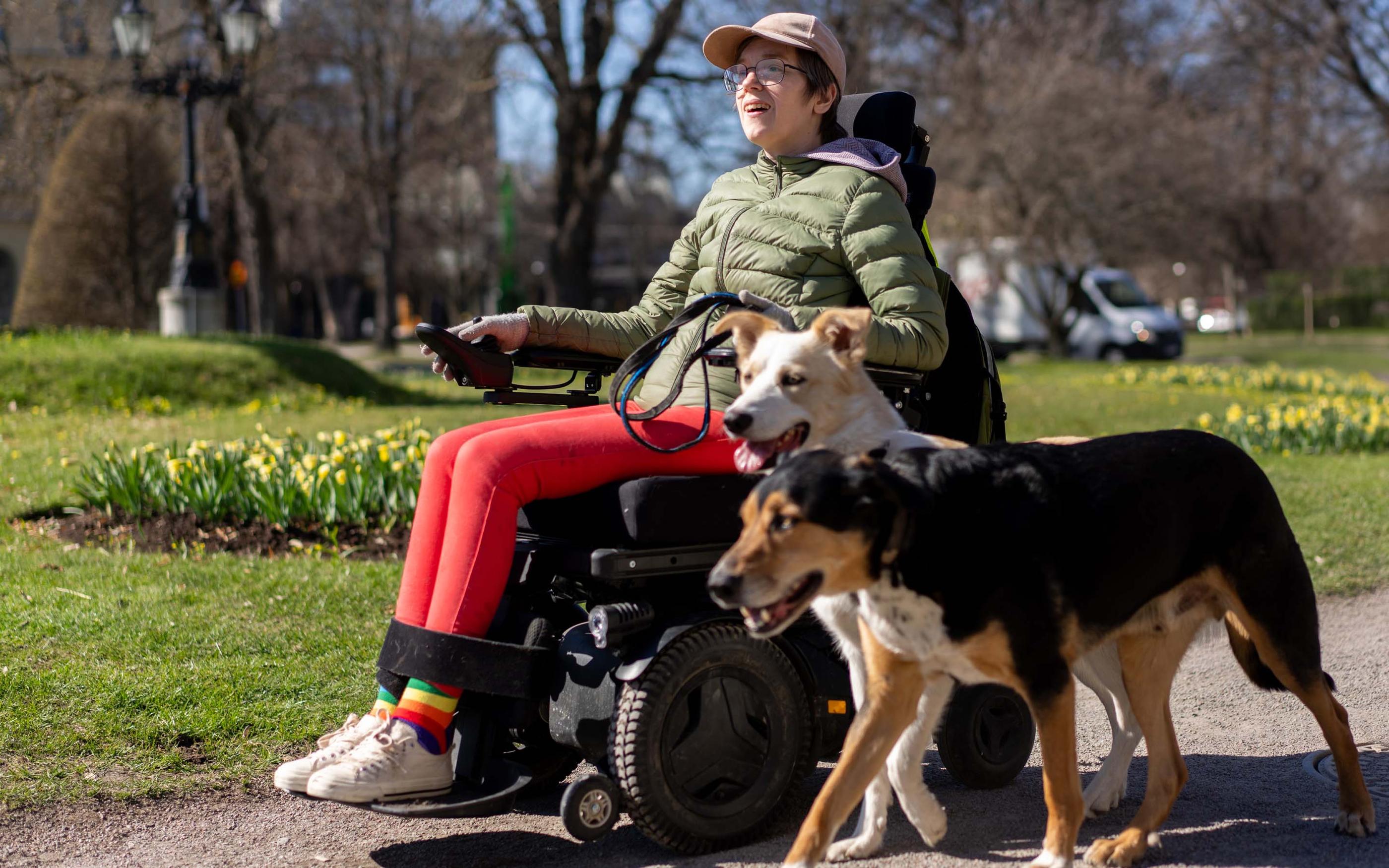
Why managing animals in healthcare is less a legal problem and more an operational one and what we can do about it.
A patient walks through your front door with a dog. In the next ninety seconds, that moment will test your registration desk, your nursing staff, your security team, and your risk management framework all at once. The question isn't whether you have a policy. The question is whether every person in that chain responds the same way.
Across the country, we're seeing animal-related encounters in healthcare settings more frequently than ever, service animals, therapy animals, emotional support animals, and the occasional miniature horse. The legal framework governing these situations has been remarkably stable. So why does this remain one of the most common sources of frontline confusion and risk management hotline calls?
Because the real risk isn't the animal. It's organizational inconsistency, a lack of standard operating procedure.
The law is clear. Our application isn't.
Let's start with what we know. Under the Americans with Disabilities Act, service animals, individually trained to perform specific tasks for a person with a disability, must be permitted wherever patients and visitors are otherwise allowed. Service animals typically are dogs and, in rare cases, miniature horses.
However, other animals , such as capuchin monkeys, birds, or even peacocks, have been used in specialized assistance roles outside the ADA’s strict definition. These are often considered assistance animals under other laws (e.g., Fair Housing Act, Air Carrier Access Act) or in specific settings like universities or private housing, but they are not recognized as service animals under the ADA for healthcare.
Staff may ask only two questions:
- Is this service animal required because of a disability?
- And what work or task has the animal been trained to perform?
No documentation. No demonstration. No probing into the person's disability. Nothing further.
That's it. The rules are not complicated.
But complexity creeps in at the point of contact, where five distinct categories of animal (personal pets, therapy animals, emotional support animals, working dogs, and service animals) each carry different legal, clinical, and operational implications.
- Personal pets do not have any special legal protection when it comes to access in healthcare settings. That means, unlike service animals, there is no federal requirement to allow them into the facility.
- Instead, their presence is entirely governed by your organization’s own policies, particularly visitor policies and infection control protocols.
- From a risk perspective, this is important because allowing personal pets without a clear policy can introduce unnecessary liability whether that’s related to safety, infection prevention, or patient experience concerns.
- So, the key takeaway here is that personal pets are a discretionary access decision, not a legal obligation. Organizations should be very clear about when, where, and if these animals are permitted, and staff should feel confident enforcing those boundaries consistently.
- Therapy animals are typically part of organized programs often coordinated through volunteer services or patient experience teams. Their purpose is to provide comfort and support, particularly in settings like oncology, pediatrics, or behavioral health.
- But the key distinction here is that access is not legally required. Unlike service animals, therapy animals are in the facility because the organization has chosen to allow them.
- Because of that, these programs need to be tightly managed. That includes handler credentialing, confirming vaccinations and training, and clear expectations around where the animal can and cannot go.
- Just as important is infection prevention involvement , especially in high-risk units. Without those controls, what is intended to be a patient experience benefit can quickly become a patient safety concern. Make sure your infection control professional is at the table for this discussion.
- So the takeaway here is: therapy animals can be very valuable but only when they operate within a structured, well-governed program.
- Emotional support animals provide comfort simply through their presence. But the key distinction is that they are not individually task-trained to perform a specific function related to a disability.
- Because of that, they are not recognized as service animals under the ADA. And that means they do not have the same public access rights in healthcare environments.
- This is where risk often arises. Staff may feel pressure to allow them, especially when a patient expresses a need, but from a regulatory standpoint, access is not required. It’s a decision the organization makes based on policy.
- So, the takeaway is: emotional support animals can look very similar to service animals, but legally and operationally, they are very different. And understanding that distinction is critical to avoiding both compliance issues and unnecessary liability. Comfort alone does not qualify an animal as a service animal under the ADA.
- Working dogs include animals such as law enforcement K-9s, security dogs, hospital canine patrols, and detection dogs. These animals are trained for very specific operational roles like identifying substances, search and rescue, or supporting public safety efforts.
- The key distinction is that their access to healthcare facilities is not governed by the ADA in the same way as service animals. Instead, their presence is determined by their official role and the authority of the agency they are working under.
- From a risk and operations standpoint, these situations are typically coordinated at an organizational level, often involving security, administration, or external agencies rather than frontline clinical decision-making.
- So, the takeaway is that working dogs are not part of patient access considerations. Their presence is situational and controlled, based on law enforcement or operational needs, not individual patient rights.
- Service animals are individually trained to perform specific tasks for a person with a disability. That task-based training is what distinguishes them from every other category we’ve covered.
- Because of that, they are afforded the highest level of legal protection under the Americans with Disabilities Act. In healthcare settings, that means they are generally allowed in any area where patients and visitors are permitted.
- From a risk perspective, this is where organizations have the least discretion. Unlike therapy animals or emotional support animals, service animals are not optional, they are a matter of federal compliance.
- At the same time, that doesn’t mean there are no boundaries. The animal must be under control and must not pose a safety risk. If those conditions aren’t met, removal can still be appropriate.
- The key takeaway here is that this category is about both access and accountability, ensuring that patients’ rights are upheld while maintaining a safe and controlled care environment.
- Of all the categories we’ve covered, this is the one where getting it wrong carries the highest regulatory risk.
When staff confuse an emotional support animal for a service animal or assume a therapy dog has the same access rights as a task-trained service animal, we open the door to Americans with Disabilities Act (ADA) violations, patient complaints, and unnecessary liability.
Heading into 2026, no major statutory changes to the ADA are on the horizon. The federal framework remains stable. And that's encouraging news because it means our greatest opportunity for improvement isn't waiting for new legislation. It’s how consistently we operationalize what we already know.
Liability doesn't start at the door. It starts with the response.
Here's a shift in perspective worth embracing: liability rarely arises because an animal entered the facility. It arises when we lack a consistent process for assessing risk, responding to concerns, and documenting our decisions.
Consider a real scenario. A patient arrived with a service animal. Staff appropriately allowed access. Later, the animal became disruptive, blocking a hallway and behaving aggressively. If staff had failed to intervene because they believed they could never touch a service animal, the organization's exposure would have shifted entirely from the animal's presence to the organization's response.
The legal question is not simply whether an animal should have been allowed in. It's whether we acted reasonably before, during, and after the event. Did we have a clear escalation pathway? Did we document what happened factually, without opinion or speculation? Did we involve risk management early?
When we get this right, we're not just protecting the organization. We're protecting the patients, the staff, and the integrity of the care environment.
The 2 a.m. test
Here's a question worth asking yourself: does the 2 a.m. Sunday emergency department team or another department handle an animal encounter the same way your Monday-through-Friday day-shift team does?
If the answer is uncertain, you've identified your most significant risk. The greatest exposure we see isn't a misunderstanding of the law, it's the inconsistent application of the law across departments, shifts, and facilities. Registration responds one way. Nursing responds another. Security responds a third. Each variation creates confusion for patients and compounds organizational risk.
The strongest organizations are moving away from individual interpretation toward defined workflows, standard policies, and shared escalation pathways. They're replacing dense, multi-page policy documents with simple visual decision tools that frontline staff can remember in the moment. They're using scenario-based training, not long-winded modules, but memorable case studies that test real judgment in real time.
Balancing multiple frameworks with confidence
We're not operating under a single rule. We're balancing several.
- The ADA drives access.
- CMS Conditions of Participation require a safe environment and robust infection control.
- The Joint Commission surveys for consistency in environment of care and infection prevention.
- State laws add their own layers from increasing penalties for fraudulent service animal claims to widely varying dog bite liability standards.
- And CDC guidance reminds us that access is allowed, but controls are required to prevent zoonotic risk, ensure hand hygiene, and restrict animals in high-vulnerability units.
Compliance isn't about choosing one priority over another. It's about working to balance all of them in a way that's legally sound, clinically appropriate, and operationally consistent. When our teams understand this framework, they make better decisions in real time, and they know when to escalate.
A forward-looking path
The opportunity before us is clear. We can build animal access programs that are not just compliant but genuinely excellent, programs that uphold patient rights, empower staff with confidence, and manage risk proactively rather than reactively. Five priorities anchor this work: know the distinctions between animal categories, train the workforce with practical scenario-based education, support ADA compliance, mitigate liability through clear documentation and early reporting, and promote safe, compassionate care.
This isn't about restricting access. It's about enabling it safely, consistently, and with compassion. When a patient arrives with a service animal, we want every staff member from registration to nursing to security to know exactly what to do, who to call, and how to document it. We want the 2 a.m. team to perform as well as the Monday morning team.
The law is stable. The path is clear. Our future success lies in the consistency we build, one well-trained team at a time. And that's a future worth working toward, together.
FAQs
The following FAQs are offered as general suggestions to help guide your thinking. They are not drawn from any specific source and should not be relied upon for general use. We encourage you to consult your own legal advisors and adapt these responses to your organization's particular circumstances before applying them.
Potentially, yes. Liability is not automatic, but the organization may be named in a claim and could be found liable if it negligently allowed, supervised, or responded to the animal’s presence. The animal’s owner or handler will often be a primary potential defendant, but permitting the animal to stay does not necessarily shield the healthcare organization from its own premises-liability, workplace-safety, or negligence exposure.
Yes, in most cases. Under Titles II and III of the ADA, a service animal is generally defined as a dog that is individually trained to perform work or tasks for a person with a disability. The ADA regulations also contain a separate provision requiring reasonable modifications for certain miniature horses that have been individually trained to perform disability-related tasks. Animals other than dogs and miniature horses are generally not entitled to public access rights under the ADA, even if the owner refers to them as a "service animal." A healthcare provider is generally not required by the ADA to admit:
- Cats
- Birds
- Rabbits
- Monkeys
- Ferrets
- Snakes
- Other exotic animals
The ADA generally requires hospitals to permit a service animal to accompany its handler in areas where patients are allowed to be, including inpatient rooms. A patient's diagnosis of C. difficile does not automatically require removal of a service dog. The organization should conduct an individualized assessment involving Infection Prevention, Nursing Leadership, and Risk Management. If infection-control risks can be reasonably mitigated, the service dog may remain with the patient. If the risks cannot be adequately controlled or the patient cannot safely manage the animal, the organization may have grounds to restrict or remove the animal based on legitimate safety requirements and documented infection-control concerns.
Questions to ask the patient include:
- Is the patient physically capable of caring for and controlling the dog?
- Is there a family member or handler available?
- Does the dog remain exclusively in the patient room?
- Does the dog need to leave the room for toileting?
- Will staff be required to care for or handle the dog?
- Can the dog be prevented from contacting contaminated areas?
- Is there an appropriate plan for exercise, feeding, hygiene, and waste management?
Service animals are expected to remain leashed, harnessed, or tethered while on hospital premises unless the patient's disability or the animal's trained task requires otherwise. In all circumstances, the service animal must remain under the handler's effective control.
One practical issue for inpatients is that if the patient becomes physically unable to control the service dog (e.g., sedation, surgery, ICU transfer), the ADA does not require the hospital to become the animal's caretaker. The facility should have a plan for an alternate handler or temporary removal arrangement.
Resources
- Paws, policy and patient safety – Managing animals in the healthcare setting
- Animals in the healthcare setting
- ADA Regulations, Service Animals (28 CFR §35.136): eCFR Service Animal Requirements [ecfr.gov]
- U.S. Department of Justice, ADA Service Animal Guidance: ADA Requirements for Service Animals
- Centers for Disease Control and Prevention (CDC), May 2026
Disclaimer
WTW hopes you found the general information provided here informative and helpful. The information contained herein is not intended to constitute legal or other professional advice and should not be relied upon in lieu of consultation with your own legal advisors. In the event you would like more information regarding your insurance coverage, please do not hesitate to reach out to us. In North America, WTW offers insurance products through licensed entities, including Willis Towers Watson Northeast, Inc. (in the United States) and Willis Canada Inc. (in Canada).
Author