
Extreme weather events are now happening with growing frequency and over larger areas. Global insured losses from natural catastrophes have more than doubled in real terms over the past 30 years, according to Swiss Re Institute. The uninsured portion of economic losses from natural disasters regularly exceeds 50%, leaving businesses to absorb the financial shock.
Both your organization and the utilities it depends on can be exposed to the same hazards, challenging traditional risk management and recovery planning.
A severe winter storm or flood can damage both your facilities and utility networks, extending downtime and driving higher business interruption losses. For example, during the 2021 Texas winter storm Uri, the same extreme cold that shut down manufacturing facilities also crippled the power grid serving them. Businesses were left without electricity for up to two weeks, and the wider economic impact of the storm has been estimated at up to $130 billion.
A severe winter storm or flood can damage both your facilities and utility networks, extending downtime and driving higher business interruption losses.
As well as extreme single weather events, utility networks face pressure from chronic hazards; from heatwaves that push transformers beyond safe operating temperatures, to droughts that disrupt water treatment plants and industrial water supplies.
Unlike acute events which cause sudden, visible damage, chronic hazards build pressure gradually and can weaken infrastructure over time before a failure becomes apparent.
When climate-related exposures are more intense, more interconnected and more likely to affect entire regions than historically, your organization may need to change its risk management and planning assumptions.
This insight explores why and how you can better understand and mitigate the correlated natural hazard and climate risks facing both your business and utility networks.
Resilience against connected utility risks starts with seeing your operations more clearly and understanding where your power, water and critical services really come from to spot the weak links.
What false assumptions can organizations make about natural hazards and climate-driven utility outages?
Many organizations tend to underestimate how long utilities take to recover after extreme weather events, either assuming restoration will happen quickly or that outages will remain highly localized.
But today, chronic stresses such as persistent heat, drought and grid instability are degrading equipment and raising vulnerabilities across regions. Some organizations may discover the operational risks too late: generators that need fuel trucks that can't reach them; cooling systems that fail under sustained heat, water stress affecting treatment facilities that serve entire districts.
These blind spots can happen if your planning is over-optimistic, over-focused on internal resilience and doesn’t consider shared exposures.
How can your organization map utility dependencies to manage your shared nat cat and climate risks?
50%+The uninsured portion of economic losses from natural disasters regularly exceeds 50%
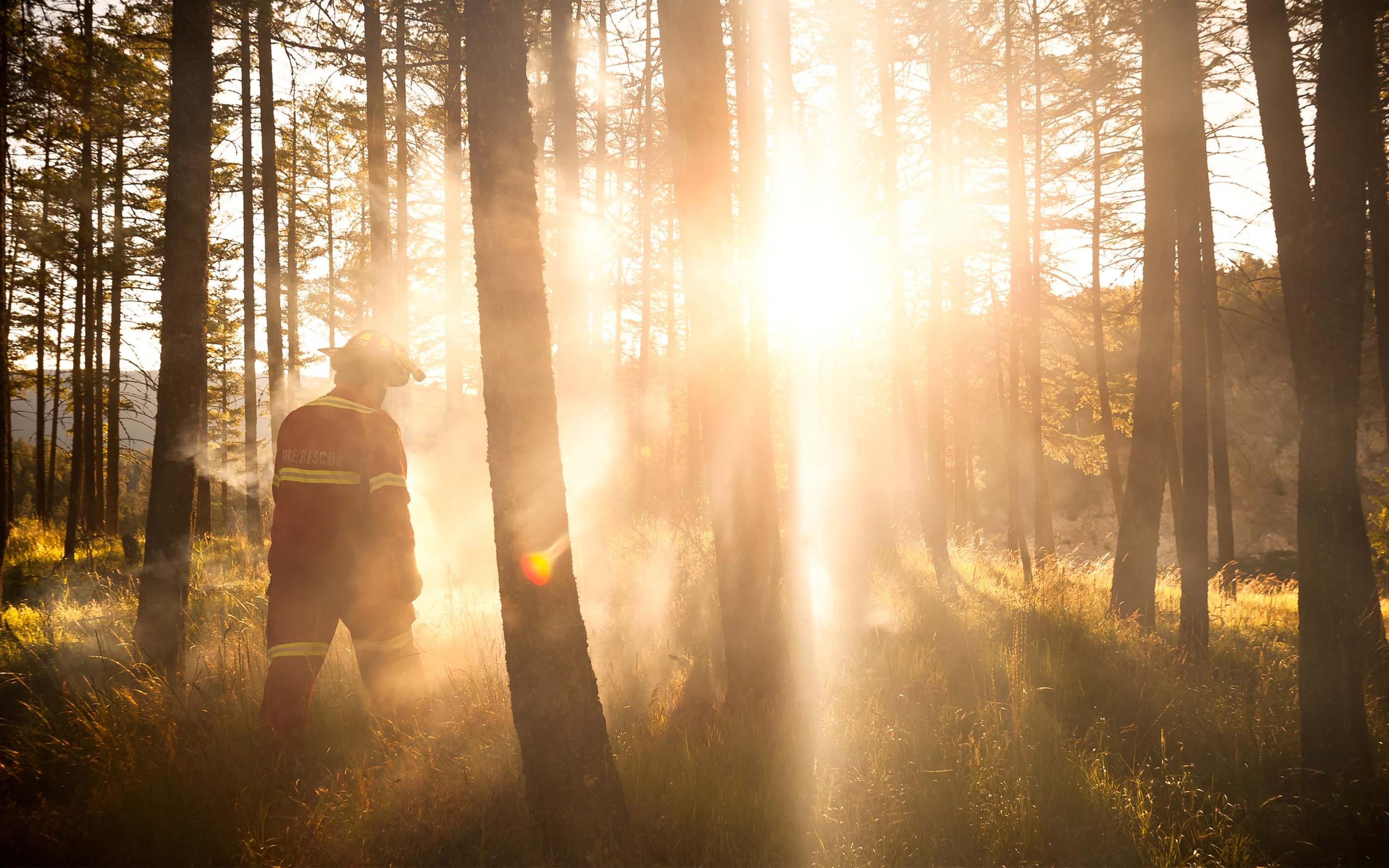
Chronic hazards build pressure gradually and can weaken infrastructure over time before a failure becomes apparent.
Resilience to shared climate risks needs an accurate picture of your dependency chains. Geographic information systems, satellite data and local infrastructure maps can pinpoint where power plants, substations, water treatment facilities and pipelines sit relative to your key sites. You can supplement this with direct information from suppliers by asking simple but essential questions: who provides your power and water and where are those assets located?
Mapping this information can reveal how far locations depend on the same infrastructure or face the same natural hazards, uncovering shared exposures that traditional risk assessments often overlook.
How can you quantify the operational and financial effect of correlated utility outages and what are the benefits?
Quantifying correlated utility risk requires realistic assumptions.
Evaluating the effect of one to two-week outages in which both the facility and the utility provider are disabled is likely to provide a more accurate basis for estimating business interruption losses.
Structured vulnerability scores that weight supply infrastructure, backup systems, recovery ability and historical performance can refine these assessments.
By linking operational thresholds to financial outcomes, you can also identify where outages create the greatest losses to determine which mitigations deliver the highest value.
These engineering‑led approaches can translate complex shared‑risk scenarios into clear, practical insights, supporting more informed discussions with insurers and help to prioritize resilience investments where they matter most. We recently completed a utility vulnerability assessment for a semiconductor manufacturer that experienced business interruption losses after the Texas 2021 freeze. The assessment helped prioritize its resilience investments and negotiate a $100M additional capacity with insurers.
Resilience to shared climate risks needs an accurate picture of your dependency chains.
Related climate risk content
Engineering‑led approaches can translate complex shared‑risk scenarios into clear, practical insights, supporting more informed discussions with insurers and help to prioritize resilience investments where they matter most.
How can your contract terms boost continuity planning against utility outages?
Contractual arrangements with utility providers influence how your organization will respond to correlated failures. For example, during severe weather, financial penalties for not meeting contractual obligations may be unenforceable. Priority restoration agreements or advance notice protocols become far more valuable in this context.
Ensure your organization isn't wrongly assuming suppliers are obligated to deliver alternative supply via tankers or temporary equipment, only to find those provisions missing when you need them most.
Understanding contractual obligations early can help avoid unpleasant surprises and inform negotiating terms more likely to support readiness and continuity in the face of climate-driven disruption.
How should your organization prioritize shared nat cat and climate risks with utility networks?
Identify and focus on the dependencies that matter most, specifically, which systems would stop revenue within 24 hours if they failed. Which would take more than a week to restore and what would be the financial impact?
$100Madditional capacity secured with insurers, following a utility assessment for a semiconductor manufacturer
Scenario analysis can help you understand those dependencies that would drive the largest losses and shape more effective recovery plans.
Running scenarios that account for chronic and acute events can also show you those operations that need to resume first and those able to remain offline temporarily.
Which early warning systems support better responses to utility outages?
Weather forecasting services and sensor networks could give you critical lead time to act before utility outages cascade.
Temperature sensors on transformers, water-level monitors at supplier facilities and predictive analytics tied to chronic hazards can also help identify when a disruption is likely. These windows of opportunity can be critical to activating resilience plans, adjusting production, or shutting down equipment safely to lessen the impact of severe weather events.
Once you identify a disruption is likely, predetermined response protocols, such as switching to backup power, sourcing water via tankers, or temporarily reducing production, can mean the difference between a managed response and an unplanned crisis.
How can you quantify utility exposures falling outside traditional risk frameworks to inform better insurance placement and operational resilience strategies? Get in touch with our climate risk specialists to find out.
Disclaimer
WTW hopes you found the general information provided here informative and helpful. The information contained herein is not intended to constitute legal or other professional advice and should not be relied upon in lieu of consultation with your own legal advisors. In the event you would like more information regarding your insurance coverage, please do not hesitate to reach out to us. In North America, WTW offers insurance products through licensed entities, including Willis Towers Watson Northeast, Inc. (in the United States) and Willis Canada Inc. (in Canada).
Author

Climate risk contact

Scenario analysis can help you understand those dependencies that would drive the largest losses and shape more effective recovery plans.