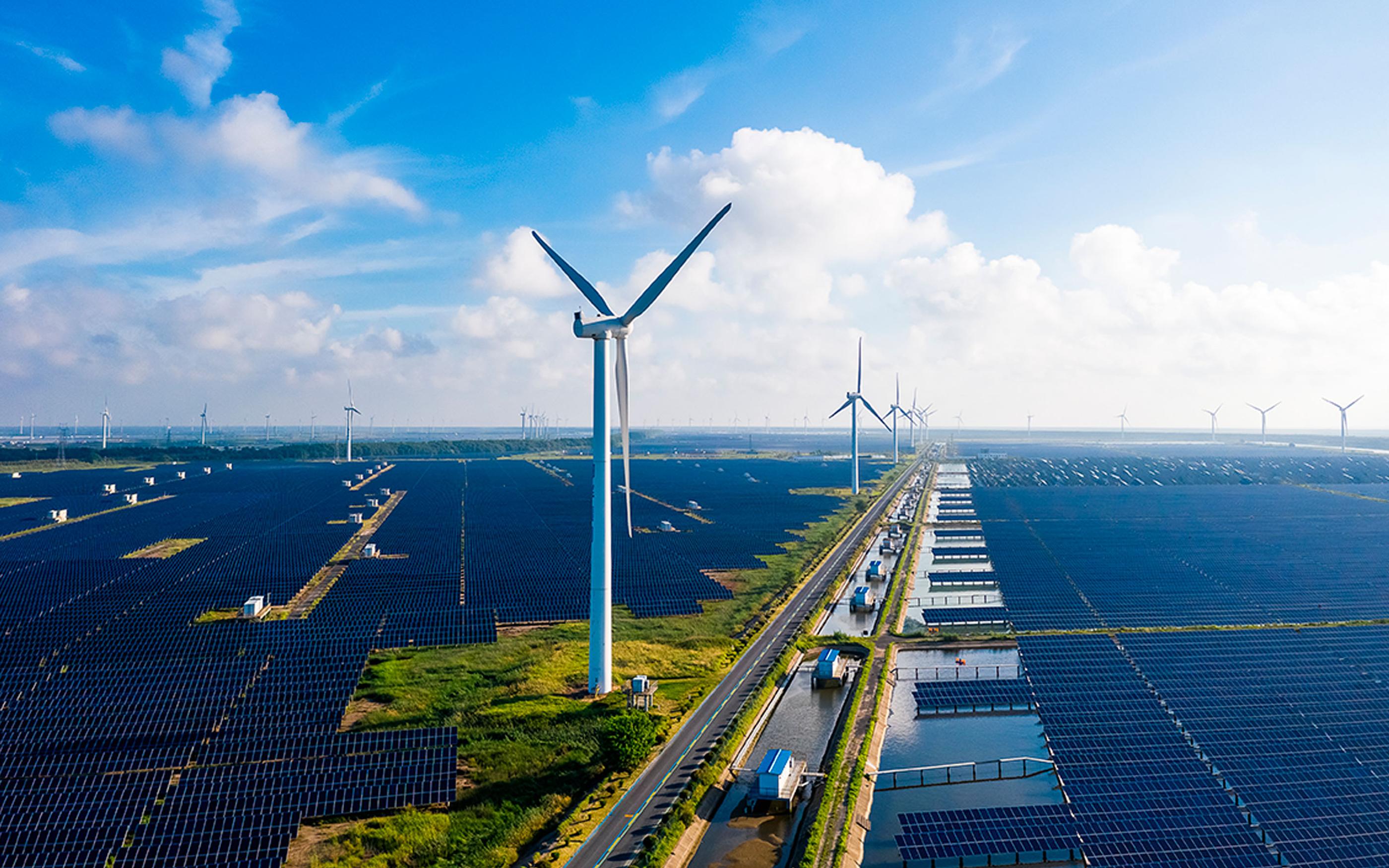
Record-breaking investment, accelerating policy support, and rapid technological innovation are propelling the renewable energy sector into a new era of growth. Underpinning this transformation: Chinese original equipment manufacturers (OEMs).
The conflict in Ukraine, tensions in the Middle East and disruption to shipping routes have reinforced a simple conclusion: for many economies, energy security increasingly depends on the speed of electrification. Solar, batteries, grid equipment and electrified infrastructure are no longer optional decarbonization tools; they are central to protecting revenue, securing supply and maintaining competitiveness.
Chinese OEMs are at the core of global manufacturing capacity to fulfil the global decarbonization imperative. In March 2026, combined sales of Chinese clean energy parts and products totaled $26 billion[1], analysis of Chinese customs data shows solar exports hit a record 68 gigawatts (GW) in a single month, and panel exports rose 91% to 32 GW, while cells and wafers rose 108% to 36 GW.[2] The lesson is not simply that crises boost renewables, it is that energy security compresses decision timelines, and prioritizes availability, scale and delivery speed over diversification. In practice, this concentrates demand on the suppliers that can deliver at scale today, not those that might diversify supply tomorrow.
This creates a paradox: the same geopolitical environment that increases scrutiny of Chinese suppliers is simultaneously deepening reliance on them.
Chinese OEMs are structurally central
This paradox exists because China’s role in clean-energy manufacturing is not substitutable at the speed the market now demands given the scale, cost advantages and vertically-integrated supply chains that have been established for more than a decade. International Energy Agency (IEA) analysis[3] shows China accounts for around 85% of solar PV supply chain production capacity and around 80% of lithium-ion battery supply-chain production capacity. Its share is even higher in specific bottleneck stages, including around 95% of PV wafers and 97% of battery anode materials.
Once embedded, dependencies are difficult to unwind without introducing further delay, cost or performance risk. What appears diversified on paper can include shared dependencies in practice across factories, firmware, logistics routes and service arrangements. The more credible strategy is not to assume dependency can be avoided altogether, but to locate it precisely, diversify where exposure is systemic and manage the residual risk explicitly.
Five actions renewable energy leaders are taking to build resilient supply chains
As electrification accelerates, risk leaders sit at the center of the trade-off between speed, resilience and financial performance. The question is no longer just “what happens if something fails?” but “how long before failure becomes financially visible, and does our insurance recognize that timing?” Resilient organizations are managing dependency deliberately rather than implicitly:
The strategic takeaway
The strategic challenge is not to slow deployment in pursuit of perfect resilience. It is to recognize that energy security crises accelerate dependency faster than governance frameworks naturally adapt.
Leaders that address this gap deliberately by designing for evidence, optionality and recoverability, and by understanding how delay propagates through supply, delivery and commissioning timelines will be better positioned to deliver the speed that energy security now demands, without embedding avoidable fragility into the systems they depend on.
Download the full article to find out why this matters for bankability and insurability.
Footnotes
Disclaimer
WTW hopes you found the general information provided here informative and helpful. The information contained herein is not intended to constitute legal or other professional advice and should not be relied upon in lieu of consultation with your own legal advisors. In the event you would like more information regarding your insurance coverage, please do not hesitate to reach out to us. In North America, WTW offers insurance products through licensed entities, including Willis Towers Watson Northeast, Inc. (in the United States) and Willis Canada Inc. (in Canada).
Download
| Title | File Type | File Size |
|---|---|---|
| When energy security accelerates dependency - The Chinese OEM paradoxPDF | 2.1MB |
Authors