In this episode of the Global Insurance Marketplace Insights podcast, Remco Beuvens and Akgun Dogan discuss where credit risk may be hiding amid global uncertainty, AI-driven growth and interconnected markets. They explore rising insolvencies, concentration risk and sector and regional opportunities, highlighting the importance of understanding exposures and strengthening business resilience.
Transcript for this episode
AKGUN DOGAN: Exactly at this point lies my main concern-- overconfidence. Many organizations have become accustomed to navigating disruption, and indeed, they may begin to believe they can successfully absorb and navigate any shock. That can really become dangerous.
SPEAKER: Welcome to Global Marketplace Insights by Willis, a WTW Business, a podcast series showing the latest trends from the specialty and regional insurance markets.
REMCO BEUVENS: Hello, and welcome back to the marketplace insight podcast series, where we are discussing the current state of the market for credit insurance. My name is Remco Beauvens, I'm Head of Strategy and Partnerships for Willis Trade Credit. And today's topic for this podcast is, where is the credit risk actually hiding?
Businesses today face an interesting paradox. On one hand, we see tremendous growth opportunities driven by artificial intelligence. We have a growth of data centers, defense spending, infrastructure investments, and also digital transformation. On the other hand, however, insolvencies remain elevated, geopolitical tensions continue to create uncertainty, as we all know, and many of these high-growth sectors are becoming increasingly interconnected.
So rather than simply asking where the economy is heading, I'd like to explore something different today. Where is the risk, specifically credit risk, building beneath this growth? And our companies sufficiently aware of how concentrated some of their exposures may have become. To discuss that, I'm really delighted to be joined by Akgun Dogan, he's Global Head of Sensitive Risk Management at Allianz Trade, one of our important partners. Akgun welcome.
AKGUN DOGAN: Thanks Remco for having me.
REMCO BEUVENS: Let's start with the global economy, Akgun. If you had to highlight the three themes that business leaders should be paying the closest attention to today, what would they be?
AKGUN DOGAN: Well, probably I would group them into three broad areas. First, the geopolitical risk. We continue to see the impact of conflicts in the Middle East and Ukraine obviously-- trade tensions, election cycles across key markets, and the resulting pressure on energy prices and supply chains. Second, we remain in an environment where inflation and interest rates are higher than many businesses become accustomed to during the previous decade. While conditions have improved in some markets, financing costs remain a major factor for companies, obviously.
And third, artificial intelligence. AI investment, particularly in the United States and parts of Asia-Pacific, continue to be the major drivers of global growth, investment activity, and trade. The interaction of these three themes will significantly influence economic performance over the next several years.
REMCO BEUVENS: OK, so that would lead to the next topic, where those three interconnect. Are businesses actually stronger or adapting? Because over the last few years, Akgun, companies have dealt with inflation, interest rates increases supply chain disruption, and as you mentioned, geopolitical shocks and tariffs. Have businesses generally become stronger or have they simply become better at operating in this riskier world?
AKGUN DOGAN: Probably a bit of both, Remco. Businesses are remarkably adaptable. Just as people learn and evolve through challenging experiences, companies also adjust their operating models, supply chains, and decision-making processes. However, it's important to remember that the real economy and the resilience it has shown has been significant. Growth has remained stronger than many expected. And business activity has held up despite considerable uncertainty.
But exactly at this point lies my main concern-- overconfidence. Many organizations have become accustomed to navigating disruption, and indeed, they may begin to believe they can successfully absorb and navigate any shock that can really become dangerous.
During and after COVID, governments provided large-scale support measures that helped many businesses survive difficult conditions. However, today, with fiscal pressures remaining high in many countries, companies should not assume similar support mechanisms will always be available. And that means resilience planning and risk management remain key factors.
REMCO BEUVENS: Yeah, I agree. I agree, Akgun. And if you would be able to advise and you are to advise the CEO or CFO today, what should be the top of their agenda?
AKGUN DOGAN: Well, it's a good question. Probably three areas. First, their business model. How are they capturing growth opportunities, particularly around AI and technological transformation? At the same time, how resilient is their organization against potential shocks, such as inflation, soaring energy costs, or supply chain disruption? Second, I would say their financial structure.
In the current environment, companies need to understand refinancing requirements, interest rate exposure, liquidity needs, and stress testing scenarios. And last but not the least, something always close to our heart as great credit insurers, they need to remember the receivables risk. In an environment where insolvencies remain elevated, effective management of customer risk and accounts receivable exposure becomes increasingly more and more important.
REMCO BEUVENS: Yeah, and that's, Akgun, where you and I can definitely support. However, also probably in your assessment you take these three main topics on the agenda also in consideration in your capacity and limit underwriting. But however, let's talk about insolvencies. Despite the growth in many markets, obviously a bit tempered now, Allianz Trade still expects global business insolvencies to increase the next months years. Why are insolvencies remaining so high?
AKGUN DOGAN: Yeah, the drivers are largely linked to the teams we already discussed in my view. Many companies are still adjusting to higher financing costs. Others face margin pressure from labor, energy, or supply chain costs. Some businesses expanded already aggressively during periods of cheap capital, and they are now finding themselves in an environment where it's more difficult to generate sufficient cash flow. So these pressures accumulate over time and eventually result in financial distress.
REMCO BEUVENS: Yeah, and I think also key question of our clients. What are typically warning signs that a company may be heading toward an insolvency?
AKGUN DOGAN: I would say there are both hard indicators and soft indicators. The hard indicators include obviously increasing overdue payments, first, real payment incidents, then deteriorating cash flow, declining margins, or rising financing costs, obviously. But we shouldn't really underestimate the softer indicators as well. They can be equally important. For example, unexpected management departures, major restructuring announcements, large-scale layoffs, or abrupt changes in strategic direction can give some clues about potential trouble coming. I would say, rarely does insolvency happen overnight. In most cases, there are warning signals well before the actual event.
REMCO BEUVENS: Yeah, no thanks. Thanks for that. Well, related to that, I'd like to move to a topic that often receives, to me and also to our clients, less attention than it might deserve. And that's concentration risk. A lot of our clients, a lot of companies believe they have a diversified portfolio like hundreds of customers, but what if many of those customers ultimately depend on, let's say, same technology trend or an investment cycle or an end market. Would you call that real diversification, Akgun?
AKGUN DOGAN: Not necessarily because we need to assess diversification at multiple levels. Because if you are a company, you may have dozens of customers. But if a large proportion of your revenue indirectly depends on the same underlying growth driver, your concentration risk indeed may still be very significant. The AI ecosystem, in my view, is a very relevant example today.
REMCO BEUVENS: Yeah, thanks. So data centers are attracting enormous investment worldwide. Every day, you read about it, construction companies, semiconductor manufacturers, and power providers, telco operators, and electrical equipment suppliers are all benefiting from this AI boom. Could businesses across these industries believe that they are diversified, while ultimately depending on one common factor, that is that continued AI investment?
AKGUN DOGAN: Yeah, that's certainly a possibility. Because today, AI investment is one of the most important growth drivers globally, particularly in North America and Asia-Pacific. But whenever large amounts of capital flow into interconnected ecosystems, concentration risks can emerge. If we look at history, it taught us in various periods that in periods of strong investment growth, you should always be careful in monitoring the concentration.
The important point is not whether AI creates opportunities, Remco. It clearly does. The question is, whether investments ultimately generate sustainable productivity gains, profits, and cash flows. That's why Allianz Trade continuously monitors both the broader ecosystem and individual market participants.
REMCO BEUVENS: Yeah, I can understand there if that AI bubble in the end collapses, then other industries would also suffer obviously. Looking ahead of opportunities, so looking across sectors and regions you Allianz has a quarterly sector country report. Probably you can download it on your site. Akgun, where do you see the greatest opportunities?
AKGUN DOGAN: OK, I would say generally I remain more positive on defensive sectors on this context. They tend to be more stable obviously in terms of demand profiles, and demonstrate greater resilience during economic uncertainty like we are living today.
REMCO BEUVENS: And where are you more cautious, Akgun?
AKGUN DOGAN: Well, typically cyclical sectors and industries with significant energy cost dependency is a point of attention for us. Those kind of sectors can experience much greater volatility than macroeconomic conditions change as you know.
REMCO BEUVENS: Yeah, no thanks. And what about geography, Sir, which regions should companies pay particular attention to?
AKGUN DOGAN: Well, focusing on Europe, I would definitely look beyond the exports alone because long-term partnerships, technology transfer. And supply chain diversification are becoming increasingly important for Europe. In that context, parts of Asia-Pacific and China continue to offer very interesting strategic opportunities despite geopolitical complexity for European companies in my view.
REMCO BEUVENS: Yeah. So let's summarize the three themes that have come back during this podcast had the AI and data centers. We have defense and industrial infrastructure, energy transition, and electrification. Which offers the greatest opportunity over the next five years?
AKGUN DOGAN: I think the answer really depends partly on the region. As we discussed in the United States, AI remains a very powerful growth engine. And I believe it's going to stay like that for a considerable future. Whereas when you look at Europe, the kick off of AI, I would say, is slower. On the other hand side, the defense investment, infrastructure renewal, and electrification may, and most likely, will create broader opportunities over the short to medium range time horizon.
REMCO BEUVENS: And now-- well, imagine you're a credit manager and not an economist. Which of those three teams would you be least comfortable having 30% of your receivable exposed to?
AKGUN DOGAN: As a credit manager, I already feel the heat every day. Thanks for asking. So I would say, I'm less focused on teams than more focused on counterparties, because the quality of the individual customer often matters even more than the sector label itself. Even in a struggling sector, you can have very well-managed and performing customers. So it's important to remember this.
On the other hand side, it's also important to remember that a portfolio can be well managed with concentration in one team if the underlying credits are strong and properly monitored. So equally, don't forget a supposedly diverse portfolio can also create problems if the risk quality, your diversification elements are really weak each of them.
REMCO BEUVENS: Yeah. So Akgun, almost at the end of this interesting podcast, some quick questions to finish with. What is the most underestimated economic risk for '27?
AKGUN DOGAN: I would say, climate-related disruption.
REMCO BEUVENS: Yeah. What about sector concentration that deserves careful monitoring?
AKGUN DOGAN: Well, we already discussed a little bit on AI-related capital expenditure. Don't get me wrong, I'm not saying this is a burning concern as of today, but it's certainly a point that works that is worth watching very closely.
REMCO BEUVENS: A region that businesses should keep a close eye on.
AKGUN DOGAN: Well, it's not because we are living in Europe, but my answer would still probably be Europe. Why? Because the combination of upcoming election outcomes, the geopolitical developments, and evolving trade relationships, how Europe is going to be impacted between US and China, are all going to be important to observe.
REMCO BEUVENS: Yeah, that will be interesting to see what will happen. Last one, what risk is everyone talking about that worries you less than it worries others?
AKGUN DOGAN: Well, risk people are not the biggest optimists, as you know. But still, I can say that while we should absolutely monitor whether AI investments, whether they can translate into profits and cash flow, and immediate collapse of the AI investment story is not currently my base case scenario, Remco.
REMCO BEUVENS: Thanks a lot for your contribution on this episode of The Marketplace Insight podcast. Thank you all for listening, and we hope to see you on the next episode.
SPEAKER: Thank you for joining this WTW podcast, featuring our latest global market commentary. WTW offers insurance-related services through its appropriately licensed and authorized companies in each country in which WTW operates. For further authorization and regulatory details about our WTW legal entities operating in your country, please refer to our WTW website. It is a regulatory requirement for us to consider our local licensing requirements.
The information given in this podcast is believed to be accurate at the time of publication. This information may have subsequently changed or have been superseded and should not be relied upon to be accurate or suitable after this date. This podcast offers a general overview of its subject matter. It does not necessarily address every aspect of its subject or every product available in the market. And we disclaimer all liability to the fullest extent permitted by law.
It is not intended to be, and should not be, used to replace specific advice relating to individual situations. And we do not offer and this should not be seen as legal, accounting, or tax advice. If you do intend to take any action or make any decision on the basis of the content of this podcast, you should first seek specific advice from an appropriate professional.
Some of the information in this podcast may be compiled from third-party sources we consider to be reliable. However, we do not guarantee and are not responsible for the accuracy of such. The views expressed are not necessarily those of WTW. Copyright 2026. All rights reserved.
Disclaimer
WTW hopes you found the general information provided here informative and helpful. The information contained herein is not intended to constitute legal or other professional advice and should not be relied upon in lieu of consultation with your own legal advisors. In the event you would like more information regarding your insurance coverage, please do not hesitate to reach out to us. In North America, WTW offers insurance products through licensed entities, including Willis Towers Watson Northeast, Inc. (in the United States) and Willis Canada Inc. (in Canada).
Please note the observations in the Global Marketplace Insights podcast series are based on our experience with WTW clients and trends across the global markets, but they do not represent a full market study.
Podcast host

Remco Beuvens
Head of Trade Credit, Europe, Credit Risk Solutions
Remco Beuvens
Head of Trade Credit, Europe, Credit Risk Solutions
Podcast guest
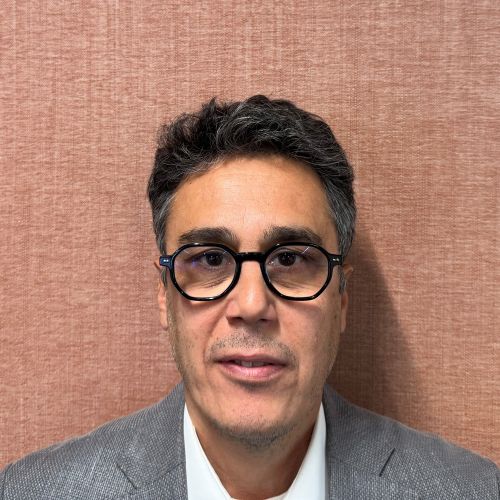
Akgun Dogan
Global Head of Sensitive Risk Management, Allianz Trade
Akgun is the Global Head of Sensitive Risk Management at Allianz Trade Group. With almost 30 years of senior management experience in Credit Insurance and Banking industries, Akgun leads a global network of empowered credit risk professionals, focusing on highly challenging credit risk management cases. They are specialized in market scanning and early identification, defining and implementing bespoke case handling and restructuring strategies, and coordination of this activity with all involved stakeholders.
Listen to this episode on:
PODCAST SERIES
Global Insurance Marketplace Insights Q3 2026