

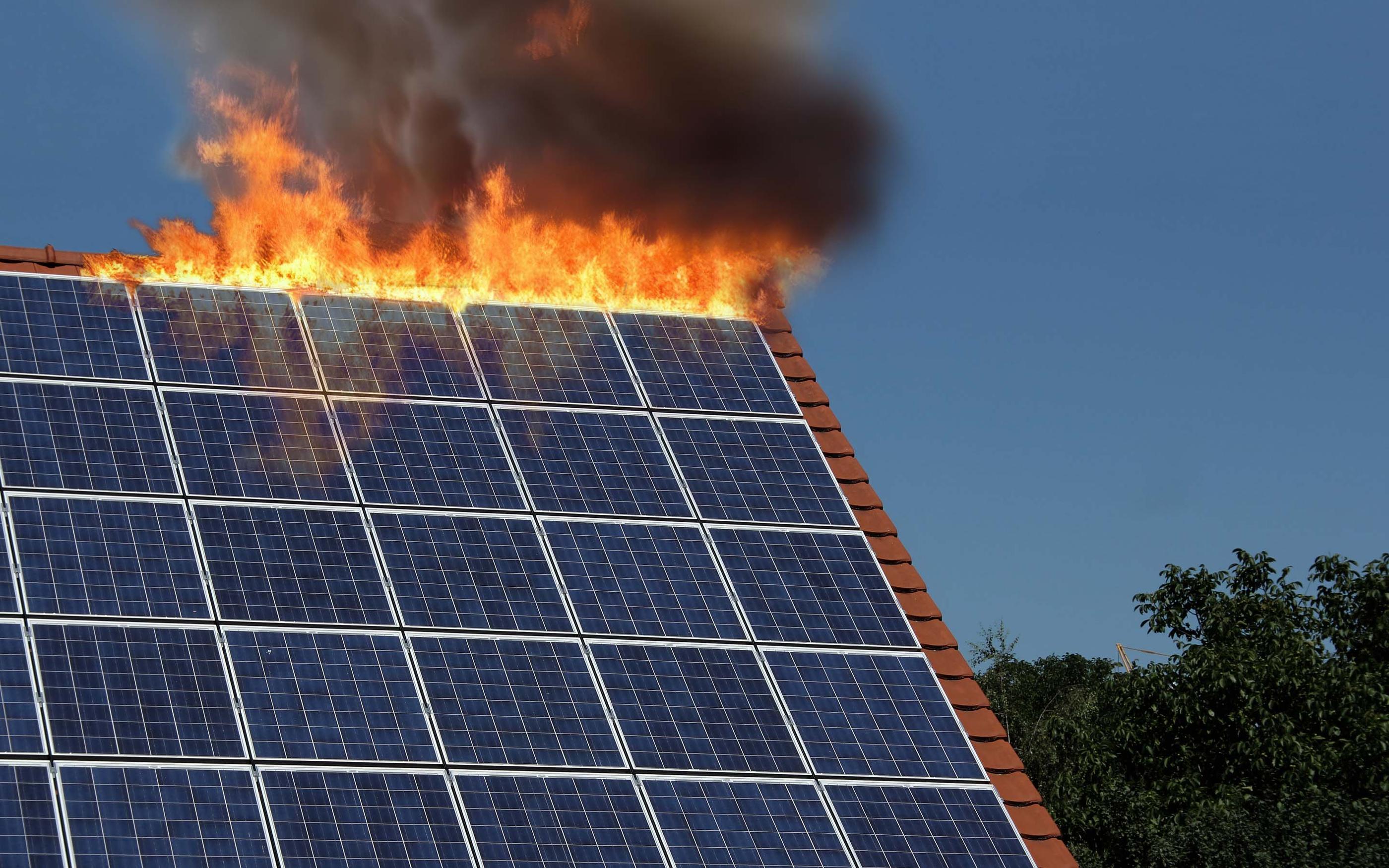
Recent litigation stemming from a Los Angeles warehouse fire has highlighted a growing risk management concern for property owners, developers, and insurers. While rooftop solar systems provide operational and sustainability benefits, they also introduce additional third-party liability exposures through a complex network of owners, operators, contractors, and manufacturers, all with varying interests and obligations in the project.
A rooftop solar loss can extend well beyond the value of the equipment installed on the roof. Damage to the building, tenant property, neighboring locations and business operations can create complex questions around responsibility, contractual recovery and the adequacy of available insurance.
Contractual dynamics in rooftop solar liability
A rooftop solar project can divide ownership of the building from ownership and control of the equipment installed on it. For instance, the building owner may lease the roof to a solar asset owner, while a tenant operates inside the building. An EPC contractor designs and installs the array, manufacturers supply its components, and a separate operations and maintenance (O&M) provider may service it for years afterward. If a fire damages the building, inventory, and neighboring property, claims may reach several of these parties while investigators are still working to establish where and how the fire began. Their agreements determine how defense costs and losses are allocated among them, but those agreements do not prevent an injured third party from bringing a claim. Three questions can help the parties assess that allocation: Who was responsible for the work and equipment at each stage, what recovery do the contracts provide after a loss, and does the insurance support those obligations?
Assign responsibility across the project life cycle
The rooftop lease or license, power purchase agreement, EPC contract, equipment purchase terms, and O&M agreement should be read together to establish who is responsible for the system at each stage. During construction, that means identifying who approves roof penetrations, verifies the roof can support the equipment, designs the electrical system, selects components, and tests the completed installation. The equipment manufacturer’s installation and maintenance instructions matter here as well: the EPC may be responsible for following them, while the solar owner needs a clear path to enforce applicable warranties if a component fails.
The handoff from construction to operations deserves particular attention. Commissioning results, open punchlist items, equipment specifications, warranty terms, and inspection records should reach the party that will maintain the system. The O&M agreement should then say who monitors alarms, inspects components, decides when corrective work is required, and has authority to shut down the array. The rooftop agreement should address access for that work, including emergencies, without leaving the building owner or tenant uncertain about whom to call. If the maintenance provider changes, records and open work orders should be handed over to the incoming provider.
These details can become consequential after a loss. Clear responsibilities and a documented handoff will not resolve every causation dispute, but they make it easier to determine who had the information, who had authority to act, and whether the required work was done.
Align indemnity with the actual exposure
The contracts should address what happens when a problem with the solar system causes harm beyond the equipment itself. An indemnity for bodily injury or third-party property damage may respond to a neighbor’s claim, but it may not address damage to the host’s own building. The tenant’s inventory and interruption of business raise another question: the tenant may be a third party to the EPC or O&M contract, yet the rooftop host may face the tenant’s claim under its lease. Each agreement should be reviewed against the parties and property that could actually be affected by a fire.
The scope of indemnity also needs to reflect each party’s role. The EPC may be responsible for its design and installation work, the O&M provider for its inspection and service work, and an equipment manufacturer for its products. Where several factors contributed to a loss, language tied to the extent each party caused the harm is generally clearer than an obligation that appears to place the entire loss on one contractor. The parties should also examine whether a duty to defend begins when a claim is alleged, before fault has been established, and how defense costs are handled if the claim involves more than one party.
The largest gap may be between the loss a party faces and the recovery its upstream contracts allow. A manufacturer’s warranty may offer to repair or replace a failed inverter while excluding damage to the building or lost income. An EPC agreement may contain a liability cap based on the contract price, even though the value of the warehouse and its contents is much greater. Limitations on consequential damages, warranty remedies, and exceptions to liability caps therefore deserve as much attention as the indemnity itself. The solar owner and EPC should confirm which obligations they can enforce against manufacturers and subcontractors; those rights should not be assumed to flow through the chain automatically.
Third party liability exposure
Following a major rooftop solar incident, litigation can quickly expand beyond the originating event as project stakeholders seek to allocate responsibility through contractual indemnity, additional insured provisions, and negligence allegations.
Key casualty exposures include:
- Bodily injury and property damage allegations arising from smoke, debris, environmental impacts, or emergency response activities.
- Environmental and pollution allegations arising from smoke migration or water runoff.
- Multi-party litigation and subrogation among project stakeholders.
- Contractual disputes regarding indemnity obligations and risk transfer.
- Test the insurance and recovery path
Insurance should be reviewed against the same chain of responsibilities established in the contracts. The building owner, tenant, and solar asset owner should know whose property policy covers the array, roof, building, tenant improvements, and inventory, and whether the policies account for loss of rent or interruption of operations. The EPC, O&M provider, and equipment manufacturers may each carry liability coverage, but their policies respond to different activities and periods. Installation work, damage discovered after completion, a product claim, and a loss during later maintenance should not be treated as though they present the same coverage question.
Additional insured requirements also need to be specific. The rooftop host may seek protection under the solar owner’s and contractors’ liability policies, but the scope of an endorsement depends on its wording and its connection to the named insured’s work. For the EPC, the review should include completed operations coverage after the project is handed over. The parties should also confirm how primary and excess policies apply, whether relevant exclusions or aggregates affect the available limits, and whether the O&M provider’s coverage extends to the work it actually performs.
Property insurance and contractual recovery must be considered together. After paying for building damage, an insurer may seek recovery from a party whose work or product caused the fire. A waiver of subrogation in the rooftop agreement could limit that route, while a separate indemnity may appear to preserve it. The parties should understand how those provisions interact, who bears deductibles or retentions, and whether the available liability limits are proportionate to the building, its contents and operations, and possible claims beyond the property line.
The recovery path also depends on evidence. Contracts should require prompt notice, preservation of failed components and monitoring data, access to commissioning and maintenance records, and cooperation in the investigation. Those obligations give the affected parties and insurers a better chance of distinguishing an equipment defect from installation work, later service, or an unrelated building condition before critical evidence is lost.
A rooftop solar loss can be far larger than the value of the equipment on the roof. The most useful time to test the allocation of that risk is before a claim, when the parties can still reconcile their contracts, confirm the insurance, and close gaps at each handoff.
The role of analytics
Liability exposure may increase with the number of panels, insured value, and age of the installation. Exposure based on location depends on whether an installation is in a high-density population area, with higher average surrounding property values and greater chance of being close to critical infrastructure. Performing a geographic exposure mapping based on the location data provided will determine the location-based risk based on installations being situated in urban, suburban, or rural areas.
The analysis would consist of running a Monte Carlo model to simulate potential liability loss outcomes many thousands of times. This model would be informed by past incident data and fine-tuned using the expertise of Willis’ Natural Resources team. Given the information outlined above relating to the exposure of the organization, this model would return a projected distribution of loss outcomes.
This distribution of outcomes could then be compared against the limits of candidate insurance programs to assess the level of protection provided against potential loss scenarios.
The analysis would also evaluate candidate insurance programs to determine which options lead to a lower cost of risk. While programs with lower limits may offer lower premiums, they can also result in higher expected retained losses and greater volatility. Programs with higher limits may carry higher premiums but can reduce expected retained loss and significantly decrease volatility, increasing the value derived from insurance coverage.
By considering both the projected loss distribution and the impact of different insurance program structures, the analysis would identify the option that provides the greatest value, achieves the lowest cost of risk, and offers the most appropriate protection against severe loss events.
Risk controls
While risk management controls can reduce potential liability exposures, they cannot eliminate them entirely. Organizations should focus on identifying potential claim severity and then the key factors that can help mitigate the risk. Willis sees the following three key areas for consideration:
- Contract clarity: Clearly define responsibilities among owners, EPC contractors, O&M providers, and other stakeholders throughout the project lifecycle.
- Risk transfer: Periodically verify that additional insured status, contractual liability coverage, waivers of subrogation, indemnification provisions, and other insurance requirements have been properly implemented within the actual policies. A post-loss discovery that insurance requirements were not maintained can significantly increase retained liability and lead to costly coverage disputes.
- Operational governance: Documented inspection, maintenance, and monitoring programs not only support safer operations but can provide critical evidence following a claim. Maintaining records of inspections, corrective actions, contractor work orders, and incident response activities can help demonstrate reasonable care and strengthen a defense against allegations of negligence.
As rooftop solar deployment continues to expand, so does the potential for complex third-party liability claims. Organizations that combine strong contractual controls, effective risk transfer, and data-driven analytics will be better positioned to manage casualty risk and mitigate claim severity following a major event.
Disclaimer
WTW hopes you found the general information provided here informative and helpful. The information contained herein is not intended to constitute legal or other professional advice and should not be relied upon in lieu of consultation with your own legal advisors. In the event you would like more information regarding your insurance coverage, please do not hesitate to reach out to us. In North America, WTW offers insurance products through licensed entities, including Willis Towers Watson Northeast, Inc. (in the United States) and Willis Canada Inc. (in Canada).
Related industries
Natural Resources
Driven by the energy transition, natural resources companies are adapting at pace. Access data-driven insights and sector expertise to prepare for a changing tomorrow.
Power and utilities
Future-ready power and utilities companies are harnessing sophisticated risk and insurance solutions to drive growth and profitability in a clean energy future.