

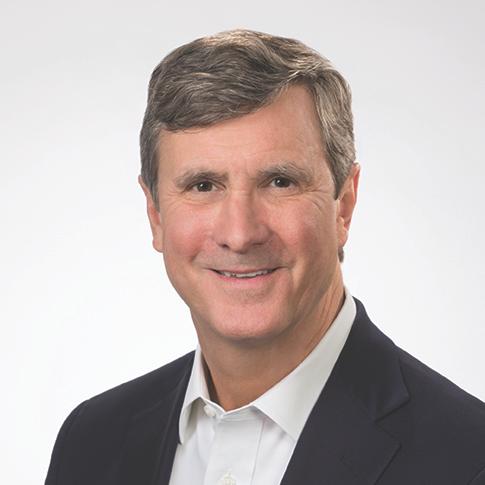
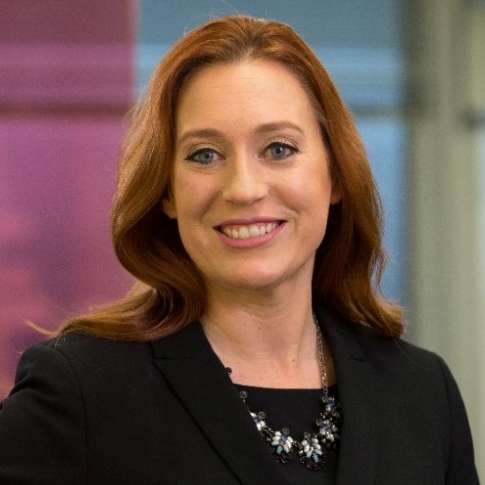
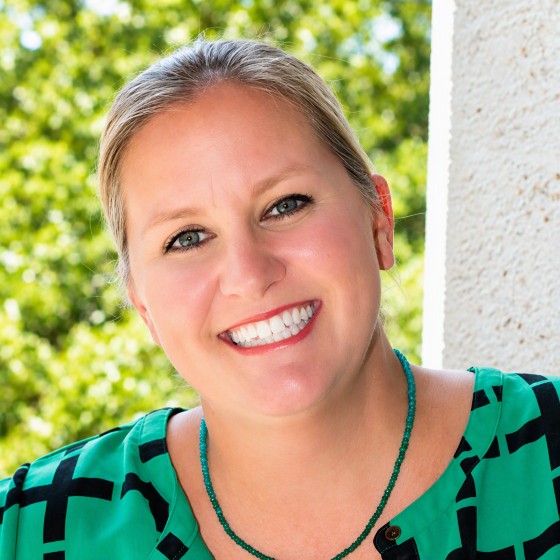
In this special contract negotiation episode of the Talk to Me About A&E podcast series, Dan Buelow, Managing Director of WTW A&E, is joined by three industry experts: Michele Kane, General Counsel (GC) for Hargrove Associates; Colleen Palmer, Risk Manager for Beazley; and Mark Blankenship, Director of Risk Management at WTW A&E. Together, they discuss contract provisions frequently negotiated by architects and engineers, sharing practical negotiation strategies, effective rebuttals and business-focused talking points that can help firms manage risk while supporting strong client relationships.
In Part One of the Good Rebuttals series, the panel explores Duty to Defend and Limitation of Liability provisions, along with the fundamentals of effective contract negotiation. Listeners will gain insights into distinguishing deal breakers from deal makers, determining when risk should influence client selection decisions and establishing a consistent framework for evaluating contract language and making informed business decisions.
Transcript for this episode
MARK BLANKENSHIP: In terms of the good rebuttal to the defend obligation, the ask for a defense is confusing the role and insurance coverage of a design professional with that of a contractor. The duty to defend is appropriate to a construction contractor who's providing general liability coverage with additional insured status for the client and other indemnities. Whereas we cannot add additional insurance to a professional liability policy. Because we can't name them, they don't get the defense.
SPEAKER: Welcome to Talk to Me About A&E, a podcast series focused on risk management for architects and engineers. Host Dan Buelow, managing director of Willis A&E, will engage experts across the A&E spectrum on topics ranging from contract details to the broadest trends impacting design professionals in North America.
DAN BUELOW: Hello, and welcome to Talk to Me About A&E. I'm Dan Buelow, managing director for Willis A&E, the center of excellence for WTW exclusively dedicated to providing insurance and risk management solutions to design professionals in North America. Well, we are back in our Willis A&E Podcast studio after a bit of a hiatus here. And today will be a rollout of a series of podcasts on a specific topic. And that's good rebuttals. And that's on negotiating contracts. So this will be our good rebuttals series.
This topic of good rebuttals was actually introduced to us by Michelle Kane, general counsel for Hargrove Associates, a large engineering firm out of Mobile, Alabama. Michelle is in fact on the steering committee of the Willis A&E legal round table working group. And a couple of years ago, Michelle proposed this topic of good rebuttals for our legal round table in Chicago.
And since that time, we've included this topic of good rebuttals in all of our quarterly legal round table working group meetings because it's that important of a topic. In fact, Michelle is with us here today and is going to be one of our special guests. And I'll be introducing everyone here shortly. And so in addition, we'll have Mark Blankenship and Colleen Palmer, who I'll be introducing.
But Mark Blankenship and I, with the input and help from our Willis A&E legal round table working group members, have been working on a digital contract guide for design professionals which we have titled good rebuttals for the design professional, which we hope to release in early 2027.
And this will be a Willis A&E contract guide for design professionals, where we have identified a long list of topics and contractual issues in which we will present the issues and the challenges for each of the topics such as liquidated damages or negotiating limitation liability. We will then provide some good rebuttals for each topic, offering some negotiating tips along with some possible contract language to consider.
And this is in fact a good time to note that we are not attorneys here at Willis A&E. In fact, we are brokers. And that includes Mark Blankenship and myself. And as brokers, as insurance agents, we cannot provide legal advice. So our focus is on insurability. And we always recommend that you seek legal counsel when reviewing professional agreements and anything that might be concerning or unfamiliar when it comes to contracts before you sign the dotted line.
So successful contract negotiators understand that the key role is not just identifying problematic language. The key is often offering thoughtful, reasonable, and in defensible alternatives. And that's what we're going to be talking about today. So let me introduce our special guests. I'll begin with Mark Blankenship, who works with me on this topic and has been on a number of our programs here. And he's the director of risk management for Willis A&E. Mark, how you doing?
MARK BLANKENSHIP: Doing well, Dan. Thanks very much.
DAN BUELOW: Do you want to give us a quick overview of your background, Mark?
MARK BLANKENSHIP: Sure. Well, it's been a couple of decades specializing in architects and engineers professional liability. First as a claims supervisor for a little company called Design Professionals Insurance Company. Then as a broker for predecessors to Willis. Then as underwriting manager for Western US for this little mom and pop shop called Liberty Mutual Insurance Company. And now I'm back with my people here at Willis A&E. Dan, claims underwriting brokerage, that completes my nerd trifecta.
DAN BUELOW: It does. And so Mark and I, again, been working together for 20-plus years and actually met at DPIC while I was on the underwriting side. And so Mark brings an excellent perspective and will review a lot of contracts for us and our clients here at Willis A&E. All right. So Colleen Palmer, risk manager with Beazley. How are you doing, Colleen?
COLLEEN PALMER: Very well. Thank you for having me today.
DAN BUELOW: Great to have you back. Colleen is a frequent flyer on our programs here at Willis A&E. So many of you have heard Colleen and certainly has been a big part of Beazley. Colleen, why don't you tell us a little bit about yourself?
COLLEEN PALMER: Sure. I have been with Beazley since 2007. So coming up on 19 years very soon. I have been doing risk management my entire time at Beazley and prior to coming here, I was practicing attorney in Boston and also in Florida.
DAN BUELOW: So Colleen brings also a lot of perspective and expertise and looks at a lot of agreements for a lot of different firms doing business throughout North America. So we're great. It's great to have Colleen with us here today. And then also, as I mentioned, is Michelle Kane, general counsel for Hargrove Associates and the mother of all good rebuttals, since she kind of coined this whole thing for us. Michelle, how are you doing?
MICHELLE KANE: Yes, I'm general counsel for Hargrove. And I've been a lawyer for over 20 years. 14 with Hargrove. I think the most fun things about me though are not that I'm general counsel for Hargrove, but that I started practicing law in Alaska. My husband and I owned two breweries, and I'm a rabid Alabama football fan.
DAN BUELOW: There you go. All right. So a lot of great credentials here. And also Michelle, we're lucky to have Michelle with us because she brings the perspective of the practitioner there, which I think is so important. So we're going to talk about a number of topics here, and I'm going to list them off that we're going to start with in this order. Duty to defend, limitation of liability, consequential damages, dispute resolution, re-work, third party beneficiaries, time is of the essence, and a little bit on AI.
And so we're going to begin with duty to defend. And so as I was saying earlier is that the format here is I'm going to talk about each of the topics a little bit and what the issue, or problem, or challenge is and then ask the group here to chime in and give us some thoughts on possible good rebuttals and any other issues and discussions around these specific topics that we want to address.
So let's begin, again, with one of the more common and most problematic provisions we encounter. And that is the duty to defend. Many client-drafted agreements include an indemnity provision requiring the design professional to defend the client against claims, often before faults has even been determined and prior to a finding of negligence against the design firm.
The problem is that this is uninsurable because it would be a liability assumed under contract, that in the absence of that contract, the design professional would not be liable for and it is simply above the standard of care and unreasonable. Now with that said, it's almost in every indemnity agreement that we see often. And so I'm going to start actually with Colleen here. And can you talk to us a little bit, Colleen, around this concept of what the contractual liability exclusion is and why is the duty to indemnify different from a duty to defend?
COLLEEN PALMER: Certainly. And as you rightly say, this is an issue that is so common with contracts that we review. I would say-- I mean, over 90% of the contracts I see probably have an express duty to defend. So let's start first with the exclusion in professional liability insurance policies, which is this duty assumed by contract.
Essentially what that means is if you contractually take on an obligation or responsibility that you would not ordinarily have under applicable law, that is going to be excluded by your professional liability insurance policy. So the duty to defend is front and center as an example of what would fall under that exclusion.
And it's not just a Beazley thing. This is standard across professional liability insurance. And the issue with the duty to defend is that it is broader than the duty to indemnify. And it's triggered by allegations of a design professionals fault, as opposed to adjudication or proof that the design professional was actually negligent.
And so because this is up front duty that the design professional would not ordinarily have under applicable law, that's why it falls under that contractual liability exclusion. So this is always-- when I talk about indemnity, I always talk about the three prongs of indemnity. And this is one of the three, this duty to defend. So I could go on and on, but I'll let you share the wealth with the other presenters.
DAN BUELOW: Right. What are the other two prongs before I let you go on this?
COLLEEN PALMER: The other two prongs. So the first prong is who are the indemnities? Meaning who are the parties that the design professional is being asked to indemnify.
DAN BUELOW: Which we'll touch on that, right, third party beneficiary, yeah?
COLLEEN PALMER: Yeah. Prong two, of course, is the duty to defend. And prong three is to ensure that the obligation is appropriately negligence-based. And by that I mean that the obligation is limited to the extent damages are caused by the professionals negligent performance of services.
DAN BUELOW: Great points. Great points. Michelle, as a practitioner, do you run into this and how do you address this with your clients?
MICHELLE KANE: Well, I don't know that my answer is the appropriate one because I do run into it and I've never successfully-- from a Fortune 50 company, I would say gotten the defend out. I have occasionally been able to get it bifurcated, where we pull out that the duty to defend is not an obligation and indemnity when it's based on a professional liability claim. So occasionally, I can get it bifurcated out. But I would say that our clients, that's the first go to if they push back.
DAN BUELOW: Right. And that's a good point. I think we need to recognize that as a design professional, you're going to be dealing with a wide range of clients if you look at all the clients that we work with, all the design professional firms. And you also have to-- also we know this whole go no go consideration is an important one. And it's not a science as much as an art.
So in the case, Michelle, I would say that when you consider go, no go, you have a very specific client niche, as you said. The Fortune 50 or what have you and certain clients. They may not be willing to negotiate some of these agreements, such as-- also public clients, we run into that.
So the design professional is left with understanding that if it's going to be a go, that they're left to assume and control the rest of that risk. Your project team capabilities, your experience with that client, and so forth can make-- I understand a contract that's less than ideal be a go because you're able to consume and control the rest of that.
MICHELLE KANE: Correct. And I do think that-- I'll say practically for us, it hasn't ever come into play in terms of claim costs. Have clients ever asked us to reimburse them? Yes. But they haven't ever asked us to actually defend them. So I will say that practically it hasn't become an issue, even if it has been in the contract.
DAN BUELOW: That's also a great point, is that we talk about this topic a lot and we don't know sometimes clients may not recognize or act on it where the defend obligation has not been struck from the agreement. However, we have seen, unfortunately, situations where the client does know that they have this provision in there, Mark, and then they turn around and they say, OK, the way this is worded, I'm basically hiring an attorney of my choice and I'm going to sue you and you're going to pay for that, the defense there, the cost that I'm going to incur.
And a lot of this came out of the contractor GL Policy with attorneys that are well versed in that, where you can be an additional insured and a reasonable offer, a reasonable defense on that obligation. So Mark, you talk to us a little more about that. And Michelle mentioned the bifurcation. Give us a little more information on that.
MARK BLANKENSHIP: Right. Well, I think in terms of the good rebuttal to the defend obligation, the ask for a defense is confusing the role and insurance coverage of a design professional with that of a contractor. The duty to defend is appropriate to a construction contractor who's providing general liability coverage with additional insured status for the client and other indemnities. Whereas we cannot add additional insurance to a professional liability policy. And because we can't name them, they don't get the defense.
The reason the defense obligation is unfair or unreasonable is because it poses a financial burden without any requirement of a proof of fault. And so this is really the role of an insurance company. And insurance companies charge a substantial premium to issue these policies that back that defense obligation. And I think that most design professionals are not pricing in a risk premium into their fee to cover that defend obligation.
So it's really designed for construction contractors. It's not fair because it imposes an uninsured obligation onto the firm, whether or not they've done anything wrong. And you don't get your money back at the end of the day, even if you're determined to be not guilty or not negligent. So that part's unfair.
So we think the solution is two parts. It's two paths. One is to agree to indemnify or reimburse the client for their legal fees to the extent those fees were caused because of the negligence of the design professional. Maybe there were errors and omissions in our documents that led to the contractor extra claim. The owner incurred fees to defend that claim, ultimately settled. Well, now the owner has a compensable element of damages that we can agree to cover and pay.
And then the second part of this is the bifurcated indemnity, like Michelle suggested, where we're basically we have a professional liability indemnity that covers damages to the extent caused by the negligence of the professional, including reasonable attorney's fees. And then there's a separate general liability indemnity, which could include a duty to defend the additional insureds, I would say, to the extent covered by additional insured status. And then that becomes a covered obligation for our folks.
DAN BUELOW: Very good points. And again, the way this is often written is you're going to provide a defense as a design professional for any and all claims. But we want to revise that, to your first point there, saying we will indemnify the client for all damages, including reasonable attorney fees, to the extent caused by the negligence of the design professional.
So you would be rewording, revising that language and/or go that bifurcation route if you can would be a good rebuttal. And I will also add that there is no insurance for this. Sometimes we'll be asked, well, can we just buy a policy for this? And there's one carrier that we know of at least that will offer a coverage for the defend obligation. But we will not represent it because we've read the policy. And in our view, it would rarely, if ever, pay out. And so that would be our position on that. All right. I'm going to go on to the next one unless anybody has anything to add to this topic defend obligation.
COLLEEN PALMER: Dan, did we want to talk at all about California?
DAN BUELOW: Sure. Talk to us about California.
COLLEEN PALMER: [CHUCKLES] Well, I think that we would be remiss if we didn't just plant the seed that it's very important to-- not only for this issue, but all issues, but particularly with the duty to defend issue to understand the jurisdiction that's governing the professional services agreement, because there are certain states-- and I'm thinking primarily the one that screams to attention here is California, where-- California statutes, if the indemnity provision is even silent on the duty to defend, meaning you don't see the word defend, you don't see the word protect.
In California, that duty to defend is implied by statute. And there's lots of case law you can read. It came out basically in 2008 time frame. It's interesting to read. But how will we address this in contracts is that, of course, we delete express duty to defend words. But we also add disclaimer language to the contract saying that the design professional, under no circumstances for professional liability, is assuming an upfront duty to defend. So we want to make sure from a professional liability standpoint that we have that disclaimer in jurisdictions where there is case law or statutory language where a duty to defend is implied.
MARK BLANKENSHIP: Right. And other states that have that implied duty to defend, it would include Montana, Oklahoma, and South Dakota in addition to California.
DAN BUELOW: Is it a good practice to add that disclaimer on all of your contracts?
MARK BLANKENSHIP: I think it's an excellent practice.
COLLEEN PALMER: Yeah, I do too. I mean, I don't add it as an automatic. And this is where the art of contract review and negotiation comes into place. I look at what's the overall tone of the contract. And if there is this leaning toward the client with a lot of onerous provisions, including yucky, ugly indemnities, then I will be more prone to add that, even if it's not a state where the duty to defend is implied. So yes. In an ideal world, of course, we'd love that disclaimer. But I don't add it always.
DAN BUELOW: I could see why add anything if it's not necessary. The concern is it's evolving, isn't it? It's like--
COLLEEN PALMER: Yeah.
DAN BUELOW: And I think that's important, again, as I mentioned earlier, to have and seek legal advice from attorneys that understand the nuances of the law in that state you're doing business because practice acts, statutes, and so forth, economic loss doctrine, will vary state to state, as well as anti-indemnity statutes. You might have an anti-indemnity statute but I'd be careful relying on that statute, right?
COLLEEN PALMER: Absolutely.
DAN BUELOW: I would still have a practice in place when it comes to the good practices we were discussing here. Thank you for talking about California. Excellent point there. All right. Next up is limitation of liability. So let's talk about negotiating a limitation of liability clause. Limitation Of Liability, LOL, clauses remain one of the most important risk management protections available to architects and engineers.
Increasingly, however, clients are resisting the LOL provisions altogether or seeking liability caps so large that they provide little meaningful protection to the design professional. And without an enforceable LOL, the design professional faces potentially unlimited liability on every project regardless of the fee earned. So this exposure is particularly problematic because design professionals really represent a small percentage of the total project costs. 3% to 8%, for example.
And in the absence of this clause, an LOL clause, the firm may be exposed again to damages approaching the full project value, creating a significant imbalance. So it's really an appeal to fairness. So professional liability insurance does not eliminate this concern when you don't have an LOL. Policy limits are generally shared across all projects and claims during the policy period.
And a single catastrophic claim on a project without an effective LOL can consume a substantial proportion of the available limits. So it's a big issue here on LOL. And Michelle, I'm going to start with you. And what is your experience and how do you address this issue of LOL with your clients and any good rebuttals that you might have?
MICHELLE KANE: Well, I think you highlighted some of the rebuttals that we should have. But what I would say is-- it's a tool for sure to-- you can accept a lot of more risk in the contract if your limitation of liability is something tied to a percentage of your purchase order or your actual purchase order amount. But I would say that it is a go, no go for me. It is a no go if we do not have a limitation of liability in our contract.
And so we would not accept a contract without a limitation of liability at this point. It's very serious to me. And depending on the scope and the size of the project, it depends on the size of the limitation of liability and the risk and the client history and the contract as a whole. There's a lot of things that go into play.
But the big rebuttal that I give them, you've already given, is that we are a very small percentage of the work on your project. And for us to have unlimited liability where you have pieces of machinery that are sometimes 100 times the amount, the size of our purchase order, and you're ultimately the end user, it's just not fair. And our margins, we could not price it high enough for us to be able to accept that risk. Our margins are just too low for that. That's my biggest rebuttal, I would say.
DAN BUELOW: And do you try to take a multiple of your fee to set that or what is your practice?
MICHELLE KANE: Well, it just depends. If our purchase order is below five million, then I would say it is generally up to the purchase order amount.
DAN BUELOW: OK.
MICHELLE KANE: If it is-- yes, the fee, purchase order amount, the fee. But if it is above five million, then it would be a percentage. Because at that point, there's probably some procurement going on or the engineering alone is probably not going to be much more than the five million. So then it becomes a percentage, because we're not going to accept a limitation of liability that's higher than the insurance required. Or God forbid, our policy limits.
DAN BUELOW: You're right. And that would be your fallback, would be-- and maybe it wouldn't be for your fallback for all these projects, I'm saying. But a firm may say, well, we would at the very least want to limit to our available proceeds of our insurance that's available at the time of settlement so that you're not hanging out there with any assets that you might have in your business. But to your point, when you have significant limits out there and projects that are smaller, you don't want to offer a over and above a certain dollar amount or a limit. Yeah.
MICHELLE KANE: Right. Right.
DAN BUELOW: All right. Great points. Mark, anything you would add to that, how you might articulate a good rebuttal as an appeal to fairness?
MARK BLANKENSHIP: Well, it is fundamentally an appeal to fairness, but I want to give the advanced class here in limitation of liability based on an experience that a client had a number of years ago. They had a limitation of liability to $50,000 in their contract. There were some change orders and issues on a project that amounted to over 300,000.
So the client brought a claim and then we confronted them with the limitation of liability. And the client recognized that this is valid and enforceable in Illinois. And so they didn't sue us. But they threw down and said, OK, well, we'll accept your limitation of to $50,000. But if you do that, if you enforce that on us, we're not going to do business with you again.
So that created some concern. And the client went to the insurance company and said, well, we think we want to waive that limitation for this client because they're a good client. And it's only 300,000 or so. And the insurance company said, no, you've got a valid and enforceable limitation. And thank you for setting it at your deductible amount, by the way. So we're off the hook completely.
So the advanced class approach then is that new first time clients get your lowest level limitation. Be it 50,000 or fee or whatever it might be. But for your good, repeat clients, you want to set that number at something that represents the value of the business relationship. Because if the LOL is tested, you will have to make that calculation. And so for instance, for good repeat clients, this engineer now uses 250,000 as their limitation for good clients that they're not just going to get completely adverse to over a contractual issue.
DAN BUELOW: Excellent points, Mark. And I think you also will get into this a little bit too on this, but consistency of docs. If you're the prime and working with the sub and not allowing them to get that limitation liability if you don't have one, there's another concern there, isn't it?
MARK BLANKENSHIP: Absolutely. And that's why we don't hire geotechs for most consultants because geotechs are really very good at holding out for limitation of liability. They were about to be sued into extinction back in the 70s and 80s. And so they just decided that we're not going to do work without that limitation of liability. And now I see owners asking engineers and architects to hold the geotech as a consideration, as a purely administrative favor, if you will.
But I suspect there's a darker motive, which is that owners have realized that geotech are going to insist on limitation of liability. So they're trying to get the benefit of the insurance coverage of the prime consultant over the geotech problems, which if you take on a geotech as a subconsultant, you've got vicarious liability for them. No matter what their limitation says.
DAN BUELOW: Yeah. There's a whole other conversation around that too, the geotechnical general. But great point there. Colleen, again, states will vary. And any thoughts or advice when it comes to drafting this language to ensure it's enforceable?
COLLEEN PALMER: Yeah. All good points. I love everything that Michelle and Mark said. Limitations of liability are provisions that we do always recommend professionals negotiate in their contract. And to have it be a go, no go, that is ultimately a business decision. And I think that if a firm has a strong position, then clients just know.
If we want to work with Michelle's firm, we're going to have to agree to this LOL. And that's great because you're essentially managing those expectations with clients that, hey, if they want us to perform services, we do a really nice job. But we are going to insist on this type of provision. So as for the nuts and bolts of it, it's important to the jurisdiction. Limitations of liability reliability are generally enforceable, but there are nuances across the country.
And you want the provision to be ultimately reasonable. You don't want a court to determine that your LOL provision is essentially an exculpatory provision, where you are taking zero responsibility for anything you're doing. So to say, oh, our limitation liability is $1 or something like that, it's probably not going to be enforceable.
The last thing I would say is that-- well, two things. Make sure that your provision is not hidden in the contract. You want this to be very easily found provision. You don't want a court to say, hey, you hid this on the footnote of page 36 out of 50 of this contract. You want it to be a prominent provision.
And then the last point I will make is when you're drafting these provisions or you're looking at a client proposed provision, read it carefully, because you want to make sure that the language is actually going to provide you with significant protection. And what I mean by that is sometimes you'll have a beautifully drafted limitation liability provision. And it'll be nice and broad. It'll cover all causes of action. It'll include you and your employees and your subs, et cetera. And it'll be limited to an amount that is acceptable to you.
But then the very next sentence will have language saying that the foregoing limitation of liability does not apply to your negligence and/or your indemnity obligations. Well, you've essentially rendered that protection meaningless at that point. So be aware of carve-outs to the protection. And that goes for limitation of liability provisions like we've been talking about, but also other kind of provisions that are protective. And the one I'm thinking of immediately is mutual waiver of consequential damages provisions.
MARK BLANKENSHIP: And to Colleen's point, I think with the limitation of liability, a well-drafted clause will say that this limitation applies to claims based on negligence, breach of contract, breach of warranty, strict liability, or any other theory. Because if I'm trying to attack your limitation of liability, my first approach is going to be, ey, nice that you've limited your liability and contract. Too bad for you. My contract's not. My claim isn't based on contract. It's based on tort. And then to Colleen's point about being visible is Missouri, for instance, has very specific rules about limitation of liability. It has to be in the largest font used anywhere in the contract. Therefore standing out.
COLLEEN PALMER: Florida also has very specific requirements for limiting liability and contracts.
DAN BUELOW: Again, get some local attorney advice on some of this. Great points on this. Well, this has been a great discussion on some very important contract rebuttal topics. I want to thank my special guests, Michelle Kane, general counsel for Hargrove Associates, Colleen Palmer, risk manager for Beazley, and Mark Blankenship, director of risk management for Willis A&E for sharing their insights and expertise.
Today's discussion was part one of a three-part series exploring some of the most important contract negotiation and risk management issues facing design professionals. Be sure to join us for parts two and three, where we'll be discussing consequential damages, dispute resolution, re-work, third party beneficiaries, time is of the essence, and artificial intelligence. Thank you for listening to another episode of Talk to Me About A&E. I'm Dan Buelow, and I will talk to you soon.
SPEAKER: Thank you for joining us for this WTW podcast, featuring the latest thinking on the intersection of people, capital, and risk. For more information on Willis A&E and our educational programs, visit willisae.com. WTW hopes you found the general information provided in this podcast informative and helpful.
The information contained herein is not intended to constitute legal or other professional advice and should not be relied upon in lieu of consultation with your own legal advisors. In the event you would like more information regarding your insurance coverage, please do not hesitate to reach out to us. In North America, WTW offers insurance products through licensed entities, including Willis Towers Watson Northeast Incorporated in the United States and Willis Canada Incorporated in Canada.
Listen to this episode
Podcast hosts

Podcast guests
Learn more about this podcast series:
Disclaimer
This podcast may contain information or materials created or provided by third parties over whom Willis Towers Watson has no control or responsibility. These third-party information or materials are not under Willis Towers Watson’s control, and Willis Towers Watson is not responsible for the accuracy, copyright compliance, legality, or any other aspect of such third-party information or materials. The inclusion of such third-party information or materials does not imply endorsement of any third parties by Willis Towers Watson or any association of Willis Towers Watson with any third parties.
WTW hopes you found the general information provided here informative and helpful. The information contained herein is not intended to constitute legal or other professional advice and should not be relied upon in lieu of consultation with your own legal advisors. In the event you would like more information regarding your insurance coverage, please do not hesitate to reach out to us. In North America, WTW offers insurance products through licensed entities, including Willis Towers Watson Northeast, Inc. (in the United States) and Willis Canada Inc. (in Canada).