


Are you ready for the new Valuation Manual 22 (VM-22) reserving framework? For life insurers participating in the U.S. pension risk transfer (PRT) market, the implications stand to be substantial. Part of a broader National Association of Insurance Commissioners (NAIC) effort to move away from prescriptive, one-size-fits-all formulas, VM-22 outlines a more principles-based, market-aligned approach. With the introduction of a dynamic framework for non-variable annuity reserving (which parallels many aspects of VM-20 and VM-21), VM-22 represents a fundamental modernization of how PRT liabilities will be valued and managed.
PRT liabilities
Before examining how VM-22 will reshape reserving for PRT business, it is important to understand the structure of the underlying liabilities. Defined benefit plans typically include two distinct groups:
- Retirees (in-pays): Already receiving monthly pension payments
- Deferred lives: Active employees and terminated employes who have earned a benefit but are not yet in payment (terminated vesteds)
When a sponsor executes a PRT transaction, insurers assume these obligations through the sale of a group annuity contract. The transaction may include just retirees or a mix of retirees and deferred lives.
Business risks include a mix of longevity, investment and behavioral risks — all of which will drive reserve levels and volatility under VM-22, as it directly targets how these long-duration, option-rich liabilities must be modeled, valued and capitalized going forward.
Current framework
While PRT is not explicitly named within NAIC’s current reserve regulations, group annuities are; therefore, the liabilities within a PRT transaction fall squarely under existing annuity U.S. statutory reserving rules. Specifically, insurers reserve according to the principles of standard valuation law (SVL), VM-A and VM-C (NAIC model laws and actuarial guidelines, respectively). While some methods and assumptions are clearly defined, others are up for interpretation.
For retirees already receiving payments, the application of the current reserving framework is straightforward and highly prescriptive. This is because in-pay liabilities are fundamentally payout annuities. Accordingly, reserves are calculated as the present value of future benefit payments. Model rule 821 prescribes using the 1994 Group Annuity Reserving (GAR94) table and prescribed maximum statutory valuation interest rates. Rates are published daily for jumbo contracts (defined as initial premiums of $250 million or above) and quarterly for non-jumbo (less than $250 million) and vary by participant initial age (at contract issue) and a reference period. Rates are lower (or more conservative) for jumbo deals and younger ages/longer durations.
Deferred lives present more of a challenge because they can choose both when to retire and the form their pension benefit will take. As such, additional considerations are required when calculating reserves — and industry interpretations vary. While some argue that a greatest present value approach based on the commissioners’ annuity reserve valuation method (CARVM) is appropriate, many are using a principles-based reserving (PBR) approach, with some also adding a provision for adverse deviation (PAD). Interestingly, all point to model rule 820 as support for their approach.
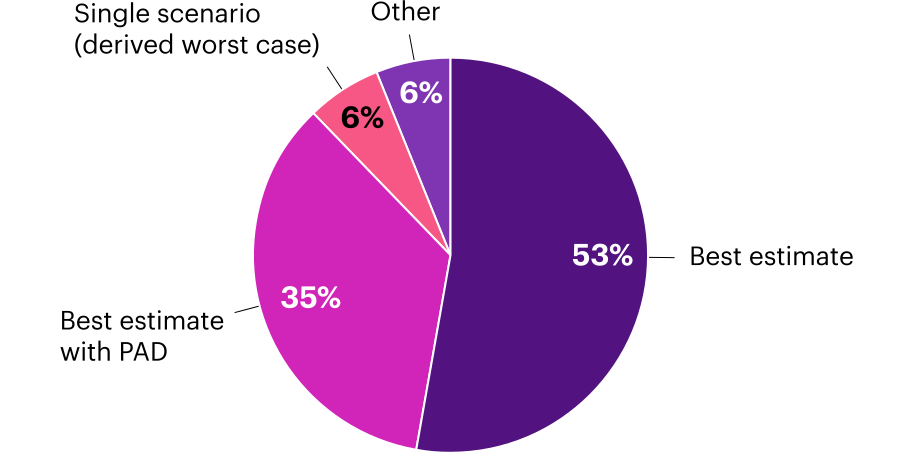
Figure 1. 2024 WTW U.S. PRT Pricing Survey: Deferred lives reserve approaches
In any case, the current formulaic regime leaves little room for company-specific experience, asset strategy or risk management practices, meaning the economic nature of long-duration PRT cash flows is not fully reflected.
New VM-22 regulations
The new VM-22 (effective for contracts issued on or after January 1, 2026, with an optional transition period through January 1, 2029) applies to all non-variable annuities and explicitly includes PRT. Under VM-22, reserves will be determined using one of the following methods:
- Current methods for contracts satisfying the stochastic exclusion test (SET)
- Deterministic reserves (DR) for contracts satisfying the single scenario test (SST)
- Stochastic reserves (SR) for all other contracts, calculated as CTE 70 of the greatest present value of accumulated deficiencies (GPVAD) across prescribed scenarios
Key changes from current methods include:
- Incorporates assets into the reserve calculation: Reserves are based on projected liability cash flows and supporting asset portfolios, replacing the purely liability-focused approach used today
- Introduces company-specific assumptions: Mortality, expenses and policyholder behavior reflect company experience with margins rather than fixed industry tables
- Changes the discount rate: Discounting uses projected net asset earned rates (NAER), rather than prescribed valuation rates, making the reserve more aligned economically
- Uses prescribed scenarios: NAIC's recently adopted Generator of Economic Scenarios (GOES) real-world scenarios are used
Additional detail is available in WTW’s article Navigating VM-22: Implications for actuarial practice, reserves and pricing.
WTW analysis: Impact on PRT
To evaluate the impact of VM-22 on PRT reserves, WTW performed an analysis using WTW’s RiskAgility FM actuarial software platform, leveraging its full VM-22 stochastic modeling capabilities. The analysis assumed the SR methodology and focused on a sample block of in-pay lives.
A waterfall analysis was performed to isolate the contribution of each major VM-22 component. Starting from the current statutory reserve, calculated using 1994 GAM mortality and prescribed statutory valuation interest rates, we sequentially updated the following elements:
- Step 1: Scenarios, assets and discount rates — incorporating supporting assets, running multiple economic scenarios and replacing prescribed statutory valuation rates with the NAER
- Step 2: Mortality assumptions — replacing 1994 GAM with company- or deal-specific mortality assumptions
Because the socioeconomic demographic profile of a pensioner population can materially influence mortality assumptions, the impact of step 2 is highly dependent on population characteristics. Accordingly, testing was performed on two representative demographic profiles:
- White-collar, representing a lower-mortality population
- Blue-collar, representing a higher-mortality population
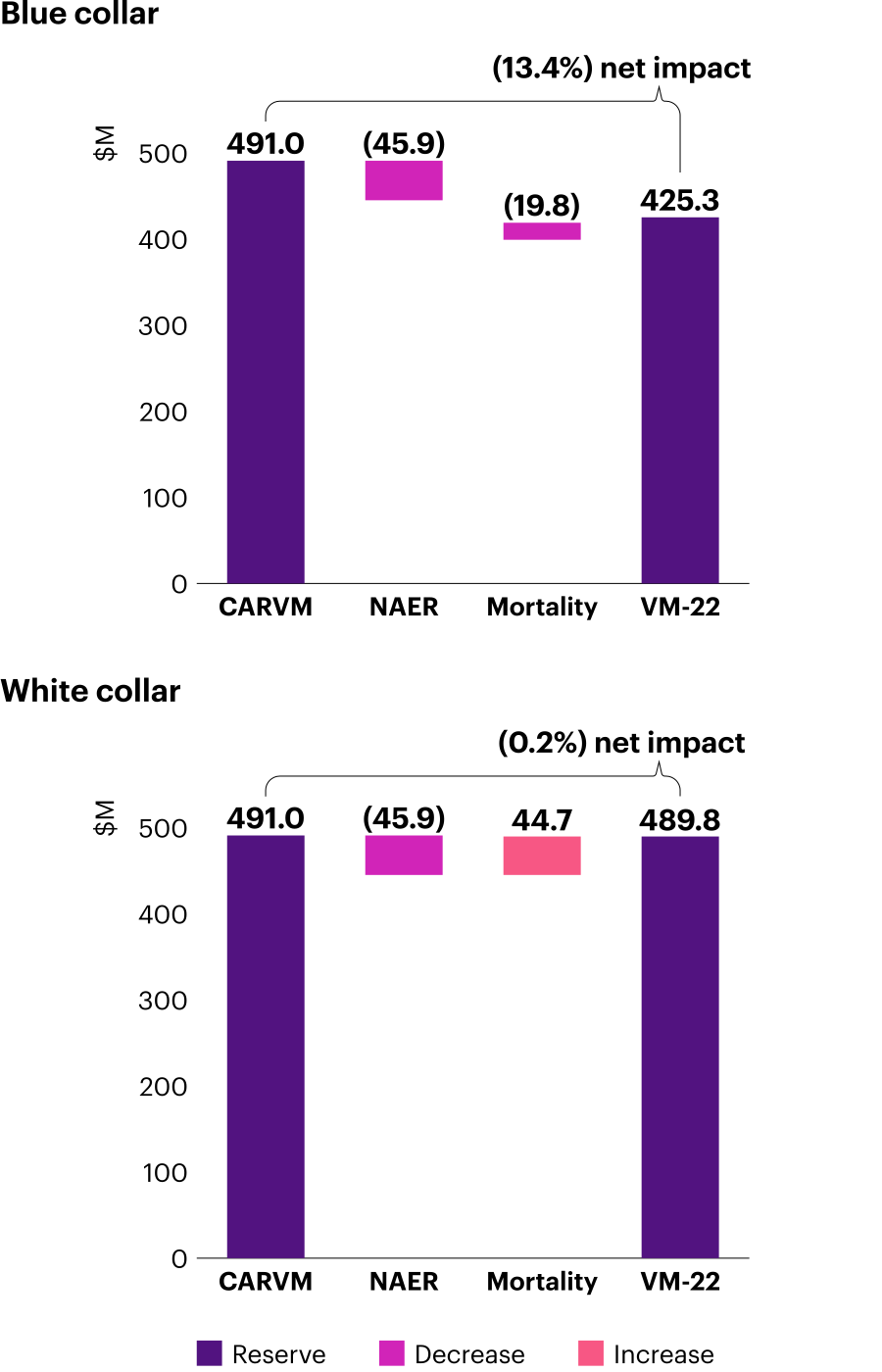
Figure 2. Sample PRT in-pay population reserve results as of December 31, 2024
For the analysis, step 1 changes act to reduce reserves because for the GOES scenarios as of December 31, 2024, the NAER rates produced by the scenarios that produce the 30% greatest GPVADs are overall greater than the prescribed discount rates. However, the impact on an actual PRT block will depend on a number of items, including:
- Investment strategy
- Asset liability management (ALM) effectiveness
- Scenario rates
Specifically, depending on the specific liability and asset profiles, mismatches in ALM can have significant impacts when interest rates change.
In step 2, replacing GAR94 with best estimate mortality produces results that vary substantially by demographic profile. This demonstrates that the demographic composition of a PRT transaction coupled with VM-22’s use of company-specific mortality will drive meaningful variation across PRT deals and insurers.
Constrained assets
Current VM-22 investment guardrails dictate that the reserve be the higher of that produced by the modeled company investment strategy and that produced by substituting an alternative investment strategy that prescribes the credit quality blend.
In the PRT results analyzed, the incremental reserve impact from the guardrail is modest (less than 1.0%), although the magnitude will depend on the insurer’s underlying investment strategy. Insurers pursuing materially more aggressive or higher-yielding strategies relative to the prescribed guardrail would expect a more pronounced reserve impact.
Regulators are currently considering an Amendment Proposal Form (APF) that would revise the reinvestment guardrail framework for VM-22 business more broadly, while separate discussions have considered further relaxing the guardrail for PRT business specifically. The rationale cited in these discussions includes the characteristics of PRT liabilities and the regulatory environment in which they are written. PRT liabilities are typically supported by highly matched, long-duration investment-grade asset portfolios. In addition, insurers participating in PRT transactions are subject to Department of Labor fiduciary standards in the selection process in addition to solvency oversight through statutory asset adequacy testing and risk-based capital requirements.
Figure 3. VM-22 investment guardrails comparison
| Current | APF 2025-16 | PRT proposal | |
|---|---|---|---|
| Products included | All | All | PRT |
| Credit rating distribution | |||
Treasury |
5% | 5% | 0% |
PBR credit rating 3 (Aa2/AA) |
15% | 15% | 0% |
PBR credit rating 6 (A2/A) |
80% | 40% | 0% |
PBR credit rating 9 (Baa2/BBB) |
0% | 40% | 100% |
| Additional spread | 0.0% | 0.0% | 0.5% |
If adopted, this change could materially reduce or eliminate the guardrail impact for PRT writers, potentially allowing a greater portion of the economic spread from the supporting asset portfolio to be reflected in the reserve calculation.
Using the sample PRT in-pay population and assuming a 50%/50% mix of white/blue collar, reserve results as of December 31, 2024, were tested under the APF 2025-16 and PRT proposal guardrails. While the impact of the APF 2025-16 guardrail was minimal, the PRT proposal decreased reserves by approximately 2%.
Implications for insurers
In practice, PRT blocks without a lump sum option may pass both the SST and the SET, which would allow them to continue reserving under the existing regulations. However, many insurers may still consider it advantageous to elect the SR for a few reasons:
- Use of prudent estimate mortality is expected to be advantageous over existing SVL mortality (GAR94) for many PRT blocks; 80% of WTW’s PRT Pricing Survey respondents believe GAR94 to be a conservative estimate of mortality
- Assets are generally required to be maintained in separate accounts for PRT blocks, allowing for high levels of asset and liability cash flow matching, which may result in lower reserve levels
- Stochastic reserves may be required if the insurer hopes to aggregate with other blocks across reserve categories, although aggregation may not be feasible given the separate account treatment
Insurers should bear in mind several additional considerations:
- Pension plans offering the option of lump sum payments may require special attention. The interest rates used for conversion as part of the VM-22 framework are market related but cannot be directly hedged. Insurers will need to consider the dynamic election formula, as the relative value of the lump sum option will likely have an influence on plan participant behaviors
- As insurers move to VM-22, they may revise their pricing strategy, disrupting an already highly competitive market
- Statutory reserving naturally has a direct link to statutory capital. VM-22 will therefore see capital levels become more assumption-sensitive and economically responsive. One danger is the possibility of weaker or more volatile risk-based capital ratios, even if the company’s actual risk hasn’t changed
- Where VM-22 results in lower reserves, insurers may have reduced need for reserve financing arrangements. Still, insurers may want to make more use of reinsurance solutions, particularly for blocks with significant optionality or tail risk, in order to stabilize reserves and capital
- With many reinsuring PRT to Bermuda, insurers may evaluate whether to refrain from reinsuring blocks with lower VM-22 reserves; however, the Bermuda regulatory regime may produce lower reserves still
Positioning for the VM-22 era
VM-22 represents a meaningful shift in how PRT liabilities will be valued, governed and managed. While some blocks may ultimately qualify to remain under existing methods, the broader framework introduces a more nuanced, assumption-sensitive approach that will influence pricing, capital and reinsurance strategy for years to come. Insurers that invest early in understanding the drivers of VM-22 results — and in refining their asset strategies, mortality assumptions and governance frameworks — will be best positioned to compete in a market where economic alignment and analytical rigor increasingly define success.
Author