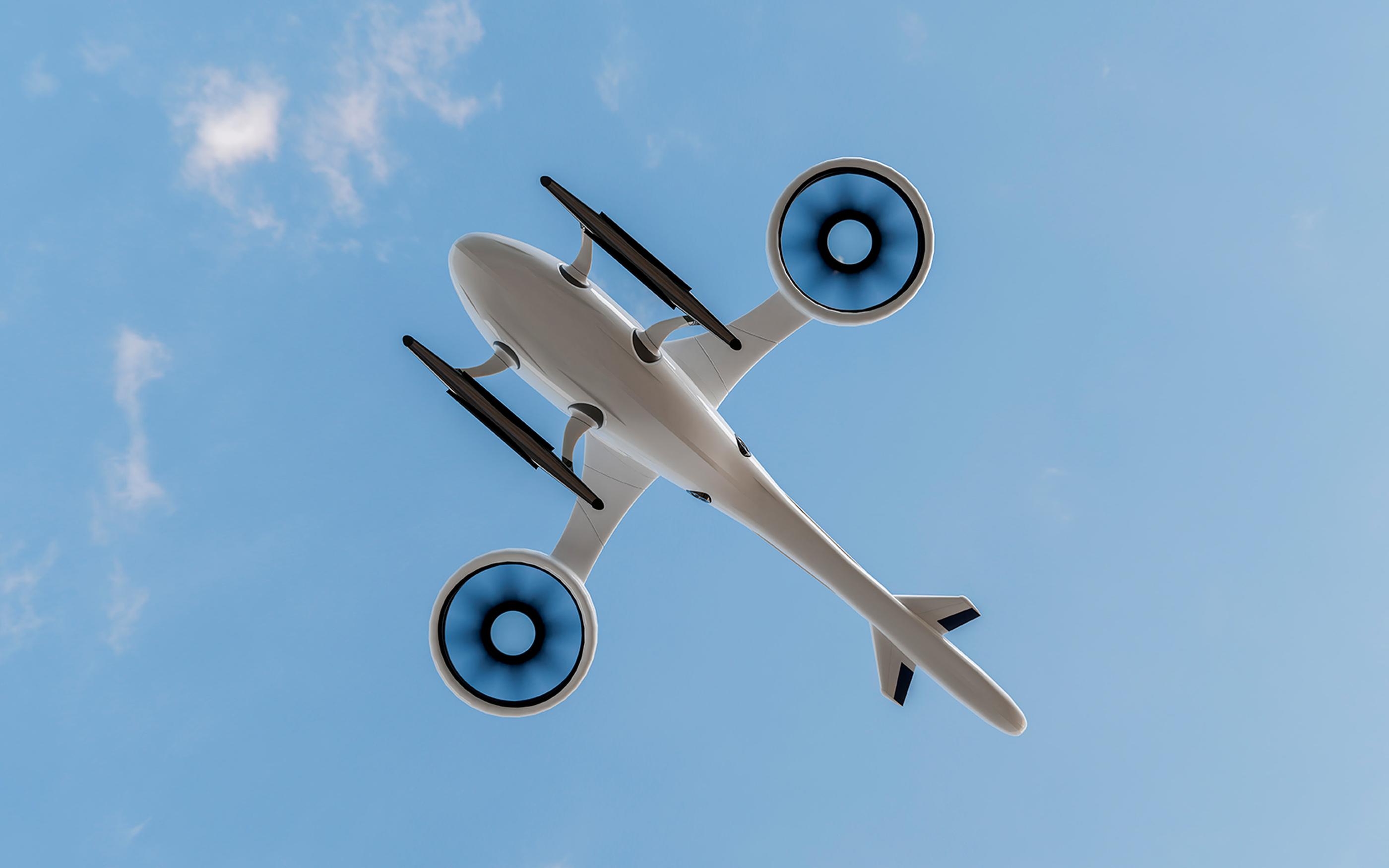
Advanced Air Mobility (AAM) may sound futuristic, but that future is arriving quickly. Prototypes are entering production [1], vertiport groundwork is progressing [2], and regulators are beginning to formalize their positions [3].
As the ecosystem shifts from concept to implementation, the risk management and insurance sector appears to be standing ready to support the AAM industry as it moves into its active stage, though it is difficult to commit to specific solutions until the sector converges on more standardized operational models, clearer regulatory constraints, and shared data baselines.
Growth and advancement are not new to the aviation industry. What is new is the scope and simultaneity of the change.
The challenge of "wait and see"
Historically, a cautious and iterative approach has generally served aviation insurance well. For decades, aviation technology has evolved steadily including enhanced avionics and fly-by-wire systems in the 1960s, composite materials in the 2000s, and increasingly digital cockpits. Each innovation improved upon the previous generation, allowing insurers and risk managers to refine existing frameworks and apply iterative strategies to new developments rather than reinvent them. Pilot experience, established airframe families, maintenance regimes, and well-understood operational contexts underpinned underwriting discipline.
Much of AAM, however, is applying new technologies in innovative ways. AAM aircraft are lighter, quieter, and frequently autonomous, and they are designed to be able to operate in densely populated, low-altitude, urban airspaces filled with buildings, drones, birds, and highly variable weather. Also, removing the onboard pilot shifts decision making from trained humans to real-time algorithmic systems. From an insurance perspective, this is not a typical iteration; it’s an entirely new aviation paradigm with unique operational complexity and risk.
AI: enabler and disruptor
Artificial Intelligence (AI) will be central to the success of AAM, underpinning both flight operations and ground-based infrastructure. Technologies such as computer vision, natural language processing, machine learning, and reinforcement learning are increasingly being deployed to help AAM vehicles perceive their surroundings, interpret sensor data, and make decisions at machine speed. AI effectively becomes the “nervous system” of AAM aircraft, enabling them to navigate dynamic environments, anticipate future states, and respond to emerging conditions in real time.
Onboard, AI supports a wide range of safety-critical functions. It processes large volumes of sensor information, predicts potential component failures, manages autonomous route planning, and detects hazards that could affect flight performance. These capabilities allow unmanned and highly automated aircraft to handle tasks traditionally reliant on human cognitive abilities, including pattern recognition, learning, problem-solving, and complex decision making.
AI will also play a pivotal role across ground operations. At vertiports (specialized hubs designed for the takeoff, landing, boarding, and in some cases charging, of certain types of AAM aircraft) AI-enabled systems can optimize scheduling, coordinate passenger flow, and manage take-off and landing sequencing. These capabilities will be particularly important as flight density increases. In busy urban airspace, AI also helps orchestrate safe and efficient operations by supporting deconfliction, coordinating traffic flows, and enhancing situational awareness.
Collectively, these technologies will make AI a crucial enabler of operational safety, airspace coordination, and economic feasibility. AI simultaneously represents both an opportunity and a disruptor. While its effective integration will unlock the scalability and reliability required for AAM to mature, it also introduces new challenges and risks.
Four risks to start with
Of the emerging risks, here are four aspects of risk that the insurance and risk management sector should examine in advance of the arrival of AI-enhanced AAM at scale.
Challenge established ways of working
These algorithm-driven risks have the potential to disrupt traditional aviation insurance models, which are grounded in decades of empirical data on human error, mechanical failure, and established safety benchmarks.
AI introduces both uncertainty and opportunity. While AI-enabled AAM brings new complexities to pricing, coverage, and claims handling, AI itself also offers potential solutions. Predictive analytics can identify precursors to failure. AI-based underwriting can dynamically adjust premiums using real-time flight data. Parametric products triggered by defined sensor thresholds can streamline claims. Automated, AI-supported claims processing can accelerate settlements and highlight anomalies that may indicate fraud.
Yet these innovations will demand governance evolution. Regulators will need to adapt certification, liability, and safety standards to reflect the probabilistic nature of AI-driven decision-making.
Traditional aviation insurance frameworks that are based on pilot experience, aircraft type, and historical loss patterns can face difficulties when applied to fleets of semi- or fully autonomous electric vertical take-off and landing (eVTOL) vehicles, emerging aircraft designs with limited operating data, interactions with vertiport infrastructure or unfamiliar environments with no historical benchmarks. The fact that many of these transitions are unfolding simultaneously only amplifies the challenge.
A quick but careful response
For AAM to succeed, it must be supported by a coordinated ecosystem of technology developers, manufacturers, risk and insurance partners, policymakers, and infrastructure providers.
The risk management and insurance sector, known for its deliberate and methodical approach, must now move more quickly to keep pace with aviation’s rapid transformation. AI provides powerful tools to manage new risks, but only thoughtful regulation, collaborative governance, and strategic system design will make AAM not just feasible, but insurable, trusted, transformative, and safe.
The coming decade could redefine how we fly, and possibly how we travel over short and intermediate distances altogether. It could also reshape how we manage uncertainty in an era of unprecedented technological change. The leaders will be those who understand complexity, embrace transparency, and build safety into every algorithm and every contract.
Footnotes
Disclaimer
WTW hopes you found the general information provided here informative and helpful. The information contained herein is not intended to constitute legal or other professional advice and should not be relied upon in lieu of consultation with your own legal advisors. In the event you would like more information regarding your insurance coverage, please do not hesitate to reach out to us. In North America, WTW offers insurance products through licensed entities, including Willis Towers Watson Northeast, Inc. (in the United States) and Willis Canada Inc. (in Canada).