

In this episode of Construction Blueprints, Kate Fowler, Global Head of Nuclear and Alastair Nicklin, Senior Director, Natural Resources explore the growing connection between AI, data centers and nuclear energy. The discussion examines why surging demand for computing power is making reliable electricity a strategic priority, how nuclear power can support digital infrastructure resilience, and the risks and opportunities associated with deploying new nuclear technologies to meet future energy needs.
Transcript for this episode
KATE FOWLER: We move into pre-construction and construction. Honestly, that's where a lot of the challenge comes into play. So financing. We've got a lot of nuclear startups out there right now that are pre-revenue and they need investment. They need loans, whether that's from government or private entities. And getting those parties actually comfortable with the project, because nuclear has historically not been so great about staying on budget, on schedule for a new project. So once again, we've got the past impacting how people are perceiving what the risk looks like, even from a financial perspective.
SPEAKER: Welcome to the WTW Podcast Construction Blueprints, where we discuss the latest risk management and insurance trends, as well as issues facing the construction industry. We'll speak with a variety of construction leaders and experts on global topics, who can help provide you a blueprint for building your industry knowledge.
KATE FOWLER: Hello and welcome to the podcast. I'm Kate Fowler, Global Head of Nuclear, and I'm joined by Alastair Nicklin, Senior Director in the Power and Renewables team. We'll be your hosts for today's episode where we will explore the convergence of AI growth and the rise of new nuclear.
We've spent decades thinking about nuclear as critical infrastructure for the electric grid. Even as SMR technologies began to emerge in the last decade, the conversation was really about grid and some behind the grid utilization for desalinization and industrial manufacturing.
Today, we're starting to realize it's also becoming critical infrastructure for the digital economy, too. So with everyone talking about AI and data centers, Ali, why has this suddenly become one of the biggest conversations in the energy industry?
ALASTAIR NICKLIN: Thanks, Kate. It's a really fascinating topic. And I think AI demand is definitely accelerating faster than everyone expected. And when we talk about AI demand, the front page is the large language models like ChatGPT and Claude. But that's only really the surface level, AI demand. I think AI is being embedded in all of our processes. That's both in the home and also in industries and businesses. And as such, that's creating a phenomenal demand for AI services across the board.
And the data centers that power it require a number of different resources. So obviously there's a huge demand on chips. There's land, water's really highly documented and talked about, but also electrons. So power generation and we're starting to see electricity becoming a strategic asset for data centers.
And this is both on the supply side and also on the grid connection side, where it's really challenging for data centers to get connected to the grid quickly. And of course, digital uptime depends on energy uptime and the availability of power, which I think we'll touch on in a moment. So just to throw it back to you, Kate, if electricity is becoming the limiting factor for AI growth, how much additional power are we actually talking about?
KATE FOWLER: Yeah, so about two years ago, data centers were using about 4:15 terawatt hours per year, which accounted for about 1.4% of energy utilization in the world. By 2030, we're saying that's going to up to about 2% demand. By 2035, we're at 2.6. So it's continuing to grow.
And one of the challenges we have right now is obviously having electricity that can meet the demand of not just data centers, but everything else that's being electrified alongside of that. So even though we're really talking about data centers, this is a broader issue around electrification.
These large data campuses are being discussed, particularly in the US right now, where they're talking two, three, four gigawatt data center campuses and adding energy to those. And we bring the nuclear conversation in, those are moving faster than nuclear technologies are. So there's this massive energy demand that we're trying to backstop it with gas turbines and things like that.
But these have got continuous load requirements. So looking at technologies like solar and wind, while those can support it, they don't have the uptime that the data centers actually need to meet the uptime requirements that they have for that, whatever it is, 99.99% on availability. It's a huge challenge right now with so much demand for data centers, so much demand for energy. And then actually having all of these constraints around what types of energy are actually fit for purpose for those types of technologies.
And I'll kick it back to you. I mean, we're talking about these really big numbers and this growing percentage demand of what we expect data centers to actually eat up from the energy that's available. But it's not just about the electricity. It's about finding that reliable electricity that I had mentioned. So why is dependable power become such a strategic issue for AI companies?
ALASTAIR NICKLIN: Yeah, it's a great question, Kate. I'd say I'd mirror the points you just made. It's the data centers require, I think, something crazy like 99.99% availability. And this means they need stable power generation throughout that with very, very limited downtime.
And there's two angles you can look at it here. It's the intermittency of, say, renewable technologies such as solar, wind, which don't provide that flat generation profile that a data center would need. And so how do we balance that out? Is it with energy storage or other solutions?
But then there's also what the impact of outages are. So for example, a lot of data centers are struggling with getting grid connections in short order or when they need them. And so they're looking at their own on-site power. But then there's a big question of well, if you have an on-site power source, what happens if there is a loss or an outage there? What does the data tend to have in terms of backup?
But it's so, so important because we've seen various examples of what outages look like in terms of the disruption to critical services, and also of just customer services and the associated revenue impact with those. And we're starting to see, as AI and digital services are getting embedded into all of our infrastructure, they're becoming mission critical, I'd say.
So yeah. One way of phrasing it maybe is saying data centers don't have a cloudy day mode. Users are expecting services to work every second of every day. And I guess this brings us to the generation side. I touched a little bit on renewable power there. There are lots of ways to produce clean power. Now, Kate, given your background, why is nuclear getting so much attention in this discussion?
KATE FOWLER: Yeah, it's interesting. So nuclear probably five to seven years ago was starting to get momentum again. Globally, we were starting to look at it as a viable clean energy source. And this is really driven by the whole net-zero 2050 demand. So the conversation around nuclear was starting. What really just amplified that was the growth of AI and data centers and the investment that some of those companies are actually making in nuclear.
And why we are seeing that is-- it's the things we've talked about already-- it's the high capacity factors. So nuclear is a clean energy similar to wind and solar, but it has that high capacity factor that is mirrored by other technologies like gas. But it's a cleaner technology than those.
The capacity factor of nuclear very much mirrors the demand of capacity that is required by those data centers. There really isn't another technology that kind of ticks all the boxes for being carbon-free generation, for having those always on-demand periods. It's almost like it was perfectly created for a data center and exactly what they're looking for.
And there's other things that go alongside of that. When we talk about these data center campuses, they're going to be very large. You don't necessarily want a gigawatt-scale nuclear power plant sitting next to it because of the size. So that's been a big driving force for small modular reactors, or SMRs, because of the smaller footprint that they have.
Alongside of that, we've had all of these technological developments in nuclear. So from a technology standpoint, while existing technologies are safe, we're just upping the safety factors associated with new designs and new technologies and new accident-tolerant fuels that we're looking at. And passive safety systems. So we're taking nuclear technology that has been safe and really just bringing it into the 21st century and changing the risk profile on it. That makes it more appetizing to sit next to a large data center.
Historically, utilities have planned power infrastructure, and technology companies have consumed it. Now, we're starting to see those two worlds start to merge together, where we're looking at that on-site power for data centers. And it's going to be provided by nuclear or something else. So it's interesting that technology companies now have to think like utilities. What is that convergence actually look like?
ALASTAIR NICKLIN: Yeah, it's a really interesting point. I actually saw something on-- I read an article the other day. And I saw that OpenAI are actually hiring a power trader. I saw a job advertised. And that just shows that energy procurement is becoming a strategic function within these tech companies and data center owners.
There's a few different avenues they can go down, whether it's a PPA, traditional PPA, or a private wire agreement. But some are also looking at behind the meter generation, which we've alluded to earlier. And this could be through on-site renewables, gas turbines, maybe even fuel cells. We've seen a bit talk about that recently. Yeah.
And there's lots of different strategies. And I think data centers owners and operators are considering a combination of these. They don't want to get stuck putting all their eggs in one basket behind a single technology or strategy.
I think when you're looking at the intermittency of power generation or maybe backup power, I think often a combination of these strategies is looking like the best way forward, so that these companies are factoring in resilience and building into their contingency planning.
I guess a common question will be, well, what happens if our on-site power is damaged? Or what happens if there's a grid outage? How does that impact our site?
And yeah, it's really interesting. The discussion on nuclear, whether that's on-site or further afield, Kate, I guess the question I have is deciding that nuclear makes sense on paper is one thing, but going ahead and actually building it is, I imagine, very different practically. What's your view and what are the biggest challenges to getting to that next step where there's actually deployment of new nuclear?
KATE FOWLER: So this is a tough question. I don't think there's any insurmountable challenge, but I feel like there's a lot of, I'll say, smaller challenges or smaller hurdles that have to be overcome. So it's not the size, it's the number of challenges that are facing the industry right now.
So from a an insurance and underwriting and even just from a public perspective, the first of a kind projects. So first of a kind is almost feels a little bit like a dirty word. And a lot of the industry is trying to make the distinction that their technology is not really first of a kind. And they like to use the term first of a fleet.
So a lot of what's being developed right now is it's not truly new. It's similar technologies or same technologies, same fuels, same chemical processes. It's a lot of what we're already familiar with in this space. It's just a slightly different configuration or a shrunk down model of it.
So there's very little within the industry that is honestly, truly, truly new right now. But there's that perception that a lot of people just have to get past that these things are super brand new, and it's completely unknown.
If we move into pre-construction and construction, honestly, that's where a lot of the challenge comes into play. So financing, we've got a lot of nuclear startups out there right now that are pre-revenue and they need investment. They need loans, whether that's from government or private entities.
And getting those parties actually comfortable with the project, because nuclear has historically not been so great about staying on budget, on schedule for a new project. So once again, we've got the past impacting how people are perceiving what the risk looks even from a financial perspective. And that's impacting construction, and construction timelines. And how are we viewing those and what's actually going to be realistic.
And if we even just take a step back from there, the regulatory piece of it, I think, is one of the bigger challenges that globally a lot of people have vocalized. And it's the regulators have-- I don't want to say they've been stagnant, but they haven't had a huge pipeline of new projects coming in. And they haven't necessarily had to have been staffed up to manage that.
So now, when you've got a hundred-plus technology developers out there, on top of the existing technology creators that have been around for decades, that are wanting to do projects, you have this massive pipeline of technologies and projects and sites that are flooding into regulators around the world. And they're struggling with the demand on their time for what's needed to actually get these to start getting to the point of putting shovels in the ground.
When we talk about the regulators and the global viewpoint of it, lots of technology developers, they don't just want to deploy in one country, they want to do it in multiple countries. There's challenges right now around having to start from square one in every single region that you want to put your technology in. Same technology, same fuel, different regulator.
And now you have to start maybe a three-year process, five-year process all over again in another country, even if one regulator has already approved it. So from a global perspective that working together of all of the different regulators and being able to accept licenses or accept at least portions of reviews that were done by other countries, there's a huge demand for that. And I think that's something that in itself could help amplify or help speed up timelines for everybody.
It's not all bad news. It's a pain point right now because the industry is growing and growth always comes with challenges. So once again nothing insurmountable that we can't get past. We have to get through this point in time where we're dealing with some of these first of a kind problems that the industry is approaching right now.
And I mean, we're talking a lot about SMRs and new tech. And a lot of people still picture large nuclear or nuclear as a large conventional reactor. There's gigawatt-scale technologies. And they're still going to be some of those. But the technology landscape is changing so quickly too, which I referenced all of this, quote unquote, "new that's out there."
But there's lots of innovation happening right now. So which once again, presents a little bit of a challenge, but it's a good thing for us to have. Lots of buzzwords out there that people hear-- SMRs, small modular reactors, advanced reactors, microreactors-- what is the difference between all of those?
And I always say, I think SMR is a little bit of a misnomer and can get very confusing. People hear small, they may not be small, they may be 300 megawatts. So it's not as small as you may think.
Modular, they may not be something that you can throw on the back of a truck and ship to site. The modular aspect of it, and many technology designs is really about-- you're not doing everything on-site. Maybe you're putting together the containment vessel offsite. And you're doing all the welding offsite. And you're bringing that as a single piece to site, as a unit, rather than puzzle piecing it together like we may have seen historically.
Advanced reactors, it's different fuels, different coolants than we may be accustomed to. So not uranium dioxide in a pellet form with 3% to 5% enrichment, it may be a slightly different fuel form. And maybe not light water. We're using gas, or we're using sodium-cooled. So that's really what the advanced reactors are.
And then microreactors are those tiny, probably sub-50 megawatt technologies that are out there. Once again, it's new, but it's also not. There's a lot of microreactors that are using old fuel technology. And they're using light water. There's nothing super different about it, other than the fact that it's small. It's tiny compared to what we're accustomed to.
So I mean, it's talking about the innovation on the nuclear side. Ali, can you add a little bit about innovation in the broader electrification area?
ALASTAIR NICKLIN: Yeah, absolutely, Kate. And I think there's a broader theme here. And it's not just driven by AI and data centers. Countries are definitely looking to diversify their energy generation mix.
And that traditionally meant going from coal, oil, and gas to renewables. But it's not as simple as that at the moment. And it's more looking at getting a combination of baseload power, intermittent clean power, and reliable. And also looking at the supply chains for each of those and making sure they're not all in on one technology with a single bottleneck, as we've seen how geopolitical incidents around the world can impact, for example, if a gas pipeline is bombed.
And I think we're talking about-- you touched on SMRs, advanced reactors, microreactors. There's other technologies as well that the investment is flowing into, for example, fusion or novel types of geothermal. These are all different ways of making baseload power and show great promise. And are attracting a lot of investment, both from tech companies and from elsewhere.
And so we're seeing that it's not just driven by the demand. There's incentives for governments and other energy actors or companies that are active in that space to invest in these new generating technologies. And it's all about diversity, as I've said, and not putting all your eggs in one basket.
An interesting point here is that we're starting to see a bit of a new business model for energy consumers. Whereas traditionally, if you're an energy consumer, you go out and buy either from a utility or an independent power producer.
But we're now starting to see-- in the same way that people are putting solar panels on their home and making their own power-- we're starting to see a lot more industrial applications of that approach. And these private wire agreements behind the meter are starting to blur the lines between who's the traditional producer and who's the traditional buyer. And I think that's just a fascinating area that we're going to see a lot of change over the next 5 to 10 years.
As these technologies-- I mentioned fusion, talking about SMRs, advanced reactors as well-- as these technologies mature. The question becomes less, can we build them? And more, how quickly are they going to influence the market? There's a lot of factors such as cost, as well as the ability to-- speed and ability to deploy them.
Kate, when you were talking earlier, it sounded like regulation, regulation, regulation was the biggest challenge. I'm trying to look ahead and think five years from now, what will be our biggest turning points? And I'm sure we've probably achieved some of them already. And hindsight will tell us if we're right or not.
From my perspective, I think one of them will be utilities partnering with hyperscalers. At the moments, we've seen data centers investing directly in generation, not just through a PPA, through actually funding project. Kate, what do you think would be the biggest turning points if we're five years from now?
KATE FOWLER: So I continue to be surprised. So 10 years ago, I never thought where we'd be today with the nuclear industry. And sitting today, I already feel like we've hit our biggest turning point. And I think that is the growth of AI and data centers. As I said, giving that injection into the nuclear industry to really propel it forward of from a political standpoint, a lot of countries are not viewing the way they did 5, 10 years ago.
So countries are actually embracing it and wanting to move it forward. So five years from now, I'm like, I'm not quite sure what I see else happening. Unless it is something around that regulatory collaboration that once again helps propel the industry forward.
But I'm hoping in the next five years, we do see our first commercial reactors, first commercial SMRs and new technologies come online. So I think that's my hope as to what we see being the next big turning point and the next thing where now we've actually proven that this is possible. And it just continues to move the industry forward even faster.
ALASTAIR NICKLIN: Yeah, so I mean, as we're getting towards the end of the pod, if listeners want to remember one thing about AI and energy, what should it be? I'd say from my perspective, we were talking about energy procurement being a strategic function. I would say that the hyperscalers, who have a really well thought out energy strategy are going to be the winners. Because I can see that bottleneck really hampering progress for the players in the space who want to develop and grow and move fast. What do you think, Kate?
KATE FOWLER: So one thing to think about nuclear for the future. We're not going to get where we want to go without nuclear. I strongly believe that we've spent a lot of time and investment in all these other technologies, which is fantastic.
But it really comes back to that baseload piece, where we're not going to achieve the goals of electrification or data centers without nuclear, because, like I said, it's checking those boxes. It's the clean technology, it's the baseload. There's a safety history there. It is absolutely going to be a part of the portfolio going forward.
And I say that very intentionally. It's not just about nuclear. So we still need wind. We still need solar. We still need developments in battery storage. But nuclear is going to have to be a part of the conversation, and it's going to be a part of the energy portfolio.
ALASTAIR NICKLIN: Absolutely, yeah. And I think AI is just changing the definition of what we call critical infrastructure. And we can all see that.
KATE FOWLER: Yeah. And digital resilience is going to begin with that energy resilience that nuclear can bring. And it's increasingly becoming a part of the digital economy. Ali, thank you for contributing to this episode. And for sharing your perspectives on such an important topic.
ALASTAIR NICKLIN: Thanks so much, Kate. Thanks for having me. I think it's a really important topic. And it'd be so interesting to revisit in a couple of years and see how any of the things we've talked about have changed.
KATE FOWLER: I absolutely agree. Well, thank you to everyone who listened and for joining the Willis podcast. We'll talk to you on the next one.
SPEAKER: Thank you for joining this podcast from Willis, a WTW company, featuring the latest thinking and perspectives on people, capital, climate, and risk in the construction industry. For more information, visit wtwco.com. WTW offers insurance related services through its appropriately licensed and authorized companies in each country in which WTW operates.
For further authorization and regulatory details about our WTW legal entities operating in your country, please refer to our WTW website. It is a regulatory requirement for us to consider our local licensing requirements.
The information given in this podcast is believed to be accurate at the date of publication. This information may have subsequently changed or have been superseded, and should not be relied upon to be accurate or suitable after this date.
This podcast offers a general overview of its subject matter. It does not necessarily address every aspect of its subject or every product available in the market. And we disclaimer all liability to the fullest extent permitted by law. It is not intended to be, and should not be used to replace, specific advice relating to individual situations, and we do not offer and this should not be seen as legal, accounting, or tax advice.
If you intend to take any action or make any decision on the basis of the content of this podcast, you should first seek specific advice from an appropriate professional. Some of the information in this podcast may be compiled from third-party sources we consider to be reliable. However, we do not guarantee and are not responsible for the accuracy of such. The views expressed are not necessarily those of WTW. Copyright WTW. All rights reserved.
Disclaimer
WTW hopes you found the general information provided here informative and helpful. The information contained herein is not intended to constitute legal or other professional advice and should not be relied upon in lieu of consultation with your own legal advisors. In the event you would like more information regarding your insurance coverage, please do not hesitate to reach out to us. In North America, WTW offers insurance products through licensed entities, including Willis Towers Watson Northeast, Inc. (in the United States) and Willis Canada Inc. (in Canada).
Podcast host
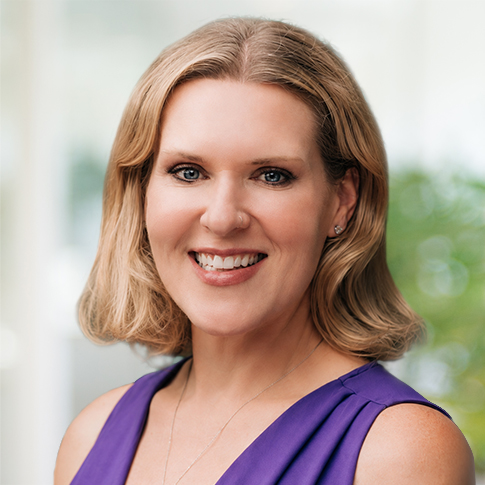
Kate Fowler
Global Head of Nuclear, Willis Global Construction Specialty
Kate is the Global Head of Nuclear, based in Charlotte, NC, USA, as part of the Global Construction team. She brings 16 years of commercial nuclear industry experience to Willis including underwriting, client management and nuclear engineering within the power and insurance industry. Previously, she held the global nuclear leader role at Marsh, served the US Nuclear industry for nine years as a property loss control engineer and senior nuclear underwriter at the US Nuclear Mutual, Nuclear Electric Insurance Limited (NEIL), and as a fire protection and safe shutdown engineer at a nuclear power facility in Nebraska.
In her role with our current nuclear team, Kate is instrumental in fostering connectivity and delivering innovative solutions for our nuclear-focused clients within Willis' Global Construction and Natural Resources Specialty businesses, further enhancing our support for clients.
Kate Fowler
Global Head of Nuclear, Willis Global Construction Specialty
Kate is the Global Head of Nuclear, based in Charlotte, NC, USA, as part of the Global Construction team. She brings 16 years of commercial nuclear industry experience to Willis including underwriting, client management and nuclear engineering within the power and insurance industry. Previously, she held the global nuclear leader role at Marsh, served the US Nuclear industry for nine years as a property loss control engineer and senior nuclear underwriter at the US Nuclear Mutual, Nuclear Electric Insurance Limited (NEIL), and as a fire protection and safe shutdown engineer at a nuclear power facility in Nebraska.
In her role with our current nuclear team, Kate is instrumental in fostering connectivity and delivering innovative solutions for our nuclear-focused clients within Willis' Global Construction and Natural Resources Specialty businesses, further enhancing our support for clients.
Podcast guest
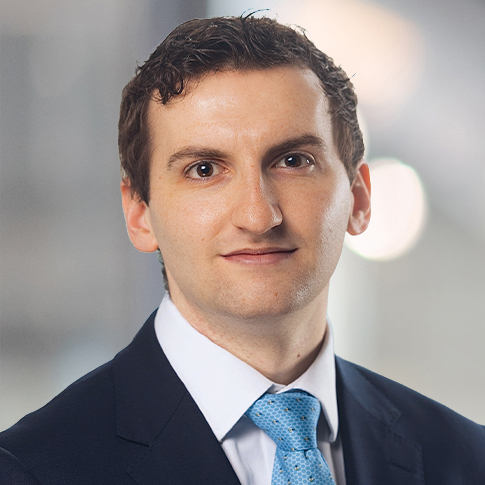
Alastair Nicklin
Senior Director, Natural Resources
Alastair Nicklin
Senior Director, Natural Resources