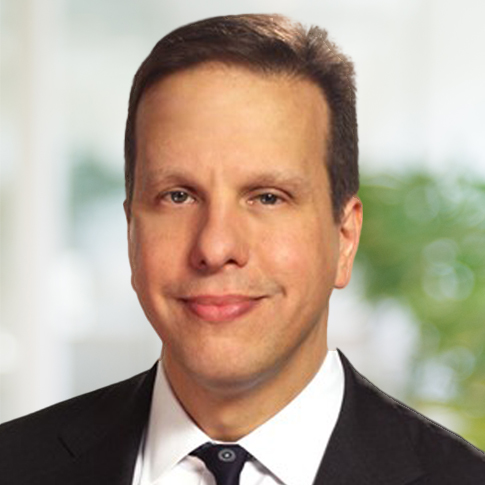
In this episode of The Willis Claims Conversation, Sarah McPherson, Jim Dorion and James Cooper explore the rapidly evolving world of PFAS litigation and what it means for businesses, insurers and risk professionals. From Australia’s landmark $2 billion lawsuit and thousands of ongoing U.S. claims to growing regulatory scrutiny across Europe, they unpack the legal, insurance and governance challenges surrounding these ‘forever chemicals’ and discuss the practical steps organisations should take now to understand, manage and insure against emerging PFAS exposures.
Transcript for this episode
The Willis Claims Conversation — Episode 2
JAMES COOPER: Businesses now need to actively demonstrate that they're managing PFAS exposure responsibly or risk both litigation and reputational fallout. A sensible approach would be to begin mapping exposures now, rather than taking action once the new regulations are implemented.
SPEAKER 1: Welcome to the Willis Claims Conversation podcast series, your guide to the latest thinking in global claims management.
SARAH MCPHERSON: In May 2026, the Australian government filed the largest lawsuit in its history, $2 billion, against a single chemical manufacturer over firefighting foam. Meanwhile, in the US, there are still more than 15,000 individual lawsuits involving tens of thousands of plaintiffs who allege exposure to PFAS chemicals, primarily through AFF foam used at military bases, airports, and firefighting training facilities. These are centralized in a single federal court in South Carolina.
These plaintiffs claim personal injuries, property damage, and economic losses due to contamination of groundwater and drinking water systems. And somewhere in between those two facts is an uncomfortable question for a lot of corporations. Do you actually know if you're exposed to this? And does your insurance policy cover you if you are? I'm Sarah McPherson, Willis's head of Claims, Pacific. And I'm here with Willis's head of Claims, North America, Jim Dorion, and partner at Norton Rose Fulbright in London, James Cooper.
In today's episode, we're looking at where PFAS litigation is heading and, more importantly, how Willis can help prepare clients for the insurance, governance, and risk conversations that are coming, whether those clients feel ready for them or not. Let's get into it, litigation trends in Australia, the US, and Europe, and then the practical part, what clients should actually be doing about it.
JIM DORION: Perhaps a quick baseline, PFAS, per- and polyfluoroalkyl substances-- it's quite a mouthful-- they are thousands of manufactured chemicals used widely for decades because they do a lot of good things. They repel water, oil, heat. And they're found everywhere, nonstick cookware, waterproof fabrics, firefighter foam, food packaging. And they've been detected in remote polar regions, which underscores just how persistent and mobile they are. And so they're referred to as forever chemicals that are everywhere.
SARAH MCPHERSON: Yeah, well, that's the catch. The carbon-fluorine bond that makes them so useful also makes them nearly indestructible. They don't break down in soil, water, or the human body. That's the forever part. These chemicals can be released through airborne emissions and, because they're water soluble, seep into surface soils and groundwater.
JAMES COOPER: PFAS contamination litigation, it's also evolving through distinct waves from the environmental, land, and water contamination to consumer-manufacturer suits and emerging personal injury actions. The reason this has become a larger liability story is that in 2023, the World Health Organization's International Agency for Research on Cancer reclassified PFOA, one of the two most studied legacy PFAS as a group 1 carcinogen, the same category as asbestos and tobacco smoke. And of course, we're all fully aware of where the asbestos and tobacco litigation has led to from an insurance perspective.
SARAH MCPHERSON: Jim, this reclassification is doing a lot of work in courtrooms right now in the US. And in Australia, updated drinking water limits are a direct regulatory response to this, which is why that asbestos comparison is so hard to avoid.
JIM DORION: There's certainly meaningful similarities to asbestos. I mean, you've got a long latency between the alleged exposures and when the claims are presented. You got decades of historical insurance policies that might be implicated, which leads to huge, just massive document discovery that really dries up expenses. So you get the high defense costs.
You've got complex allocations over multiple policy years, multiple insurers. And that leads to significant reinsurance implications. And there's these potential for these large aggregate losses over many years. So all those things, highly similar and unwelcome by our policyholder client defendants.
But there are some important differences, though, that may ultimately make PFAS follow a different trajectory because asbestos is-- it's just this well-defined group of minerals for really specific purposes. But we mentioned at the top, PFAS, thousands of different fluorinated chemicals with varying properties and uses. So much harder to pin down exactly where the exposures are.
And asbestos, I think this one is really a big thing. It has a signature disease in mesothelioma. It's a specific type of cancer caused only by exposure to asbestos. So it bridges that causation gap for plaintiff attorneys. And also, with PFAS, regulatory standards, like you just mentioned, are still evolving. And it creates uncertainty for both plaintiffs and defendants.
And a lot of the PFAS claims we've seen so far have been economic rather than just straight bodily injury. So that changes because all these asbestos is bodily injury. And the defendant pool, like we talked about, we're getting into a little more super broad, way broader than the asbestos defendant pool, which makes the litigation a lot more heterogeneous.
And insurance issues are a little different, pollution exclusions rather than asbestos exclusion. And the litigation, as James mentioned, is more-- it's going to be more varied.
SARAH MCPHERSON: Yeah, but the litigation seems to move in waves. So let's start with wave 1 in Australia because the timeline has compressed dramatically here in the last few years. Early Australian PFAS class actions were all about contaminated land near defense bases, flowing from historic use of PFAS containing firefighting foams. Nearby landowners have sued the Commonwealth directly over falling property values and lost use of land.
Those cases settled some years ago, but with one critical reservation. The judge overseeing several of them, Justice Lee, made it very clear that the settlements didn't extinguish anyone's right to bring a separate personal injury claim later.
JAMES COOPER: That feels like it's left a really slow-burning fuse in the background.
SARAH MCPHERSON: I think it has. And alongside this, in 2022, the Victorian government announced a $57-million redress scheme to support firefighters exposed to high levels of toxic chemicals at a training facility following an inquiry that found their overall cancer risk was significantly raised. The environmental contamination wave was really never the end of the story.
Then in May this year, the litigation landscape shifted materially. The Australian government filed that $2-billion lawsuit in the federal court against 3M over fire foam contamination at 28 defense bases around the country. It's the largest claim the federal government has ever bought, and it seeks to recover significant costs that the government has borne in investigating, managing, and remediating contamination at defense force bases.
Significantly, I think, the allegations aren't just your product contaminated on land. They go to conduct that 3M had internal testing showing the toxicity of these chemicals and didn't disclose it and separately made public assurances that the foam was biodegradable that were inconsistent with what the company actually knew. But I should point out this wasn't the first shot fired. Sitting quietly in the background is a case filed in the Victorian Supreme Court in December 2024.
It's a consumer-led PFAS class action against 3M. It didn't make the same headlines then, but it did break new ground in its own right as the first consumer-led PFAS action in the country. The Australian Broadcasting Corporation gained access to the filing last month and has reported that the claim alleges 3M sold products containing PFAS without disclosing their risk.
It also does something no Australian PFAS case has done before. It introduces allegations regarding PFAS health-related impacts, which have never been successfully litigated in Australia. So this case is very much a wait and see.
JAMES COOPER: And it does feel like together, those two cases tell a story of momentum building, so a private consumer-driven claim testing untested legal grounds in December, followed by the Commonwealth stepping in with the biggest claim of its kind that it has ever brought in its history.
SARAH MCPHERSON: Yeah. And the framing really matters. It shifts these cases from contamination to concealment. And commentators tracking the Commonwealth case have drawn a direct line to how asbestos litigation played out decades ago, that is allegations that the manufacturer knew about the danger long before it became public knowledge. It's worth remembering, too, that the federal court action was filed only months after a Senate Select Committee spent over a year investigating PFAS and concluded in its final report that Australian regulators had credible advice about the health dangers as far back as 2000 and were slow to act on it.
So what we have here is a $2-billion Commonwealth case, a parliamentary committee saying the warning signs were there, and a judge on record making it clear that PFAS class-action settlements do not extinguish personal injury claims. Taken together, these developments really mark a clear shift in Australia. And potentially, the PFAS personal injury claims may not be a theoretical possibility for long. And litigation is a risk that businesses, insurers, and advisors do need to take seriously. Jim, in the US, which is years ahead of Australia on this, we really have a preview of where things may head.
JIM DORION: Well, sure. And almost all the AFFF, the firefighter foam-related PFAS lawsuits, thousands of cases from firefighters, veterans, municipalities, and others sit inside a single piece of federal litigation in the US. And it's a multidistrict litigation, MDL we refer to it, that sits in South Carolina in front of Judge Richard Gergel. And it's one of the largest mass tort dockets in the country.
SARAH MCPHERSON: But that MDL actually splits, doesn't it, it into two very different litigation pathways?
JIM DORION: It does. Pathway one involves the public water system claims, utilities suing over the cost of testing and filtering PFAS out of drinking water. And that pathway is essentially settled. Major manufacturers have either paid or agreed to pay billions to resolve that. And smaller manufacturers have contributed a few hundred million each. And we've also seen significant state-level litigation and settlements related to PFAS remediation, not only against major manufacturers, but also against the secondary users of PFAS chemicals.
SARAH MCPHERSON: And I think this is the critical detail. Every one of those MDL settlements explicitly excludes personal injury claims, doesn't it? They only cover infrastructure and remediation costs for water utilities.
JIM DORION: Correct, which leads us to the second pathway of personal injury. Individuals, largely firefighters, military personnel, and residents near contaminated sites, they're making claims that PFAS exposure has caused cancers, including kidney, testicular, liver, thyroid, most other thyroid diseases, ulcerative colitis. And as of mid-2026, where we sit right now, there's still no global settlement on this and no completed precedential or bellwether trial either.
The first single trial over kidney cancer was adjourned and hasn't been rescheduled. So the exposure remains untested, which is why it may carry the greatest financial risk. There's no settlement framework yet to guide expectations. And more concerning, though, for a broader swath of our clients is where this litigation is heading.
Plaintiffs are moving past chemical manufacturers and going after companies further down the supply chain, which is something we saw in the asbestos litigation as well, sued simply for using, distributing, or disposing of PFAS-containing products, not making the chemicals themselves. We're seeing this play out across multiple sectors, apparel brands over deceptive eco-friendly marketing claims rather than bodily injury, fast food companies over PFAS and makeup, and, in many cases, focused on alleged misrepresentations rather than proven physical injury, so again, all still largely untested.
And the exposure also extends to oil and gas operations and universities facing cleanup costs tied to firefighting foam use. As it's starting to reach automakers involving interior fabrics, wire insulation, coatings, and textile companies that make are making stain-resistant fabrics, some have filed cost recovery suits, while others themselves have become targets of regulatory investigations.
SARAH MCPHERSON: So just pulling that together, the US litigation shows a sequence we might expect to see replicated elsewhere. The claims for remediation and infrastructure costs tend to resolve first because the loss can be quantified with relative certainty. Then you start seeing the misleading and deceptive conduct claims. Personal injury claims, though, remain live much longer because causation, latency, and damages are far more contested, and the ultimate exposure is significantly less predictable.
JAMES COOPER: Yeah, and I think from a European perspective, we've started to see some significant litigation and some familiar pathways to those that you outlined, Jim. There's been some significant claims brought by municipalities against manufacturers seeking remediation costs and compensation for environmental contamination. We've also seen private litigation actions brought against manufacturers, again, for damages for environmental contamination.
So, for example, in Belgium and France, litigation is beginning to extend to users of PFAS, such as the action that's been brought against the armed forces in Sweden for contamination caused by their use of firefighting foam. There's a few specific observations about how the European picture is developing. Firstly, the private actions have been brought by way of class action, as you might expect.
And these have been assisted by consumer associations or environmental NGOs, often using this as a mechanism to force change rather than simply chase damages. Secondly, we saw a Swiss decision that found that elevated levels of PFAS in the claimant's blood constituted a personal injury under Swiss law without the need to show a disease and that drinking water with PFAS levels above the threshold was a defective product under Swedish legislation implementing the European product liability directive. This was a declaratory judgment but a significant decision nonetheless.
Thirdly, we've seen these owners facing liability in Europe. Former executives of a chemical plant are facing environmental charges, which brings the no liability cover firmly into play. And then lastly, a class action in France is accompanied by a claim in the Paris Administrative Court against the French state for regulatory failures and inaction over PFAS, showing the potential for dual litigation pathways for effective citizens.
The UK isn't as far developed as a number of the European jurisdictions, though. There's been some claimant law firm interest. And there is a potential class action against a firefighting foam manufacturer in North Yorkshire that's being led by a prominent claimant firm. They settled an individual claim in 2025, and they're looking to try to build a class off the back of that. But those types of claims do face hurdles. It seems likely there'll be more litigation in the UK, but it is a slightly more nuanced landscape here.
SARAH MCPHERSON: Yeah. And from a risk and insurability perspective, the issue with PFAS is that many clients may not appreciate they have that latent exposure until it crystallizes, whether that's through regulatory scrutiny, transactional due diligence, or a claim. So as a broker, our first role is to help clients identify where that risk could plausibly sit. And once that exposure is identified, step 2 is really coverage discipline. And the first thing is to say plainly, don't assume your existing liability program response.
JAMES COOPER: Yeah, that's definitely right. PFAS-specific exclusions are now appearing across pollution and general liability wordings. And the market's still looking to price an exposure that remains really uncertain. That means that every renewal needs a genuine line-by-line review, not just the exclusions, but how pollution, bodily injury, property damage, occurrence, knowledge, prior known circumstances language all interact with each other. It's a huge jigsaw puzzle.
SARAH MCPHERSON: If cover is narrowing, we should be explaining that early. If affirmative cover is available, even on a limited basis, we should be helping clients understand what risk controls, disclosure, testing, or governance may support a better placement outcome.
The broker's role isn't simply to report what the market's doing. It's to help the clients prepare for the market conversation before the renewal is really under pressure.
JIM DORION: Well, with the US insurers having seen the worst of asbestos litigation, in the US, we're also-- beginning around late 2010s and early 2020s, many insurers began adding PFAS, forever chemicals, emerging contaminants, and perfluorinated compound exclusions. Now, these endorsements, they vary considerably, so the exact wording matters.
And in this context, historic policies matter, as you mentioned, Sarah. If a client's exposure traces back decades, a policy that actually responds may be sitting in storage from the 1980s, written well before any PFAS exclusion existed. So for a company facing a significant PFAS exposure, I would review every historical CGL general liability and policy and identify the exact pollution exclusion language, and also any umbrella and access policies, as their wording may differ from the primary CGL, and also all environmental impairment and pollution legal liability policies.
And whether the claims are framed as environmental contamination, product liability, occupational exposure, or consumer injury, since the theory of liability can really materially affect how the exclusions apply and which lines of coverage may be triggered, in the US, governing state law needs to be reviewed as well because jurisdictions vary widely in how they interpret pollution exclusions and allocate long tail environmental losses. You could have full recovery under one state's law and be barred in another.
But from an insurance recovery perspective, the exact wording of the exclusion and the applicable state law, they can matter far more than just the mere presence of the word pollution. Two companies with identical exposures can have different outcomes. So I would prioritize preserving every historical insurance record immediately. Engage in insurance archeology specialists and policies that are incomplete to round out the evidence because the burden is on the policyholder, in the US, anyway, to establish the existence of and the terms of a policy.
And you got to get all these insurers on notice. And then also, just build out a coverage matrix mapping, policy years, limits, exclusions, and attachment points, so you can know where all the risk transfer sits. And integrate the insurance and recovery strategy with an overall litigation and settlement strategy right from the outset because you need to know what you're working with to deal with plaintiffs. And for large PFAS matters, insurance recovery can involve just hundreds of millions of dollars in potential coverage, making a systematic historical insurance reconstruction and policy analysis one of the most valuable early investments.
SARAH MCPHERSON: It's not just environmental or general liability at stake. Product liability for products that cause harm or came with a failure to warn, workers' compensation liability for occupational exposure claims, D&O for allegations of mismanagement or non-disclosure, along with environmental or pollution legal liability, which is often a better fitting product for PFAS specifically, though appetite and exclusion still very courier to courier, of course.
JAMES COOPER: I think that D&O point's important. D&O exposures can arise from allegations of regulatory compliance failures, shareholders' claims for breach of disclosure obligations, derivative and regulatory claims, all relating to greenwashing, or on the basis that boards fail to make adequate provisions for remediation costs or disclosure of material contingent liabilities. Once litigation starts, it quickly becomes a governance and disclosure issue.
So boards need to know what's known, what isn't known, what's being investigated, and how that's being disclosed to shareholders, insurers, transaction counterparties. And then on top of that, what issues can arise from their own supply chain? There's already been securities class actions in the US brought against manufacturers and their executives, although usefully, plaintiffs have suffered difficulties in getting past the motions to dismiss stage so far. In terms of coverage, whilst there may be barriers to insurability of criminal and regulatory fines and penalties, the ambit of environmental liability exclusions will be an issue in claims for indemnity for civil claims and defense costs, but those typically do include a carve preserving coverage for shareholder claims.
SARAH MCPHERSON: The regulatory backdrop is accelerating all of this. From the 1st of July, for example, Australia-- or 1st of July last year, it was, Australia banned the manufacturer import and use of three PFAS chemicals under the Industrial Chemicals Environmental Management Standard.
JAMES COOPER: And it does feel like it's a similar picture in the European Union and the UK. The direction of travel is only really one way, although currently companies have to grapple with overlapping regulations relating to product safety, environmental, and health, the EU is leading the charge for a unified and universal approach to PFAS by pursuing a universal ban subject to derogations, with a final decision expected by the end of this year, albeit it wouldn't then come into force for some time.
There'll be some sector-specific restrictions also developing. So France is already ahead of the EU as it introduced a ban of PFAS in certain textiles from January of this year. Wider restrictions are planned from 2030. The UK does restrict specific PFAS, and more regulation is planned, but there's currently no suggestion of a universal ban.
So for multinational clients, this isn't one regulatory target. It's a real moving target across multiple different jurisdictions. If you then add investor and ESG scrutiny on top, businesses now need to actively demonstrate that they're managing PFAS exposure responsibly or risk both litigation and reputational fallout. A sensible approach would be to begin mapping exposures now, rather than taking action once the new regulations are implemented. In litigation, the key question is almost always the same. What did the company-- what did the board know? When did it know it? What did it do about it? So clear records of testing advice, remediation, governance decision, insurance disclosures. And that can end up central to defending both the underlying claim and any coverage dispute that follows.
SARAH MCPHERSON: Which is why this really can't be treated as a one-off review. Regulation is moving. Litigation is moving. The market is moving. For at-risk clients, this needs to be a recurring renewal conversation, not just a single client communication. So let's bring it back to where we started, a $2-billion Commonwealth claim in Australia and more than 15,000 unresolved personal injury claims in the US, different systems, different stages, but the same lessons for every client.
JIM DORION: And I'll leave people with this. You need to identify the exposures early, as we've discussed. You have to document potentially responsive insurance assets and reconstruct insurance programs. And make sure you're engaging with your insurers early.
SARAH MCPHERSON: Thanks, James. Thanks, Jim. And thank you all for listening. We'll see you next time.
SPEAKER 1: Thank you for joining us for this WTW podcast featuring the latest perspectives on the intersection of people, capital, and risk. For more information, visit the Insights section of wtwco.com. Willis Towers Watson offers insurance-related services through its appropriately licensed and authorized companies in each country in which Willis Towers Watson operates.
For further authorization and regulatory details about our Willis Towers Watson legal entities operating in your country, please refer to our Willis Towers Watson website. It is a regulatory requirement for us to consider our local licensing requirements. The information given in this podcast is believed to be accurate at the date of publication. This information may have subsequently changed or have been superseded and should not be relied upon to be accurate or suitable after this date.
This podcast offers a general overview of its subject matter. It does not necessarily address every aspect of its subject or every product available in the market. And we disclaimer all liability to the fullest extent permitted by law.
It is not intended to be and should not be used to replace specific advice relating to individual situations. And we do not offer and this should not be seen as legal, accounting, or tax advice. If you intend to take any action or make any decision on the basis of the content of this podcast, you should first seek specific advice from an appropriate professional.
Some of the information in this podcast may be compiled from third-party sources we consider to be reliable. However, we do not guarantee and are not responsible for the accuracy of such. The views expressed are not necessarily those of Willis Towers Watson. Copyright WTW 2026, all rights reserved.
Disclaimer
WTW hopes you found the general information provided here informative and helpful. The information contained herein is not intended to constitute legal or other professional advice and should not be relied upon in lieu of consultation with your own legal advisors. In the event you would like more information regarding your insurance coverage, please do not hesitate to reach out to us. In North America, WTW offers insurance products through licensed entities, including Willis Towers Watson Northeast, Inc. (in the United States) and Willis Canada Inc. (in Canada).