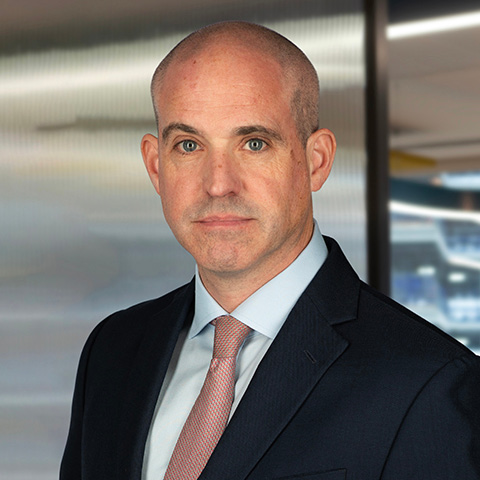
In this Waves podcast episode, David Cawdeary is joined by James Reason, Head of Hull for Marine GB, and Patrick Wilson, Head of Special Risks for Marine GB, to explore how capacity, pricing and geopolitical events are shaping the marine insurance market in 2026.
Transcript for this episode
PATRICK WILSON: We are seeing incentives such as continuity credits and low claims bonuses being common tools used by carriers in order to retain accounts. With rate rises no longer driving premium growth, underwriters are having to lean heavily on new business as their primary growth engine.
NARRATOR: Welcome to our marine insurance podcast, Waves by Willis, a WTW business. This podcast series explores key topics and trending issues facing the maritime industry.
DAVID CAWDEARY: Welcome to Waves by Willis, I’m David Cawdeary, Marketing Director for Marine and I'm joined today by James Reason, Head of Hull for Marine GB, and Patrick Wilson, Head of Special Risks for Marine GB. James, starting with you, how has the Hull market been faring so far in Q1?
JAMES REASON: Thank you David. So our assessment of the Marine Hull market at the start of this year is a continuation, really, of factors that drove market conditions in 2025. We see in the London market a further tranche of capacity being made available through existing syndicates entering the class through the Lloyd's platform and there are still a number of Hull MGAs rumored to be entering the market in 2026.
As a result of this, the expectation is that competition will remain and will continue to drive pressure on rating. We believe that clients ability to achieve contract enhancements are expected to persist, probably throughout the year. At present, we believe there is no suggestion there will be any change to this outlook.
DAVID CAWDEARY: And I suppose we can't ignore it, what impact have events in the Middle East been having on the market?
JAMES REASON: Well David, that's the question. And as you'll understand, it is impossible to ignore recent events in the Middle East and what this means, not just for the marine market, but for the wider insurance market. These events are still being realized from an insurance perspective, but the scale and possible duration of the conflict have already caused significant disruption to maritime trade.
It is possible, this conflict has the potential to be a catalyst for change in the marine market, and whilst large scale changes to capacity and rate rises are probably unlikely at this stage, we may see it cooling insurer appetite.
DAVID CAWDEARY: And what have you been seeing in terms of new market entrants or M&A activity in the sector?
JAMES REASON: Sure. Well, taking a step back from the current crisis in the Middle East, we are starting to see some very small signs of insurer M&A activity, but I think it's too early to tell if this is a sign of market consolidation and if it will ultimately start to influence the underwriting outlooks for those involved. It is apparent, though, that many marine insurers continue to try and diversify their whole portfolio and push new product lines as a way of achieving organic growth from their existing client base.
I believe this demonstrates the need for many insurers still to grow their account, to try and counter rate reduction, and loss of market share experienced in what is still a very, very competitive marketplace. So that all said and taking into account the events which are unfolding at the moment, we still believe for the long-term that capacity and choice are expected to be favorable conditions for buyers throughout 2026.
DAVID CAWDEARY: Fantastic. Thank you, James. Now turning to the Marine Liability Market, Patrick, what external factors have been most impactful so far in 2026?
PATRICK WILSON: So, David, the major talking point in 2026 has been the escalating conflict in the Persian Gulf and the Strait of Hormuz. The rapid issuance of 72 hour cancellations by P&I clubs and commercial carriers over the weekend of the 28th of February for non-mutual programs has really created an immediate pressure for operators, while a surge in vessel attacks has resulted in crew casualties, pollution threats, and really complex multi-line claims.
Liability exposures are rising sharply, with underwater drones, and missile incidents continuing to damage tankers and commercial vessels, which could potentially trigger environmental and wreck removal obligations. Additionally, there are new, I guess, non-traditional events that are also emerging, including Iran's reported safe passage fees, which add both operational and contractual uncertainty.
They are particularly focused on the nationality of vessel ownership and management and whilst liability cover is readily available, the pricing for these covers is firming quite rapidly due to heightened crew pollution and wreck removal risks.
DAVID CAWDEARY: And the outlook for the next quarter?
PATRICK WILSON: So moving away from the conflict and as we move into Q2 2026, the broader Marine Liability Market really is continuing the softening trend that began in late 2025. So after years of steady increases from 2019 into really late 2024, rates have now flattened for clean business and most non-US renewals are coming in with single digit reductions provided the loss experience supports it.
Remarketing for smaller limits still produces the largest reduction, so this removes the advantages of long-term insurer relationships, of which there are a number of key benefits. US business, certainly from what we're seeing remains more resilient to softening. Really this is being held back by ongoing social inflation, elevated litigation costs, and continued anxiety around what's known as nuclear verdicts.
Despite this, Q1 2016 saw a growing number of low single digit reductions for renewals of clean US accounts, which again is an evolution of the flattening that emerged towards the end of last year. Capacity wise, it remains abundant and new entrants has continued personnel movements across the London market, which also helps to keep competitive pressure high.
We are seeing incentives such as continuity credits and low claims bonuses being common tools used by carriers in order to retain accounts. With rate rises no longer driving premium growth, underwriters are having to lean heavily on new business as their primary growth engine.
Despite all of this, I think it's fair to say carriers do still hold a degree of caution. Large losses, such as the MV Dali allision a couple of years ago, and ongoing possible deteriorations around major marine casualties continue to loom over underwriter loss ratios, which really, I guess, tempers how fast insurers are willing to soften.
DAVID CAWDEARY: Moving on to ports and terminals, has the market softened at all this year?
PATRICK WILSON: Q1 this year, I think it's fair to say ports and terminals market has really fully settled into a soft marketplace. This is aided by the benign 2025 cat year, the arrival of new capacity last year, which include the likes of Arch IQ at the back end of 2024, North standard, and you've got MGAs such as Alchemy and Vault really has intensified competition and very quickly has accelerated the rate reductions.
Insurers have got aggressive top line growth targets, they're continuing to chase new business. Remarketing is a powerful lever for brokers and what that means is that incumbents are under pressure and frequently forced to match reductions offered by competitors when the loss records justify it.
The non-marine property market continues to add to this pressure. They are offering significant reductions across interests, across regions and those very large reductions really are now prevalent in that marketplace. And what this means for the Marine carriers is that they're being forced to respond and I guess this is really exacerbated what was already a softening marketplace.
DAVID CAWDEARY: And so finally, turning to the builder's risk market, how strong is this market looking for the year?
PATRICK WILSON: Builder's risk really does remain highly sought after. Appetite across the hull insurers is strong, boosted further by MGAs such as Guardian and Clearwater, all of which add meaningful capacity and really push pricing downward. As a result, market conditions continue to be soft. There is slight softening still occurring, and underwriters are reducing expectations to secure really meaningful shares on new projects given the abundance of capacity.
Despite the softening, some caution does remain. Builder's risk is a long tail business, and there are historic large losses which continue to inform the discipline of underwriters. Even so, there's an abundance of capacity, strong interest in naval construction projects.
We can allude, as we did earlier, to the conflict in the Persian Gulf, which is likely to continue to drive naval orders going forward and really, there's a pressure on underwriters to grow books to drive new business. And there's a huge amount of competition on new placements. Loss prevention requirements and review clauses in long-term contracts remain standard, but we are seeing where claims histories are favorable, annual yard facility renewals continue to attract rate reductions.
DAVID CAWDEARY: Thanks very much James and Patrick for your time and insights today, and thank you for joining Waves. We’ll see you next time.
NARRATOR: Thank you for joining this WTW podcast featuring the latest perspectives on marine insurance risk. WTW offers insurance-related services through its appropriately licensed and authorized companies in each country in which WTW operates. For further authorization and regulatory details about our WTW legal entities operating in your country, please refer to our WTW website.
It is a regulatory requirement for us to consider our local licensing requirements. This information given in this podcast is believed to be accurate at the date of publication. This information may have subsequently changed or have been superseded and should not be relied upon to be accurate or suitable after this date. This podcast offers a general overview of its subject matter. It does not necessarily address every aspect of its subject or every product available in the market, and we disclaimer all liability to the fullest extent permitted by law.
It is not intended to be, and should not be used to replace specific advice relating to individual situations, and we do not offer, and this should not be seen as legal, accounting, or tax advice. If you intend to take any action or make any decision on the basis of the content of this podcast, you should first seek specific advice from an appropriate professional. Some of the information in this podcast may be compiled from third-party sources we consider to be reliable.
However, we do not guarantee and are not responsible for the accuracy of such. The views expressed are not necessarily those of WTW. Copyright WTW 2026. All rights reserved.
Disclaimer
WTW hopes you found the general information provided here informative and helpful. The information contained herein is not intended to constitute legal or other professional advice and should not be relied upon in lieu of consultation with your own legal advisors. In the event you would like more information regarding your insurance coverage, please do not hesitate to reach out to us. In North America, WTW offers insurance products through licensed entities, including Willis Towers Watson Northeast, Inc. (in the United States) and Willis Canada Inc. (in Canada).