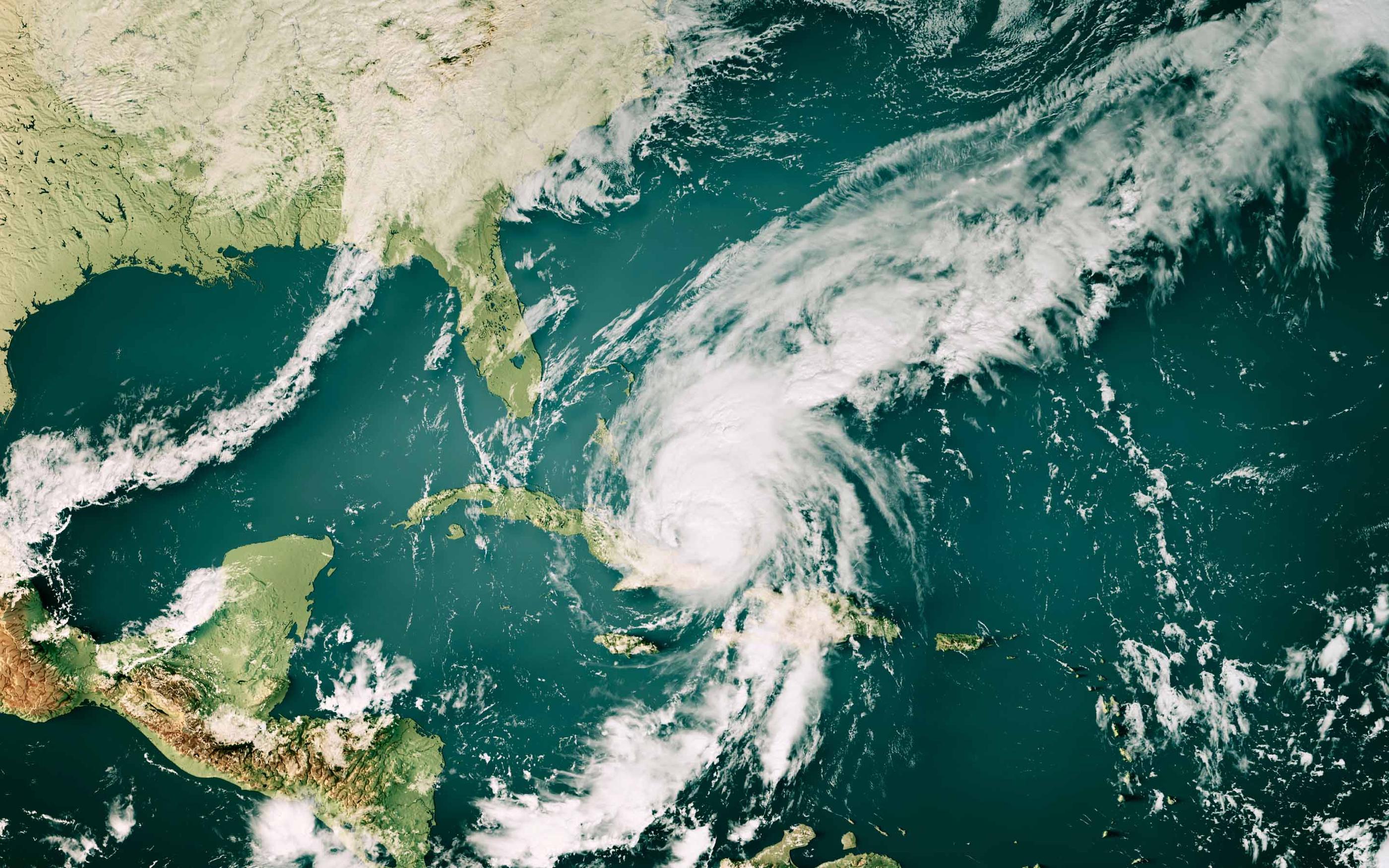
This year, the world is facing a ‘super’ El Niño, likely amplified in its nature by ongoing climate change. This is happening at a time where businesses are also facing significant geopolitical and economic pressures that heighten volatility.
In this environment, we believe you need to challenge modeling assumptions and build your own view on business vulnerabilities. While El Niño weather cycles have always driven weather volatility, by shifting rainfall patterns, increasing drought risk in some regions and triggering intense flooding in others, there is evidence that El Niño and other climate or weather patterns are starting from a higher baseline in the wake of ongoing climate change.
As sea surface temperatures rise, each El Niño now builds on an already warmer system, rendering what once seemed extreme or ‘super’ El Niño cycles as more likely. When the baseline for cycles that have long sat within standard catastrophe modeling change, risk and insurance managers need to adapt to protect businesses.

Now is the time to build your own risk profile, one that may differ from the standard insurance view.
Because while insurance models show how your risk may be priced, they may not show how disruption from increasingly common, extreme weather cycles will move through your business.
Below, we look at why and how you need to challenge market assumptions on your exposures to more regular ‘super’ El Niño cycles and wider climate volatility that’s becoming a constant feature of global operating conditions.
How does El Niño amplify physical climate risk for your assets and operations?
If you operate across multiple regions, a strong or ‘super’ El Niño can bring hotter, drier conditions in some locations and heavier rainfall in others. That can increase drought, heat and wildfire risk in parts of Australia, Southeast Asia and the Americas, while raising flood risk in parts of South America, East Africa and the southern US. It can also shift storm patterns, with fewer Atlantic hurricanes and more in the Pacific.
A severe El Niño can disrupt supply chains, reduce water availability and damage infrastructure, with knock-on effects on production and energy reliability.
If your business is global, a weather shock in one part of the world can quickly become an operational or financial problem somewhere else in your value chain. A severe El Niño can disrupt supply chains, reduce water availability and damage infrastructure, with knock-on effects on production and energy reliability.
Past strong El Niño events, including 1997–98 and 2015–16, showed the same pattern of a single climate pattern triggering simultaneous stresses across multiple regions and business dependencies: drought in some regions, flooding in others and widespread disruption across food, water and livelihoods.
Risk, insurance and sustainability functions need to reassess how these extreme events compounded by geopolitical volatility could interact across your value chain regularly.
Scenario stress testing, which we look at in more detail below, can help you move away from looking at risks in silos. It also provides a framework to quantify cascading impacts, understand how your risk profile could change and judge exactly how much disruption your organization can absorb.
Are standard catastrophe models still tracking the reality of climate volatility?
You may need to start treating insurance-recognized natural catastrophe model outputs as your starting point for deeper analysis rather than a full picture of your risk.
Most organizations still rely on catastrophe models to quantify risk, often by looking at perils such as flood or windstorm one at a time.
While these models remain useful, many depend on historical claims data and insurance-market assumptions that may no longer hold under today’s climate conditions and compounding geopolitical pressures. They often reflect an insurance market view of risk: how the market sees exposure by peril, sector or line of business. The view you need to better manage the risks is one that considers the specific vulnerabilities, dependencies and interconnections across your assets, operations and value chain.
If model inputs don’t reflect the already climate amplified conditions and specific vulnerabilities in your operations and value chain to these compounding effects, they can understate potential losses.
The insurance model view may tell you you’re adequately protected by being covered for a one-in-200-year loss. But when you build your own risk profile, based on your locations, suppliers, processes and dependencies, you could find the odds are closer to a one-in-50-year event and your organization is critically underinsured.
How can you better risk manage recurring extreme climate events?
Start by defining your risk tolerance in financial terms: how much loss you can absorb and how often. Then stress-test those thresholds against scenarios that reflect current conditions and cascading effects, rather than historic averages.
Such inputs will give you a better basis for benchmarking risk appetite and deciding what level of likelihood and financial impact you're prepared to absorb on your balance sheet. If probabilities have shifted, your current appetite and limits may no longer protect you.
Use your analysis to decide what to retain, what to transfer and where higher limits or additional protection make financial sense. In a soft market, buying additional protection may cost less than absorbing the financial impact of a severe event.
Now is the time to build your own risk profile, one that may differ from the standard insurance view.
Related content
Build in safety margins where uncertainty remains. Climate scenario stress testing, which you might already be carrying out to meet your climate disclosure obligations, can help you test those margins and connect risk management with insight from your sustainability team.
How can granular risk analysis support better decisions in the face of extreme climate volatility?
High-level models can't capture the specific vulnerabilities of your assets and operations. Carrying out more detailed assessments, supported by scenario stress testing, helps you build a business-specific view of risk.
By showing how exposure turns into loss across your operations and value chain, you build on the generalized market view to develop a clearer understanding of where disruption is most likely to occur, how it could spread and what the financial consequences could be.
Start with site-level engineering insight on construction, protection measures and local hazards. Combine this with hazard data, adjusting model assumptions and calibrating results to give you a stronger foundation for deciding whether to mitigate, retain or transfer risks that’s grounded in your business realities.
How can you align risk financing with a more volatile climate?
Once you have a clearer view of your true risk profile, you can align financing with a future where extreme events happen more often.
That may mean combining traditional insurance with captives, alternative risk transfer, targeted retention and adaptation measures, based on whether you’re best placed to retain risk and where transfer still adds value.
The stronger your understanding of risk, the more confidently you can decide which losses belong on your balance sheet and which you should transfer and where adaptation can reduce losses and improve the economics of your overall program.
What first steps can risk managers take to manage ‘super’ El Niño cycles and climate hyper-volatility?
We believe priority moves for risk and insurance managers are:
- Challenge the modeling assumptions behind your current risk strategy and don't accept model outputs or market signals without scrutiny.
- Build internal expertise so your team understands how models work, where they fall short and how changes in frequency, severity, exposure and interdependency affect results.
- Invest in building your own risk view with granular analysis, scenario stress testing and specialist engineering assessments, then use that insight to guide mitigation and financing decisions.
- Run forward-looking climate scenario stress testing that reflect continued warming and use them to build safety margins within your near- and longer-term planning horizon. Assume severe years can now occur within the period you're planning for, not at some distant point, to get as close to your actual risk profile as possible. Where possible, draw on the scenario work your sustainability team may already be doing for disclosure and transition planning.
- Treat volatility as a constant so you can adapt earlier, absorb shocks and maintain continuity.
To strengthen your climate and hyper-volatility risk management in the face of heightened volatility, get in touch with our specialists. And for more insights, read how to outsmart amplified climate and geopolitical risks and learn the strategies to thrive in the face of hyper-volatility driven by these complex risks.
Disclaimer
WTW hopes you found the general information provided here informative and helpful. The information contained herein is not intended to constitute legal or other professional advice and should not be relied upon in lieu of consultation with your own legal advisors. In the event you would like more information regarding your insurance coverage, please do not hesitate to reach out to us. In North America, WTW offers insurance products through licensed entities, including Willis Towers Watson Northeast, Inc. (in the United States) and Willis Canada Inc. (in Canada).
Author

Climate risk contact

Build in safety margins where uncertainty remains. Climate scenario stress testing… can help you test those margins and connect risk management with insight from your sustainability team.