Protecting what matters most for high-net-worth families
For high-net-worth and ultra-high-net-worth families that typically have a family office, the stakes of personal liability have increased significantly in recent years. A single automobile accident, a water leak in a high-rise condo, an injured hired contractor, or even a mis-tweet by a family member can expose decades of accumulated wealth to a liability claim that could cost millions. That is why understanding personal liability and excess liability insurance, what it covers, how it is underwritten, where claims come from and how much protection is truly appropriate, is one of the most important conversations any affluent family or family office can have with their advisors.
This article draws on a recent online roundtable discussion among our WTW personal lines specialists and outside risk experts attended by family office advisors to walk through the fundamentals, the nuances and the real-world scenarios that make this coverage so critical.
What is personal liability insurance?
Personal liability insurance is designed to protect an individual and their household against claims for injuries or property damage to others. That definition is simple enough, but it encompasses a surprisingly broad territory that's worth unpacking carefully.
The coverage applies to three primary categories of harm. The first is personal injury, which captures non-physical harm such as emotional distress, mental anguish, libel, slander, defamation of character, malicious prosecution and wrongful detainment. The second is bodily injury, the physical harm caused to another person, including cuts, bruises, broken bones and other physical trauma. The third is property damage to others, which covers the cost of damage you or a family member causes to someone else's property.
In practice, most people encounter personal liability coverage through what we call core underlying policies: automobile insurance, homeowners’ insurance, condominium policies and policies covering recreational vehicles, watercraft and similar assets. Each of these typically carries a personal liability component. For most middle-market households, those underlying limits, often capping somewhere between $300,000 and $500,000 per occurrence, are sufficient. For high-net-worth families, they are rarely enough.
Personal excess liability-the umbrella coverage
A personal excess liability policy, commonly referred to as an umbrella policy, sits above those underlying policies and provides an additional, higher layer of protection. Where a standard auto or homeowners’ policy might top out at $500,000 or $1 million in liability coverage, an excess liability policy typically starts at $1 million and can extend significantly beyond that, up to $25 million, $50 million, or even $100 million in the specialized high-net-worth market.
The excess policy responds when a covered claim exhausts the limits of an underlying policy. It also often broadens coverage beyond what the underlying policy provides, picking up personal injury exposures, like libel and slander, that standard mass-market policies may not include at all.
Several optional coverage enhancements are particularly relevant for sophisticated families and family offices. Directors and Officers (D&O) coverage can be purchased as an endorsement to a personal excess liability policy, protecting individuals who sit on nonprofit boards, which among high-net-worth families might mean serving on several boards simultaneously. Employment Practices Liability Insurance (EPLI) addresses the exposure that comes with employing domestic staff (chefs, housekeepers, landscapers, personal assistants), providing protections analogous to what an employer in a corporate setting would carry for claims such as wrongful termination or discrimination. Uninsured and underinsured motorist coverage at the excess level is another important option, protecting the insured family when someone without adequate insurance causes an accident that injures them or damages their property.
What personal liability insurance doesn't cover is equally important to understand. Intentional acts are universally excluded, as the coverage is designed for accidents and negligent conduct, not deliberate harm. Activities that fall squarely within the scope of commercial or professional activity are also generally excluded from personal policies, because those exposures are better addressed by commercial lines coverage. And there are grayer areas in between (renting a home on a short-term basis, operating an incidental farming enterprise on the property, or running a small business from a residence) where the applicability of personal coverage versus a commercial policy isn't always obvious and should be reviewed carefully with an insurance advisor.
Why this coverage is different for high-net-worth families
The simple answer is that high-net-worth families have more to lose. The scope and value of assets owned by an affluent family are substantially broader than those of a typical household. That might mean multiple homes in different jurisdictions, fine arts, jewelry and other valuable collections, aviation assets, yachts, an extensive vehicle fleet and privately held business interests. Each of those assets introduces its own layer of liability exposure, and the cumulative risk profile is meaningfully different from, and more complex than what a standard insurance carrier is designed to handle.
There's also the dimension of a public profile. High-net-worth families, particularly as their wealth grows, tend to attract media attention. They are quoted in the press, profiled in business publications and are active on social media platforms. That visibility can make them targets in litigation, because a perceived ability to pay, what practitioners sometimes call "deep pockets", is a real factor in how plaintiffs' attorneys evaluate whom to sue and for how much. The United States is the most litigious country in the world, and the combination of significant assets and public visibility meaningfully increases the risk that a given incident will generate a lawsuit with aspirational damages well beyond what might be sought against a middle-market defendant.
Critically, the liability coverage that specialized high-net-worth insurers provide follows the insured around the world. That worldwide coverage is a meaningful differentiator from mass-market policies, which may limit coverage geographically. For families with international homes, frequent international travel and assets abroad, this global scope of protection isn't a luxury; it's a necessity.
The underwriting landscape: What you should know
We're seeing a meaningful evolution in underwriting trends for personal excess liability. Understanding those trends helps families and their advisors navigate the coverage conversation more effectively.
The personal excess liability market broadly divides into two segments. Mass-market carriers serve a wide range of clients and typically can provide between $1 million and $5 million in excess liability limits, with some going to $10 million in rare circumstances. Specialized high-net-worth carriers, by contrast, offer substantially more capacity; $25 million, $50 million and $100 million limits are achievable in this market. The contract terms also differ materially. High-net-worth policies are generally broader, including personal injury coverage for libel and slander, less restrictive definitions for incidental business activity and fewer coverage limitations overall.
The high-net-worth personal lines insurance market in North America is estimated at approximately $40 billion (based on industry estimates), though only about $12 to $13 billion of that is served by carriers that specifically focus on the high-net-worth segment. That means a significant population of affluent clients may be insured with carriers whose contracts aren't designed for their risk profile, which might mean a significant gap in coverage.
From a claims and loss trend perspective, automobile liability remains the primary driver of excess liability claims frequency and severity. Going into the COVID-19 pandemic, automobile claim frequency and severity were already escalating. During the pandemic, with fewer vehicles on the road, those trends temporarily reversed. Coming out of the pandemic, a somewhat counterintuitive pattern emerged: while overall traffic volume remained somewhat reduced, the severity of accidents increased, driven by faster driving speeds, greater distraction from in-vehicle technology, and more pedestrian-related incidents as people on phones and e-bikes shared roadways with drivers. Today, frequency is returning to pre-pandemic levels while severity remains elevated.
A second material and growing underwriting concern is personal injury from defamation, libel and slander. Twenty years ago, personal injury exposure was largely confined to individuals with genuine public profiles, those whom journalists sought out or who appeared in traditional media. Today, access to a public platform is essentially universal. Social media means that anyone with a smartphone can amass influence, publish opinions to thousands or millions of followers and inadvertently step into liability exposure that was once the exclusive province of celebrities and executives. This has materially changed how underwriters think about personal injury risk within a personal excess liability portfolio.
A third area of underwriting focus, particularly relevant in urban markets, is property damage liability arising from high-value residential buildings. When a high-net-worth individual in a luxury condominium building is negligent and causes water damage or fire that spreads through multiple adjacent units, the resulting property damage claims can rival the severity of a serious automobile accident. The concentration of very high-value properties in buildings shared by equally affluent neighbors creates an exposure profile that underwriters watch closely.
Real claims, real consequences
Claims are where the abstract becomes concrete. The scenarios we see in the real world, and we see them regularly, illustrate exactly why adequate limits and broad coverage matter so much.
Automobile accidents are the most frequent source of serious excess liability claims. A recent example involved a youthful driver, home from college, driving a high-performance electric vehicle, who lost control, struck a tree and killed two occupants while severely injuring a third. That claim resulted in a multi-million-dollar settlement. High-performance electric vehicles, with their extraordinary acceleration and the relative inexperience of many young operators, represent an emerging risk that makes carrying appropriate limits of liability and excess liability protection critical.
Pedestrian accidents, particularly in dense urban environments, generate another category of severe claims. In one recent case, a mature, careful driver was backing up slowly in traffic when a parade disrupted normal traffic flow. He inadvertently struck an elderly pedestrian, a resident of the same building, who sustained severe orthopedic injuries requiring more than 20 surgeries. The matter resolved in a settlement in the eight-figure range. This isn't a reckless driver scenario but an ordinary situation with catastrophic consequences.
Condominium and co-op renovations represent an underappreciated but increasingly significant liability exposure as well. When a high-net-worth individual undertakes a renovation in a luxury building, building management often requires the unit owner to sign an alteration agreement, a legally binding contract accepting all liability for damages arising from the work being performed in the unit. Many residents sign these agreements without fully understanding their implications. If a general contractor or subcontractor causes a fire, a water flood, or structural damage during the renovation, that alteration agreement can make the unit owner financially responsible for damages to neighboring units even if the direct cause was the contractor's negligence. Water travels down through buildings and smoke travels up, so a single renovation incident in a luxury high-rise can generate claim losses totaling millions of dollars. And, if the insurance carrier wasn't notified in advance of the renovation, coverage may be further complicated.
Injured workers doing services on behalf of a high-net-worth family at their residences are another area seeing a recurring source of claims. Properties maintained by household staff, contractors and specialty vendors (landscapers, pool technicians, roofers and electricians) create constant liability exposure. Contractors who lack adequate workers' compensation or general liability coverage can, in certain jurisdictions, transfer their exposure to the property owner. Under “joint and several liability” laws that exist in some states, a homeowner found to have even 1% of legal responsibility for an injury can be held liable for the entirety of the damages. Falls from ladders and roofs, electrocution incidents and similar severe injuries have resulted in multimillion dollar claims paid under personal excess liability policies.
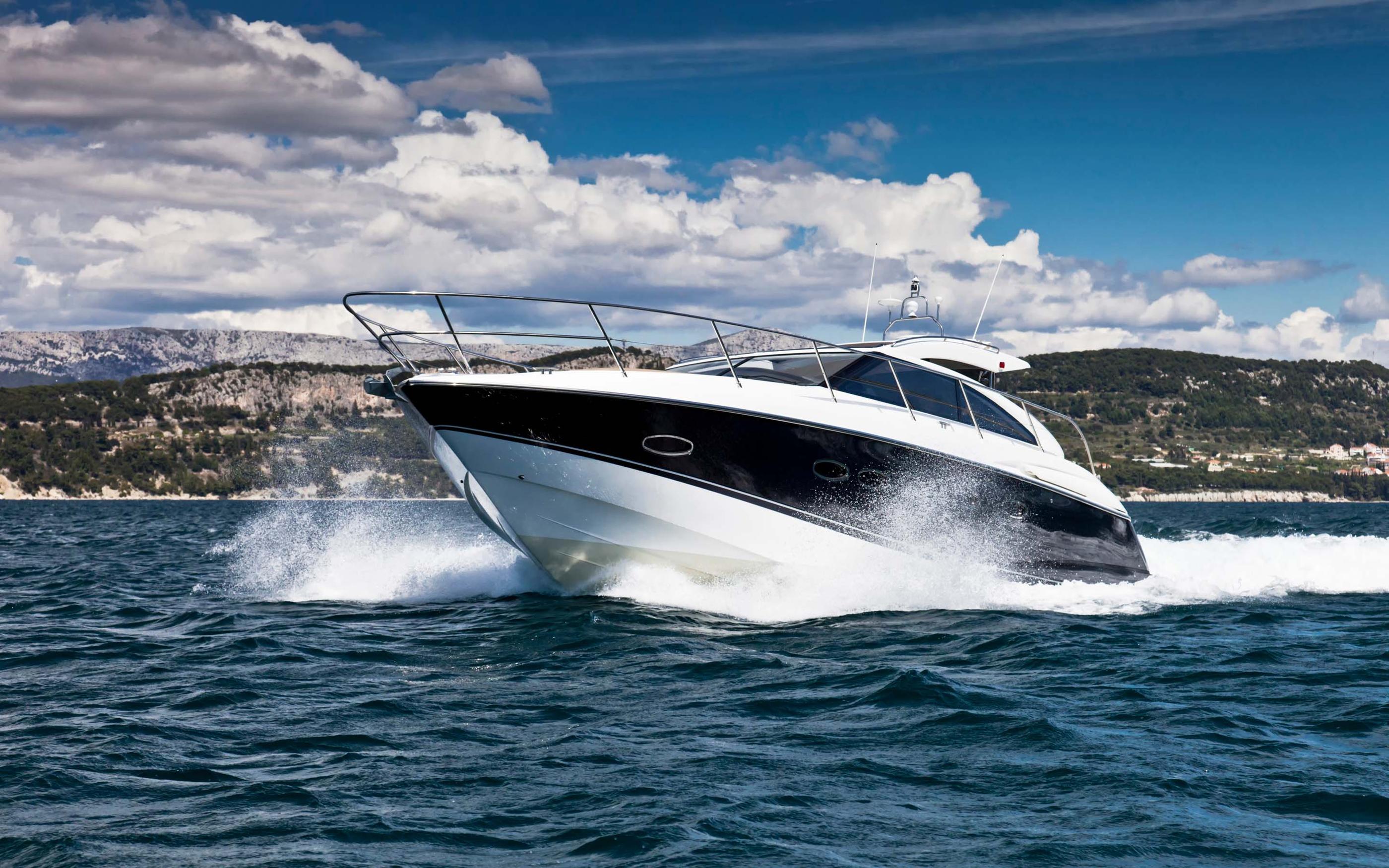
Recreational vehicles and watercraft deserve special mention. Golf carts, ATVs, snowmobiles, and jet skis, the assets that are more often found at high end residences and vacation homes, carry a liability exposure that is often underestimated precisely because they seem innocuous. In particular, golf carts and ATVs lack the safety features of automobiles and are frequently operated by inexperienced or young family members. We've seen severe traumatic brain injury claims arising from golf cart accidents and devastating orthopedic injuries causing millions of dollars in liability payments.
How much coverage is enough?
Determining appropriate limits for personal excess liability coverage is one of the most important conversations we have with clients, and the answer is more nuanced than most people expect.
The foundational principle is to insure to net worth. If a family's net assets total $10 million, they should carry at least $10 million in personal excess liability coverage. If net assets total $40 million or $50 million, coverage should reflect that. The logic is straightforward: in a worst-case scenario (a catastrophic accident, a jury verdict with punitive damages, a compound claim) a plaintiff's attorney will look for every recoverable dollar. Insurance that falls short of net worth leaves assets exposed.
For families of extraordinary wealth, those worth hundreds of millions or more, the guidance evolves. In those cases, some families may consider purchasing higher limits depending on their circumstances. The cost of insurance, even at very high limits, is modest relative to the potential exposure it protects. A $100 million excess liability policy may seem like an extravagance until the moment a lawsuit with eight-figure aspirational damages is filed.
There's also a forward-looking dimension to this analysis. A family that's worth $12 million today may experience a liquidity event (the sale of a business, a significant inheritance, an IPO) that transforms their net worth to $50 million or more within a few years. Coverage that was appropriate before that event becomes inadequate after it. Major financial milestones should always trigger a review of insurance limits, and advisors should build that conversation into the lifecycle planning they do with families.
One consideration that occasionally comes up is self-insurance: the idea that an ultra-high-net-worth individual has sufficient resources to absorb a large liability claim without insurance. In our experience, some clients choose not to self-insure for reasons that go beyond the financial math. Insurance companies bring something to a claim that individual wealth can't easily replicate: a national network of specialized defense counsel, expertise in managing complex multi-party litigation and the institutional muscle to negotiate efficient resolutions. Specialty insurers negotiating defense costs through longstanding panel counsel relationships can defend a claim far more cost-effectively than a private individual hiring their own attorney at $1,500 to $2,000 per hour. The value of that defense infrastructure is real and substantial. Importantly, with a properly structured excess liability policy, defense costs and legal fees are paid outside of and in addition to the policy limit, meaning a $25 million policy remains fully intact to pay a judgment even after significant defense expenses have been incurred.
Finally, for ultra-high-net-worth clients where a single carrier's capacity is insufficient, layered coverage, an "excess over excess" structure is available. This involves placing additional carriers above the primary excess liability policy to build a higher total tower of protection. It introduces some complexity, particularly around coordinating coverage between carriers, and should be approached thoughtfully. It's a viable solution for families who need more protection than any single carrier can provide.
LLCs, trusts and the named insured question
A significant proportion of high-net-worth families hold their assets (homes, real estate, vehicles and watercraft) through legal entities such as limited liability companies (LLCs) or revocable and irrevocable trusts. Estate planning attorneys create these structures for sound reasons, primarily to ring-fence assets so that the liability exposure associated with one property doesn't travel to others and to minimize estate exposure. But the interaction between those structures and personal insurance is an area where mistakes are commonly made and where early, interdisciplinary coordination pays significant dividends.
The fundamental principle is this: the entity that is deeded as the owner of a property should be listed as the named insured on the insurance policy covering that property. If a home is held in the name of "The Smith Family Trust," that trust, not the individuals, should appear as the named insured. The named insured has specific rights under the policy: the ability to make changes to coverage, to cancel the policy and to receive claim proceeds. Those rights belong to the entity that owns the asset.
This matters practically because an estate planning structure that successfully ring-fences assets provides little protection if the insurance policies are structured inconsistently with the ownership scheme. If an LLC owns a property but an individual is named on the insurance policy, the intended separation between assets may not be honored in a claim scenario.
Equally important is understanding that ownership structures don't eliminate personal liability exposures. Negligence is generally created by people, not entities. An individual remains personally responsible for negligent acts regardless of how cleverly their assets are structured. The insurance program often works best when it covers both the entities that own assets and the individuals whose actions create liability, and those two structures need to be deliberately aligned. And, the entities themselves may also require their own commercial insurance program if the scope of the entity is larger than just owning a personal property.
That is why we often see better outcomes when clients invite their insurance broker to the table when estate planning attorneys and accountants are establishing or modifying ownership structures. The insurance structure and the legal structure need to work together, and alignment from the start is far less costly than discovering a mismatch after a claim.
The family office entity: A separate conversation about liability
While the primary focus of personal liability planning is the individual family members of a family office, the family office as an entity has its own distinct insurance needs that deserve a brief mention.
A family office, whether single-family or multi-family, functions essentially as a business. It employs staff, renders investment and administrative services, makes financial decisions with fiduciary implications and operates in ways that generate commercial liability exposures. The insurance program for a family office entity is fundamentally a commercial program, covering risks such as crime, professional liability, fiduciary liability, employment practices and directors and officers liability at the entity level. These aren't personal lines coverages, and they aren't addressed by the same policies that protect individual family members.
The interplay between the commercial coverage protecting the family office entity and the personal coverage protecting the family members it serves is an area where thoughtful, coordinated advice is essential. Both programs need to be robust, and the gaps between them need to be identified and closed.
The bottom line
Personal liability and excess liability insurance isn't a commodity purchase for high-net-worth and ultra-high net worth families. The risks are real; the claims are severe, and the consequences of inadequate coverage, or coverage that is poorly structured, can be life-altering. We see that in the claims we manage and the conversations we have with families every day.
The good news is that the specialized market for high-net-worth personal insurance is deep, sophisticated and well-equipped to meet these needs. Limits of $25 million, $50 million and beyond are available. Coverage can be tailored to address the specific exposures created by various assets, domestic staff, social media profiles, recreational activities and complex ownership structures.
We encourage every family and every family office to treat this as an annual conversation, reviewing limits in light of net worth, checking that entities are correctly named on policies, confirming that renovations and new assets are reported to insurers and ensuring that personal and commercial programs are designed to work together rather than to create gaps. The families who take that conversation seriously are the ones we see protected when it matters most.
For more information or advice on personal and excess liability risk and insurance considerations for high-net-worth families and family offices, please contact the authors below or go to Personal Lines Insurance.
Disclaimer
WTW hopes you found the general information provided here informative and helpful. The information contained herein is not intended to constitute legal or other professional advice and should not be relied upon in lieu of consultation with your own legal advisors. In the event you would like more information regarding your insurance coverage, please do not hesitate to reach out to us. In North America, WTW offers insurance products through licensed entities, including Willis Towers Watson Northeast, Inc. (in the United States) and Willis Canada Inc. (in Canada).
Authors