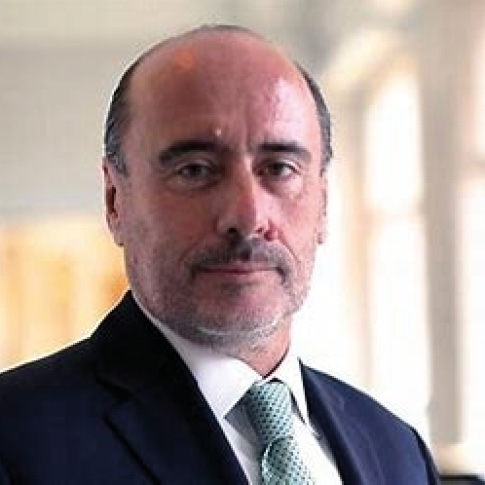
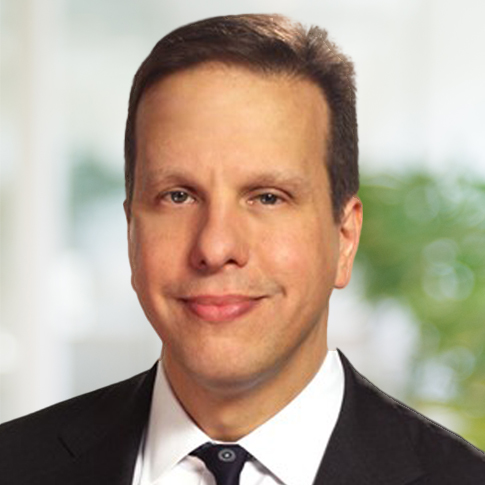
JAMES DORION: Thanks, Neil. Happy to be here.
NEIL HARRISON: So look, before we get into our topic, one of your favorite topics-- I know-- each quarter for me, I reflect on what's happening in the world of claims. And there are some consistent themes. And one of those is the importance and impact of social inflation and nuclear verdicts. So this time around, rather than just mention it in passing, I thought it would be good to get into some detail on the topic. And obviously, you live in that world. Nobody better than you to do that for us and for all of the people who are listening.
We have a global audience. And this has historically, perhaps-- maybe not now-- but historically been a bit of a US, North America-type issue. So if you don't mind, let's start with the basics. And what is social inflation, and what are nuclear verdict? Let's start there. And then we can drill into a bit more detail.
JAMES DORION: Sure thing. Well, social inflation and nuclear verdicts are closely related concept in insurance and litigation trends. But it's, like you said, especially relevant in the US. And Social inflation itself is the-- it refers to the rising cost of insurance claims beyond what can be readily explained by normal economic inflation-- say for wages or medical costs. And it's being driven by plaintiff-friendly juries, litigation financing, just theories of liability, and just general distrust of institutions.
The result, though, is that there's just more frequent and more severe and unpredictable liability cases. And social inflation is interesting-- it's a semi-benign. It's a thing happening in the background. And many insurers have taken to reframing it as litigation abuse to give it a more negative moniker-- that it's an adverse trend that's really affecting everyone in the industry.
The social inflation, but in the nuclear verdicts themselves-- nuclear verdict is typically a jury award in excess of 10 million. Sometimes they'll say, oh, maybe it's excess of 25. But they're just these disproportionately large verdicts. And you can think of it like, social inflation is the trend that creates the environment, and the nuclear verdicts are the outcomes-- the visible symptom.
NEIL HARRISON: OK, good. Got it. That's helpful. And I mentioned that you live in this world. How long have you been living in this world? From a US or North America perspective, this isn't a new phenomenon, right?
JAMES DORION: The phenomenon has been around, to some extent, for decades. But the term is newer, but where we've really seen it is from a roughly around 2010 to the present. It's the last 15 years when we've seen just the litigation funding growth, the digital evidence-- where all the bad emails and texts that inflame juries have come out-- and just more sophisticated plaintiff strategies. So really, these last 15 years have been the worst. Same thing for the nuclear verdicts. There was occasional large verdicts, but this explosion in the frequency of verdicts in excess of 10 million has been over the past 15 years.
NEIL HARRISON: OK. All right. But now very much an established part of the claims picture in your part of the world. I think sometimes these conversations can be a bit abstract unless we get into a couple of examples. So you mentioned the 10 million, 20 million, or 25 million moniker-- if you want to call it that-- that goes to the nuclear verdict phrase. But give us a couple of examples just to help everybody to understand what these really can look like.
JAMES DORION: Well, I mean, that's the bottom end of the bracket in these examples. I mean, just looking last year, like Johnson & Johnson took a $1.5 billion verdict for a single defendant in the talc exposure case. Now, that had all the classic profile aspects where it was heavy punitive damages, really strong emotional narrative about cancer and long-term exposure, and then allegations of failure to warn.
Another example is that there was a $951 million medical malpractice verdict against a defendant hospital in Utah. Again, single-plaintiff injury, was a birth injury, delayed C-section, catastrophic brain injury. But why it matters is it's just showing that even traditional medical malpractice cases are now reaching those near-billion-dollar levels, and it just reflects juries pricing lifetime care and what that punitive sentiment does to how they're rendering verdicts.
One thing is important to note, though, too, is we always talk about nuclear verdicts. But what it does in our industry-- I see, and I know you see as a practical matter-- it drives massive settlements with the goal of trying to avoid nuclear verdicts. When they've got bad facts and a bad case, it can drive settlements far in excess of what most reasonable observers would consider to make sense.
NEIL HARRISON: Yeah, no, for sure. Look, I mean, those are massive numbers, and I know startling examples for people. I guess in many ways the big question is, what can be done about it? If you're sitting in the insurer chair, sitting in our chair, and perhaps most importantly, sitting in the chair of a client. What are the tactics? What are the opportunities to mitigate what is fundamentally now almost like an environmental exposure that comes with operating in the United States?
JAMES DORION: There isn't a single fix for social inflation and nuclear verdicts. But what's working best is when we see a coordinated strategy across insurers, brokers, and clients. And a lot of it involves just earlier, smarter intervention-- recognizing when there's been a catastrophic injury, you've got a likable plaintiff, or there's problematic internal documents-- that just making sure you're being proactive in your settlement efforts rather than waiting for exposures to multiply. And just also in the litigation approach, it's making sure you're investing in top-tier counsel council, and that you've got a humanized corporate story to the extent possible, and then also using mock juries to test arguments and to have a data-driven jury research.
And now from the broker standpoint, we just make sure we're out there helping clients understand the true loss potential, and benchmarking against peer verdict and settlement exposure data, and then also designing programs that anticipate these outcomes. Making sure that insurers engage early and are aware at all potentially impacted layers. And then just help coordinate defense counsel's selection and act as a bridge between the insurers, the clients, and the legal teams.
Clients-- they really just have to work to prevent bad facts, get a safety culture and documentation and just making sure there's training and compliance with those safety standards and just doing what they can to eliminate those damaging emails and texts. Because in many cases, the verdict turns on what the company knew, not just what happened. And just doing what they can to prepare for litigation before it happens-- just preselecting defense counsel, the mock trials, as I mentioned, and making sure that corporate narrative is really well honed.
They also can look at things like these federal removal strategies where-- because federal court, as compared to our state courts in the US, is just less dangerous and less subject to wild swings as well as plaintiff influence. So what works best-- when clients, insurers, and brokers are all aligned. The insurer identifies the risk and prices correctly, and the broker connects the data, the coverage, and the claim strategy. And the client does their best to eliminate bad facts and prepares early.
NEIL HARRISON: That's great. That's very helpful. Let me globalize the issue a little bit. We've talked about the US. It's a phenomenon that started in the US. I think I'm right in saying we're starting to see this as a little bit of a trend in some other parts of the world. So perhaps last question I'll send across your way-- what are we seeing internationally, and how quickly is the rest of the world going to start to see some of these kind of numbers and issues that you're talking about from the US perspective?
JAMES DORION: Well, definitely an export that no one wants. But we are seeing some spread. In the United Kingdom, we're seeing rising severity on liability and motor claims, expanding duties of care, greater use of litigation funding. And there's periodic large awards, but they're still far below typical US levels because there's just some systematic constraints, like limited punitive damages and just more predictable jury awards, and plus the whole loser pays aspect of the system, where the legal costs go like-- it makes one less inclined to bring a frivolous claim and take a shot at this lottery-ticket type chance of winning.
And then in Australia, one of the closest analogous jurisdictions to the US, we're seeing definitely seeing growth in securities class actions and product liability claims. But at the same time, there's tort reform caps and still restrains outcomes. Canada, we're seeing also severity spiking. But still far fewer nuclear outcomes.
And in the EU, we're seeing a more coordinated mass claims-- typically, statutory or judge-driven and punitive damages are rare or of nonexistent. And this is because the US is different, because it's like our jury system here and the availability of punitive damages, how lawyers are paid with contingency fees, and then also finally our broad discovery. We allow plaintiffs to dig through corporate records to a degree that other jurisdictions don't. And then that's where those bad documents and bad facts can arise.
So what is globalizing, though, is like the litigation funding and just more coordinated activity of the plaintiff's bar. Plaintiff's bar-- they're so well funded and entrepreneurial that we're seeing that spread across borders. And also social media amplifying reputational risk, which wants our clients, of course, to be able to shut down these risks more quickly. So for multinational clients, the exposure is no longer just US-centric. They need to have a consistent claims and legal strategy, and local incidents can become these cross-border litigated events.
NEIL HARRISON: Jim, thank you very much for doing this, for taking some time to share your expertise. I think everyone will have learned a lot. And listening to somebody like you get into the details behind the headlines on this, I think is extremely helpful. So thanks for your contribution on this episode of Marketplace Insights podcast, and I look forward to seeing everybody on the next version of the claims podcast as part of this overall series. Thanks again, Jim.
JAMES DORION: Good to speak with you. Neil, thanks.
SPEAKER: Thank you for joining this WTW podcast featuring our latest global market commentary. WTW offers insurance-related services through its appropriately licensed and authorized companies in each country in which WTW operates. For further authorization and regulatory details about our WTW legal entities operating in your country, please refer to our WTW website. It is a regulatory requirement for us to consider our local licensing requirements.
The information given in this podcast is believed to be accurate at the time of publication. This information may have subsequently changed or have been superseded, and should not be relied upon to be accurate or suitable after this date. This podcast offers a general overview of its subject matter. It does not necessarily address every aspect of its subject or every product available in the market, and we disclaimer all liability to the fullest extent permitted by law.
It is not intended to be, and should not be used to replace specific advice relating to individual situations, and we do not offer, and this should not be seen as legal, accounting, or tax advice. If you do intend to take any action or make any decision on the basis of the content of this podcast, you should first seek specific advice from an appropriate professional.
Some of the information in this podcast may be compiled from third-party sources we consider to be reliable. However, we do not guarantee and are not responsible for the accuracy of such. The views expressed are not necessarily those of WTW. Copyright WTW 2026. All rights reserved.