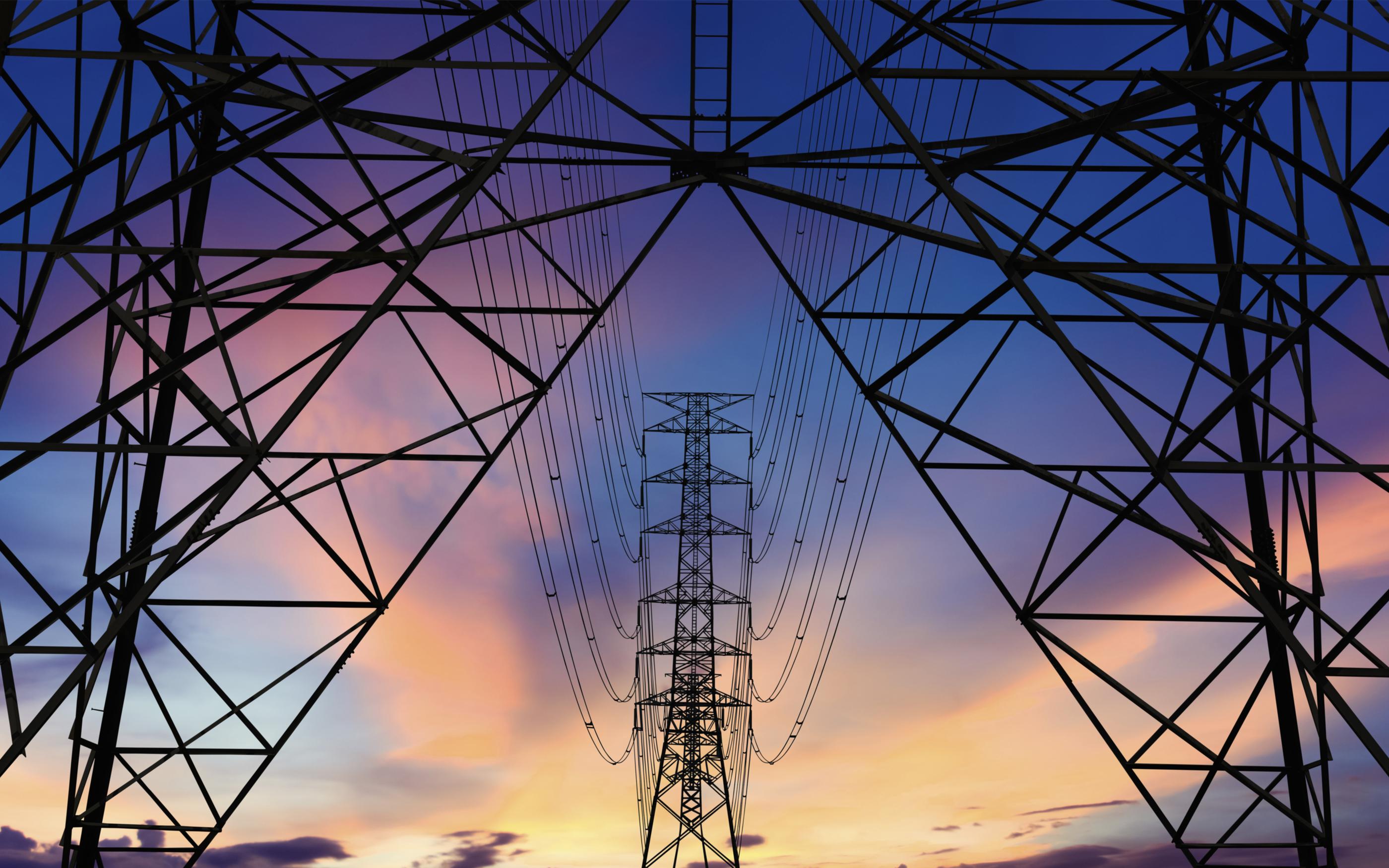
Whether the future is a risk or an opportunity will depend on power companies’ business goals and risk management strategies.
Power generation is at the heart of the energy system, providing critical systems and infrastructure as the world electrifies and evolves. Energy use could double by the end of the century, with geopolitical tensions, new technologies, a changing climate and variable economic outlooks all key drivers influencing the direction and pace of change.
Imagining that future is hard but the scale of change could be huge. 30 years ago, life looked very different. In 1990s 3.5” floppy disks were still in use, the smart phone was still nearly two decades away, Google was an idea in a university dorm room called Backrub.
Getting the balance right: Power companies are acutely aware of what’s at stake
Whether the future is a risk or an opportunity will depend on power companies’ business goals and risk management strategies. The momentum behind electrification is growing. And risk leaders are challenged in making the right decisions today, to build a better tomorrow for their business.
- Identify your risks and opportunities, making use of industry specialization. Risk leaders will be able to overlay potential sector-specific scenarios to test risk resilience and integrate lenses of risk and opportunity into strategic planning.
- Take an objective view of your resilience, backed by data. Analytics will be key. Risk engineering can provide well-designed risk models provide in a world of changing climates, higher frequency and severity natural catastrophe events, globalized distribution of higher value assets and more complex supply chains and revenue streams, to help risk leaders cut through complexity.
- Optimize your insurance spend to deploy capital strategically. Analytics point to areas to retain risk that’s costly in the market, or how best to spend on premium across all risks and set your limits at the most efficient level, in line with your organization’s risk tolerance. Risk and finance leaders can make decisions knowing there will be no better option, and savings made on premium spend can then be deployed strategically in ways that best support the organization’s future growth objectives.
As the demands on the power sector evolve at pace, future-ready leaders will need to explore three key trends:
Electrification and networks
The bottom line is global grid capacity needs to grow 2.5 times its current size, with annual expenditure on grids more than doubling to $970 billion by 2050 to achieve the goals of the Paris Agreement to keep global warming to no more than 1.5°C.
While the technologies to diversify energy production are still at different stages of development, more energy users will be adopting decentralized energy generation, storage and flexibility.
Speeding up grid expansion will require substantial technology investment over the coming decades.
Connecting these networks together is a key area of focus. Bloomberg New Energy Finance (BNEF) estimate that 152 million kilometers of power lines may be needed for the world to reach net-zero by 2050.
“Speeding up grid expansion will require substantial technology investment over the coming decades. Every project is unique. If controls are not put in place for manufacturing and installation quality, the risk of a loss increases, and pricing may start to climb. Access to robust expertise – whether that’s in nuclear or subsea cables – is essential to develop a tailored program that aligns with your company's specific requirements, ensuring effective risk mitigation and optimal operational outcomes.” Thomas Mallindine, Head of Energy Transition and Development, Natural Resources Global Line of Business, WTW
Demand and consumption
Power demand and consumption are becoming more dynamic and complex, driven by electrification, digitalization, energy efficiency improvements, societal values, and the growing role of renewable energy.
Computers accounted for 1-2% of global electricity use in 2018 and are projected to hit 8-21% by 2030. Updated regulations and technological improvements, including on efficiency, will be crucial to moderate the surge in energy consumption from data centers.
“Greater numbers of diverse energy users will be adopting decentralized energy generation, storage and flexibility techniques. Risk leaders need to conduct regular horizon scanning and partner with their specialist brokers to address emerging trends through proactive risk management or by working with intermediaries and insurer partners to develop future-proof risk transfer and/or retention solutions”. Carlos Wilkinson, Head of Power & Utilities, Natural Resources Global Line of Business, WTW
Energy security and resilience
Building a growing network of connected energy producers will be critical for energy security and resilience.
But major headwinds remain a threat.
“There have even been instances where national governments have requested operators to have specific assets continue operating beyond their planned decommissioning dates. Robust life extension processes and independent analyses of these processes by qualified engineers need to be undertaken by power companies to ensure that the assets that continue to operate do so in a safe manner and are considered to be “fit for service”. Failing to do so could, and probably will, result in losses that no one wants to experience, either as an operator or insurer.” Alan McShane, Global Head of Risk Engineering, WTW
The signals for tomorrow are here today, and power companies are already dealing with cost-benefit questions of system flexibility, maintaining existing assets or transitioning to new technologies, and the need to challenge market design.
Download the full article to find out how to get the balance right.
Disclaimer
WTW offers insurance-related services through its appropriately licensed and authorised companies in each country in which WTW operates. For further authorisation and regulatory details about our WTW legal entities, operating in your country, please refer to our WTW website. It is a regulatory requirement for us to consider our local licensing requirements.
Download
| Title | File Type | File Size |
|---|---|---|
| The future is electric: How the power sector is driving changePDF | .7MB |