An effective pension scheme buy-in transaction process should maximise insurer engagement, harness competitive dynamics, and support well-informed decision-making, ensuring the chosen insurer best meets the scheme's price and non-price objectives.
In today's busy market insurers expect transparency regarding the quotation process, particularly the number of pricing rounds anticipated. For all but the smallest schemes, a two-round pricing process is standard. This approach enables meaningful negotiation, as the pool of insurers is narrowed at each stage, without placing undue burden on participating insurers.
Whilst we tailor our approach to reflect prevailing market dynamics and each scheme's specific needs, the core elements of a typical two-round quotation process are set out below.
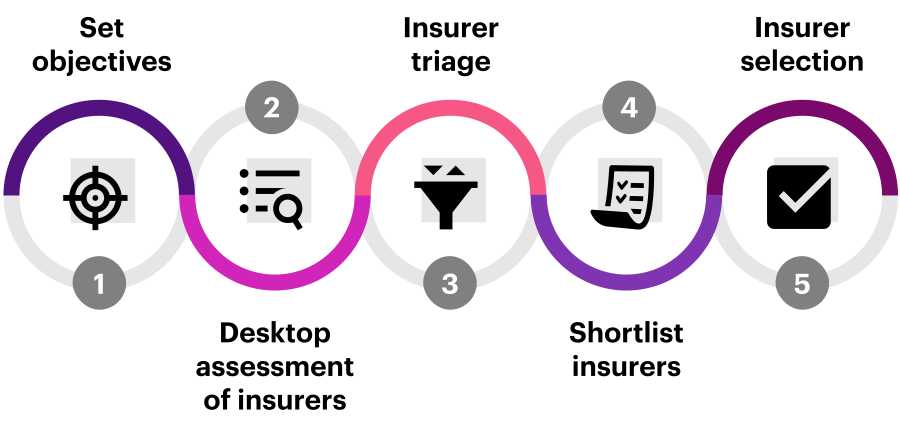
Core elements of a typical two-round pension scheme buy-in quotation process
- Set objectives
- Desktop assessment of insurers
- Insurer triage
- Shortlist insurers
- Insurer selection
Set objectives
It is critical that stakeholders agree on a joint set of success criteria to inform decision-making and help avoid conflict between stakeholders through the process. Evidencing to insurers this has been thought through before coming to the buy-in market demonstrates seriousness and allows insurers to focus on tailoring their proposal to meet the scheme's requirements.
Tip: To ensure objectives reflect the views of all trustees and other stakeholders, and are not dominated by one vocal individual, an anonymous survey can be undertaken with all Board members, and the individual responses collated into a summarised position for discussion.
Desktop assessment of insurers
Initial screening of all insurers to establish whether there are any who don't meet the agreed objectives. This preliminary evaluation ensures no wasted time either on the part of the scheme or the insurer.
Case study: The scheme's benefits included an option for members to restructure their income to allow for a bridging pension, which was highly valued by members. The trustees therefore excluded insurers who were not willing or able to continue offering this option post buyout from the quotation process.
Insurer triage
Insurers don't have the resource to quote on every deal. "Triage" is their opportunity to assess the scheme's fit with their aims, resource and capabilities considering factors such as:
- Project timescales
- Complexity of benefit design
- Clarity and cleanliness of data
- The likelihood of the deal proceeding/the insurer winning
Honesty is critical. Whilst it can be disappointing for insurers to decline to quote, it is better to have a smaller number of engaged insurers than a higher number of less committed participants.
Tip: Demonstrating the scheme's preparation, articulating the trustee and sponsor priorities, and outlining any pre-screening of insurers ensures optimal positioning for triage.
Shortlist insurers
Shortlisting of insurers after the first pricing round strikes a balance between maintaining competitive tension and choice with heightened insurer engagement due to the "carrot" of a transaction getting closer. This dynamic supports detailed negotiation with the shortlisted insurers at the second round on both price and non-price factors.
The shortlisting decision will normally be driven by price and the ability of the insurer to accommodate the scheme's benefit structure and any scheme specific requests.
Tip: Clear messaging and focused negotiation on a small number of important factors will yield better outcomes than providing insurers with a long "shopping list" of requirements.
Insurer selection
Updated insurer proposals, detailed due diligence on the factors of most importance to the trustee and company and, in most cases, a selection meeting with the shortlisted insurers. These steps will all feed into the insurer selection decision.
Whilst a weighted scorecard approach can be used to remove subjectivity from the decision making, it should also be recognised that the insurer will have a relationship with the scheme's members for, typically, well over 50 years. Therefore, trustees should be comfortable that they will be able to entrust their members to the insurer, and in this context softer considerations such as cultural fit can also factor into decisions.
Tip: Giving insurers transparency as to the selection process and confidence that timescales will be adhered to is critical. Any concerns that the scheme will keep coming back to ask for more may result in concessions being held back. An experienced adviser will be able to strike the appropriate balance between negotiating strongly and ensuring no ill feeling – which is not the way you want to start a decades long relationship.
Contacts