Decumulation is often described as "the nastiest, hardest problem in finance" and in this second episode of our mini‑series, we turn our attention firmly to the people it matters most to: members. Host Sophie Tennison is joined by Georgia Smith, Senior Proposition Manager at Nest, Stewart Patterson, Head of Innovation at LifeSight, and Paul Davies, behavioural psychologist and founder of Behaviour Consulting, to explore how Guided Retirement could reshape the member experience at retirement.
Together, they examine what it really means to introduce a default at retirement, how members might feel about a ready-made default option rather than being forced to choose, as well as how schemes should think about engagement, inertia and choice architecture across diverse memberships. The conversation tackles the opportunities and limitations of personalisation and asks what good outcomes look like from a member's perspective.
A thoughtful discussion combining behavioural insight, provider experience and practical innovation - essential listening for anyone shaping the future of DC retirement.
Transcript for this episode
[MUSIC PLAYING]
SOPHIE TENNISON: Hello, and welcome to this episode of the Pensions Perspective Podcast, brought to you by WTW. I'm your host, Sophie Tennison, an investment consultant to DB and DC pension schemes. Today, we are back with our second episode titled The nastiest, hardest problem to solve in finance: Decumulation. We released the first episode of this same title back in March, where we discussed the regulatory requirements, the timescales for implementation, and the role of trustee. But today, we're going to really focus on that member perspective.
SOPHIE TENNISON: Guided Retirement fundamentally changes how members will approach retirement. So today, we want to make sure the members are at the heart of the discussion. So I'm joined by three amazing guests to help me tackle this topic once again. Georgia Smith, senior proposition manager at Nest, one of the UK's largest DC master trusts with over 14 million members and $60 billion in assets. Stewart Patterson, Head of Innovation at LifeSight, and Stewart is responsible for developing and shaping propositions for members with a focus on member engagement.
And Paul Davies, behavioural psychologist and podcast host of the UK's number one social science podcast, Everything's Psychology, and founder of Behaviour, a creative agency that supports in developing products for customers. So thank you all for joining me today. I'm really looking forward to this conversation. I'm slightly nervous, Paul, being in front of a seasoned podcast host, but hopefully we'll be OK.
So to start with, I just thought if you could introduce yourself. And to do something slightly different, I'll be interested to how you describe your role to your friends and family outside of the industry. So, Georgia, can I start with you?
GEORGIA SMITH: Yeah, absolutely. So my name is Georgia Smith. I work at Nest. I look after our investment fund proposition. So when I'm relaying this to friends, I often say that you're in a pension scheme and then often eyes glaze over. But actually, often people come back and ask a few questions later on. So what I say is my role at Nest is to help develop our retirement proposition and also to look after our fund choice. So the vast majority of our 13, 14 million members are in our default fund, but we also have a small range of fund choices and I help look after them.
STEWART PATTERSON: Yeah, and I'm Stew Patterson from LifeSight, so another master trust pension scheme. I think probably when I described my job, depending on what mood I'm in, I might say it's spreadsheets, PowerPoints, and talking. But in reality, a bit of a deeper dive, a bit similar to Georgia. If I was being ambitious, I'd say my job is to make pensions better for people. So yeah, whatever that means. And in particular, the conversation today, making retirement easier and making the money last longer.
PAUL DAVIES: Yes. And I'm Paul. I'm a behavioural psychologist. Now, I don't tend to tell people that because it either gets people saying, well, can you interpret a dream for me, or can you help with my children who are having problems? And I don't deal with that. What I do do is I help organisations work with their patients, members, customers to make better decisions for themselves, and I do that by injecting psychological theory and insight into propositions to make it easier for people and simpler for people to make those decisions.
SOPHIE TENNISON: Amazing. Thank you. Well, before we delve into the questions, just as a reminder to our listeners, Guided Retirement has been introduced through the Pensions Bill and will fundamentally change how members approach their retirement. So at the moment, they reach this big, pivotal moment in their lives and have faced with complex choices. But going forward, there will be a ready-made pathway available to them, delivering an income for life. And that needs to be suitable for the majority of membership. Obviously, those where that doesn't fit, they can still make a choice.
But the first time where members don't engage, there will be a solution available to them. And I'm sure Stew and Georgia, you're well-versed in this. Read up on it a lot and spent a lot of time working your way through the Pensions Bill and what that means for your members. But I'll be interested to know in broad terms how you see that impacting Nest's and LifeSight's membership.
GEORGIA SMITH: So for Nest members, fundamentally this is about turning their retirement pot into an income for the rest of their life. And many of our members have been saving with us in what we call accumulation without having to make active decisions about being in the fund, about how the money is invested, which fund they choose. They've stayed with their defaults. And that's been really successful for most members. That's been a really good outcome.
So what Guided Retirement is, in my mind, is about converting the success of what's been done in accumulation into the retirement phase and allowing people who don't necessarily want to engage and don't want to make a lot of decisions to have those safeguards and some certainty about what their income will be as they go through to later life, whilst preserving some of the things they may like. So that might be quite a bit of flexibility earlier on in that journey.
SOPHIE TENNISON: Stew, from a LifeSight perspective.
STEWART PATTERSON: Yeah, very similar to Georgia really. So even though the Nest and LifeSight populations are quite different in terms of our memberships, very similar in terms of the objective, is turning pots into pensions and really thinking about it for those people who don't want to become pensions experts and pensions specialists. A lot of people in the industry, a lot of the audience of this podcast, think about pensions a lot, but normal people don't.
And what Guided Retirement is helping us do and implement is recognising that people shouldn't have to be pensions experts in order to have their pension. They have saved, they have put their money in for a long time, and then they want to retire and live their life. And so Guided Retirement is helping them do that without putting barriers in their way. Still, like you say, Sophie, leaving the options there for people who do want to engage, but not having that as a prerequisite.
SOPHIE TENNISON: And this is the first time trustees have had to put something in place as a default for decumulation for members. Paul, I'm really interested in the psychology, is how you feel having a default would be met by members.
PAUL DAVIES: Yeah. And generally, I think it's going to be very positive. But let's start with, exactly as you said Stew, people are more disconnected from their pension than I think we realise. We pay into it all our life. You get to -- every year, you get your annual statement and some people read them. A lot of people don't. They just put it to one side, put it in that old filing cabinet, and they don't actually engage with it until that point in life where suddenly they have to make a decision of all this money that they've saved has to then become an income for the rest of their life.
And that's a really important decision. And at the current system, they're given a lot of information about annuities, drawdowns, tax-free lump sums, and all of this stuff, which is all new. And it can feel, as an industry, really respectful because we're giving that information in a way that we hope they'll engage with that information and make a decision. But it's actually based on old neoclassical economic principles that we think people are perfectly rational actors, and if we give them perfect information, well, of course they're going to do the right thing.
The reality is very different, because a lot of information actually overwhelms people, and that can lead to decision paralysis. It just means people don't make a decision or they panic and leave and leave it and leave it, or they make a knee-jerk decision based on not very much information just to get the whole thing over with. And that's not good for them either.
So defaults can change that dynamic. It really can. It can really say to people, here's a pathway that most people are taking and most people are OK with that. It's not a pathway for everyone. And there are other ways to go as well. But here's one.
And that isn't lazy. And people go, oh, you should engage. They definitely should engage with all this information because it's important. It's not lazy. It's just a very high cognitive burden on people to be expected to make that decision in their life when they are not experts, as you said. And so it's really difficult.
The paradox, though, with defaults in psychology is that people don't like to make a decision when they're only given one option. It's called single option aversion. And what happens is they go, well, why are they only giving me this? Is there an agenda at play here? Which is why they're trying to funnel me down this route. People start to double-think it. So actually, what people want, they want to feel control over their decision whilst also being told what to do.
And that is a paradox because you go, OK, how do you do that? And that's a challenge for the industry to make sure that they don't just give a default and say, that's it. They have to say, there are alternative options. Because if you give alternatives to the default people, basically -- the default does the heavy lifting. That's the one that goes, oh great, I can see that. But I feel like I've got a sense of agency still that I could move elsewhere. And so default, for me, are really positive, like in the accumulation space, as you said Georgia, that it's going to make a real difference.
When you understand that, though, that defaults are going to be immensely powerful, the choice of what the default is is a real responsibility. And that's a question I can't answer. It's for the schemes to do that.
SOPHIE TENNISON: I think that's a perfect point to touch on the actual default itself because we know you need to provide a default with suitable off-ramps. And I'd be interested to know from yourself, Georgia and Stewart, what you think good looks like here. What would that look like? So Stew, maybe starting with you first this time.
STEWART PATTERSON: Yeah, absolutely. Well, I think broadly what the pension schemes bill sets the framework broadly turning pot into pension, so turning the savings into an income for life. And there's different ways of doing that and I know on the previous podcast that you did the part one of this talks about flex and fix, and Retirement CDC has designs that do that well. And they can be done differently, but in broad terms, they both achieve similar things in terms of turning that into an income for life.
But I think the off-ramps point, and as Paul was picking up on some of the behavioural stuff, is really important. So I think what we are looking at is trying to make sure that where the default isn't suitable for someone, that's clearly signposted. So it's OK in principle to think, well, for most people, turning your savings into an income for life is the right thing to do. But actually, if someone's in serious ill health or if they've got only a very small pot, turning that into, say, 20 pounds a month, might not be very helpful or practical.
Equally, if someone's got a very large pot and lots of savings elsewhere, they might have other options that are more appealing to them and more suited to them. So I think the off-ramps is about signposting at that point of the member making the decision to either go for the default or take that agency and choose something else, what are the characteristics that might make you not suitable for the default so that you can then decide to do something else, whatever that is?
SOPHIE TENNISON: Yeah. And I think one of the key challenges, Paul, what you were saying before, I just found so interesting because time and time and again, we talk about member engagement, member communication, and it was a key theme that came up on episode one actually, is the importance of member communication to get that engagement. But I'd be interested to hear in your views of how trustees can encourage engagement, as is there something -- you mentioned about the information that provided, but is there something else they should be thinking about to encourage engagement?
PAUL DAVIES: Engagement is a funny thing because it sounds very positive. Of course, it does. It sounds very respectful of an intelligent audience. And of course, that's great. However, when you realise that too much information -- and too much isn't a lot. It can tip over to too much for people quite easily that it leads to this paralysis and/or just knee-jerk reactions. Then you go, OK, is engagement actually as good as you think it is?
Because forced engagement is not the same as informed formed engagement. And if you take Sweden, for instance, when they changed their pensions in, I can't remember the year, they had a default that people can go into, but they also an active choice. And the government launched a huge campaign to say, we'd really think this is an important decision in your life. It'd be really good for you to engage with this and make your active choice. And a third of the population did.
The problem was that the default choice actually went on to be the better choice because it performed better than any individual's choice. And when people who are not experts in an area are encouraged to engage and make a choice themselves, and they never have done in their entire life, actually that can be a very bad thing. And so the default, which is made by experts to say that, as you said, for the majority of people, that's going to be the thing that's going to make them better off, that's great.
So for me, I always slightly shudder at engagement, and I definitely shudder at the word education, because that isn't what made auto-enrollment a success.
SOPHIE TENNISON: Yes.
PAUL DAVIES: Inertia made auto-enrollment a success, not financial education, not engagement, and not personalisation. All of those words, it was inertia. And that's what I think here is going to be the powerful aspect as well.
SOPHIE TENNISON: I think we know that lack of engagement is something that the industry tackles with. So your point there of actually been beneficial is really interesting. And I guess my question, maybe start with you, Georgia, do you think inertia is a bad thing in the industry?
GEORGIA SMITH: Not at all. We've seen inertia has been a really powerful influence in people's savings life. That's the default to join a pension scheme in the first place, the default investment strategy that they're placed into, unless they make an alternative choice. Those defaults and the inertia that goes hand in hand with those have provided really good outcomes for people. I think there is a challenge in harnessing and converting that inertia that we've seen in accumulation into later life when we do expect people to start to engage a little bit more, but on their own terms.
We know from Nest member research that there is often no single point of retirement. It's a progression. It happens over a series of -- a period of years. So seeing how people become switched on will be part of an important learning process for us as well and harnessing that in the right way without making people feel overwhelmed by choice and expecting them suddenly to become an actuary, a demographic forecaster, an investment specialist and an economist in their late 60s. That's just wildly unrealistic.
So success for us in terms of our retirement income solution will really look like getting most people to the right place most of the time. And I think we're putting a lot of careful thought and research in working with some brilliant people at WTW to get the solution under the bonnet developed, and it's really complicated. The challenge will be ensuring that we convey that to members in a really simple way. And that's not necessarily a volume of communications and an expectation of engagement. It's not necessarily hyperpersonalisation, like Paul said. It's more about keeping it simple, allowing them, if they wish to and want to engage at the right time, that it's easy for them to do so.
SOPHIE TENNISON: You've touched on personalisation there and that was one of the things I really wanted to bring out in this discussion because it's one of the challenges of a default, is that you are looking for it to work for the masses. And obviously, there's always going to be people that fall out of that. But how much personalisation is realistically possible when you are thinking about these solutions for the masses that you work for? And when is simplification the most honest choice? So Stewart, might start with you with that one.
STEWART PATTERSON: Yeah, and I think -- this is exactly the right challenge that I think the industry should be wrestling with. Like Georgia says, there's a lot of smarts under the bonnet, and that's really good for the industry to be thinking, what are the correct solutions that manage this balance of risk and turn the pot into a pension in the most efficient way? And it's great that we all talk about that at conferences. And like I said earlier, we have spreadsheets, we have models that do that. But that's not really relevant in terms of the member comms in particular and in terms of then personalizing the solutions to the individuals.
And I think it's not -- I don't think the aim of Guided Retirement is an optimization challenge. Make sure every individual person converts their pots into an income for life in the most efficient way possible for them, recognizing their wants, their needs, their personal situation, their preferences, their attitudes. Guiding retirement simply can't do that. And the solutions that we're building and implementing as defaults need to live in that real-world that Paul talked about, not in the spreadsheets that I'll be looking at this afternoon.
And that's the nuance that I think we need to keep a focus on. It needs to be right for most people in most situations, not necessarily aiming to be perfect for everyone all the time.
SOPHIE TENNISON: I guess, Paul, would be interested to hear your thoughts on that and the impact of personalisation and how people feel when things are personalized.
PAUL DAVIES: Yeah. So there's two aspects to what you've just said. The how people feel when they feel perceived personalisation. And it can feel quite charming. It can feel like you are being talked to as an individual. They taken on your personal needs. That's a persuasion technique. That's very good. There's nothing wrong with that. However, as a psychologist, we acknowledge how similar human beings are in their decision making processes, especially around important topics, money, having enough money to last you a life, things like that.
So in one respect, we totally acknowledge people are unique. It might be that I love Marmite, you might hate Marmite, I love marzipan, you might hate marzipan. Of course, we all have very different flavours of what we like, but we all want food and we all need food. And when it comes down to those baseline behavioural mechanisms, we're talking at the same level of food here, we need people to be able to have enough money to last their lifetime. And then any personalisation on top of that is like the Marmite, the marzipan side, which can be nice and charming.
But actually, to get people to do something, we need to be concentrating on the human as a whole, not just on the small little things on top of that. And I think the way you put it about -- in fact, I think both of you are talking about the direction and giving people most people that direction. It's like we're talking about a GPS navigation system. Google Maps or I'm sure other navigation systems are available.
When you put your address in where you're going, it gives you a route and it recommends that route to you, and it gives you maybe one or two others on there as well, which no one looks at. They always just generally go for the one. For 80% of people, that's all they want from their GPS system. However, some people might want to go, actually, I want to decide if the motorway or the A road or the B road. I'm going to cross the country because -- and they'll get their big AA road map out. But that's the minority.
Most people use Google Maps and they just put in the thing and go, that's good enough for me. Thank you. And I think it's a very similar way that we need to look at it when it comes to the pension problem.
GEORGIA SMITH: Yeah, I agree. And we briefly touched on off-ramps for those people for whom it is suitable earlier. And absolutely, they're critical to give everybody confidence that were they to find themselves in certain circumstances, ill health, seriously impaired life expectancy, that there is a different route available for them. But for the vast majority, a default will work very effectively and will take them right through, ideally, from the point of retirement or the phase of early retirement right through into later life.
SOPHIE TENNISON: Yeah, I think it sounds like in the market there's been two clear frontrunners in what that solution, the central solutions might look like. So whether it's flex and fix with a few variants or Retirement CDC. And we discuss those in more detail in the previous podcast, but I wanted to look at this more from that member perspective. And when thinking about those frontrunning solutions, are there particular aspects of them that you think are particularly useful to members or attractive to members, whether that's the income for life aspect, whether it's the fact that you don't have to make a decision? What do you think are the key elements there that make these attractive from a member point of view?
GEORGIA SMITH: Briefly, I think, first of all, it's really exciting that we have variations of solutions that are going to help deliver people and income for the rest of their life. And both of those frontrunners look really effective solutions. The approach we're going for provides a lot of flexibility at the front end of people's retirement. And that's often when they're still deciding what the shape of their retirement is going to be, what sorts of income they might need, what that looks like, along with the state pension, which for our members is going to still form the bulk of their retirement income.
So having that flexibility is important and reassuring. And what our solution does is towards the latter end of life, so from 75 onwards, a little bit of that flexibility is traded for a higher degree of confidence. So some certainty about their income and what they'll get the latter stage of life. But overall, what they're getting is a continuity, something which will feel like a continuation of their income as they transition from working life into retirement.
And we know from our members that they really value that certainty, that absolute confidence about a baseline of what their income is going to be later on in life. And that might be because our members are still in rented accommodation, for instance. They need to have a degree of confidence. But that's the shape. And we think that kind of blending of flexibility earlier on and certainty later on is a real important part of our solution.
STEWART PATTERSON: Yeah, and just building on that, the way I think about flex and fix, and Retirement CDC is that they're almost on a spectrum. And yeah, as you said, there's different ways of doing flex and fix. So not all flex and fixes are exactly the same. But broadly, the further you get towards the CDC end of the spectrum is more do it for me. And then the further you get to flex and fix or even going to traditional drawdown is far more do it myself.
So that is the member having to decide how much to withdraw and at the beginning of any support, or are they being clearly steered towards a regular income amount? And is the member having to decide where to invest their money. So they're the two key decisions, is it do it for me or do it myself in terms of where the money's invested and managing my portfolio, and then how quickly to take the money out. CDC does both of those things for you. Flex and fix, depending on the variant, does probably one or two of those things for you, but with a bit more flexibility.
But exactly as Georgia said, there are trade-offs. The reason there's higher expected income in CDC is because it has slightly less flexibility built into it at the front end than flex and fix. But it's fine to have those trade-offs. Life is about making those choices and trade-offs.
GEORGIA SMITH: I think something we both identified as really important for our members is the guidance around sustainable income. So I think it's front and center of the products we're developing, is that there is a high degree of guidance about what people can take out of their pot as they enter retirement, and we help to set those frameworks. So they're very sophisticated frameworks, but as far as the member is concerned, that feels like quite a simple interaction. They are simply receiving that income. They have every confidence that that's going to be sustainable going forward. And our investment strategy matches the sustainability of that income over time.
SOPHIE TENNISON: I think that's quite -- draws on a conversation we'd had Paul before this podcast of people thinking about that tax-free lump sum and what that means for income going forward. So having that flexibility, I guess, makes you members being able to tackle that decision.
PAUL DAVIES: Yeah. Again, it's a difficult thing because there's so many psychological variables at play here. And most financial companies are interested in financial variables, income, death benefits, flexibility, all of these things. At a human level, people are worried about running out of money in their retirement, and you talked about the certainty, uncertainty. It's a huge factor there and it will swing people one way or the other that. It reminds me of one of the reasons people use as a reason for why they avoided buying an electric car. It's range anxiety.
There are very few people that regularly do trips of 500 miles in one go and do so without stopping. But it's that worry that the worst case scenario might happen. And therefore, I'm not going to do it. And again, that's the same in our world as well in pensions. They go, people don't evaluate their income on what the average thing will happen. They look at the worst case scenario and try and avoid that. So having a product that has a certain amount of certainty built into it, even though they might get less income from that, is actually a really warm, comforting thing to have.
And I think on the other side of it is that acknowledging that continuing to make financial decisions through retirement is also daunting. You don't want to continue to do that as you get older. And also acknowledging the potential for cognitive decline in retirement as well, you don't want people to be making these decisions all the time. So it can be easier for people to go, great. There's a product here where I make a decision now and I am sorted. That's great.
SOPHIE TENNISON: Yeah. So just on that, Georgia, if we look ahead and Guided Retirement's in place, we have the nicely named solution that doesn't scare anyone on the street. But what do you see, going back to the member -- the outcome here for a DC member, what are you expecting as a result of Guided Retirement and their end outcome?
GEORGIA SMITH: I think for our members, it's about, first of all, success will be achieving the best outcome we can on behalf of those members. And also, it will be about those members not feeling worried about their pensions or fearing decisions, or putting decisions off. Because ultimately, if they don't want to make those decisions, they're in good hands and pathways will be set out for them that they can follow without having to worry too much about understanding the detail underneath that. And that's really quite a powerful thing for people. So yes, that will be success for us.
STEWART PATTERSON: Yeah, so very similar for LifeSight. I think we said at the top of the podcast, turning the pot into a pension is the main thing and removing that fear so that it's easy for people and feels comfortable. And if we're doing that in a way that turns the pot into the highest income for life for the member that, on average, we think we'll be able to generate, then that's success really. And they can then have a reasonable expectation of what their regular income is going to be and use that to manage their lumpy lifetime spending, which is what they've done through their working career. So again, has that familiarity in terms of knowing how to use it, how to receive it.
SOPHIE TENNISON: And then, Paul, I guess this is an evolving space for us in the pensions industry things are moving, people are developing solutions right now. From your perspective and thinking from it from that end member experience, what would you say we should be thinking front of mind? What are the key points that you think are really core to making this a success?
PAUL DAVIES: Well, I think the thing to keep in mind is that success here really is going to be that members enjoy their retirement. I mean, as you said, Stew, people save money throughout their life. They work really hard so that they can enjoy retirement. That's what we need to keep an eye on. And at the moment, when they are making decisions, like they are at the moment with a lot of information and panicking and what have you, it can lead to things such as loss aversion, where people don't draw down enough or don't take enough, so they don't enjoy their retirement because of that fear, again, of running out of money.
And it happened in Australia. They don't take enough and so they don't enjoy the money that they could enjoy. And I think for that to really happen, there are several things trusts schemes need to think about. One of those is to communicate at the right time to people. When you're coming up to drawdown or the ability to take your tax-free lump sum, for instance, there's a term I coined called conservatory bias, which is that you have pre-formed the intention to spend money when you get it.
So it could be you're 53 and you think, at 55, I can take some money and buy the conservatory, go on a dream holiday, spend it on the grandkids, whatever it is. Once that intention is formed in people, any communication actually at the point of that decision, which says, actually, maybe you might be doing something different would be better off and don't do such a thing. You're basically taking that away from them because they've already formed that intention. So communicating to people before the point of decisions is going to be really interesting, in that point 50 or possibly even earlier.
But also communicating for simplicity, which I'm really pleased to hear both of you say a lot, rather than just look at the regulatory side of it, the liabilities that are involved. Because given information to people can feel, again, very respectful, but also it can be cover the regulatory risk as well to say, well, we've given them everything, haven't we? We're done now. I think pension schemes need to be confident and say, we have created a pathway. It is good for the majority of people like you. We do have alternatives though, and this is the alternative, and then stop. Don't put all the temptation, put all the stuff around it. That's the message.
And then finally, I would also say totally understand that the people you're talking to are the people you don't hear from very much, because all of the research in the industry is generally from people who are slightly engaged. All the surveys, webinars, all the things people come to to therefore take part in research means that they've opened the letter, they've looked at the email, they've done something. That isn't the majority. And if this turns out to be right and we get it right, then actually you're talking to the 80% of people who have never engaged with anything before. And that, I think, can be so positive in the same way as the pensions accumulation side has been as well.
SOPHIE TENNISON: Well, thank you all so much. It's been such a good conversation, so I really appreciate your time. And thank you to our listeners for joining us on another episode, and we hope you'll join us again soon. Thank you very much.
PAUL DAVIES: Thank you.
STEWART PATTERSON: Thanks.
GEORGIA SMITH: Thanks, Sophie.
STEWART PATTERSON: Thank you.
SOPHIE TENNISON: Bye.
[AUDIO LOGO]
Thanks for listening. This podcast is for informational purposes only and does not constitute financial advice. The views expressed by any hosts and guests are their own and may not reflect those of their employers or affiliated organisations. All content is protected by copyright.
Podcast host
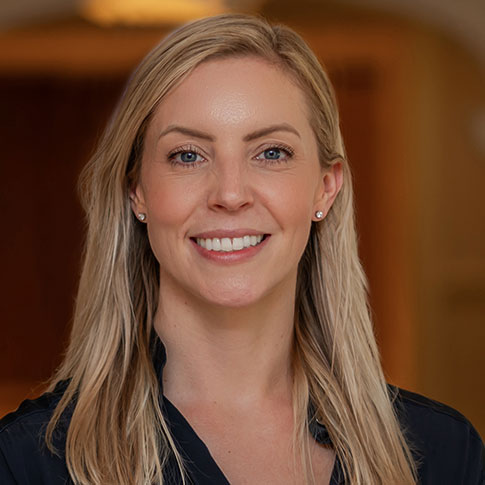
Sophie Tennison
Senior Director, Investments
Sophie Tennison
Senior Director, Investments
Podcast guests
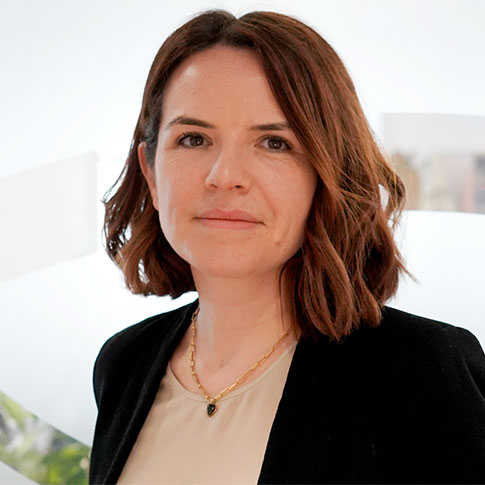
Georgia Smith
Senior Proposition Manager, Nest
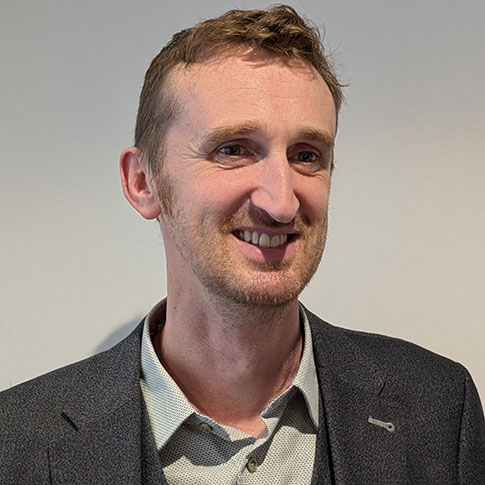
Stewart Patterson
Head of Innovation, LifeSight
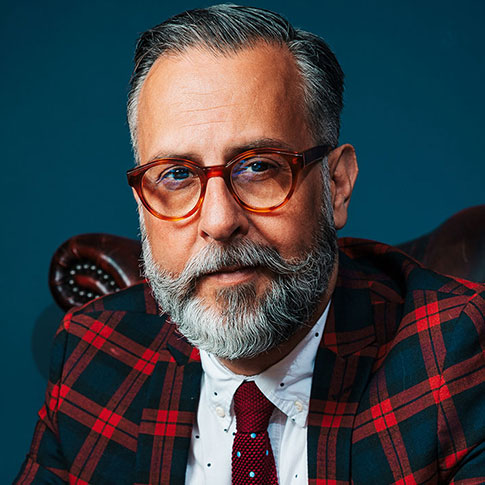
Paul Davies
Behavioural Psychologist
Georgia Smith
Senior Proposition Manager, Nest
Stewart Patterson
Head of Innovation, LifeSight
Paul Davies
Behavioural Psychologist
Disclaimer
This podcast by WTW is intended for general information purposes only and does not constitute financial, investment, legal or other professional advice. Listeners should not act on the information presented without first consulting a qualified professional and this podcast should not be relied upon for investment or other financial decisions.
This podcast takes into account information available to WTW at the date of recording and takes no account of developments after that date. WTW provides no guarantee as to the accuracy or completeness of any information contained in this podcast and WTW and its affiliates and their respective directors, officers and employees accept no responsibility for any of the content.
The views expressed by any hosts and guests are their own and may not reflect those of their employers or affiliated organizations.
All content, including audio, branding, and any associated materials, is protected under applicable copyright laws. Unauthorized use, reproduction, or distribution of this content is prohibited without prior written consent.
Copyright © 2026 WTW. All rights reserved.