Gen Z checks their finances on their phones dozens of times a week—so why do pensions still feel stuck on desktop? In this Pensions Perspectives episode, Luna Fadayel chats with Barney Holt and Oshin Sharma to unpack mobile first engagement, AI and finfluencers and why starting financial education early matters.
Gen Z checks their finances on their phones dozens of times a week—so why do pensions still feel stuck on desktop? In this Pensions Perspectives episode, Luna Fadayel chats with Barney Holt and Oshin Sharma to unpack mobile first engagement, AI and finfluencers and why starting financial education early matters.
Podcast host
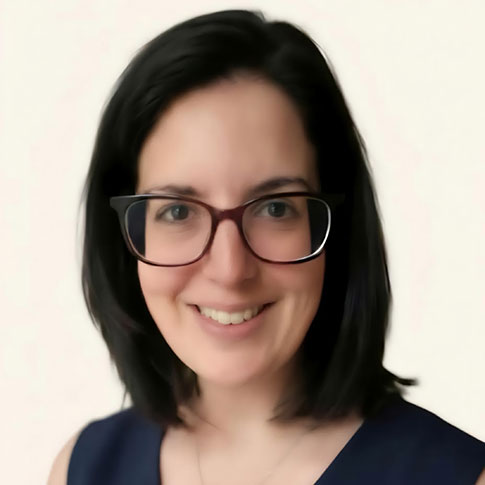
Luna Fadayel
Scheme Actuary and Relationship Manager
Luna Fadayel
Scheme Actuary and Relationship Manager
Podcast guests

Barney Holt
Change Management Associate
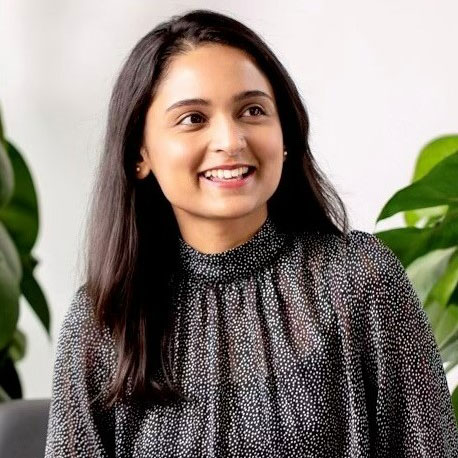
Oshin Sharma
Senior Associate, Member Communications
Barney Holt
Change Management Associate
Oshin Sharma
Senior Associate, Member Communications
Transcript for this episode
[MUSIC PLAYING]
LUNA FADAYEL: Hello, and welcome to this episode of the Pensions Perspectives podcast, brought to you by WTW. I'm your host, Luna Fadayel a scheme actuary and trustee relationship manager. Now, today we're going to be discussing a big question. How do we get Gen Z to swipe right for retirement? With DC being their main form of pension provision and expected longer life spans, planning retirement at an early stage is more critical than ever. Further, we have evidence that members are no longer just passively uninformed, but they are being actively misinformed. Now, joining me today to discuss this further are Oshin Sharma and Barney Holt. Welcome.
OSHIN SHARMA: Hi, Luna.
LUNA FADAYEL: How are you both?
BARNEY HOLT: Very well, thanks.
LUNA FADAYEL: All good?
OSHIN SHARMA: Good.
LUNA FADAYEL: Would you like to say what you do at WTW?
OSHIN SHARMA: I can go first. Hi, I'm Oshin Sharma, and I am a pensions comms specialist in our Member Communications Team. I've been at WTW for over three years now. And prior to this, I was a financial comms PR expert.
BARNEY HOLT: I'm Barney Holt. I'm a change management specialist in the Employee Experience Team. I work with a lot of clients on their pension member engagement solutions, and I've been at WTW for just over a couple of years now as well.
LUNA FADAYEL: And for those of us who are only joining us over audio, it's worth pointing out that Barney is himself a member of Generation Z, so can bring through some of his own personal perspectives. Just to start with the basics, Generation Z, or Generation Z, as I know most of that generation call themselves, are aged 13 to 28 years old, and they're digital natives, really. They're the first generation that grew up with social media and smartphones as norm.
But we see that they aren't really that engaged with their pensions just yet, and I think we've had a little bit of conflicting information around this. I read something that said Generation Z actually start engaging with their pensions from around age 20, which compares to the late 20s for Millennials. What's your experience around this?
OSHIN SHARMA: I think the data that we are seeing actually points out that members who are approaching retirement are more engaged with their pensions. And I think that's also due to the perspective that's been painted around pensions, that it's something that you pay attention to when you are thinking about retirement. And so what we are seeing is that members who are below age 30 are less engaged, but as you said, that they are investing more in their pensions. But that could also be due to auto enrollment. So when they start their careers, they're automatically enrolled.
But we think there's more that needs to be done to push them and nudge them to pay more attention to their pensions. It's not something that should make you lose your aura points when you talk about. We just need to add a bit more rizz to our pension comms.
BARNEY HOLT: I'm not going to pretend to not know all of those references there, but no, I completely agree. I think it's important to get that message out into that generation, or into my generation, to really understand the importance of how pensions should be seen as a necessity for that point in life. And even though that's so far away for a lot of people, there's no doubt that you will get to that age, and you will one day require and depend on that as a source of income. So it's what you can do now to actively invest into that future that's really the key.
OSHIN SHARMA: Yes. And your point around auto enrollment is actually quite interesting because perhaps that is why engagement is starting earlier. But if it's just the default contribution, around 8%, then is that really enough?
LUNA FADAYEL: Exactly.
OSHIN SHARMA: I think it's accepted that you're looking to contribute about 15% of your salaries for a secure income in retirement, and that's quite a gap from that 8% minimum.
BARNEY HOLT: Yeah. And I think, just talking from experience, having just moved to London a few years ago myself and paying over 1,000 pounds per month in rent at the start of a new career, it can be quite daunting to even think of putting 15% of your salary away. So I do think there is a lot of thoughts around how is that even possible. And I think making the most of your company contributions and the matching schemes that we have is really an important part that we need to get out there in our message.
LUNA FADAYEL: So how do we get that out there?
BARNEY HOLT: Well, through our great and wonderful pension engagement solutions.
OSHIN SHARMA: Absolutely. I think it's key for us to understand that the communications that we're putting out to these members actually resonates with them. I was reading somewhere online that Gen Z especially, their attention span is just about 8 seconds. So if you don't capture their attention, they're you've lost them. So I think we really need to look at our communications and see, are we getting our message across at the top.
And we really need to be quite straightforward and just put everything in layman's terms. There's so much jargon around pensions. And, when I started in the industry, it took me time to understand just the basic concepts of how pensions work. But now that I understand it, and I think we are in a lucky position that we understand pensions and finance and investments, so now we have that power to make everything simple for the man on the street and Gen Z to help them learn the importance of their pension savings.
LUNA FADAYEL: Yeah, I remember having a conversation with someone who said that she didn't get pensions until it was explained to her in the form of how many pairs of shoes she can buy. And I think that really brings home that you just need to find what's applicable to the person, and they will then engage, because once they understand it, they'll realize how important it is, as you were saying. So what other ways could we bring that visualization piece out to members, and what have you seen work with some of our clients?
BARNEY HOLT: Yeah, I think, to touch on one point, it's looking at the gamification of pensions and how can we really bring that generation into and match what we share with our [? clients' ?] members to what they are looking for? And going to that gamification piece, it's what can we do differently? What creative aspects can we bring to that solution? So videos, making things more mobile friendly.
We've typically seen across our clients memberships that those that actually invest into making their pensions more mobile friendly, generally speaking, see a slightly higher engagement across from a year-to-year basis. So whether that's ensuring all of their communications have QR codes or have videos that members can click through in one click rather than three or four clicks, so just making that journey in a bit more easy for members to navigate.
OSHIN SHARMA: Yeah. I'm a member of a DC fund that has a kind of gamified approach, or it has a tool where I can enter the contributions that I'm happy-- actually, no, sorry, I don't enter the contributions. I say what age I want to retire at and what level of retirement I would like to achieve, and it will then tell me the sorts of contributions I need to make or suggested investment returns to get there. And I think that really highlights and makes it real. Instead of thinking, oh, I'll retire in 40-odd years and this should get me there, it just kind of paints that picture. But I can imagine that it could also be demoralizing if it's saying, oh, you need to contribute 15% of your pension. As you were saying earlier, that 15% just feels huge and unachievable.
BARNEY HOLT: Yeah, I do. I think it's a double-edged sword sometimes, where it can be quite daunting, especially to those further away from retirement, such as our Gen Z-ers. But I think it also works in a really positive way, where some people do need that education and help forward to understand why they need to invest.
OSHIN SHARMA: And I think we need to get there early because with AI, and even now if you go on Google, the first thing you see is an AI-generated list of a summary of the things that you're looking for. So more and more people are going online, and they're asking AI to answer their questions, especially about whether it's investments or pensions. And I think we need to get there early and point them towards the trusted source of truth, whether it is our pensions website, so your schemes pensions website, or if it's MoneyHelper, for example, where you can find more information, just generic information about pensions and how it works.
So I think it's very important. So if you are a trustee, you need to understand your demographic of your scheme, listen to your members, and meet them where they are, and focus on targeted communications, which we think work quite well. So if you tell them, you're contributing this much, but if you add in a bit more, if it's possible, then you should be able to achieve X amount of example benefit when you retire. So paint the picture for them to help them understand why are we pushing them to do a bit more, I think that's really important.
LUNA FADAYEL: And that understanding your demographic piece, 48% of Gen Z actually use technology for financial advice. And there is a new term-- or I say new, but it's new to me-- of "influencer." And a definition, in case any of our listeners, it's new for them too, so they are personalities who use social media platforms to promote financial products and share insights and advice with their followers. Now, many of them are legitimate, and that they're having those great conversations that we want people to have and encouraging people to save for their retirement.
So I watched a video that was shown at our Pensions and Savings conference, and it was really quite shocking because I was aware that there are a lot of people who are not really engaging with their pensions, so what we would say are people who are passively uninformed. They're enrolled automatically. They go into the default fund. But actually, this video showed people telling them that pensions are scams. One of the people who was saying it used to be an IFA.
OSHIN SHARMA: Oh, God.
LUNA FADAYEL: And my jaw hit the floor. [INAUDIBLE].
OSHIN SHARMA: And people will believe this sort of thing. So they're moving from that passively uninformed to actively misinformed because they're now actually opting out of pensions, so it's actually a worse scenario than what we were in before. So that idea of meeting your members where they are and understanding what they need, I think that's really key.
LUNA FADAYEL: So what can employers and trustees do to access those members.
OSHIN SHARMA: I think it's really important to, first, of course, you need to listen to them. So you could do a survey to understand where the gaps are and see what they really need. I think, secondly, it's really important to then understand the data that you've got on them and to analyze where the gaps are and then use that data to make a strategy on how you want to target those members, and just make sure that your comms are really concise and just very clear about what action we need them to take, because we've seen from experience, we've seen if you give them a list of three things to do, that's more effective than giving them a long paragraph or an email, which is where it's really hard to find what the key action is. So if you just make a very short, simple, sharp, and concise, and just give them a list of three things to do, I think that's more effective than writing a long list of paragraphs and paragraphs.
BARNEY HOLT: Yeah, I agree with all of that. And I think it's, in this day and age, easier than ever to expose yourself to information. TikTok, Instagram, YouTube, all of these platforms are so readily available to so many people that I think it is a responsibility of the trustee and of your company to pull your members back and just remind them that sometimes it's not investing your pension into Bitcoin that will one day give you the income to live off. It can be as boring as just making your contributions through your company scheme, getting the matching which gets invested into some of trust or fund, and that's all you really need to do. It's as simple as that, and you gain from the compounding interest and the time. And I think just honing in on that message and making sure that your members remember that, and that they're not overly digesting and bringing in information from sources that may try to actually be selling you something instead of actually trying to educate you.
OSHIN SHARMA: Yeah.
LUNA FADAYEL: You just reminded me, a colleague had typed into her favorite AI tool, should I invest in cryptocurrency instead of a pension? And the first response she got back on the older GPT model was, yes, you should invest 5% to 10% of your portfolio in crypto, which is quite shocking. But then she tried it again on GPT-5, so a newer model, and that came back and said, look, you can invest in crypto. That's fine. But do not replace your pension because pension comes with a lot of what we were talking about before, the tax efficiencies and the matching contributions from your employer.
So it's good to see that things are improving for the better, because I do think that AI has so many opportunities that can be used to try and reach out to this generation and improve their retirement planning. We were talking about meeting members where they are, understanding what they want. Well, AI is great for that, and you can then tailor messages to those members.
OSHIN SHARMA: Yeah, and I think it's just slow and steady wins the race. So you have to-- I think we need to just change the connotation around pensions, because when I started working and when somebody asked me what my thoughts were about pensions, I was just like, oh, I'll think about it when I'm, like, 40 or plus 40. But then when I started learning more about pensions or just finance, it's just a savings tool, really. So I think it's just the way we talk about pensions needs to be changed. We just need to make pensions a bit more fun.
LUNA FADAYEL: Yeah. And related to that, I mean, there are other influences. So there's cultural influences, financial education. Oshin, do you want to talk about something you mentioned [INAUDIBLE]?
OSHIN SHARMA: Absolutely. So I come from a South Asian background family where conversations about pension, savings, investment, they're really normal. You talk about it when you're just having your breakfast or lunch. So when I was born, my grandfather, he started a savings account for me. And every year on my birthday, he used to put more money in, in that savings account. And then he used to sit us down, so all grandchildren, he used to sit us down and tell us, so you've got this much money in your account, you've got this much money in your account. And he basically explained the power of compound interest. And that was how I started learning about savings. And I used to then have my own piggy bank where I saved money as a child.
So I've been fortunate enough that I have learned about savings through my parents or grandparents or just family. And I think more needs to be done to help young kids and Gen Z learn about these just basic concepts, whether it's in school or whether it's outside in your friend circle. I think we need to feel comfortable talking about money.
LUNA FADAYEL: Yeah. I read that less than half of the children in the UK have received some form of financial education. And you're right, that needs to change because you need to instill these habits from a very young age. Something that I've done with some WTW colleagues is go into a few local schools and try to teach the children about pensions and savings.
Now, the session is only an hour, so there's only so much you can achieve. So we tend to focus on retirement and the idea of saving early to benefit from compound interest. Lots of props involved. We've got a Bowler hat representing the banker. We've got a balloon that we blow up to represent inflation. But the best bit is always when the LEGO comes out.
So what we do is we split the class into two teams, and the first team has to save one LEGO brick's worth of money a month, and they have to build the tower with the single LEGO brick. And the second team has to save two LEGO bricks' worth. Now, the team with the single LEGO brick are told to pretend they start saving from when they're 20, and the team with two LEGO bricks from when they're 40. And we asked the class to vote. Which of the two teams do you think will have the most by the time they get to the retirement age of, say, 60? And without fail, they always vote for the person who starts at 40, who's paying double the contribution.
But then I come out with my Bowler hat and these stacks of bricks representing compound interest, and there's always disbelief. They pile on these towers of compound interest, and the 20-year-old saver always wins.
OSHIN SHARMA: Exactly.
LUNA FADAYEL: And it just gets so much excitement and chatter going in the class, and that's really great to see. But I'm so conscious that it's just one day in the summer term, and they'll probably forget it by the time it's September again the next year. So we need more to be done in schools and in homes to harness that and just reinforce that messaging.
And the government have published their strategy, and I was quite excited to see that there was a focus on financial education. But again, it just reinforces that fact that we need to get to people a bit earlier. And as I said, we need to add a bit more rizz to pensions. Well, I'll stop putting in my Gen Z slangs. So is there anything that you would like to change in the pensions industry to make it easier for younger people to engage?
BARNEY HOLT: I think in a lot of the work that we do day to day, we can frame how we word certain communications around pensions. And a key theme that we're seeing amongst a lot of our clients and from our general advice is to move away from-- it's kind of touching on your quote-- from passively thinking about your pension as a saving mechanism to proactively or actively investing into your future. So whether that's into the stock market or whether that's matching your contributions or gaining from that compound interest, it is an investment into your future self. And whenever you take out those retirement benefits, you're going to depend on those as an income source.
So I think moving away from thinking of it as a separate amount of money that you will one day have access to and towards something that is part of your wider portfolio. So it's the same as an ISA, although you might not be able to access it at the same time. It should be classed as part of your wider savings portfolio that you will have access to one day.
OSHIN SHARMA: Yeah, I agree with all your points. And, building on that, I think we need to then change that picture that has been painted for so many years, that pension is something that you just think about when you want to retire. I think it's about starting early, and it's about thinking every little penny counts. If you save now, you will have a comfortable retirement. And, I like to think about pensions as, for example, you go to the gym, you don't immediately see an impact. But you slowly, slowly, if you are consistent and if you're having a good diet, later on in life, you will see those results. So consider your pensions as something similar to good health keeping. And if you follow consistent diet, as told by your trustees, and if you listen to our pension comms, then at the end towards the end of it, you will have a healthy portfolio and that will add up to your retirement goals.
LUNA FADAYEL: Yeah, I really like that comparison, actually. I think it's perfect. So before we wrap up for today, I'm going to unleash something on you. This is something that we're hoping to do in all of our episodes. I've got a pack of Would You Rather cards here, and I'm going to ask each of you to pick one and read it out. I hope we get an easy one.
BARNEY HOLT: Oh, gosh. Oshin, would you rather arrive at an event extremely underdressed or arrive at an event extremely overdressed?
OSHIN SHARMA: Oh, my God. Depends what the event is. If it's our Pensions and Savings conference, I would rather be underdressed. I don't want to take the limelight from our amazing presenters. But if it's just a party thrown by a friend, I would rather be overdressed. Why not. All right, your turn. Barney, would you rather always get stuck in traffic or always have terrible internet connection?
BARNEY HOLT: Oh.
LUNA FADAYEL: This is an easy one. Do you even drive?
BARNEY HOLT: I do, and I would rather get stuck in traffic, I reckon, than have bad internet connection, as that would significantly impact my day-to-day work.
OSHIN SHARMA: Yeah, perfect.
LUNA FADAYEL: That would be an interesting one to ask across generations--
OSHIN SHARMA: Exactly.
LUNA FADAYEL: --and see how that changes.
OSHIN SHARMA: Yeah.
LUNA FADAYEL: Well, thank you both very much. That's all we've got time for today. And thank you to our listeners for joining us for this episode of the Pensions Perspectives podcast, brought to you by WTW. I'm your host, Luna Fadayel, and I look forward to joining you again for another conversation that matters.
OSHIN SHARMA: Thank you.
BARNEY HOLT: Thank you.
LUNA FADAYEL: Thanks for listening. This podcast is for informational purposes only and does not constitute financial advice. The views expressed by any hosts and guests are their own and may not reflect those of their employers or affiliated organizations. All content is protected by copyright.
[MUSIC PLAYING]
Disclaimer
This podcast by WTW is intended for general information purposes only and does not constitute financial, investment, legal or other professional advice. Listeners should not act on the information presented without first consulting a qualified professional and this podcast should not be relied upon for investment or other financial decisions.
This podcast takes into account information available to WTW at the date of recording and takes no account of developments after that date. WTW provides no guarantee as to the accuracy or completeness of any information contained in this podcast and WTW and its affiliates and their respective directors, officers and employees accept no responsibility for any of the content.
The views expressed by any hosts and guests are their own and may not reflect those of their employers or affiliated organizations.
All content, including audio, branding, and any associated materials, is protected under applicable copyright laws. Unauthorized use, reproduction, or distribution of this content is prohibited without prior written consent.
Copyright © 2026 WTW. All rights reserved.