The UK pensions world has changed, but has our definition of gilt risk kept up? In this episode, we dive head first into the questions trustees and sponsors can’t afford to ignore and unpack how tail risks in UK gilt markets could derail even the best funded plans. If you’ve ever wondered whether gilts still make sense as the anchor of UK pension strategy, or whether the government’s fiscal trajectory should keep trustees up at night, this is the episode you’ll want to hear.
The UK pensions world has changed, but has our definition of gilt risk kept up? In this episode, we dive head first into the questions trustees and sponsors can’t afford to ignore and unpack how tail risks in UK gilt markets could derail even the best funded plans. If you’ve ever wondered whether gilts still make sense as the anchor of UK pension strategy, or whether the government’s fiscal trajectory should keep trustees up at night, this is the episode you’ll want to hear.
Podcast host

Harsimar Atwal
Director
Harsimar Atwal
Director
Podcast guests

Frazer Morgan
Head of Liability Matching and Derivatives
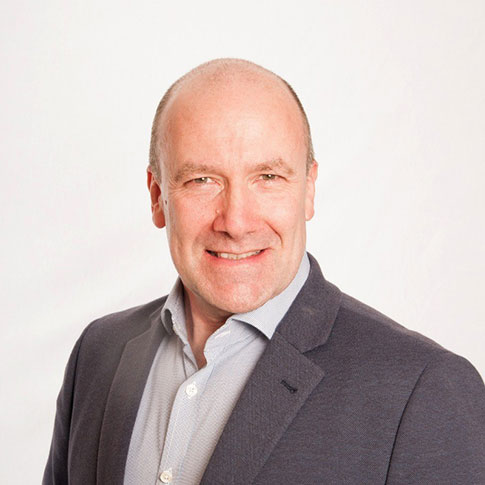
Graham McLean
Head of Scheme Funding
Frazer Morgan
Head of Liability Matching and Derivatives
Graham McLean
Head of Scheme Funding
Transcript for this episode
[MUSIC PLAYING]
HARSIMAR ATWAL: Welcome to this episode of the Pensions Perspectives podcast, brought to you by WTW. My name is Harsimar Atwal and I'm your host today. I'm joined today by two of my colleagues. The first is Graham Mclean, a scheme actuary and head of scheme funding here at WTW. And the second is Frazer Morgan. Frazer Morgan heads up our liability matching and derivatives team.
FRAZER MORGAN: Hello.
HARSIMAR ATWAL: Hi, guys. Thanks for joining me today. How are you both?
FRAZER MORGAN: Good, thanks.
HARSIMAR ATWAL: Good. So the conversation we're going to be having today is around the extent to which gilts are still a risk free asset. So as many of you will know, pension schemes use gilts to price and match their liabilities. And we're just going to get into some of the detail around, what do we mean by risk? What's happened recently in UK gilt markets? And what other alternative options might pension schemes want to consider beyond using gilts?
So if we start by thinking about risk more generally, since I've been at WTW, I've noticed that we are very responsive in how we think about risk. We think about what's happened in markets, what we're seeing happen with schemes. And we very much adjust our approach to risk based on that experience. Graham, what's been your experience since you've been here? How do you think we think about risk, how's that evolved?
GRAHAM MCLEAN: Well, given my day job, I suppose it's not surprising that, unlike Fraser, I'm probably not coming from quite an investment perspective. But I think it's interesting because if you think about real life, people are always quite careful about what they mean when they talk about risk. So if someone just came up to you and asked if owning a dog involves risk, well, it probably involves more risk like going to eat your carpet and your shoes, but less risk of getting burgled. So the first thing you do is ask them what they mean by risk.
But sometimes in pensions, that doesn't seem to happen. And people use the word risk without defining it. And I think it's becoming increasingly important with funding levels improving schemes, moving to more matching assets, which I'm sure Frazer will come on to, to be clear what you mean when you talk about risk. 20, 30 years ago, it was probably pretty obvious, and you didn't need to define it. I think now you do need to define what you mean before we come on to the question today.
FRAZER MORGAN: And I think one of the ways where we think about risk differently, like from an investment point of view than some others in the market, is that a lot of investment managers define risk as versus my benchmark. So in the case of thinking about pension scheme liabilities, you'll often have a very clearly specified benchmark that they manage to. And any deviation from that is risk.
But with the more actuarial, more holistic point of view, you say, well, that benchmark is just one of many that we could have chosen. There's nothing-- it's a range of reasonable options. There's nothing special about it. It isn't unique to the mission that we're trying to get to. So when we're thinking about risk, it's usually trying to go beyond that. Or is this perfectly in line with the exact benchmark we've been set? It's more looking at the mission and what you're trying to achieve.
GRAHAM MCLEAN: And I'd echo that, yeah. What we're increasingly looking at, people are getting more and more clarity about what they're trying to achieve with schemes as they get better funded. So I think it's bringing-- if I have to define risk or what I think is important as a measure of risk, it is all about that mission impairment. What do you want to achieve and look at risk in everything you do as being something that reduces the probability that you can achieve your objectives or reduces the size of the prize if you do achieve those objectives?
HARSIMAR ATWAL: It feels like we're talking to clients about the same set of risks, but we've got a different onus on certain risks now that perhaps investment risk is becoming less important, and it's the funding risk becoming more important, and finding that balance of how to consider each risk in isolation and then holistically as well.
GRAHAM MCLEAN: Yeah, I'm not sure I would agree that investment risks are becoming less important relative to other risks. But it is changing. So typical UK pension scheme, a lot better funded than they were five years ago. Interest rates are up. Equities are doing very well. It's more that the risks that are being faced are tail risks. It's not that moderately bad, the low expectation equity returns are a disaster or things like that.
So one of the big risks that you started off talking about today is the potential of gilts getting into trouble and UK fiscal issues, which I would see very much as a investment risk and not a risk to the benefits. So there's still very sizeable investment risk going on, I think.
HARSIMAR ATWAL: So just thinking there about UK gilt markets, we've seen a lot of evolution in the market recently post gilts crisis, as Graham was talking about there. We've got improvement in funding levels. Frazer, I wonder if you can talk to some of the changes that we've seen in the market?
FRAZER MORGAN: So there's the gilt market, and there's the UK fiscal position. And those two are linked because the UK'S fiscal position is impacted by who will lend to it. But they're not the same thing. In terms of the gilt market, it used to be a lot of pension schemes, insurers, asset managers of pension schemes and insurers buying gilts. And now that's changed a bit.
So it's more overseas holders, more individuals, more hedge funds, things like that, so a shift from people who, to some extent, felt like they had to be there for hedging reasons to people who want to be there because they see that the returns are attractive, or attractive relative to other options. So the returns are probably more attractive now. But there is probably more risk associated with it, as we'll go on to talk about.
And in terms of the UK fiscal position, so the UK is now at about 100% debt to GDP, which isn't a great place to be. The first most recent big jump up was during the great financial crisis and then during COVID. But the thing that's really bringing this more into focus for me in the last few years is that we've gone from a conservative government, who had a long run in government, to a labor government, fairly centrist in terms of the people in the cabinet, really large majority, lots of power. And they're still struggling to make decisions that would put the fiscal path of the UK on a sustainable way going forward.
In addition to that, we're seeing in the polling the rise of parties on the left and right, more populist in terms of the kind of things they're proposing. So it's getting more risky in terms of, will prudent fiscal management continue in the UK in the way that it had for most of the last 50 years?
HARSIMAR ATWAL: And undoubtedly, that will have had an impact on investor confidence in the market as well.
FRAZER MORGAN: Yes. So there was obviously a big event in 2022 with the Liz Truss budget, where there was a big spike up in yields, in part driven by UK pension schemes, hedging programs. So confidence is very important, because if you completely lose confidence, people will stop lending you money, or the interest rate that you have to pay is going to be prohibitively high.
GRAHAM MCLEAN: Liz Truss probably doesn't get enough credit for improving funding levels and giving us some of the opportunities that we have. But I suppose, looking at it from an actuarial perspective, even if there is no risk of default from the government, which clearly isn't the case, are gilts still a risk free asset? Because if you entirely invested your portfolio in gilts, that's not going to give you a perfect match to buyout pricing, which is obviously one of the focuses at the moment.
And I think I'd also argue it's not risk free in a runoff context, even if you're not interested in buyout, because typically there, you're trying to generate surplus. And I think there's a pretty high risk, thinking about how you define risk, that gilts are not going to generate that level of surplus to give extra benefits.
FRAZER MORGAN: Well, or even going more than that, just what happens if people live longer and longevity improves? Even if you weren't planning on generating a surplus, they might not give you the money you need to cover that.
GRAHAM MCLEAN: Yeah, I think it comes back to the earlier point about, what risks are you worried about? And some of the much smaller risks back in the day are becoming more material things. Even some of the demographics in the population, how many of your members are married or have a dependent? How old is their dependent? Those sorts of things didn't get much focus. But they become much more important. And gilts, best ones in the world, are never going to hedge you against that type of risk.
FRAZER MORGAN: No. And the other way this comes back to mission is in a theoretically perfect world, you could have your gilts, and you can have your longevity hedge. And that could be risk free almost in the sense of, can I pay my benefits exactly as they are specified in the scheme rules? But if there was very, very high inflation, say, then it wouldn't give you any extra money to actually maybe uplift pensioner benefits and actually allow them to maintain their standard of living and allow them to actually retire, which is probably the real goal of a pension scheme, rather than how we then abstract it down into various different things underneath that, to let people actually retire with dignity and money to live.
GRAHAM MCLEAN: Yeah, yeah.
HARSIMAR ATWAL: I think it's very clear that gilts aren't risk free. But just for clarity, we're talking about tail risk here. It's not necessarily the biggest risk that we're worried about. And to your point around inflation, to what extent do you agree with the view that you could always just print more money and combat inflation that way?
FRAZER MORGAN: So I don't think that is necessarily true. And for two reasons, one of which is we see countries who could print more money not to do so. We see them default. It's called a local currency default. And in 2023 alone, there were five different countries around the world who had local currency defaults. That's a tick up from the recent past, with the most prominent ones being Ganon, Sri Lanka.
So people are choosing to do that because the political cost of defaulting is lower than the political cost of just printing money and inflation. If you're reading the BBC News app at the time, you'll see that people in Sri Lanka were getting really hit by high inflation and just printing more and more money, causing big issues for those people. So it's not something the government wants to do. But it's sometime the lesser of two evils.
And the other reason is the UK has got more inflation linked debt than just about anywhere in the world ever. In fact, I think it probably is the highest, in that about 20, 25% of our debt is linked to inflation. So just mechanically printing more money to try and inflate your way out of debt works less well here than it would have worked anywhere else. So I'm not convinced that the, oh, they'll just print money to get out of it will really work.
GRAHAM MCLEAN: But I think it is important not to overcook the risk that's inherent in gilts. I'm probably stepping slightly in or fully into your territory here. But it seems to me that gilts are still an appropriate part of many portfolios, regardless of the objectives. But also thinking about how we set discount rates, expected returns, it's quite often a risk free rate is the base to that. And then we build up from there.
I think there are lots of arguments about whether that should be gilts or whether it should be swaps. But I think gilts are a sensible language, if you like, for setting discount rates. As long as people aren't setting completely fixed margins over gilts, I think you have to use it as a base for an expected return.
FRAZER MORGAN: No, I agree. There's no issue with using gilts for that purpose. The mistake you need to avoid is then thinking it's shorthand for saying, oh, gilts are completely risk free, and they're the things I have to buy. If I'd said your liabilities are worth 100 million, that's gilts plus 1%. We could call that equities minus 2%. You'd obviously recognize it. It would be silly to say, well therefore, I need to hold 100% equities to minimize my risk versus that measure. It's the same with gilts. It's an asset like any other.
It is, perhaps, one of the bigger risks faced by pension schemes. Again, it's not necessarily high probability. But for a typical now quite well funded pension scheme, there aren't very many high probability risks left kicking around. It is a low probability risk. But if you look at a portfolio that's got 70, 80% in gilts, it's not that it's inappropriate to hold some gilts, it's that that is one of the few things that is completely mission critical to actually being able to do what you want to do. So it is a big risk in that sense.
HARSIMAR ATWAL: You spoke there about the choice between gilts, between swaps. Are there any other alternative options that pension schemes might want to consider?
FRAZER MORGAN: So the main alternative option still probably uses either gilts or swaps as a base. But I think that a lot of pension schemes are using now is a dynamic discount rate, where you say we'll use gilts or swaps as a base, but the margin we apply above that will be variable. So you might say, even if you hold a 100% corporate bond portfolio, you might call that, for shorthand, gilts plus 100 basis points, gilts plus 1%.
And that is effectively actually corporate bonds. You've got gilts in the way that you're choosing to measure it, in case you choose not to hold corporate bonds in the future. But in effect, you're using the corporate bond yield, the corporate bond spread, to actually get that number of your liability value.
GRAHAM MCLEAN: And I suppose it's not an alternative to either investing in gilts or using them as a benchmark. But I suppose it's an alternative way of looking at risk, rather than just running a standard set of VAR type scenarios where gilts usually don't even feature in there. So you never really think about any risk they involve.
It's almost like a reverse stress testing approach about thinking about what your mission is, what could break that, and then working back to scenarios that could actually lead to that breakage. And I think there, if gilt default, for example, is a scenario that causes you a real problem, it might be a very low probability so you're not overly worried, but at least you have flagged that it is a risk, rather than just ignoring it through the process.
FRAZER MORGAN: So I think that, probably a statement of the obvious, but the probability varies over time. Is the UK government going to default on their debts in the next year? No, they are not. Might they over the next 20 years? Starting to get a bit more likely. And if you look at numbers, say, from S&P or from the OBR about how debt is going to increase over time, that's what you would see in those numbers.
But in the short term, what can happen is that people can get more worried about this risk. In order to get from here to the scenario where it's actually happening, there's a point where everyone's going to get more worried about it, where the yields on gilts, the cost of government borrowing, is going to go up. And the value of those gilts the pension schemes hold are going to fall relative to the other assets that they then find themselves actually wanting to be holding. And they then see that fall in funding level coming through that way in the shorter term, even if there's not an immediate default happening.
GRAHAM MCLEAN: And that's a much more useful scenario to stress test when you're thinking through. And I think again, helpfully, the government a few years ago gave us a bit of a pointer on that, but not the thing that featured on people's risk radars massively before that happened.
HARSIMAR ATWAL: So what are the practical steps, then, that pension schemes might take to mitigate some of this risk? We talked about alternative options, pricing using gilt swaps, dynamic discount rates. But practically, what can trustees be thinking about?
FRAZER MORGAN: If you use a dynamic discount rate, or any of those things, but you hold the same assets, you haven't reduced your risk. In reality land, you still are, say, holding a 60, 70, 80% of gilts in your portfolio. So what can you actually do about the underlying investment risk? There's two broad categories, I would say. One is hold less gilts. And another one is hold things that do well when gilts don't do well.
In the category of holding less gilts, there's a bunch of ways you could go about it. One, you could just say, I'm happy accepting a bit of a lower hedge ratio than I was before. You could switch some of your gilt hedging to swap hedging. You could switch some of your gilt hedging to corporate bond hedging, even though spreads are a bit low at the moment. Versus gilts, they're actually about line with average for swaps.
Or you could move into the next option, talking about ways you could proxy hedge. You could say, OK, what if the UK government's really getting in trouble and the UK is really in trouble? What's going to be doing really well and giving me big counterbalancing returns in those situations? Perhaps a couple of things that could be in that are FX exposure, so diversified basket of overseas FX exposure. The pound is probably tanking in these scenarios that could help you.
Or because there's probably going to be some degree of inflating debt away, printing money, extra inflation exposure could also be a way of getting that extra benefit that you need when the UK government's starting to struggle and starting to take those extreme options.
HARSIMAR ATWAL: Is there another option to just hang this all up, buy out the portfolio, and avoid the risk altogether?
GRAHAM MCLEAN: I think this probably comes back to my point about, what is risk? Because certainly, there are some scenarios where buyout is the right thing to reduce risk, possibly not driven by concerns about gilts, usually, but other things. But as I said, if you have a scheme that is running on and trying to generate higher benefits or to your point earlier about real benefits that match inflation for members and give them that protection, then buyout isn't necessarily going to achieve that. Running the scheme on, investing to get extra returns, and using those assets to the benefits of members and/or the sponsor is a lower risk scenario, I think, in that case, compared to buyout.
FRAZER MORGAN: That's the key point for me. So if you look at the history of-- the academic analysis of the history of these scenarios, where there's local currency defaults, the average amount of inflation that you see is about 35% a year. And that's not including really extreme Weimar, Zimbabwe type things. That's the three years before, during, and three years after 35% inflation. So if your liabilities were capped at 5% a year, you're going to see a huge real funding fall for your pensioners. And will they actually be able to stay retired in that type of scenario?
You could see a less extreme version as well with just the 1970s in the UK, where inflation is 15, 20, 25% or something like that. Again, also just a really big reduction in purchasing power when you start to get to these near default scenarios. So it's a question of, what are you actually trying to achieve? And are pensioners benefiting from the trustee point of view in actually making that switch?
HARSIMAR ATWAL: Thank you both for such an interesting conversation there. And before I let you go and before we wrap up, I wanted to ask you a would you rather question. So I have a deck of cards here. And I'm going to ask each of you to pick a card. Maybe Frazer, you pick one for Graham. Graham, you pick one for Frazer. And ask the question that's on the other side.
GRAHAM MCLEAN: What could possibly go wrong?
HARSIMAR ATWAL: We've filtered out some of the more problematic ones.
[LAUGHTER]
FRAZER MORGAN: Would you rather have all traffic lights you approach be green or always get the best parking space wherever you go?
HARSIMAR ATWAL: Oh.
GRAHAM MCLEAN: Oh. I would go for traffic lights because I think I hit a lot more traffic lights than parking spaces.
FRAZER MORGAN: I think that's the right answer.
HARSIMAR ATWAL: I think that's the right answer.
FRAZER MORGAN: Because even if you always got the best parking space, I still wouldn't trust myself to get the best one.
GRAHAM MCLEAN: You are assuming, of course, that I stop for red lights.
HARSIMAR ATWAL: That's a different conversation.
FRAZER MORGAN: But you risk loving actuary.
GRAHAM MCLEAN: Would you rather get a job at the zoo with unlimited access to the animals or get a job at Disneyland with unlimited rides?
FRAZER MORGAN: Oh, I'd definitely get a job at Disneyland.
GRAHAM MCLEAN: Too easy. Too easy.
FRAZER MORGAN: I wasn't that keen on the getting a job at the zoo one. I was like, is this a bad option or a good option you're offering me here?
GRAHAM MCLEAN: You're not Doctor Dolittle.
HARSIMAR ATWAL: Oh, lovely. Thank you both.
GRAHAM MCLEAN: Thank you.
HARSIMAR ATWAL: Before we finish, what is one key thing, a key takeaway, that you think the listeners should take from what we've discussed today? We'll start with you, Graham.
GRAHAM MCLEAN: Going first, probably a bit easier. I think for me, it's make sure you know what you are trying to achieve with a scheme. And then think about risk. Build everything you do towards achieving those objectives, and absolutely think about risk in terms of mission impairment. Build the whole of your strategy, your monitoring, everything to deliver that. And think about risk, measure risk, monitor risk, and mitigate risk against that backdrop.
FRAZER MORGAN: And the one thing I'd say is gilts are not special. They're an asset like any other. And you should be thinking about the risk return trade offs and holding them like any other asset you hold.
HARSIMAR ATWAL: Thank you for joining us for this episode of the "Pensions Perspectives" podcast. Stay tuned for the next episode coming soon.
[MUSIC PLAYING]
Thanks for listening. This podcast is for information purposes only and does not constitute financial advice. The views expressed by any hosts and guests are their own and may not reflect those of their employers or affiliated organizations. All content is protected by copyright.
[MUSIC PLAYING]
Disclaimer
This podcast by WTW is intended for general information purposes only and does not constitute financial, investment, legal or other professional advice. Listeners should not act on the information presented without first consulting a qualified professional and this podcast should not be relied upon for investment or other financial decisions.
This podcast takes into account information available to WTW at the date of recording and takes no account of developments after that date. WTW provides no guarantee as to the accuracy or completeness of any information contained in this podcast and WTW and its affiliates and their respective directors, officers and employees accept no responsibility for any of the content.
The views expressed by any hosts and guests are their own and may not reflect those of their employers or affiliated organizations.
All content, including audio, branding, and any associated materials, is protected under applicable copyright laws. Unauthorized use, reproduction, or distribution of this content is prohibited without prior written consent.
Copyright © 2026 WTW. All rights reserved.